Obsidian vs Logseq: Honest Comparison (2026)


Used by recruiters, executives, consultants, and more.
Obsidian vs Logseq: Which Is Better in 2026?
Obsidian is the better choice for most users in 2026. It offers a more polished interface, a massive plugin ecosystem with 1,500+ community plugins, stronger mobile apps, and a document-centric approach that works well for both short notes and long-form writing. Logseq wins for users who prefer outliner-style note-taking with daily journals and block-level linking. Both store files locally in Markdown, so your data stays private and portable. Choose Obsidian for flexibility and polish. Choose Logseq for structured daily journaling and block-based workflows.
Both Obsidian and Logseq are local-first, Markdown-based knowledge management tools built for personal knowledge management (PKM). They share a commitment to privacy, data ownership, and bidirectional linking. Deciding between them comes down to how you prefer to structure your thinking. This comparison covers seven key dimensions.
Obsidian vs Logseq at a Glance
| Feature | Obsidian | Logseq |
|---|---|---|
| Best For | Flexible knowledge base | Outliner-based journaling |
| Platform | Mac, Windows, Linux, iOS, Android | Mac, Windows, Linux, iOS, Android |
| Note Structure | Document-centric (files) | Block-centric (outlines) |
| Plugins | 1,500+ community plugins | 200+ plugins |
| Daily Journal | Via plugin | Built-in core feature |
| Data Storage | Local Markdown files | Local Markdown/Org files |
| Open Source | No (free, closed source) | Yes (fully open source) |
| Sync Pricing | $4/mo (Obsidian Sync) | $5/mo (Logseq Sync) |
| Rating | 4.7/5 (Capterra) | 4.4/5 (AlternativeTo) |
What Is Obsidian?
Obsidian is a Markdown-based knowledge management tool that stores all notes as plain text files on your device. It uses bidirectional links and a graph view to help you build a connected personal knowledge base. Obsidian's plugin ecosystem is its greatest strength, with over 1,500 community plugins that can transform it into a task manager, writing environment, research database, or personal CRM. The app works on Mac, Windows, Linux, iOS, and Android. It is free for personal use, with optional paid services for cloud sync and web publishing.
Obsidian Key Features
- 1,500+ Community Plugins: Extend Obsidian into almost any workflow, from task management to spaced repetition to academic research.
- Graph View: Visualize connections between notes as an interactive network graph to discover relationships in your knowledge base.
- Canvas: Create visual boards with notes, images, and links arranged freely on an infinite canvas.
- Customizable Interface: Use themes, CSS snippets, and layout options to tailor the editor to your preferences.
- Obsidian Sync: End-to-end encrypted cloud sync across all devices for $4/month (annual).
Obsidian Pricing
- Personal: Free - all core features, unlimited notes, full plugin access
- Commercial: $50/user/year - required for business use
- Obsidian Sync: $4/month (annual) or $5/month - end-to-end encrypted sync
- Obsidian Publish: $8/month (annual) or $10/month - publish notes as a website
What Is Logseq?
Logseq is an open-source, outliner-based knowledge management tool that stores notes locally in Markdown or Org-mode files. Every bullet point in Logseq is a discrete block that can be referenced, embedded, or linked from anywhere else. The daily journal is its core workflow, encouraging you to capture thoughts chronologically and connect them later through block references and page links. Logseq includes built-in features for task management, PDF annotation, and flashcards. Its 2025-2026 transition to a database-first architecture aims to improve performance and sync reliability.
Logseq Key Features
- Block-Level Linking: Reference any individual bullet point from anywhere in your notes, enabling granular connections between ideas.
- Daily Journals: Built-in daily journal pages serve as the default entry point for capturing new thoughts and tasks.
- PDF Annotation: Highlight and annotate PDFs directly within the app, with highlights linked to your notes.
- Built-In Flashcards: Convert any block into a spaced repetition flashcard for learning and review.
- Open Source: Fully open-source code that you can inspect, modify, and self-host.
Logseq Pricing
- Free: All core features, unlimited notes, full plugin access
- Logseq Sync: $5/month - encrypted cloud sync across devices
Head-to-Head Comparison
Note Structure and Workflow
Obsidian uses a document-centric approach where each note is a file. This feels familiar and works well for both quick notes and long-form writing like articles, essays, or documentation. Logseq uses a block-centric outliner where every bullet is a discrete unit. This excels for capturing fragmented thoughts and linking them later. However, the outliner format feels constraining for prose writing. Your preferred thinking style determines the winner.
Winner: Obsidian - document-based structure works for more use cases, from quick notes to long-form writing
Plugin Ecosystem
Obsidian dominates with 1,500+ community plugins compared to Logseq's 200+. You can add task management (Tasks plugin), spaced repetition (Anki integration), calendar views, Kanban boards, and hundreds more. Logseq compensates by building more features into the core app, like flashcards, PDF annotation, and task management. But Obsidian's plugin breadth gives you far more customization options.
Winner: Obsidian - 1,500+ plugins offer unmatched customization and workflow flexibility
Daily Journaling
Logseq makes daily journaling a first-class feature. Opening the app drops you into today's journal page, ready to capture. Every daily entry is automatically linked and searchable. Obsidian supports daily notes through a core plugin, but it requires setup and does not feel as seamless. For users whose primary workflow revolves around daily capture and review, Logseq's journal-first design is superior.
Winner: Logseq - daily journaling is deeply integrated into the core workflow
Mobile Experience
Obsidian's mobile apps are more polished and responsive. The iOS and Android apps support most plugins, sync reliably, and offer a good editing experience. Logseq's mobile apps have improved but still feel slower and less refined. Users report occasional sync issues and lag on both iOS and Android. For heavy mobile use, Obsidian provides a better experience.
Winner: Obsidian - more polished, faster mobile apps with better plugin support
Privacy and Data Ownership
Both tools store data locally in plain Markdown files. You own your data entirely, and neither tool requires an account to use. Logseq is fully open source, meaning you can inspect every line of code. Obsidian is free but closed source. Both offer optional encrypted sync services. Logseq's open-source nature gives it a slight edge for users who want full transparency.
Winner: Logseq - fully open source with the same local-first data ownership
Learning Curve
Both tools require investment to learn effectively. Obsidian's document approach feels more familiar to most users, and the interface is cleaner. Logseq's outliner paradigm and block-referencing system take longer to internalize. Budget 1-2 weeks for basic Obsidian proficiency and 2-4 weeks for Logseq. Obsidian's larger community also means more tutorials, courses, and guides are available.
Winner: Obsidian - more familiar document paradigm with more learning resources available
Pricing and Value
Both tools are free for personal use with all core features. Obsidian Sync costs $4/month (annual) while Logseq Sync costs $5/month. Obsidian charges $50/user/year for commercial use, while Logseq has no commercial license requirement. For business users, Logseq is cheaper. For individual users who need sync, Obsidian is slightly cheaper. Overall, both offer exceptional value.
Winner: Tie - both are free for personal use with affordable optional sync
Who Should Choose Obsidian?
- You should choose Obsidian if you want maximum customization through 1,500+ community plugins
- You should choose Obsidian if you write long-form content like articles, documentation, or research papers
- You should choose Obsidian if you need reliable, polished mobile apps for on-the-go note-taking
- You should choose Obsidian if you prefer a document-based structure that feels like traditional note-taking
- You should choose Obsidian if you want a large community with extensive tutorials and templates
Who Should Choose Logseq?
- You should choose Logseq if daily journaling is your primary capture method
- You should choose Logseq if you think in outlines and want block-level referencing
- You should choose Logseq if open-source software and full code transparency matter to you
- You should choose Logseq if you annotate PDFs and want highlights linked to your notes
- You should choose Logseq if you use spaced repetition flashcards for learning
Speakwise gets your hours back.
- ✓Built for in-person meetings, interviews, and site visits.
- ✓Trusted by recruiters, consultants, agents, and field pros.
- ✓One tap to record. Notion-ready summary in minutes.

Frequently Asked Questions
Is Obsidian better than Logseq?
Obsidian is better for users who want flexibility, a polished interface, and a massive plugin ecosystem. It handles both short notes and long-form writing well. Logseq is better for users who think in outlines, rely on daily journals, and want block-level connections between ideas. If you are unsure, try both for a week since both are free, and your files are portable Markdown either way.
Can I use Obsidian and Logseq together?
Yes. Both tools read Markdown files, so you can point them at the same folder. Some users use Logseq for daily journaling and Obsidian for long-form writing, sharing the same underlying files. However, formatting differences can cause minor display issues. Block references in Logseq may not render in Obsidian and vice versa.
Which is cheaper, Obsidian or Logseq?
Both are free for personal use. Obsidian Sync costs $4/month (annual) versus Logseq Sync at $5/month. Obsidian charges $50/user/year for commercial use, while Logseq has no commercial license. For businesses, Logseq is cheaper. For individuals needing sync, Obsidian saves $12/year. Both offer outstanding value for free tools.
Is there a better alternative to both Obsidian and Logseq?
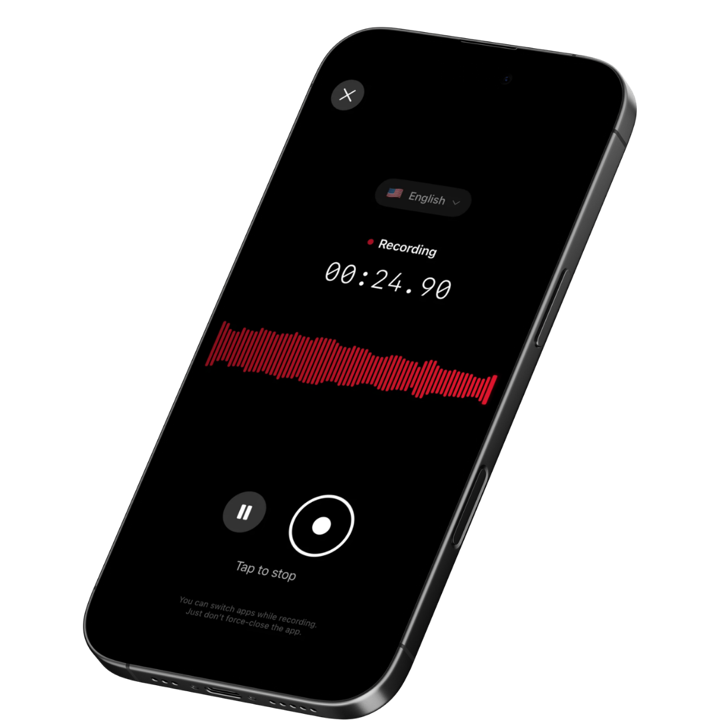
If your main need is capturing and transcribing voice notes or meeting recordings, Speakwise is a strong complement to either tool. It records on iPhone or AirPods, transcribes in 100+ languages with 95%+ accuracy, generates AI summaries, and syncs to Notion. At $59.99/year, Speakwise handles the voice capture workflow that text-based PKM tools like Obsidian and Logseq are not designed for.
Can I migrate from Logseq to Obsidian or vice versa?
Yes. Both use Markdown files stored locally, making migration straightforward. Copy your Markdown files from one vault to the other. Some Logseq-specific formatting like block references and properties may need manual adjustment in Obsidian. Several community tools exist to automate the conversion process.
Final Verdict: Obsidian vs Logseq
Obsidian is the better all-around knowledge management tool in 2026. Its plugin ecosystem, polished mobile apps, and flexible document structure make it suitable for a wider range of users. Writers, researchers, and professionals who need customization will find Obsidian hard to beat.
Logseq is the right choice for a specific workflow. If you think in outlines, rely on daily journals, and want block-level connections with full open-source transparency, Logseq delivers exactly that. Its built-in flashcards and PDF annotation are genuine advantages over Obsidian's core feature set.
For professionals who capture spoken content, Speakwise adds voice recording and AI transcription that pairs well with either tool's knowledge management system.
Bottom line: Obsidian wins on flexibility and polish. Logseq wins on outliner workflows and open-source values. Both are excellent free tools.
If you need to capture voice notes and meeting recordings alongside your PKM system, download Speakwise from the App Store and get AI transcription with Notion sync.
🎯 4.9★ App Store Rating | 📱 Built for iOS
