One-on-One Meeting Statistics 2026: Data
Used by recruiters, executives, consultants, and more.
One-on-One Meeting Statistics 2026: Data
Regular one-on-one meetings boost employee engagement by 300% and reduce turnover by 67%. Only 15% of employees who never meet with their manager are engaged. Adobe cut voluntary turnover by 30% by replacing performance reviews with regular check-ins. GE registered a five-fold productivity increase after switching to informal manager-employee touchpoints. These 16 statistics prove that the one-on-one meeting is the single highest-leverage management activity.
The one-on-one meeting between manager and direct report is the most important recurring event on any team's calendar. Research from Gallup, major corporations, and workplace analytics firms consistently shows that regular check-ins drive engagement, retention, and performance more than any other management practice.
This post compiles 16 statistics on one-on-one meeting effectiveness, frequency, and impact. The data is essential for managers looking to improve team performance, HR leaders building management training, and employees advocating for better support from their leadership.
1. Regular one-on-one meetings boost employee engagement by 300%
When managers hold regular one-on-one meetings, employee engagement triples. This 300% increase, documented across multiple studies, represents the single largest engagement lever available to organizations. The mechanism is straightforward: regular conversations make employees feel seen, heard, and supported. Without them, workers drift into disengagement, disconnection, and eventually departure.
Source: Teamflect - How to Run Effective One-on-One Meetings
2. Only 15% of employees without regular manager meetings are engaged
Gallup found that just 15% of employees whose managers do not meet with them regularly are engaged at work. Managers who hold regular one-on-one meetings nearly triple that engagement level. The 15% baseline represents the cost of management neglect - when direct reports are left without regular support, the overwhelming majority check out mentally, even if they remain physically present.
Source: Gallup - Employee Engagement
3. Employees getting twice the 1:1s are 67% less likely to be disengaged
Frequency matters. Employees who receive twice the number of one-on-one meetings compared to their peers are 67% less likely to be disengaged. This dose-response relationship confirms that more frequent check-ins produce better outcomes. The data does not support annual reviews or monthly catch-ups as sufficient - weekly or biweekly cadence delivers the strongest results.
Source: Perdoo - Everything About 1:1 Meetings
4. Weekly one-on-ones increase team productivity by 18%
Teams whose managers hold weekly one-on-one meetings show an 18% increase in productivity. This productivity gain reflects multiple mechanisms: clearer priorities, faster problem resolution, better resource allocation, and reduced time spent on work that does not align with team goals. The weekly check-in acts as a course-correction mechanism that prevents small misalignments from becoming major productivity drains.
Source: Teamflect - How to Run Effective One-on-One Meetings
5. Regular 1:1 meetings reduce voluntary turnover by almost 33%
Employee retention improves dramatically with consistent one-on-ones. Regular check-ins lower voluntary exits by almost 33%. Turnover is expensive - replacing a knowledge worker costs between 50% and 200% of their annual salary. The one-on-one meeting is one of the cheapest retention tools available, requiring only 30 minutes of a manager's time per week per report. The ROI is overwhelming.
Source: Small Improvements - Guide to 1:1 Meetings
6. Adobe cut voluntary turnover 30% by replacing reviews with check-ins
In 2012, Adobe eliminated annual performance reviews and replaced them with regular manager-employee check-ins. Voluntary turnover dropped 30%. The change removed the stress and artificiality of annual evaluations and replaced them with ongoing dialogue about goals, development, and feedback. Adobe's results demonstrated that continuous conversation outperforms periodic assessment for both retention and performance.
Source: MuchSkills - Employee Check-ins
7. GE saw a five-fold productivity increase after adopting regular touchpoints
In 2015, GE dropped its annual performance review system in favor of regular, informal touchpoints between managers and employees. The result was a five-fold increase in productivity. The frequency and informality of the new approach allowed problems to surface faster, feedback to be more timely, and goals to be adjusted in real time. The old system was too infrequent to drive behavior change.
Source: MuchSkills - Employee Check-ins
8. Gallup recommends one meaningful conversation per week per employee
Gallup's research is specific: the manager must hold one meaningful conversation per week with each employee, lasting 15 to 30 minutes, covering goals, customers, wellbeing, and recognition. This is the activity that prevents employees from feeling disconnected from the organization. The recommendation is prescriptive because the data is clear - less frequent contact produces measurably worse outcomes.
Source: Gallup - Employee Engagement
9. Engagement is highest among employees who meet with managers weekly
Gallup found that engagement peaks among employees who meet with their managers at least once per week. Biweekly meetings show moderate engagement gains. Monthly or less frequent meetings show minimal improvement over no meetings at all. The data supports a clear threshold: weekly cadence is the minimum for maximum engagement returns. Anything less fails to build the relationship continuity that drives trust.
Source: Gallup - Employee Engagement
10. Regular one-on-one meetings improve employee morale by 30%
Beyond engagement and productivity, morale sees a direct lift. Regular one-on-ones improve employee morale by 30%. Morale affects collaboration, creative contribution, and willingness to go beyond minimum requirements. When workers feel supported by their manager, they bring more energy and initiative to their work. The morale boost from consistent check-ins ripples through the entire team dynamic.
Source: Flowtrace - Meeting Statistics 2026
11. The optimal 1:1 duration is 30 minutes
Research and practitioner consensus point to 30 minutes as the ideal one-on-one meeting length. This provides enough time for meaningful discussion without creating calendar pressure. Shorter meetings feel rushed and prevent deeper topics from surfacing. Longer meetings can become unfocused. Weekly 30-minute check-ins require just 2.5% of a manager's weekly schedule per direct report - a small investment for outsized returns.
Source: Fellow - One-on-One Meeting Definitive Guide
12. Average weekly meeting time has jumped to 11.3-12 hours
The overall meeting landscape has changed dramatically. Average weekly meeting time now ranges from 11.3 to 12 hours - up from 6-8 hours pre-pandemic. Within this expanded meeting load, one-on-one meetings must compete for calendar space. The irony is that 1:1s are among the highest-value meetings but are often the first to be skipped when calendars get crowded with group calls and recurring team meetings.
Source: Flowtrace - Meeting Statistics 2026
13. 86% of executives blame poor communication for workplace failures
86% of employees and executives cite lack of collaboration and poor communication as the primary cause of workplace failures. One-on-one meetings are the most direct communication channel between manager and employee. They surface misunderstandings before they become conflicts, clarify priorities before they diverge, and build the trust that makes difficult conversations possible.
Source: Kapable - Communication and Leadership Statistics
14. Companies with strong internal communication have 4.5x higher retention
Organizations with effective internal communication practices see up to 4.5 times higher employee retention. The one-on-one meeting is the backbone of internal communication at the individual level. While company-wide communications build awareness, the manager-employee check-in builds trust, alignment, and personal commitment. Retention is won or lost in these conversations.
Source: Kapable - Communication and Leadership Statistics
15. Weekly check-ins are best for new employees and challenging periods
While biweekly 1:1s work for experienced team members in stable situations, weekly meetings are optimal for new employees, during organizational transitions, and in challenging periods. The increased frequency accelerates onboarding, provides more support during uncertainty, and prevents small issues from escalating. Adjusting cadence based on context shows management maturity and employee awareness.
Source: Teamflect - How to Run Effective One-on-One Meetings
16. Managers are the single biggest factor in employee engagement
Across all of Gallup's engagement research, the direct manager accounts for 70% of the variance in team engagement. Not compensation, not perks, not company mission - the manager. One-on-one meetings are the primary vehicle through which managers build the relationships that drive engagement. Investing in manager capability to run effective 1:1s is the highest-ROI engagement strategy available.
Source: Gallup - Employee Engagement
The One-on-One: Small Meeting, Massive Impact
The data is unambiguous. One-on-one meetings are the single most effective management practice for driving engagement, retention, and productivity. The 300% engagement boost, 67% reduction in disengagement, and 33% reduction in turnover represent returns that no other management intervention can match.
Yet one-on-ones are also the meetings most likely to be canceled or skipped. When calendars fill with team meetings, project updates, and cross-functional syncs, the 30-minute check-in gets sacrificed first. The statistics from Adobe and GE show that organizations which prioritize regular manager-employee conversations see transformational results. Those that treat them as optional see the opposite.
The path forward is simple but requires discipline. Protect weekly 1:1 time as non-negotiable. Train managers to run these conversations effectively. Cover goals, wellbeing, and recognition - not just status updates. The data shows that 30 minutes per week is enough to triple engagement, cut turnover by a third, and boost productivity by nearly 20%.
The one-on-one meeting is not overhead. It is the highest-leverage 30 minutes on any manager's calendar.---
Make every one-on-one count with effortless capture
The best one-on-one meetings produce decisions, commitments, and insights. The worst produce nothing because no one writes anything down. When action items are agreed verbally but not tracked, they fall through the cracks. When a manager holds eight 1:1s per week, remembering the details from each conversation becomes impossible.
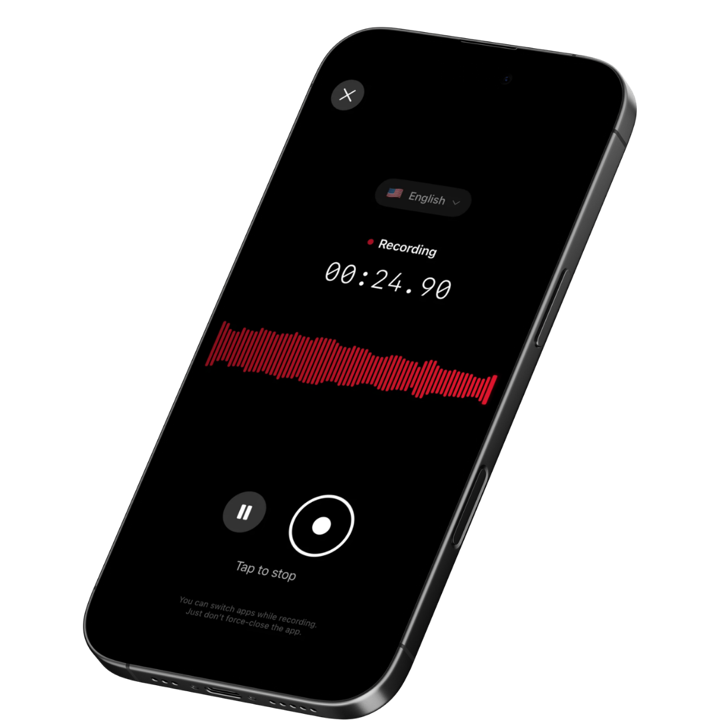
Voice recording and AI transcription turn every one-on-one into a searchable record. Decisions are captured. Action items are extracted. Follow-up becomes automatic rather than reliant on memory.
Download SpeakWise from the App Store and capture every one-on-one meeting effortlessly. AI transcription, automatic action item extraction, and Notion sync keep every commitment tracked and every conversation documented.
Join 10,000+ professionals who turn their one-on-ones into action with AI-powered capture.
Get SpeakWise Free
4.9-star App Store Rating | iOS Optimized

🎯 4.9★ App Store Rating | 📱 Built for iOS
