Overtime Work Statistics 2026: Hours and Costs


Used by recruiters, executives, consultants, and more.
Overtime Work Statistics 2026: Hours and Costs
84% of desk workers regularly work overtime, and 68% work weekends. The WHO and ILO estimate that 745,000 people die each year from stroke and heart disease linked to working 55 or more hours per week. Burnout has reached an all-time high of 76% globally, and overwork costs businesses $322 billion annually in lost productivity. The data is clear: overtime is killing workers and hurting businesses.
Overtime was once an occasional necessity. Now it is the default. From unpaid evening emails to weekend catch-up sessions, working beyond contracted hours has become so normalized that employees rarely question it. But the research shows that overtime delivers diminishing returns. After a certain threshold, additional hours actually reduce total output while dramatically increasing health risks.
This post presents 16 statistics that quantify the human and financial costs of overtime work. These numbers draw from the WHO, ILO, BLS, and major workplace surveys to show why working more hours is not working.
1. 84% of desk workers regularly work overtime
More than four in five desk workers (84%) work overtime on a regular basis, according to a 2025 study on the state of overworking. This is not a small group of overachievers pulling extra hours by choice. It is the overwhelming majority of office workers putting in time beyond their contracted schedule. The normalization of overtime means that the 40-hour workweek exists on paper but not in practice for most professionals. When 84% of workers exceed their scheduled hours, overtime is no longer an exception - it is the unwritten expectation embedded in organizational culture.
Source: Resource Guru - The State of (Over)working 2025
2. 68% of workers are required to work weekends
68% of employees have to work weekends in some capacity, erasing the boundary between work time and personal time. Weekend work was once limited to shift-based industries like healthcare and retail. Now it extends across knowledge work, creative industries, and professional services. The loss of weekend recovery time has direct consequences for health and productivity. Research on cognitive performance consistently shows that rest days are essential for clearing mental fatigue and restoring focus. Workers who never fully disconnect accumulate a sleep and recovery debt that compounds week over week.
Source: Resource Guru - The State of (Over)working 2025
3. 745,000 people die annually from overwork-related stroke and heart disease
A landmark WHO/ILO study found that 745,000 people died in 2016 from ischemic heart disease and stroke attributable to working 55 or more hours per week. That figure represents a 29% increase from the year 2000. Of these deaths, 398,000 were from stroke and 347,000 from heart disease. The numbers have likely grown since 2016 as working hours have increased further during and after the pandemic. This is not a theoretical risk calculation - it is a body count. Overwork is a leading occupational health hazard, and the global trend is moving in the wrong direction.
Source: WHO - Long Working Hours Increasing Deaths from Heart Disease and Stroke
4. Working 55+ hours per week increases stroke risk by 35%
The WHO/ILO research found that working 55 or more hours per week is associated with a 35% higher risk of stroke and a 17% higher risk of dying from ischemic heart disease, compared to working 35-40 hours per week. These are not marginal increases - a 35% elevation in stroke risk represents a substantial and preventable health threat. The biological mechanisms are well understood: chronic overwork increases cortisol, raises blood pressure, disrupts sleep, reduces physical activity, and promotes unhealthy coping behaviors like increased alcohol consumption. Each of these factors independently raises cardiovascular risk.
Source: ILO - Long Working Hours Can Increase Deaths from Heart Disease and Stroke
5. 479 million people worldwide work 55+ hours per week
In 2016, approximately 479 million people - 9% of the global population - were working 55 or more hours per week. This population is disproportionately concentrated in certain regions: the Western Pacific, South-East Asia, and sub-Saharan Africa bear the heaviest burden. Men account for 72% of deaths from overwork. The 479 million figure establishes the scale of exposure. Nearly half a billion people are working at levels the WHO has directly linked to premature death. At the organizational level, every company that normalizes 55-hour weeks is exposing its workforce to a documented health hazard.
Source: WHO - Long Working Hours Increasing Deaths from Heart Disease and Stroke
6. More than 75% of workers worldwide experience burnout in 2026
Global burnout has reached crisis levels, with more than 75% of workers reporting some degree of burnout in 2026. Among knowledge workers specifically, the figure rises to 83%. These numbers represent an increase from previous years - a 2025 Modern Health study cited by Forbes placed burnout at 66%, meaning the problem has worsened significantly in just one year. The connection between overtime and burnout is direct. Workers who consistently exceed their contracted hours deplete their cognitive and emotional reserves without adequate recovery time. Burnout is not weakness - it is the predictable outcome of chronic overwork.
Source: MetaIntro - Over 75% of Workers Suffer from Burnout in 2026
7. North American workers average 9 hours of unpaid overtime per week
A survey by ADP found that North American workers put in an average of nine hours of unpaid overtime every week. At median wage levels, this represents approximately $17,726 per year in stolen income per worker. Unpaid overtime is particularly insidious because it is invisible in payroll data. Companies benefit from the extra output without bearing the cost, creating a perverse incentive to maintain cultures where working beyond contracted hours is expected but never compensated. For employees, unpaid overtime effectively reduces their hourly rate by more than 20%.
Source: TIME - How America Gave Up on Overtime for Workers
8. Only 15% of salaried workers are covered by overtime protections
Only 15% of salaried workers in the United States are covered by the overtime provisions of the Fair Labor Standards Act, down from over 60% in 1975. This dramatic erosion of overtime protections means that the vast majority of salaried workers can be required to work unlimited hours with no additional compensation. The decline from 60% to 15% reflects decades of policy changes that have expanded the exemptions under which employers can classify workers as ineligible for overtime pay. The result is a legal framework that enables the unpaid overtime culture documented in other statistics.
Source: TIME - How America Gave Up on Overtime for Workers
9. 48% of 18-to-24-year-olds work unpaid overtime regularly
Nearly half of workers aged 18 to 24 (48%) regularly work unpaid overtime. Another 46% take on additional hours specifically to cover basic living costs. Young workers face a double bind: they work extra hours both because their employers expect it and because their base pay is insufficient. This generation is entering the workforce with overtime as the default from day one. They have no experience of a working culture where contracted hours were respected. The normalization of overtime at the start of a career sets patterns that persist for decades and contribute to the burnout statistics seen across all age groups.
Source: Resource Guru - The State of (Over)working 2025
10. Gen Z workers reach peak stress at age 25 - compared to 42 for older generations
Gen Z and Millennial workers report reaching their highest stress levels at an average age of just 25, compared to 42 for the broader population. This earlier onset of peak stress is directly connected to the overtime culture young workers inherit. Reaching peak stress 17 years earlier than previous generations suggests that the intensity of modern work - including overtime expectations, always-on communication, and financial pressure - is compressing a career's worth of stress into its first decade. The long-term health consequences of this accelerated burnout timeline are not yet fully understood.
Source: Team Out - 25 Employee Burnout Statistics
11. 74% of Gen Z employees report moderate to severe burnout
74% of Gen Z employees report experiencing moderate to severe burnout, the highest rate of any generation. Nearly 40% of workers aged 18 to 24 are taking time off specifically for stress-related mental health issues. These numbers reflect a workforce that is burning out before it has fully ramped up. When three-quarters of the youngest workers are already moderately or severely burned out, organizations face a structural sustainability problem. The workers who will carry the economy for the next four decades are depleted before they reach 30.
Source: Team Out - 25 Employee Burnout Statistics
12. A 10% increase in overtime reduces output by 2-4%
Research on the relationship between hours and productivity shows that a 10% increase in overtime reduces actual output by 2-4%. This finding captures the diminishing returns that kick in beyond the optimal workday of approximately eight hours. The implication is clear: past a certain point, overtime is counterproductive. Workers who put in 50 hours per week do not produce 25% more than those working 40 hours. They produce only slightly more - and sometimes less - while accumulating fatigue, health risks, and dissatisfaction that further erode long-term performance.
Source: Emory Economics Review - The Economics of Burnout
13. Burnout costs businesses $322 billion annually worldwide
The World Health Organization estimates that burnout - driven primarily by chronic overwork - costs businesses $322 billion annually in lost productivity worldwide. This figure encompasses absenteeism, presenteeism, turnover, and reduced output from exhausted workers. The $322 billion cost dwarfs most corporate wellness budgets. Organizations spend millions trying to fix burnout symptoms while maintaining the overtime culture that causes them. The math suggests a simpler solution: reduce the hours that create burnout in the first place.
Source: Meditopia - Employee Burnout Statistics 2026
14. 80% of workers say they lack the time or energy to do their job effectively
Microsoft's 2025 Work Trend Index found that 80% of workers report not having enough time or energy to do their job effectively. This is the self-reported consequence of a culture that demands more hours without providing more capacity. When four out of five workers tell you the system is broken, the system is broken. The 80% figure undermines the fundamental rationale for overtime. If extra hours are supposed to increase output, why do 80% of workers feel they still cannot keep up? The answer is that overtime creates more work through its side effects - more errors, more rework, more communication overhead - than it eliminates through additional hours.
Source: Microsoft Work Trend Index 2025
15. Full-time workers average 47 hours per week - seven more than the standard
Full-time workers in the United States report working an average of 47 hours per week, seven hours more than the standard 40-hour workweek. This average includes workers across all industries and roles, meaning many professionals work well beyond 47 hours. The seven-hour gap between the standard and actual workweek represents nearly a full extra day of work every week. Over a year, it adds up to approximately 364 additional hours - more than nine full working weeks of unpaid or undercompensated labor above the contractual baseline.
Source: BLS - Average Weekly Hours and Overtime of All Employees
16. Deaths from heart disease due to overwork increased 42% from 2000 to 2016
Between 2000 and 2016, deaths from heart disease attributable to long working hours increased by 42%. Deaths from stroke attributable to overwork increased by 19% over the same period. The trend is accelerating, not stabilizing. The 42% increase over 16 years means that overwork is becoming deadlier even as awareness of its risks grows. Economic pressures, technological always-on culture, and the erosion of overtime protections have created conditions where more people work dangerous hours despite knowing the consequences. Knowledge alone is not sufficient - structural change is required.
Source: CNBC - Long Working Hours Kill 745,000 People a Year
The Overtime Trap: More Hours, Worse Outcomes
These sixteen statistics demolish the myth that more hours equal more productivity. Beyond roughly eight hours per day, additional work time produces diminishing and eventually negative returns. Output declines, errors increase, health deteriorates, and burnout accelerates. Yet 84% of desk workers still do overtime regularly, and organizations continue to reward long hours as a proxy for dedication.
The human cost is staggering. Three-quarters of a million people die each year from overwork-related cardiovascular disease. 75% of workers are burned out. Gen Z workers hit peak stress at 25. These are not abstract data points - they represent real people whose health and lives are being shortened by workplace cultures that treat time as an unlimited resource.
The financial cost tells the same story. Burnout costs $322 billion globally. Unpaid overtime costs $17,726 per worker per year. Diminishing returns mean that the last 10% of overtime actually reduces output. Companies paying for overtime are often paying for worse results while destroying their workforce's health and engagement in the process.
Working 55+ hours per week increases stroke risk by 35% and produces less output per hour. The evidence could not be clearer: the path to better results runs through fewer, more focused hours - not more exhausting ones.---
Work less overtime by capturing more in less time
These 16 statistics show that overtime often stems from inefficiency, not insufficient hours. Workers stay late to write up meeting notes, follow up on action items, and document decisions that should have been captured in real time. The administrative tail of every meeting extends the workday far beyond the meeting itself.
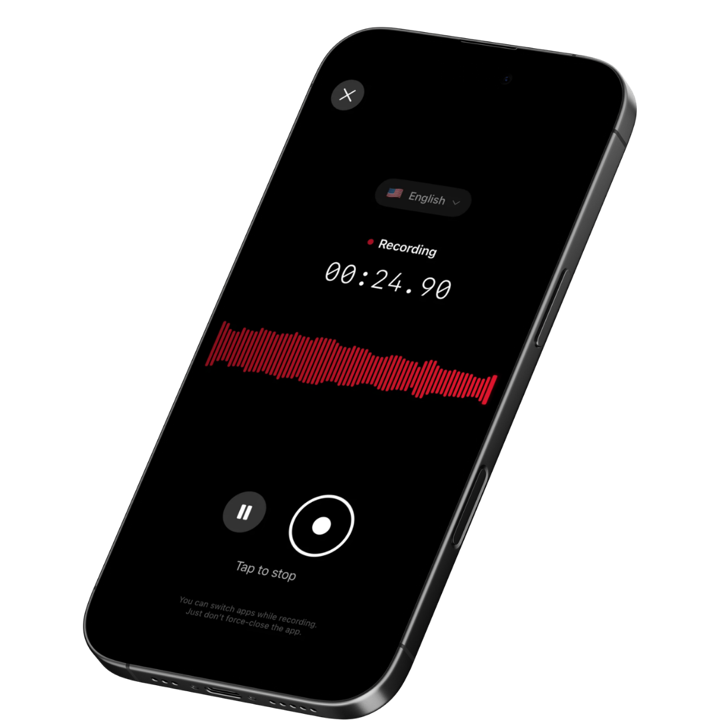
Voice capture eliminates that tail. Record any conversation with one tap. Get AI-generated summaries, transcripts, and action items instantly. What used to take 30 minutes of post-meeting typing now takes zero - because Speakwise captured it while you were talking.
Download Speakwise from the App Store and cut the after-hours work that keeps you at your desk with instant AI transcription, automated summaries, and one-tap Notion sync.
Join 10,000+ professionals who reclaimed their evenings by letting AI handle meeting documentation.
Get Speakwise Free
4.9-star App Store Rating | iOS Optimized

🎯 4.9★ App Store Rating | 📱 Built for iOS
