Performance Review Statistics 2026


Used by recruiters, executives, consultants, and more.
Performance Review Statistics 2026
95% of managers are unhappy with their performance management systems. Only 14% of employees feel inspired to improve after reviews. Employees who receive daily feedback are 3.6x more motivated than those with annual reviews. Yet 65% of employees say they want more feedback than they currently receive. These 20 statistics expose why traditional performance reviews are failing - and what works instead.
Performance reviews are one of the most universally disliked workplace rituals. Managers dread writing them. Employees dread receiving them. HR teams spend weeks administering them. And the data suggests that all this effort produces almost no improvement in actual performance.
This post covers 20 statistics on performance reviews and management in 2026. These numbers reveal where traditional review systems fail, what modern feedback approaches achieve, and why the shift from annual evaluation to continuous feedback is accelerating.
Key Performance Review Statistics (2026)
- Performance review statistics show that 95% of managers are unhappy with their current performance management systems (ThriveSparrow).
- Only 14% of employees strongly agree that performance reviews inspire them to improve (Gallup).
- Employees who receive daily feedback from their manager are 3.6x more likely to feel motivated to excel than those who receive only annual feedback (People Managing People).
- 80% of employees who received meaningful feedback in the past week are fully engaged, regardless of how many days they work in the office (Gallup).
- Companies with continuous feedback are 50% more likely to exceed their financial goals than those relying on annual reviews (People Managing People).
- Only 16% of employees say their last conversation with their manager was extremely meaningful, according to a Gallup study of nearly 15,000 employees (Gallup).
- For every five additional direct reports a manager takes on, employee eNPS scores decline by 2%, according to PerformYard's 2026 State of Performance Management Report (PerformYard).
1. 95% of managers are unhappy with their performance management systems
Industry research finds that a staggering 95% of managers express dissatisfaction with their current performance management systems. When virtually every manager in an organization dislikes the process they are required to execute, the system itself is broken. This near-universal dissatisfaction suggests that the problem is not implementation quality. It is the fundamental design of traditional performance reviews.
Source: ThriveSparrow - Performance Management Statistics
2. 90% of HR leaders say reviews fail to reflect employee contributions
The dissatisfaction extends beyond managers. 90% of HR leaders admit that performance reviews fail to accurately reflect employee contributions. When the people designing and administering the system acknowledge that it does not work, the case for change becomes urgent. Reviews that miss the mark damage trust, create resentment, and undermine the very engagement they are supposed to measure.
Source: ThriveSparrow - Performance Management Statistics
3. Only 14% of employees feel inspired to improve after reviews
The stated purpose of performance reviews is to drive improvement. The data shows they fail at this core mission. Only 14% of employees strongly agree that their performance reviews inspire them to improve. The remaining 86% experience reviews as administrative obligations at best and demoralizing judgments at worst. A process that inspires improvement in fewer than one in seven employees needs fundamental redesign.
Source: Gallup - More Harm Than Good: The Truth About Performance Reviews
4. Employees with daily feedback are 3.6x more motivated
The contrast between annual reviews and frequent feedback is stark. Employees who receive daily feedback from their manager are 3.6 times more likely to feel motivated to excel than those who receive annual feedback. This multiplier effect reveals that timing matters as much as content. Feedback delivered in the moment connects directly to specific behaviors and outcomes. Feedback delivered months later feels disconnected and arbitrary.
Source: People Managing People - Performance Management Statistics 2026
5. 80% of employees with recent meaningful feedback are fully engaged
Engagement responds powerfully to timely feedback. 80% of employees who say they received meaningful feedback in the past week are fully engaged. This finding turns the typical engagement strategy on its head. Instead of complex programs and expensive platforms, organizations can drive engagement through one simple behavior: managers giving specific, meaningful feedback every week.
Source: Gallup - A Great Manager's Most Important Habit
6. 65% of employees want more feedback than they currently receive
There is a clear demand for more feedback. 65% of employees say they want more feedback than they currently get. This appetite for input challenges the assumption that employees avoid evaluation. They do not want less feedback. They want better, more frequent, and more useful feedback. The problem with traditional reviews is not that they provide feedback. It is that they provide it too rarely and too disconnectedly.
Source: HireBorderless - 60+ Employee Feedback Statistics in 2026
7. 96% of employees believe regular feedback helps them improve
Nearly all employees (96%) believe that regular feedback is beneficial for their performance. This near-unanimous agreement makes the case for continuous feedback systems stronger than almost any other workplace intervention. When 96% of your workforce says a practice helps them improve, the only question is how quickly you can implement it at scale.
Source: Peaceful Leaders Academy - Employee Feedback Statistics
8. 43% of highly engaged employees receive weekly feedback
The link between feedback frequency and engagement is measurable. 43% of highly engaged employees receive feedback at least once per week. Among employees with low engagement, only 18% receive feedback at that frequency. This 25-point gap reveals that feedback cadence is one of the strongest predictors of engagement levels. Organizations that mandate weekly check-ins see engagement improvements almost immediately.
Source: Peaceful Leaders Academy - Employee Feedback Statistics
9. 45% of managers see no value in formal performance reviews
Manager buy-in is essential for any management process to work. Yet 45% of managers do not think their formal performance review process brings value to the company. When nearly half of the people executing the process consider it valueless, the quality of execution inevitably suffers. Managers who see no value in reviews deliver perfunctory, checked-box evaluations that employees can sense immediately.
Source: Folks HR - Performance Management Statistics 2025
10. Companies with continuous feedback are 50% more likely to exceed goals
The business case for continuous performance systems is strong. Companies that implement continuous feedback are 50% more likely to exceed their financial goals. They are also 42% better at holding employees accountable, 39% better at attracting top talent, and 44% better at retaining it. These are not marginal improvements. They represent a fundamental competitive advantage that accrues to organizations willing to modernize.
Source: People Managing People - Performance Management Statistics 2026
11. 41% of organizations are shifting to frequent one-on-one meetings
The move away from annual reviews is accelerating. 41% of organizations are actively shifting toward frequent one-on-one meetings between managers and employees as their primary performance management approach. These shorter, more frequent conversations replace the formal review with ongoing dialogue. They create natural opportunities for real-time feedback, goal adjustment, and recognition.
Source: Thrive Sparrow - Performance Management Statistics 2025
12. Annual review adoption dropped from 82% to 54% between 2016 and 2019
The decline of the traditional annual review has been well documented. In 2016, 82% of companies relied on annual reviews. By 2019, that number had fallen to 54%. The trend has continued accelerating through 2025 and 2026 as more organizations adopt continuous feedback, quarterly check-ins, and project-based evaluations. The annual review is not evolving. It is being replaced.
Source: ThriveSparrow - Performance Management Statistics
13. 75% of organizations plan to integrate AI into review processes
Technology is reshaping performance management. 75% of organizations now plan to integrate AI-based technology into their review processes. AI applications include automated feedback prompts, sentiment analysis of manager-employee interactions, bias detection in evaluations, and real-time performance tracking. The performance management software market is projected to grow from $5.82 billion in 2024 to $12.17 billion by 2032.
Source: ThriveSparrow - Performance Management Statistics
14. Employees who set 20-30 goals per year complete 38% more goals
Goal-setting behavior correlates strongly with goal achievement. Employees who set 20 to 30 goals per year complete 38% more goals than employees who set five or fewer. This finding suggests that the traditional approach of setting a handful of annual objectives misses the mark. More granular, shorter-cycle goals create more frequent checkpoints and more opportunities for course correction.
Source: PerformYard - Performance Management Statistics for 2026 HR Strategy
15. Review forms with 10-15 questions achieve highest completion rates
Design details matter in performance management. Research shows that goal completion peaks when review forms contain 10 to 15 total questions, indicating focus and clarity drive execution. Shorter forms feel too superficial to be useful. Longer forms create fatigue and abandonment. This finding highlights that even as organizations modernize their approach, the mechanics of how feedback is collected affect whether the process works.
Source: PerformYard - Performance Management Statistics for 2026 HR Strategy
16. 77% of employees who receive ongoing feedback feel motivated
For employees receiving ongoing feedback rather than periodic reviews, 77% report feeling motivated to perform well. This compares favorably to the 14% who feel inspired after traditional reviews. The 63-point gap between these two approaches is one of the starkest contrasts in all of workplace research. Ongoing feedback does not just incrementally improve on annual reviews. It transforms the experience entirely.
17. Only 16% of employees say their last conversation with their manager was extremely meaningful
Gallup studied nearly 15,000 employees and found that only 16% described their most recent conversation with their manager as extremely meaningful. The gap between how often feedback happens and how meaningful it feels is a major reason engagement programs underperform. Gallup's research identifies recognition, collaboration, clarity on goals, conversation length, and a focus on strengths as the characteristics that separate meaningful conversations from forgettable ones.
Source: Gallup - A Great Manager's Most Important Habit
18. Only 23% of employees strongly agree they get the right amount of recognition
Recognition is one of the most powerful and most neglected ingredients in effective feedback. Gallup and Workhuman found that only 23% of employees strongly agree they get the right amount of recognition for their work, and just 10% are ever asked how they prefer to be recognized. Employees who do feel adequately recognized are four times more likely to be engaged, underscoring how much performance conversations lose by skipping this step.
Source: Gallup - A Great Manager's Most Important Habit
19. Every five additional direct reports per manager cuts eNPS scores by 2%
PerformYard's 2026 State of Performance Management Report found that manager span of control directly affects engagement: for every five additional direct reports a manager takes on, employee eNPS scores decline by approximately 2%. Managers with 1 to 5 direct reports lead teams with 7% higher eNPS scores than managers with 15 or more direct reports. Smaller teams give managers more capacity for the kind of frequent, individualized feedback that drives engagement.
Source: PerformYard - 2026 State of Performance Management Report
20. Managers with 20+ direct reports see goal completion fall to 60%, versus 79% for smaller teams
Span of control also shapes whether goals actually get finished. PerformYard's 2026 report found that when managers oversee 20 or more direct reports, average goal completion drops to 60%, compared to 79% at companies with lower manager-to-report ratios. Larger team sizes reduce the level of individual support a manager can provide, and goal completion suffers as a result.
Source: PerformYard - 2026 State of Performance Management Report
The Review Revolution: From Annual Judgment to Continuous Dialogue
The data paints an unflattering picture of traditional performance reviews. Managers hate them. HR knows they are inaccurate. Employees find them demotivating. And the organizations clinging to them are falling behind those that have adopted continuous feedback approaches.
The shift underway is not simply about frequency. It is about fundamentally changing the relationship between feedback and performance. Annual reviews treat feedback as a retrospective judgment. Continuous feedback treats it as a prospective tool for improvement. One looks backward. The other looks forward.
The technology wave is accelerating this transition. AI-powered tools can prompt managers to provide feedback at optimal moments, detect patterns in team dynamics, and help employees track their own development. But technology alone is not the answer. The foundation is a cultural shift where feedback becomes a daily habit rather than an annual obligation.
When 95% of managers and 86% of employees are dissatisfied with the same system, the system is not broken. It is obsolete.---
Turn every conversation into actionable feedback
The shift to continuous feedback requires capturing insights as they happen. When feedback lives only in memory, it fades, distorts, or disappears by the time the next review cycle arrives. The best feedback is specific, timely, and tied to real conversations.
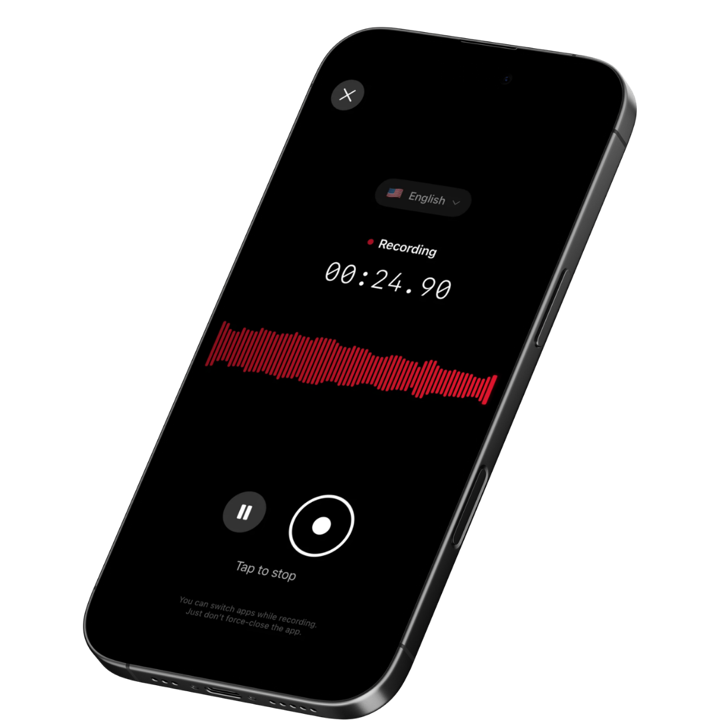
Voice recording with AI transcription captures the context that makes feedback meaningful. Record one-on-ones, coaching sessions, and team meetings. Get automatic summaries and action items. Build a continuous record that makes performance conversations evidence-based rather than memory-based.
Download SpeakWise from the App Store and transform performance conversations with one-tap recording, AI-generated summaries, and automatic action item extraction.
Join 10,000+ professionals who have replaced annual review anxiety with continuous, evidence-based feedback.
Get SpeakWise Free
4.9-star App Store Rating | iOS Optimized

🎯 4.9★ App Store Rating | 📱 Built for iOS
