Phone Addiction at Work Statistics 2026
Used by recruiters, executives, consultants, and more.
Phone Addiction at Work Statistics 2026
The average worker checks their phone 96 times per day - roughly every 10 minutes. 70% of employees admit smartphones distract them during work hours. Phone interruptions cost an estimated 23 minutes of recovery time each. With smartphone addiction costing U.S. businesses an estimated $600 billion annually in lost productivity, these 16 statistics reveal how our phone habits are quietly destroying our ability to do deep, focused work.
Smartphones have become essential work tools - but they are also the biggest source of self-inflicted distraction. The same device that connects us to email, Slack, and calendars also delivers social media notifications, news alerts, and personal messages throughout the workday. The result is a workforce that is technically present but constantly pulled away from the task at hand.
This post examines 16 statistics that document the scale, cost, and impact of phone addiction in the workplace. From checking frequency to productivity losses, these numbers reveal why the device in your pocket may be the single greatest barrier to focused work.
1. Americans check their phones 96 times per day on average
The frequency of phone checking has reached compulsive levels. Asurion's research found that the average American checks their phone 96 times per day - once every 10 minutes during waking hours. This represents a 20% increase from just four years prior. Each check may only last seconds, but the cumulative effect of nearly 100 daily interruptions is devastating for sustained focus and deep work. The brain cannot maintain concentration when it is pulled away every few minutes.
Source: Asurion - Americans Check Their Phones 96 Times a Day
2. 70% of workers say smartphones distract them during the workday
Self-awareness doesn't translate to behavior change. A CareerBuilder survey found that 70% of workers admit that smartphones are a distraction during work hours. Despite knowing their phones are a problem, few workers take active steps to limit phone use during focused work periods. The most commonly cited distracting activities include texting (55%), social media browsing (41%), and news consumption (37%). Notification sounds and vibrations trigger checking behavior even when the alert is irrelevant.
Source: CareerBuilder - Biggest Productivity Killers in the Workplace
3. Phone interruptions require 23 minutes and 15 seconds to recover from
Each phone check is not a momentary disruption - it triggers a lengthy recovery process. Research from UC Irvine by Gloria Mark found that it takes an average of 23 minutes and 15 seconds to return to the original task after an interruption. If a worker checks their phone just 10 times during a focused work period, they may lose nearly 4 hours of productive time to context-switching and recovery. The phone check itself takes seconds; the cognitive cost takes minutes.
Source: UC Irvine - The Cost of Interrupted Work
4. Smartphone addiction costs U.S. businesses $600 billion annually
The financial impact of phone distraction is enormous. Research estimates that smartphone-related distractions cost American businesses approximately $600 billion per year in lost productivity. This figure accounts for the time spent on non-work phone activities, the recovery time needed after each interruption, and the reduction in work quality that results from divided attention. For a company with 1,000 employees, this translates to roughly $4 million in annual productivity losses from phone distraction alone.
Source: Udemy - 2018 Workplace Distraction Report
5. The average person spends 3 hours and 15 minutes on their phone daily
Total daily screen time provides context for the addiction problem. Research from RescueTime shows that the average person spends 3 hours and 15 minutes on their phone each day, with the top 20% of users exceeding 4.5 hours. A significant portion of this usage occurs during work hours. Even if only one-third of daily phone time happens at work, that represents over an hour of distracted time per worker per day, or roughly 250 hours per year of phone-related productivity loss.
Source: RescueTime - Screen Time Statistics
6. 55% of employers say smartphones are the biggest productivity killer
From the employer's perspective, phones top the list of productivity threats. More than half of employers surveyed by CareerBuilder identified cell phones and texting as the number one productivity killer in the workplace, ahead of internet browsing (41%), gossip (39%), and social media (37%). Yet most employers remain reluctant to implement phone policies, fearing employee pushback and recognizing that the same devices are increasingly used for legitimate work communication.
Source: CareerBuilder - Biggest Productivity Killers in the Workplace
7. 47% of workers consider themselves addicted to their phones
Nearly half the workforce recognizes that their phone use has crossed from habitual to compulsive. A survey by Deloitte found that 47% of workers describe themselves as smartphone addicts, acknowledging that they use their phones more than they would like and feel anxious when separated from their devices. Among millennials, the self-reported addiction rate climbs to 59%. This level of self-identified addiction suggests the problem is not a lack of awareness but a lack of effective coping strategies.
Source: Deloitte - Global Mobile Consumer Survey
8. The mere presence of a phone reduces cognitive capacity
You don't even need to use your phone for it to hurt your performance. Research published in the Journal of the Association for Consumer Research found that the mere presence of a smartphone - even when it is face down and silenced - reduces available cognitive capacity. Study participants who had their phones on their desk performed worse on cognitive tests than those whose phones were in another room, even though none of them used their phones during the test. The brain expends resources resisting the urge to check.
Source: University of Texas at Austin - Brain Drain
9. 80% of workers don't need their smartphones for work tasks
Despite the narrative that smartphones are essential work tools, the reality is different for most workers. Research shows that approximately 80% of employees do not require a smartphone to perform their core job functions. The primary work-related uses - email, calendar, and messaging - can be handled on desktop systems. For these workers, the phone serves primarily as a personal distraction device during work hours, offering social media, news, and entertainment at the cost of focused attention.
Source: Pew Research Center - Technology's Impact on Workers
10. Social media consumes 2.5 hours of the average person's day
Social media has become the most time-consuming phone activity. Data from DataReportal shows that the average internet user spends 2 hours and 31 minutes per day on social media platforms. Much of this usage happens on phones during work hours, disguised as brief "quick checks" that stretch into extended browsing sessions. The algorithmic design of social platforms - optimized for engagement rather than user wellbeing - makes them particularly difficult to put down once opened.
Source: DataReportal - Digital 2024 Global Overview
11. Workers who use phones during meetings miss 25% of the content
Phone use during meetings creates a dual problem. Research shows that workers who use their smartphones during meetings miss approximately 25% of the information presented. They also demonstrate lower recall of key decisions and action items. Beyond the individual cost, phone use during meetings signals disengagement to colleagues, eroding trust and reducing the quality of group discussion. When multiple attendees are on their phones, meeting effectiveness drops sharply for everyone.
Source: Harvard Business Review - Stop the Meeting Madness
12. Notifications cause stress spikes even when ignored
The physiological impact of phone notifications extends beyond the moments when we actually check them. Research from the University of Nottingham found that receiving phone notifications triggers measurable stress responses - increased heart rate and cortisol levels - even when the recipient does not look at their phone. The anticipation and curiosity created by the notification alert is enough to disrupt focus and elevate anxiety. Over a full workday, dozens of ignored notifications still accumulate a significant stress burden.
Source: University of Nottingham - Push Notifications and Stress
13. 75% of workers admit to using their phone during bathroom breaks for work avoidance
Phone-based work avoidance has become a widespread coping mechanism. A Zippia survey found that 75% of workers admitted to using their smartphones during bathroom breaks, with many acknowledging these breaks as opportunities to scroll social media, check personal messages, or otherwise disengage from work. Extended phone-based bathroom breaks have become so common that some organizations report a measurable increase in time spent away from desks, attributable to smartphone use rather than actual biological need.
Source: Zippia - Cell Phone Usage at Work Statistics
14. Compulsive phone checking increases anxiety by 26%
The relationship between phone addiction and anxiety is bidirectional. Research published in Computers in Human Behavior found that compulsive phone checking behavior is associated with a 26% increase in anxiety symptoms. Workers reach for their phones to alleviate momentary boredom or anxiety, but the checking behavior itself generates more anxiety - creating a feedback loop. The constant low-level stimulation prevents the mind from reaching the restful states needed for creative thinking and problem-solving.
Source: Computers in Human Behavior - Smartphones and Psychological Well-being
15. Phone-free workspaces increase productivity by 26%
The solution may be simpler than expected. Research shows that workers who keep their phones out of their immediate workspace - in a bag, locker, or another room - report approximately 26% higher productivity during focused work periods. Companies that have implemented phone-free zones for deep work report improved output quality, faster task completion, and higher employee satisfaction during focus periods. The key finding is that physical separation from the device is far more effective than relying on willpower.
Source: University of Texas at Austin - Brain Drain
16. 89% of workers check their phone within 10 minutes of arriving at work
The phone habit starts immediately. Research shows that 89% of workers check their personal phones within 10 minutes of arriving at work, before they have begun any substantive work task. This early-morning phone check often sets the tone for the day, priming the brain for reactive, notification-driven behavior rather than proactive, intentional work. Workers who begin their day with email and social media on their phones report lower focus levels throughout the morning compared to those who start with their primary work task.
Source: Deloitte - Global Mobile Consumer Survey
The Phone in Your Pocket Is Your Biggest Productivity Threat
These statistics reveal an uncomfortable truth. The device we consider essential is also our greatest source of self-inflicted distraction. With 96 daily phone checks, 23-minute recovery periods, and $600 billion in annual productivity losses, smartphone addiction has become one of the most expensive workplace problems of the decade.
What makes phone addiction uniquely difficult to address is that the same device is both the problem and, in many cases, a legitimate work tool. You cannot simply ban phones when employees genuinely need them for communication, authentication, and collaboration. The challenge is separating productive phone use from compulsive checking.
The research points to practical solutions: physical separation during deep work, notification management, phone-free meeting policies, and awareness training. Organizations that create clear boundaries around phone use - rather than relying on individual willpower - see measurable improvements in both productivity and employee satisfaction.
The question isn't whether phones are hurting productivity - the data leaves no doubt. The question is whether organizations will create environments where focused, phone-free work is possible.---
Turn Your Phone Into a Productivity Tool Instead of a Distraction
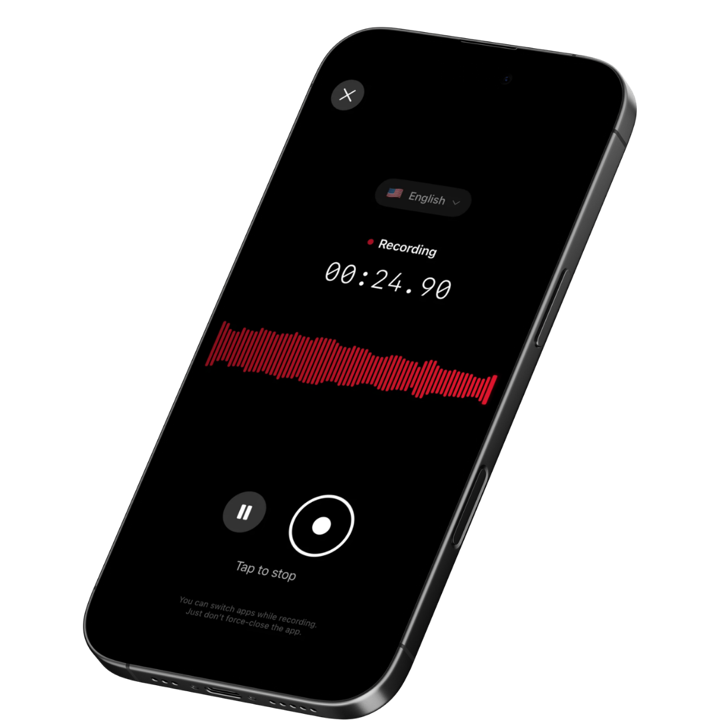
What if the same phone that distracts you could capture your most important ideas? Instead of mindlessly scrolling between tasks, open SpeakWise and record a voice note. Capture meeting insights, brainstorm ideas, or dictate action items in seconds. Your phone becomes a tool for creation rather than consumption.
Voice capture transforms your relationship with your device. A quick 30-second recording replaces 10 minutes of typing. AI transcription and summaries turn spoken thoughts into organized notes. Your phone starts working for you instead of against you.
Download SpeakWise from the App Store and transform your phone from a distraction into a productivity tool with one-tap voice recording, AI transcription, and intelligent summaries.
Join 10,000+ professionals who have turned their phones into capture devices instead of distraction machines.
Get SpeakWise Free
4.9-star App Store Rating | iOS Optimized

🎯 4.9★ App Store Rating | 📱 Built for iOS
