Presentation Skills Statistics 2026


Used by recruiters, executives, consultants, and more.
Presentation Skills Statistics 2026
Over 90% of presenters say strong presentation skills are crucial for success. Audiences are 43% more likely to be persuaded by presentations with visual aids. People remember 65% of what they see and hear but only 10% of what they hear alone. The optimal presentation length is 10-15 minutes, yet the average attention span on a single screen point is just 47 seconds. These 16 statistics reveal the science behind effective presentations.
Presentations remain one of the most high-stakes forms of workplace communication. A single presentation can win a client, secure funding, align a team, or derail a project. Despite this, most professionals receive little formal training in presentation design or delivery. The gap between how important presentations are and how well people deliver them is one of the largest skill deficits in the modern workplace.
This post covers 16 statistics on presentation skills in 2026. These numbers reveal what makes presentations effective, where most presenters struggle, and how the science of attention and persuasion should shape how you prepare and deliver.
1. Over 90% of presenters say strong presentation skills are crucial for success
The importance of presentation skills is nearly universally acknowledged. Over 90% of presenters agree that strong presentation skills are crucial for professional success. This consensus spans industries, roles, and seniority levels. Whether presenting to clients, leadership, or peers, the ability to communicate ideas clearly and persuasively determines how much influence a professional has over decisions and outcomes.
Source: Visme - Presentation Statistics 2026
2. Audiences are 43% more likely to be persuaded with visual aids
Persuasion is the core purpose of most business presentations. Research shows that audiences are 43% more likely to be persuaded when a presenter uses visual aids compared to verbal delivery alone. This effect is consistent across different types of content, from financial data to strategic proposals. Visual aids do not just make presentations more engaging. They make them measurably more effective at changing minds.
Source: Visme - Presentation Statistics 2026
3. People remember 10% of what they hear but 65% of what they see and hear
The retention gap between verbal-only and multi-modal presentations is enormous. People remember just 10% of what they hear three days later. But when visual content accompanies verbal delivery, retention jumps to 65%. This 6.5x improvement in information retention makes visual presentation design not just an aesthetic choice but a strategic communication decision. Every presentation without visuals wastes the majority of its content.
Source: SlideUpLift - Presentation Statistics and Trends 2025
4. The average attention span on a single screen point is 47 seconds
Audience attention is the scarcest resource in any presentation. Research shows that the average attention span on one point on a screen is just 47 seconds. After that, attention drifts. This finding has direct implications for slide design: each slide must make its point quickly and transition before the audience's attention window closes. Presenters who linger on a single slide for minutes are speaking to distracted minds.
Source: Decktopus - Presentation Statistics 2025
5. The optimal presentation length is 10-15 minutes
Over 60% of audiences say the optimal presentation length is 10 to 15 minutes. This preference aligns with cognitive research on sustained attention. Presentations longer than 15 minutes face rapidly diminishing returns as audience engagement declines. The most effective presenters design their core message to fit within this window and use additional time only for discussion and questions.
Source: Visme - Presentation Statistics 2026
6. Visual content increases information retention by 15% over verbal-only
Complementary research confirms that visual content increases information retention by 15% compared to verbal-only presentations. While this figure is more conservative than the 65% combined retention rate, it isolates the incremental effect of adding visuals to an otherwise identical message. Even modest visual additions - a chart, a diagram, a photograph - produce measurable improvements in how much audiences remember.
Source: Visme - Presentation Statistics 2026
7. 75% of professionals want to improve their presentation skills
The desire for improvement is strong. 75% of professionals say they are actively looking to improve their presentation skills. This appetite for development reflects awareness of the skill gap. Most professionals recognize that their presentation abilities do not match the importance of the task. Organizations that invest in presentation training tap into an eager audience already motivated to learn.
Source: WeShare - Presentation Statistics 2025
8. Only 25% of presenters are confident in their speaking skills
Despite the acknowledged importance of presentations, only a quarter of presenters feel confident in their public speaking skills. This 75% confidence gap mirrors the glossophobia statistics and reveals a workforce where the majority of presenters approach the podium with more anxiety than assurance. Confidence correlates directly with delivery quality, making this gap both a cause and effect of poor presentation outcomes.
Source: Visme - Presentation Statistics 2026
9. 67% of audiences prefer well-designed slides over text-heavy ones
Audience preferences are clear. 67% of users favor well-designed slides over plain, text-heavy alternatives. Over 70% prefer slides with less than 25% text. These preferences reflect how audiences actually process information: visually, in chunks, with minimal reading required. Presenters who fill slides with paragraphs are working against their audience's cognitive preferences.
Source: Visme - Presentation Statistics 2026
10. 91% of presenters feel more confident with well-designed slides
Slide quality affects presenter confidence as much as audience engagement. 91% of presenters say they feel more confident when they have a well-designed slide deck. This creates a positive feedback loop: better slides increase confidence, and confident presenters deliver more effectively. Investing in presentation design is simultaneously an audience engagement strategy and a presenter performance strategy.
Source: Beautiful.ai - Presentation and Public Speaking Stats
11. 45% of presenters struggle to summarize complex information
The most common presentation challenge is not delivery. It is content design. 45% of presenters say that summarizing complex information concisely is their biggest challenge. This difficulty is especially acute in data-heavy fields like finance, technology, and healthcare. The ability to distill complexity into clarity separates effective presenters from those who overwhelm and lose their audiences.
Source: Visme - Presentation Statistics 2026
12. 41% find incorporating high-quality graphics challenging
Visual aids boost persuasion and retention, but 41% of presenters find it challenging to incorporate high-quality graphics into their presentations. This gap between knowing that visuals matter and being able to produce them explains why many presentations default to text-heavy bullets. Design tools and AI-powered presentation software are closing this gap rapidly, making professional-quality visuals accessible to non-designers.
Source: Visme - Presentation Statistics 2026
13. Engagement drops 14% without audience interaction
Passive presentations underperform interactive ones by a wide margin. When presenters do all the talking without interacting with their audience, engagement drops 14%. Meanwhile, 70% of marketers say interactive content is more effective at engaging audiences. The implication is clear: presentations that include questions, polls, or discussion segments outperform monologues even when the content is identical.
Source: Decktopus - Presentation Statistics 2025
14. 60% of presenters use animations to clarify ideas
Animation and transition usage is widespread among presenters. Around 60% use animations to clarify ideas, and 45% use transitions to maintain audience interest. Used strategically, these tools guide attention and reveal information progressively rather than overwhelming audiences with everything at once. Used poorly, they become distractions. The key is using motion to serve clarity, not decoration.
Source: Decktopus - Presentation Statistics 2025
15. Visuals are processed 60,000x faster than text by the brain
The neuroscience behind visual communication is striking. The human brain processes visual information 60,000 times faster than text. This processing speed differential explains why visual presentations are more persuasive and more memorable. When a presenter shows a chart, the audience grasps the trend instantly. When they read a paragraph of data, comprehension takes orders of magnitude longer.
Source: SlideUpLift - Presentation Statistics and Trends 2025
16. 94% of employees would stay longer if their company invested in their development
Presentation skills training connects directly to retention. 94% of employees say they would stay at a company longer if it invested in their learning and development, including communication and speaking skills. Organizations that offer presentation training are not just building capabilities. They are signaling investment in their people, which drives loyalty and reduces turnover.
Source: Beautiful.ai - Presentation and Public Speaking Stats
The Presentation Paradox: High Stakes, Low Preparation
The data reveals a fundamental misalignment. Over 90% of professionals say presentation skills are crucial. 75% want to improve. Yet most organizations invest minimally in presentation training, and most presenters approach high-stakes moments with low confidence and limited design skills.
This gap matters because presentations are decision points. They are where budgets get approved, strategies get aligned, and clients get won or lost. When the majority of presenters struggle with confidence, content summarization, and visual design, the quality of organizational decisions suffers. Better presentations lead to better decisions.
The trajectory points toward AI-assisted preparation and delivery. Tools that help presenters organize their thoughts, design compelling visuals, and practice their delivery are reducing the skill barrier. But the fundamentals remain unchanged: know your audience, structure your message clearly, use visuals strategically, and keep it under 15 minutes.
90% of professionals acknowledge that presentation skills drive success, but only 25% feel confident delivering them. Closing that gap is one of the highest-ROI investments in professional development.---
Prepare better presentations with captured insights
The best presentations start with clear thinking. But clear thinking is hard to produce under pressure. Ideas often surface during conversations, brainstorming sessions, or moments of reflection - not when you are staring at a blank slide deck.
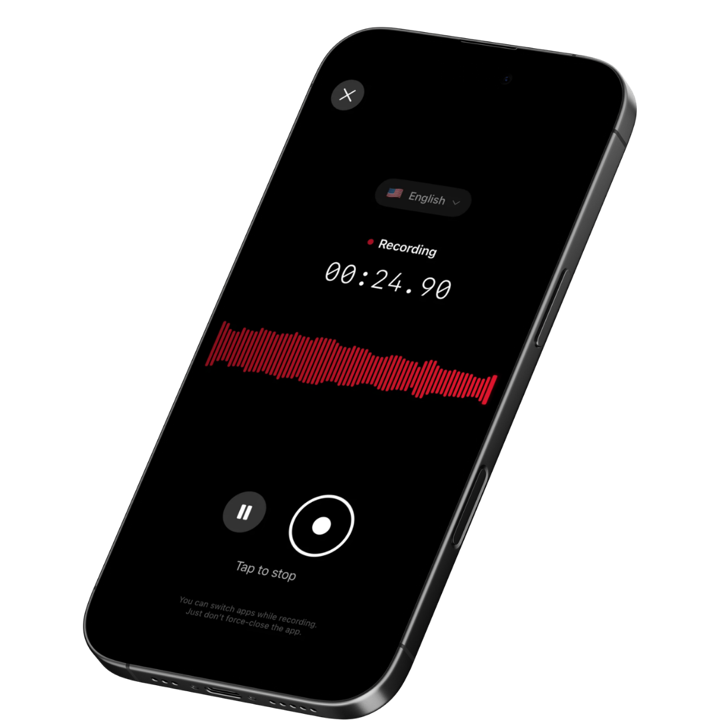
Voice recording captures your best ideas when they happen. Speak your presentation outline aloud, record brainstorming sessions, and capture feedback from practice runs. AI transcription turns spoken thoughts into organized text you can refine into polished slides.
Download SpeakWise from the App Store and prepare sharper presentations with one-tap voice capture, AI transcription, and intelligent summaries that organize your ideas before you ever open a slide deck.
Join 10,000+ professionals who prepare better presentations by capturing their best thinking through voice.
Get SpeakWise Free
4.9-star App Store Rating | iOS Optimized

🎯 4.9★ App Store Rating | 📱 Built for iOS
