Presenteeism Statistics 2026: Costs and Impact


Used by recruiters, executives, consultants, and more.
Presenteeism Statistics 2026: Costs and Impact
Presenteeism costs US businesses up to $150 billion annually - roughly 10 times more than absenteeism. Employees lose an average of 57.5 days of productivity each year to working while sick or impaired. 90% of US workers went to work sick at least once in 2023, and depression-related presenteeism alone costs $33 billion per year. The hidden epidemic of showing up but not performing is far more expensive than staying home.
Presenteeism - the practice of going to work despite illness, injury, or mental health issues that prevent full productivity - is one of the most underrecognized costs in modern business. Unlike absenteeism, which is visible and measurable through missed days, presenteeism hides in plain sight. Workers are at their desks, logged in, and appearing to work. But their output is a fraction of what it should be, and the costs accumulate invisibly across every department.
This post presents 16 statistics that expose the true scale and cost of presenteeism. These numbers come from Harvard Business Review, the Integrated Benefits Institute, CDC research, and workplace health studies.
1. Presenteeism costs US businesses up to $150 billion per year
Presenteeism - workers showing up but performing at reduced capacity - costs US businesses up to $150 billion annually, according to research cited by Harvard Business Review. This figure captures the productivity gap between what employers pay for and what they actually receive from impaired workers. The $150 billion figure is likely conservative. It primarily accounts for physical health conditions and may undercount the impact of mental health issues, which have grown significantly since the estimate was first calculated. As workplace mental health challenges have increased, the true cost of presenteeism has almost certainly grown with them.
Source: HR Grapevine - Presenteeism Costing US Firms $150bn a Year
2. Presenteeism costs 10 times more than absenteeism
Research from EHS Today found that presenteeism costs businesses approximately 10 times more than absenteeism. While absent workers cost employers around $150 billion per year, those who came to work but were not fully productive cost an estimated $1,500 billion per year. The tenfold multiplier exists because presenteeism is far more common than absenteeism and far harder to detect. An absent worker's cost is limited to their missed days. A present but impaired worker costs their salary every day while producing significantly less than expected - and potentially making errors that create additional costs downstream.
Source: EHS Today - Presenteeism Costs Business 10 Times More than Absenteeism
3. Workers lose an average of 57.5 unproductive days per year to presenteeism
Employees are unproductive on the job for an average of 57.5 days each year due to presenteeism - nearly three full working months. By comparison, absenteeism accounts for only four missed workdays per year. The 57.5-day figure reveals the true magnitude of the problem. Nearly a quarter of the working year is spent at reduced capacity. Workers are physically present but cognitively, emotionally, or physically unable to perform at their full level. The cost of those 57.5 unproductive days far exceeds the cost of the four days workers stay home.
Source: Enhesa - The Price of Productivity Loss
4. 90% of US workers went to work sick at least once in 2023
A 2023 survey found that 90% of US workers worked while sick at some point during the year. Additionally, 40% of employees were hesitant to take available sick leave even when they were unwell. The 90% figure demonstrates that working while sick is not a niche behavior - it is the overwhelming norm. American work culture has created conditions where staying home when ill feels riskier than showing up impaired. Fear of falling behind, concern about perception, and limited sick leave policies all push workers to the office when they should be recovering.
Source: Wellity Global - Presenteeism: How Much Is It Costing Your Business?
5. Employees now lose 44 days of productivity annually due to working while sick
Updated research shows that employees lose an average of 44 days of productivity per year specifically because of working while sick. This figure, distinct from the broader 57.5-day presenteeism measure, isolates the impact of illness-related impairment. Forty-four days represents nearly nine full working weeks of reduced output caused by workers who should have been home recovering. The cost to employers is substantial, but the cost to workers is equally significant: working through illness delays recovery, increases the risk of complications, and can spread contagious diseases to colleagues.
Source: Enhesa - The Price of Productivity Loss
6. Poor health costs US employers $575 billion and 1.5 billion lost productivity days
The Integrated Benefits Institute calculated that poor health - encompassing both absenteeism and presenteeism - costs US employers $575 billion and 1.5 billion days of lost productivity annually. Presenteeism accounts for the majority of both the financial and time costs. The $575 billion figure places employee health on par with major operational expenses. For most organizations, health-related productivity loss exceeds the cost of healthcare benefits themselves. Companies are spending to treat illness while simultaneously losing far more to the productivity impact of illness that goes untreated or unacknowledged.
Source: Integrated Benefits Institute - Poor Health Costs US Employers $575 Billion
7. Depression-related presenteeism costs $33 billion annually in the US
US companies spend approximately $33 billion per year on depression-related productivity losses, primarily through presenteeism rather than absenteeism. The cost of depression-related presenteeism significantly exceeds the cost of depression-related absenteeism because depressed workers are more likely to show up than stay home - but their cognitive function, motivation, and output are substantially impaired. Depression affects concentration, decision-making, memory, and interpersonal interactions - all core functions of knowledge work. A depressed worker at their desk may complete tasks at half their normal speed while making twice as many errors, yet their presence makes the problem invisible to managers.
Source: PMC - Presenteeism: A Public Health Hazard
8. In 2015, 58% of European workers reported working while sick
A European-wide survey found that 58% of workers in the EU reported working while sick in the preceding 12 months. The figure demonstrates that presenteeism is not uniquely American - it is a global phenomenon affecting workers across different healthcare systems, labor protections, and cultural norms. The 58% EU rate exists despite stronger worker protections, more generous sick leave policies, and universal healthcare in many European countries. This suggests that presenteeism is driven as much by workplace culture and individual identity as by policy. Even workers with adequate sick leave choose not to use it.
Source: Frontiers in Psychology - Working While Ill Is Not Always Bad
9. Mental health problems cause worse presenteeism than physical health issues
Research published in The Manchester School found that both physical and mental health significantly predict presenteeism, but mental health problems produce worse productivity outcomes. Workers with mental health conditions show greater output reductions, more frequent errors, and longer periods of impaired performance than workers with comparable physical ailments. The finding has major implications for the modern workplace, where mental health challenges have surged. Depression, anxiety, and burnout now affect large portions of the workforce. If these conditions produce worse presenteeism than physical illness, the total cost of mental health-related presenteeism is likely far higher than current estimates suggest.
Source: Wiley - Dysfunctional Presenteeism: Effects of Physical and Mental Health
10. Presenteeism in the UK costs an estimated 103 billion pounds annually
The UK economy loses approximately 103 billion pounds per year to presenteeism, according to employment law research. This figure reflects the scale of reduced productivity across British workplaces and has been described as a crisis by multiple employment organizations. The 103 billion pound figure contextualizes presenteeism as one of the largest drags on the UK economy. It exceeds the budgets of many government departments and represents a significant portion of national productivity loss. British organizations that address presenteeism proactively can capture a meaningful share of this lost value.
Source: The Employment Law Solicitors - Presenteeism: A 100 Billion Crisis
11. Working while sick actually harms productivity and retention long-term
A 2024 study from the University of South Florida found that working while sick does not just reduce immediate productivity - it harms long-term productivity and retention. Workers who frequently engage in presenteeism experience cumulative health deterioration, slower recovery times, and increased likelihood of leaving their job. The study challenges the assumption that "powering through" illness serves the employer's interest. In reality, presenteeism creates a negative feedback loop: workers who do not recover fully get sick again faster, perform at reduced capacity for longer periods, and eventually burn out entirely. The short-term gains of having someone at their desk are overwhelmed by the long-term costs.
Source: USF - New Study Finds Working While Sick Harms Productivity and Retention
12. The average productivity loss from presenteeism is 36.6% per worker
The average productivity loss associated with a day of presenteeism is 36.6%, meaning workers operating while impaired produce roughly one-third less output than they would when healthy. By comparison, the average productivity loss from a planned absence is 22.6%. Presenteeism actually produces a larger per-day productivity gap than absenteeism. A sick worker at their desk contributes 63% of their normal output, while a planned absence allows colleagues and managers to redistribute work and maintain closer to 77% of the absent worker's expected contribution. In many cases, it would be more productive for the organization if the sick worker stayed home.
Source: Inspirus - See How Much You Can Save on Absenteeism Costs
13. 40% of employees are hesitant to take available sick leave
40% of workers report reluctance to use their sick leave even when they are genuinely unwell and the leave is available to them. The hesitancy stems from fear of being perceived as lazy, concern about falling behind on work, worry about burdening colleagues, and anxiety about job security. This statistic reveals that presenteeism is often not a choice workers make freely. It is a response to workplace cultures that subtly or overtly penalize absence. When four in ten workers will not use sick leave they have earned and are entitled to, the problem is organizational culture, not individual behavior.
Source: Wellity Global - Presenteeism: How Much Is It Costing Your Business?
14. Presenteeism reflects structural flaws in how work is designed
Research increasingly frames presenteeism not as a personal choice but as a symptom of deeper structural problems in work design. Organizations that create cultures of fear around absence, provide insufficient sick leave, or design work with no redundancy force workers into presenteeism. The structural analysis matters because it shifts the solution from individual responsibility to organizational redesign. Telling workers to "stay home when sick" while maintaining cultures that punish absence is contradictory. Effective presenteeism reduction requires changing the systems that make showing up sick feel like the rational choice.
Source: Calm Blog - Presenteeism at Work
15. Chronic health conditions drive the highest presenteeism costs per employee
CDC research found that chronic health conditions - including allergies, arthritis, back pain, diabetes, and depression - drive the highest per-employee presenteeism costs. Workers with chronic conditions experience ongoing reduced capacity that accumulates over months and years, not just the occasional sick day. Unlike acute illness, which produces short bursts of presenteeism, chronic conditions create persistent, low-level productivity impairment that is extremely difficult to detect. A worker with chronic back pain may never take a sick day but consistently underperform by 20-30% for years, costing far more than periodic absences would.
Source: CDC - Absenteeism and Employer Costs Associated with Chronic Diseases
16. Organizations unknowingly encourage presenteeism through cultural pressure
Research consistently finds that organizations unknowingly encourage employees to power through illness. Many companies put pressure on employees to show up no matter what, unaware that presenteeism is typically more costly over the long term than absenteeism. The cultural encouragement of presenteeism operates through multiple channels: attendance awards, recognition for never missing a day, subtle disapproval of sick leave users, and managers who model working through illness themselves. Each of these signals tells workers that presence is valued over health - and the $150 billion annual cost is the result.
Source: Uprise Health - Absenteeism vs. Presenteeism
The Hidden Epidemic: Present but Not Productive
These sixteen statistics reveal that presenteeism is the most expensive workplace problem that nobody talks about. At $150 billion per year in the US alone - ten times the cost of absenteeism - it dwarfs most recognized business challenges. Yet few organizations measure it, fewer address it, and many actively encourage it through cultures that reward attendance over output.
The mental health dimension makes the problem even more urgent. Depression-related presenteeism alone costs $33 billion annually, and mental health conditions produce worse productivity outcomes than physical illness. As workplace mental health challenges have surged in recent years, the hidden cost of impaired workers showing up and underperforming has grown proportionally.
The path forward requires a fundamental shift in how organizations think about attendance. Being present is not the same as being productive. A worker who stays home, recovers fully, and returns at 100% capacity contributes more over time than one who shows up at 63% capacity day after day. The data overwhelmingly supports replacing attendance-based cultures with output-based ones that give workers genuine permission to recover when they need to.
Presenteeism costs 10x more than absenteeism. Workers lose 57.5 days per year to reduced productivity while at their desks. The most expensive worker in any organization is not the one who stays home - it is the one who shows up but cannot perform.---
Capture essential information even on low-output days
These 16 statistics show that presenteeism means workers are often operating at reduced capacity. On those days, the cognitive effort required to type detailed meeting notes, write follow-up emails, and organize action items is exactly the kind of focused work that impaired productivity prevents. Important information gets lost not because it was not discussed, but because nobody had the energy to document it.
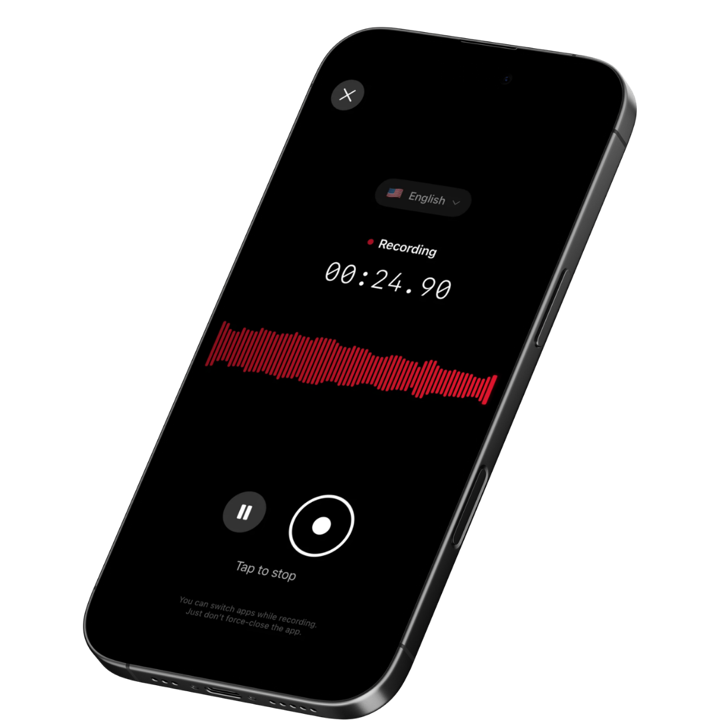
Voice capture requires minimal effort. Tap once. Speak. AI handles the rest. Even on a difficult day, recording a meeting or dictating key takeaways takes seconds and preserves information that would otherwise disappear into the presenteeism gap.
Download Speakwise from the App Store and ensure that critical meeting insights, decisions, and action items are captured automatically - even when you are not at your best.
Join 10,000+ professionals who never lose important information to a low-energy day because voice capture works when typing does not.
Get Speakwise Free
4.9-star App Store Rating | iOS Optimized

🎯 4.9★ App Store Rating | 📱 Built for iOS
