Public Speaking Anxiety Statistics 2026
Used by recruiters, executives, consultants, and more.
Public Speaking Anxiety Statistics 2026
75% of people worldwide experience fear of public speaking. 45% have rejected promotions or avoided job applications because of it. Glossophobia reduces wage potential by 10% and leadership advancement by 15%. Only 8% of people with public speaking fears seek professional help. These 18 statistics reveal how speech anxiety silently shapes careers and costs economies billions.
Public speaking anxiety is the most common social fear on the planet. It affects professionals at every level, from entry-level employees dreading team updates to executives avoiding keynote stages. The impact extends far beyond nervous hands and racing hearts. It shapes career trajectories, limits earning potential, and costs organizations their most capable but quietest talent.
This post covers 18 statistics on public speaking anxiety in 2026. These numbers quantify the prevalence of glossophobia, its measurable career and economic costs, and the demographic patterns that reveal who suffers most.
Key Public Speaking Anxiety Statistics (2026)
- Public speaking anxiety affects an estimated 75% of people worldwide, from mild discomfort to full-blown panic (Teleprompter.com).
- Nationally representative polling still ranks it low against other fears: public speaking anxiety came in #46 out of more than 65 fears (33.7%) in the Chapman University Survey of American Fears 2025 (Chapman University).
- Public speaking anxiety has led 45% of workers to reject a promotion or avoid applying for a job altogether (Novoresume).
- Public speaking anxiety cuts wage potential by 10% and leadership advancement by 15% over the course of a career (Novoresume).
- Roughly 40 million American adults aged 18 or older live with some form of public speaking anxiety (Novoresume).
- Public speaking anxiety is treatable: a 2025 meta-analysis of 26 studies and 2,253 participants found psychological interventions produced a large reduction in symptoms (The Journal of Psychology).
- Despite its career impact, only 8% of people with public speaking anxiety ever seek professional help for it (Crown Counseling).
1. 75% of people worldwide fear public speaking
Public speaking anxiety affects roughly three-quarters of the global population. This makes glossophobia one of the most prevalent fears in existence, consistently ranking above fear of heights, spiders, and even death in surveys. The 75% figure includes all severity levels, from mild discomfort to debilitating panic. Even at the milder end, this anxiety influences how people communicate, contribute, and advance professionally.
Source: Teleprompter.com - Public Speaking Statistics 2025
2. Only 10% of people enjoy public speaking
At the opposite end of the spectrum, only 10% of people genuinely enjoy speaking in public. Another 10% experience extreme, debilitating fear. The remaining 80% fall somewhere between discomfort and dread. This distribution means that in any meeting, presentation, or conference, the vast majority of participants would rather be doing almost anything other than speaking. The few who enjoy it hold a significant competitive advantage.
Source: Teleprompter.com - Public Speaking Statistics 2025
3. 50% of speakers report high anxiety during presentations
When researchers measured anxiety levels during actual presentations, 50% of participants reported high anxiety, 42% reported moderate anxiety, and only 9% reported low anxiety. These are not hypothetical survey responses. They are real-time measurements of people actively presenting. The data confirms that anxiety during public speaking is the norm, not the exception, even among people who present regularly.
Source: PMC - Measuring Public Speaking Anxiety
4. 45% have rejected promotions due to glossophobia
The career cost of public speaking anxiety is severe. Approximately 45% of people have either rejected a promotion or refrained from applying for a job because of their fear of public speaking. This means that nearly half the workforce is self-selecting out of advancement opportunities based on anxiety rather than capability. Organizations lose access to talented people who would excel in senior roles but cannot get past the speaking requirements.
Source: Novoresume - Public Speaking Statistics
5. Fear of public speaking reduces wage potential by 10%
Glossophobia has a measurable impact on earnings. Research shows that fear of public speaking reduces an employee's wage potential by 10%. Over a 30-year career, this wage gap compounds into hundreds of thousands of dollars in lost earnings. The mechanism is straightforward: people who avoid speaking opportunities miss visibility, advocacy, and leadership positions that drive compensation growth.
Source: Novoresume - Public Speaking Statistics
6. Speaking anxiety reduces leadership advancement by 15%
Beyond wages, glossophobia reduces a person's ability to obtain managerial and leadership positions by 15%. Leadership roles inherently require communication, presentation, and public-facing responsibilities. When anxiety prevents qualified individuals from pursuing or accepting these roles, organizations end up promoting for confidence rather than competence. The leadership pipeline suffers as a result.
Source: Novoresume - Public Speaking Statistics
7. 70% of jobs require presentation abilities
Public speaking is not a niche skill reserved for executives and salespeople. Approximately 70% of all jobs require some form of presentation ability. From team updates and client calls to training sessions and stakeholder briefings, speaking is woven into the fabric of modern work. For the 75% of people who fear it, this means that anxiety is present in some form nearly every workday.
Source: Teleprompter.com - Public Speaking Statistics 2025
8. Only 25% of young adults feel confident speaking to an audience
Age plays a significant role in speaking confidence. Only 25% of 16-to-24-year-olds say they feel confident speaking to an audience. By contrast, 69% of adults over 45 report feeling confident. This confidence gap suggests that early-career professionals are disproportionately affected by speaking anxiety at the exact moment when visibility and communication skills are most critical for career trajectory.
Source: Novoresume - Public Speaking Statistics
9. Education level correlates with reduced speaking fear
Education creates a measurable buffer against speaking anxiety. 52% of individuals with a high school education or less fear public speaking, while only 24% of those with a college degree report the same level of fear. This correlation likely reflects exposure rather than innate ability. College environments provide more opportunities to practice presenting, building comfort over time through repeated experience.
Source: Passive Secrets - Fear of Public Speaking Statistics 2026
10. 40 million Americans suffer from public speaking anxiety
In the United States alone, approximately 40 million people aged 18 or older experience some form of anxiety related to public speaking. This figure represents roughly 15% of the adult population experiencing clinical-level anxiety, not just mild nervousness. The scale of this number underscores that glossophobia is not a personality quirk. It is a widespread condition with real consequences for workforce participation and productivity.
Source: Novoresume - Public Speaking Statistics
11. 5-10% of the population has severe glossophobia
While 75% experience some degree of fear, approximately 5 to 10% of the population suffers from severe, debilitating glossophobia. For these individuals, public speaking triggers full panic responses: rapid heartbeat, trembling, nausea, and cognitive shutdown. This severe form can prevent people from participating in meetings, conducting client calls, or even introducing themselves in group settings. It requires professional intervention.
Source: Teleprompter.com - Public Speaking Statistics 2025
12. Only 8% of people with speaking fears seek professional help
Despite its documented impact on careers and earnings, only 8% of individuals with public speaking fears seek professional help. The remaining 92% cope through avoidance, endurance, or self-medication. This treatment gap means that the vast majority of people affected by glossophobia never access interventions that research shows are highly effective. The stigma around admitting fear of speaking keeps most people suffering silently.
Source: Crown Counseling - Fear of Public Speaking Statistics 2026
13. Anxiety disorders cost $42-47 billion per year to treat
The economic burden of anxiety disorders, including glossophobia, is substantial. Research estimates that the cost of treating anxiety disorders and phobias ranges between $42.3 billion and $46.6 billion per year. This figure includes direct treatment costs plus indirect costs such as lost productivity and forgone career advancement. Public speaking anxiety contributes a meaningful share of this total given its prevalence and career impact.
Source: Novoresume - Public Speaking Statistics
14. Combined treatment approaches yield the strongest results
Research confirms that the most effective treatment for public speaking anxiety combines multiple approaches. Cognitive modification, systematic desensitization, and skills training together produce the most substantial positive effects. Each approach alone helps, but the combination addresses both the psychological roots of fear and the practical skill gaps that sustain it. This finding suggests that practice-based interventions are as important as therapeutic ones.
Source: ERIC - Meta-Analysis of Public Speaking Anxiety Treatment Techniques
15. 61% of university students report fear of public speaking
Public speaking anxiety starts early and is pervasive in educational settings. More than 61% of university students report fear of speaking in public. Since university is where many professionals develop the communication skills they will rely on throughout their careers, this high prevalence means that a majority of graduates enter the workforce with unaddressed speaking anxiety that shapes their career decisions.
Source: Springer - Demographic Predictors of Public Speaking Anxiety
16. Glossophobia consistently ranks above the fear of death
In survey after survey, public speaking anxiety ranks above the fear of death. This ranking, often cited as the origin of the observation that "most people would rather be in the coffin than giving the eulogy," reflects how deeply public speaking triggers social evaluation fears. The fear of judgment, embarrassment, and visible failure activates threat responses more intensely than many physical dangers.
Source: MentalHealth.com - Glossophobia: Fear of Public Speaking
17. Public speaking anxiety ranks only #46 out of 65+ national fears
Nationally representative polling tells a more nuanced story than the "world's biggest fear" headlines suggest. The 2025 Chapman University Survey of American Fears, an 11th-annual probability-based survey of 1,015 respondents, found that only 33.7% of Americans reported being afraid or very afraid of public speaking, ranking it 46th out of more than 65 surveyed fears - just behind a devastating hurricane and just ahead of murder by a stranger. The gap between this figure and the widely cited 75% comes down to measurement: general nervousness about speaking versus a forced ranking against dozens of competing anxieties, from corrupt government officials to economic collapse.
Source: Chapman University - Survey of American Fears 2025
18. A 2025 meta-analysis of 26 studies confirms treatment works
A systematic review and meta-analysis published in The Journal of Psychology in February 2025 screened 1,293 articles on public speaking anxiety interventions published between 2000 and mid-2023, ultimately analyzing 26 studies with 2,253 participants that met its inclusion criteria. Across 42 individual interventions - spanning exposure therapy, cognitive modification, combined strategies, and other techniques - psychological interventions produced a large overall effect on public speaking anxiety (Hedges' g = 1.17). The finding reinforces that glossophobia is not a fixed trait; it responds measurably to structured treatment.
Source: The Journal of Psychology - Review and Analysis of Successful PSA Interventions
The Silent Career Tax of Speaking Anxiety
These statistics reveal that public speaking anxiety functions as a hidden tax on careers, organizations, and economies. A 10% wage reduction, a 15% leadership advancement penalty, and 45% of talented people removing themselves from promotions - these are not abstract numbers. They represent real people whose careers are shaped more by anxiety than by ability.
The organizational cost is equally significant. When the most capable but most anxious employees avoid visibility, organizations promote less qualified but more confident candidates. The talent pool for leadership shrinks not because talent is scarce, but because anxiety filters it out. Every meeting where a knowledgeable person stays silent is a missed opportunity for better decisions.
The path forward involves two parallel strategies. First, reducing the stakes of speaking through tools that allow people to contribute without real-time performance pressure. Second, building speaking confidence through practice in lower-pressure environments. Both strategies require organizations to recognize that speaking anxiety is not a personal weakness. It is a systemic barrier to talent utilization.
75% of the population fears public speaking, and the career consequences compound over decades. Organizations that help their people communicate more confidently gain access to talent their competitors never see.---
Share your voice without the pressure of the room
Public speaking anxiety often peaks in real-time, high-pressure situations: all-hands meetings, client presentations, and group discussions where every word feels permanent. But the ideas that matter most often come to people outside those high-pressure moments - during preparation, reflection, or casual conversation.
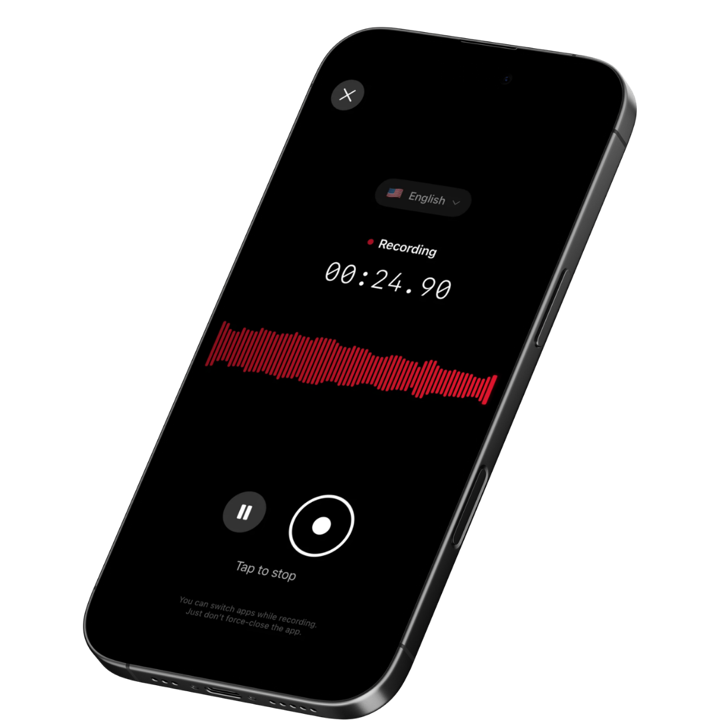
Voice recording lets you capture thoughts, ideas, and contributions on your own terms. Record when you are ready. Let AI transcription turn your spoken words into clear, structured content. Share the summary instead of presenting under pressure.
Download SpeakWise from the App Store and share your best thinking through one-tap voice recording, AI transcription in 100+ languages, and instant summaries that communicate clearly without the stage fright.
Join 10,000+ professionals who have found a way to contribute their ideas without the anxiety of speaking in the moment.
Get SpeakWise Free
4.9-star App Store Rating | iOS Optimized

🎯 4.9★ App Store Rating | 📱 Built for iOS
