Quiet Quitting Statistics 2026: Trends
Used by recruiters, executives, consultants, and more.
Quiet Quitting Statistics 2026: Trends
At least 52% of US workers qualify as quiet quitters, according to Gallup. Employee disengagement costs the global economy $10 trillion per year. 47% of Gen Z employees say they are "coasting" through work. Only 20% of employees worldwide are engaged, and the trend is evolving into new forms like "quiet cracking" and "revenge quitting." The disengagement crisis is deepening, not fading.
Quiet quitting - doing the minimum required rather than going above and beyond - became a cultural phenomenon in 2022. Four years later, the data shows it was not a trend but a permanent shift in how workers relate to their jobs. The underlying causes - burnout, broken trust, poor management, and lack of purpose - have not been resolved. They have intensified, spawning new variants of disengagement that signal an even deeper fracture between employers and employees.
This post presents 20 statistics that quantify the scope, cost, and evolution of quiet quitting and workplace disengagement. These numbers come from Gallup, TalentLMS, Monster, and major workforce research to show where engagement stands today and where it is heading.
Key Quiet Quitting Statistics (2026)
- Quiet quitting affects at least 52% of US workers, who meet their job requirements but do not go beyond them (Gallup).
- Global employee engagement has fallen to just 20%, its lowest level since 2020 (Gallup).
- Workplace disengagement now costs the global economy $10 trillion a year, or roughly 9% of world GDP (Gallup).
- 47% of Gen Z employees admit they are "coasting" through work rather than fully engaging (CNBC|SurveyMonkey Workforce Survey).
- Manager engagement has collapsed from 31% to just 22% since 2022, a key driver of the broader disengagement slide (Gallup).
- 47% of US workers say they have already "revenge quit" a job without notice (Monster).
- Disengaged and not-engaged workers cost the US economy an estimated $2 trillion a year in lost productivity (Gallup).
1. At least 52% of US workers are quiet quitters
Gallup's research found that 52% of US workers can be classified as quiet quitters - employees who meet their job requirements but do not go beyond them. They arrive on time, complete assigned tasks, and leave at the end of their shift. They do not volunteer for extra projects, mentor colleagues, or invest emotional energy in their organization's success. The 52% figure transforms quiet quitting from an online meme into a majority behavior. When more than half the workforce is doing the bare minimum, the cumulative impact on innovation, collaboration, and organizational adaptability is enormous. These workers are not failing - they are withdrawing.
Source: Gallup - State of the Global Workplace 2026: Regional Data
2. Only 20% of employees worldwide are engaged at work
Gallup's State of the Global Workplace 2026 report found that just 20% of employees globally were engaged in their work in 2025 - the lowest level since 2020. The remaining 80% are either not engaged (64%) or actively disengaged (16%). This means that for every engaged worker, there are four who are either going through the motions or actively working against their employer's interests. The 20% engagement rate represents a global productivity crisis. Organizations are paying full salaries for workforces where only one in five employees brings genuine energy and commitment to their role. The other four are physically present but emotionally and intellectually checked out.
Source: Gallup - Global Indicator: Employee Engagement
3. Employee disengagement costs the global economy $10 trillion per year
Gallup estimates that quiet quitting and employee disengagement cost the global economy approximately $10 trillion per year in lost productivity. This figure represents roughly 9% of global GDP. The $10 trillion cost makes disengagement one of the largest economic drains in the world - exceeding the GDP of every country except the United States and China. The scale of the number can obscure its meaning, so consider it at the organizational level: disengaged employees cost their company between 18% and 33% of their annual salary in lost productivity.
Source: Gallup - State of the Global Workplace 2026
4. 47% of Gen Z employees say they are "coasting" through work
Nearly half of Gen Z workers (47%) admit they are "coasting" at work - doing enough to keep their jobs but not investing significant effort or engagement. The generational dimension is crucial because Gen Z represents the future workforce. If nearly half are already disengaged in their first years of employment, the trajectory for organizational engagement and productivity is deeply concerning. The coasting behavior among Gen Z reflects early career disillusionment, poor onboarding experiences, lack of mentorship, and misalignment between expectations and reality. These workers entered the workforce during unprecedented disruption and many never developed the workplace attachments that drive discretionary effort.
Source: CNBC|SurveyMonkey Workforce Survey, April 2024
5. 54% of employees report feeling unhappy at work
According to a 2025 TalentLMS report, 54% of employees report feeling unhappy at work, with the frequency ranging from occasionally to constantly. The unhappiness finding provides context for quiet quitting: workers are not choosing to disengage from a place of contentment. They are withdrawing because they are genuinely unhappy. The 54% unhappiness rate exceeds the 52% quiet quitting rate, suggesting that even some workers who have not yet begun "quiet quitting" are unhappy enough to be at risk. Unhappiness is the precursor to disengagement, and the pipeline is full.
Source: Fortune - Quiet Cracking: Half of Workers at Breaking Point
6. "Quiet cracking" costs companies $438 billion in productivity losses
A 2025 report identified "quiet cracking" - a persistent state of workplace unhappiness that leads to disengagement, poor performance, and an increased desire to quit - as costing companies $438 billion in productivity losses. Unlike quiet quitting, which involves a conscious decision to limit effort, quiet cracking describes a more insidious process where unhappiness gradually corrodes performance without the worker making any deliberate choice. The $438 billion cost represents the productivity lost when workers are not actively disengaging but are slowly deteriorating under the weight of dissatisfaction, broken promises, and unaddressed frustration.
Source: Fortune - Quiet Cracking: Half of Workers at Breaking Point
7. In the US, 52% of workers are not engaged and 17% are actively disengaged
US-specific Gallup data shows that 52% of American workers are not engaged - the quiet quitting majority - while 17% are actively disengaged, meaning they are unhappy and actively undermining their organization. Only 31% of US workers are fully engaged. The 17% actively disengaged figure is particularly alarming. These workers are not just withdrawing effort - they are working against their employer's interests through negativity, complaints, and behaviors that damage team morale and culture. One actively disengaged worker can neutralize the engagement of multiple engaged colleagues.
Source: Gallup - State of the Global Workplace 2026: Regional Data
8. Disengaged employees have 37% higher absenteeism and 18% lower productivity
Research shows that disengaged employees exhibit 37% higher absenteeism, 18% lower productivity, and 15% lower profitability compared to their engaged peers. These metrics translate directly to the bottom line. Conversely, companies with highly engaged workforces experience 21% higher profitability and 59% less voluntary turnover. The performance gap between engaged and disengaged workers is wide and well-documented. A team with five disengaged workers effectively operates with less than four productive employees while paying for five.
Source: ContactMonkey - Calculating the Cost of Employee Disengagement
9. Half of employees have spent periods meeting only minimum job requirements
According to the 2025 State of Internal Communications report, 50% of employees say they have spent periods where they only met minimum job requirements - the defining behavior of quiet quitting. The word "periods" is important here. Many workers do not quiet quit permanently. They cycle in and out of disengagement based on workload, management quality, personal circumstances, and organizational decisions. A pay freeze, a promotion denial, or a poorly handled organizational change can trigger a quiet quitting period that may last weeks, months, or indefinitely.
Source: People Insight - Is Quiet Quitting Still an HR Issue in 2026?
10. "Revenge quitting" has emerged as a visible 2026 workplace trend
In 2026, "revenge quitting" - leaving a job specifically out of resentment, broken trust, or accumulated frustration - has emerged as a significant workplace trend. Unlike quiet quitting, which involves staying and withdrawing, revenge quitting is an active, often dramatic departure that signals to employers and colleagues that something went fundamentally wrong. The evolution from quiet quitting to revenge quitting represents an escalation. Workers who spent years silently disengaging are now leaving - and they are not leaving quietly. The trend is driven by workers who feel they gave their employer chances to address their concerns, were ignored, and finally decided to act.
Source: V7 Recruitment - Revenge Quitting 2026
11. Disengaged employees cost 18-33% of their annual salary in lost productivity
Research calculates that disengaged employees cost their organizations between 18% and 33% of their annual salary through reduced output, higher error rates, increased absenteeism, and the management time required to compensate for their disengagement. For a worker earning $60,000, that translates to $10,800-$19,800 in lost value per year. When half the workforce is disengaged, the math becomes devastating. A 100-person company with a $60,000 average salary and 50% disengagement is losing between $540,000 and $990,000 annually in productivity - before accounting for the cultural damage disengaged workers inflict on their engaged colleagues.
Source: Hubstaff - Understanding the Cost of Employee Disengagement
12. Companies with engaged workforces see up to 51% less turnover
Gallup's Q12 Meta-Analysis (11th edition) found that top-quartile engagement business units have 51% lower turnover than bottom-quartile units in low-turnover organizations, and 21% lower turnover in high-turnover organizations. This is one of the most dramatic effects of engagement on any business metric. Turnover is extremely expensive - typically 50-200% of annual salary per departing employee when accounting for all direct and indirect costs. The turnover reduction from engagement represents potentially millions of dollars in savings for large organizations. Companies that treat engagement as a strategic priority retain their best people, maintain institutional knowledge, and avoid the constant drain of recruitment and onboarding cycles.
Source: Gallup - Q12 Meta-Analysis: 11th Edition
13. US employee disengagement costs approximately $2 trillion in lost productivity
Within the United States specifically, employees who are not engaged or actively disengaged cost the economy approximately $2 trillion in lost productivity annually, according to Gallup. This figure represents a meaningful share of the global $10 trillion disengagement cost and reflects the scale of a workforce where only 31% of workers are fully engaged. The $2 trillion is roughly equivalent to the GDP of Canada. It represents output that American companies are paying for but never receiving. Every dollar of that $2 trillion is being spent on salaries for workers who are present but not producing at their potential.
Source: Gallup - Employee Engagement Remains Flat as AI Adoption Accelerates
14. Younger generations show the steepest decline in discretionary effort
Research from Frontiers in Behavioral Economics found that hours worked - including overtime - declined across three of four generational cohorts, with the steepest declines among Gen Z and Millennials. The younger the generation, the more pronounced the pullback from discretionary effort. This generational gradient matters for workforce planning. As Boomers and older Gen X workers retire, they are being replaced by generations that are less willing to work beyond minimum requirements. If the engagement strategies that worked for previous generations do not resonate with younger workers, the quiet quitting trend will accelerate.
Source: Frontiers - Does the Tendency for "Quiet Quitting" Differ Across Generations?
15. Engaged companies see 23% higher profitability and 18% higher productivity
Gallup's Q12 Meta-Analysis of 183,806 business units across 347 organizations found that top-quartile engaged companies achieve 23% higher profitability and 18% higher productivity (sales) than bottom-quartile companies. These are not marginal differences - they represent the gap between thriving organizations and struggling ones. The profitability and productivity premium from engagement provides the clearest possible business case for investing in solutions to quiet quitting. Organizations do not need to convince every disengaged worker to become a star performer. Even modest improvements in the engagement of the disengaged majority would produce significant financial returns.
Source: Gallup - Q12 Meta-Analysis: 11th Edition
16. The engagement crisis is evolving, not resolving
The shift from quiet quitting to quiet cracking to revenge quitting reveals a disengagement crisis that is evolving into more acute forms. Workers who once silently withdrew are now developing persistent unhappiness that erodes performance (quiet cracking) or taking dramatic action by leaving (revenge quitting). The evolution suggests that the root causes of disengagement have not been addressed. Organizations that responded to quiet quitting with surveillance, return-to-office mandates, or motivational campaigns missed the point. Workers are not disengaging because they are lazy. They are disengaging because their needs for meaning, fairness, growth, and genuine connection are not being met.
Source: CNBC - Quiet Cracking: Workers Are Quiet Cracking
17. 47% of US workers say they have already "revenge quit" a job
A November 2025 Monster survey of more than 3,600 US employees found that 47% say they have abruptly quit a job without notice, as a protest against unsatisfactory treatment or a toxic work environment. The finding turns "revenge quitting" from an anecdotal 2026 workplace trend into a documented, near-majority behavior: nearly half the workforce has already walked out this way at least once. More than half of workers (57%) say they have witnessed a co-worker do the same, and 87% believe revenge quitting is justified when workplace conditions are poor. The number puts a hard figure behind the qualitative shift described above - workers who spent years quietly disengaging are increasingly choosing to leave loudly instead.
Source: Monster - Nearly Half of U.S. Workers Admit to "Revenge Quitting" Their Jobs
18. Manager engagement has fallen from 31% to 22% since 2022
Gallup's State of the Global Workplace 2026 report identifies a collapse in manager engagement as a primary driver of the broader disengagement slide: engagement among managers worldwide dropped nine points, from 31% in 2022 to 22% in 2025. Because managers set the tone for their teams, a disengaged manager tends to produce a disengaged team. The finding reframes quiet quitting less as a worker-motivation problem and more as a management-capacity problem: organizations that lost engaged managers over the past three years are now seeing that loss show up in their broader workforce numbers.
Source: Gallup - State of the Global Workplace 2026
19. The US workforce has 8 million fewer engaged employees than in 2020
Gallup's July 2026 employee engagement update found that US engagement has remained flat at 31% through the first half of 2026, unchanged from 2025, after peaking at 36% in 2020. Applied across the US workforce, that decline means there are 8 million fewer engaged employees today than there were in 2020. The plateau at 31% - after several straight years of decline before it - suggests organizations have stopped the bleeding but have not reversed it. Whatever caused millions of workers to disengage since 2020 has not been undone.
Source: Gallup - Employee Engagement Remains Flat as AI Adoption Accelerates
20. Employees whose managers support AI use are 18 points more engaged
The same Gallup update found that AI adoption is starting to reshape the engagement picture: employees who say their manager actively supports their team's use of AI have an engagement rate of 48%, compared with 30% among employees who do not say this - an 18-point gap. When employees are in AI-adopting organizations and have frequent AI use, a clear integration plan, and active manager support all at once, engagement rises to 53%. The finding matters for the quiet quitting conversation because it locates the lever inside management behavior, not the technology itself: AI alone does not fix disengagement, but visible managerial support for how it is used correlates with meaningfully higher engagement.
Source: Gallup - Employee Engagement Remains Flat as AI Adoption Accelerates
The Great Withdrawal: Why Workers Stopped Caring
These twenty statistics paint a picture of a global workforce in retreat. More than half of US workers are quiet quitting. Only one in five is fully engaged. The economic cost exceeds $10 trillion annually. And the problem is getting worse, not better, as quiet quitting evolves into quiet cracking and revenge quitting - with 47% of US workers now saying they have already revenge quit a job. What began as a social media conversation has become the defining workforce challenge of the decade.
The generational dimension adds urgency. When 47% of Gen Z workers admit to coasting and younger generations show the steepest declines in discretionary effort, organizations face a structural problem that will compound as the workforce turns over. The workers who will staff organizations for the next three decades are already disengaged. Without fundamental changes in how work is designed, managed, and experienced, the quiet quitting numbers will only grow.
The data also points toward solutions. Companies with engaged workforces see 23% higher profitability, up to 51% less turnover, and 18% higher productivity. Engagement is not an abstract concept - it is a measurable condition with measurable financial consequences. The organizations that thrive in the coming decade will be those that treat disengagement as a strategic threat and invest in the meaning, autonomy, and connection that drive genuine engagement.
52% of workers are quiet quitting. It costs $10 trillion globally. The solution is not surveillance or motivation - it is building workplaces where people genuinely want to contribute.---
Re-engage your team through better meeting outcomes
These 20 statistics show that disengagement often starts when workers feel their contributions do not matter. Meetings where nothing gets captured, decisions that get forgotten, and action items that disappear into the void all send the same message: your input was not important enough to record.
When every meeting produces a clear, actionable record, workers see that their contributions have impact. AI-captured notes, action items, and summaries create accountability and follow-through that makes people feel their participation matters.
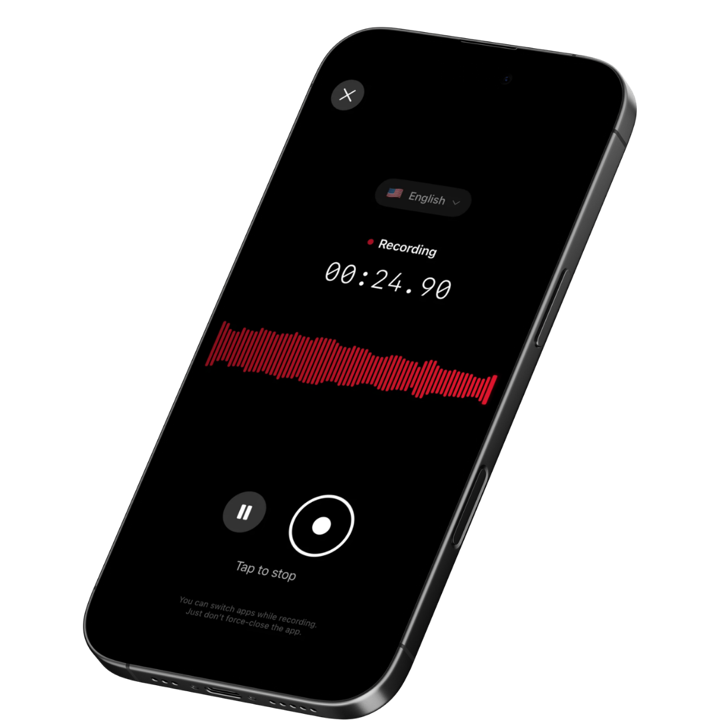
Download Speakwise from the App Store and transform every meeting into a clear record of decisions, action items, and accountability with AI-powered voice capture and automatic Notion sync.
Join 10,000+ professionals who fight disengagement by making every conversation count.
Get Speakwise Free
4.9-star App Store Rating | iOS Optimized

🎯 4.9★ App Store Rating | 📱 Built for iOS
