Remote Onboarding Statistics 2026
Used by recruiters, executives, consultants, and more.
Remote Onboarding Statistics 2026
74% of employees say their remote onboarding was a failure, while 60% of remote hires feel disoriented during the process. Organizations with strong onboarding see 82% better retention and 70% higher productivity from new hires. Yet 64% of employees never received preboarding, and 20% of new hires leave within 90 days. These 16 statistics reveal why remote onboarding remains one of the most overlooked drivers of early turnover and disengagement.
Remote onboarding has shifted from a pandemic workaround to a permanent business function. With 52% of the global workforce now working remotely or in hybrid arrangements, getting new hires up to speed without a shared office is a challenge every organization faces. The stakes are high. A bad first 90 days costs companies thousands in turnover and lost productivity.
This post covers 16 statistics on remote onboarding outcomes, costs, retention, and emerging best practices. Whether you manage a distributed team, lead HR for a growing company, or recently started a remote role yourself, these numbers provide the evidence base for building onboarding that actually works.
1. 74% of employees say their remote onboarding was a failure
A Paychex survey found that 74% of employees declared their remote onboarding process a failure. This number stands in stark contrast to companies' own assessments of their programs. The disconnect often stems from information overload in the first week combined with zero social integration. New hires receive logins, documents, and video links but miss the informal hallway conversations that build belonging. When nearly three in four employees rate the experience as a failure, remote onboarding is not a logistics problem. It is a design problem.
Source: Paychex - Remote Onboarding Survey
2. 60% of remote hires feel disoriented during onboarding
Research shows that 60% of remote hires report feeling disoriented after their onboarding experience. The lack of physical cues makes it harder for new employees to understand team dynamics, company culture, and unwritten norms. In an office, a new hire can observe how colleagues interact, when people take breaks, and who to ask for help. Remote employees must figure all of this out through scheduled calls and chat messages. This disorientation often extends well beyond the first week, affecting confidence and early performance.
Source: AIHR - Employee Onboarding Statistics 2026
3. Organizations with strong onboarding see 82% better new hire retention
According to research by the Brandon Hall Group, organizations with a strong onboarding process improve new hire retention by 82% and productivity by over 70%. The difference between strong and weak onboarding is not budget. It is structure. Strong programs assign mentors, set clear 30-60-90-day goals, and create touchpoints beyond the first week. They treat onboarding as a months-long integration rather than a one-day orientation. For remote teams, this structure matters even more because there are fewer organic opportunities to course-correct.
Source: Enboarder - Employee Onboarding Statistics 2026
4. 20% of new hire turnover happens within the first 45 days
Poor onboarding leads to 20% of turnover occurring within the first 45 days of employment. More broadly, 20.5% of HR leaders report that up to half of their new hires leave within the first 90 days, and 60.8% say this 90-day turnover has increased in the past year. The top reason for early departure is misalignment between job expectations and reality, cited by 30.3% of new hires. A lack of connection with team or company culture follows at 19.5%. Both problems are amplified in remote settings where expectations are harder to set and culture is harder to transmit.
Source: HiBob - Onboarding Statistics 2026
5. 63% of remote employees feel undertrained compared to 52% of in-office peers
Remote employees report feeling undertrained at a rate of 63%, compared to 52% for in-person employees. This 11-point gap highlights a structural weakness in how companies deliver training remotely. Video recordings and document libraries do not replace hands-on coaching. Remote new hires often hesitate to ask questions because they do not want to seem incompetent over chat or video. The result is a training gap that compounds over time, leading to slower ramp-up and lower confidence in the first six months.
Source: FirstHR - Onboarding Statistics 2025-2026
6. 86% of new hires decide how long they will stay within the first six months
Research shows that 86% of new employees decide whether to stay long-term at a company within their first six months. This window is when onboarding either builds loyalty or plants the seeds of disengagement. For remote hires, the decision often comes even faster because isolation accelerates dissatisfaction. Companies that invest in structured check-ins, social connections, and clear career pathways during this critical window retain significantly more talent than those that treat onboarding as a first-week event.
Source: Click Boarding - Onboarding Statistics
7. 64% of employees never received any preboarding
Research reveals that 64% of employees did not receive preboarding before their first day. Another 40% did not even get the minimum required to start their new role, such as equipment, login credentials, or a schedule. Preboarding fills the gap between accepting an offer and Day One. It reduces first-day anxiety and signals that the company is organized and invested. For remote employees who cannot walk into an office and ask for help, missing preboarding creates an immediate sense of being forgotten.
Source: Deel - Employee Onboarding Statistics 2025
8. Buddy programs boost new hire retention by 52%
Onboarding buddy programs can increase retention by 52% and reduce time-to-productivity by 60%. Microsoft's own research on buddy systems found that 87% of companies see productivity increases from assigned mentors. A buddy provides something that no document or video can: a real person who answers the questions a new hire feels too awkward to ask their manager. In remote settings, buddies serve as cultural translators, helping new hires decode communication norms, meeting expectations, and team dynamics.
Source: Qooper - Onboarding Buddy Program Metrics
9. 39% of remote employees say their company did not configure technology properly
Up to 39% of remote employees report that their organization did not properly configure technology when they started. Missing software, wrong permissions, and delayed hardware shipments are among the most common complaints. Each day a new hire spends troubleshooting their setup is a day they are not learning their role. For remote workers, technology is the workplace itself. When it does not work, nothing works. Companies that ship pre-configured equipment and provide IT support on Day One avoid this entirely preventable frustration.
Source: Yomly - Employee Onboarding Statistics 2026
10. Hybrid onboarding shows the highest satisfaction at 75%
Hybrid onboarding outperforms both fully remote and fully in-person formats. Research shows 75% satisfaction for hybrid onboarding, compared to 73% for in-person and 71% for remote-only. The blended approach lets new hires experience the office culture and meet colleagues face-to-face during critical early days while maintaining the flexibility of remote work. This suggests that even one or two in-person days during the first week can meaningfully improve the onboarding experience for remote employees.
Source: AIHR - Employee Onboarding Statistics 2026
11. Virtual onboarding programs grew 87% from 2023 to 2025
The adoption of virtual onboarding programs surged by 87% between 2023 and 2025. This growth reflects both the expansion of remote work and a growing recognition that onboarding needs its own dedicated tooling. Companies are investing in onboarding platforms, virtual tour software, and automated workflow systems. The global onboarding software market is projected to reach $4.36 billion by 2029, growing at 19.7% annually. The shift from ad hoc video calls to structured virtual programs marks a maturation of remote onboarding practices.
Source: BuildEmpire - Onboarding Statistics 2026
12. The average cost of onboarding a new employee is $4,100
SHRM estimates the average cost of onboarding a new employee at approximately $4,100. This includes administrative setup, training hours, manager time, and technology provisioning. While this seems significant, it pales next to the cost of replacing an employee who leaves early, estimated at 21% of their annual salary. For a $60,000 role, that is $12,600 in replacement costs. Investing in better onboarding is one of the highest-ROI decisions an organization can make, especially for remote roles where early turnover rates tend to be higher.
Source: Whatfix - Cost of Onboarding New Employees 2026
13. 36% of remote workers found the onboarding process confusing
Research shows that 36% of remote workers found their onboarding process confusing, compared to 32% of on-site employees. The confusion is not about complexity. It is about scattered information. Remote new hires receive instructions across email, Slack, shared drives, and video calls with no single source of truth. When orientation materials live in five different places and nobody tells you which one to check first, confusion is the natural outcome. Centralizing onboarding content in one accessible location is a simple fix that most companies still have not implemented.
Source: AIHR - Employee Onboarding Statistics 2026
14. 54% more productive new hires result from effective remote onboarding
Remote employees who receive effective onboarding are 54% more productive in their first six months compared to those with poor onboarding. Productivity is the clearest measure of onboarding success, and this gap is enormous. Effective onboarding gives new hires clarity about their role, access to the right people, and structured milestones. It turns the ambiguity of a new remote job into a clear path forward. Over six months, a 54% productivity difference represents thousands of dollars in output per employee.
Source: Newployee - Employee Onboarding Statistics 2025
15. 37.4% of HR professionals say remote onboarding is their top challenge
When asked about their biggest difficulty filling roles, 37.4% of HR professionals cite remote onboarding as the top challenge. This ranks above sourcing candidates, negotiating offers, and managing compliance. The admission is revealing: even the people responsible for onboarding acknowledge it is broken. The challenge is not awareness. It is execution. Remote onboarding requires different skills, different tools, and a different mindset than in-person orientation. Most HR teams are still adapting their approach.
Source: Thirst - Employee Onboarding Statistics 2025
16. 20% of new hires say their company does nothing to help them find peer support
One in five new hires reports that their company takes no steps to help them find support among coworkers. For remote employees, this is especially damaging. Without an office environment where relationships form naturally, structured introductions and social activities are the only way new hires build connections. Peer support is not a nice-to-have. It directly affects engagement, retention, and time-to-productivity. Companies that leave social integration to chance are gambling with their most vulnerable employees.
Source: Deel - Employee Onboarding Statistics 2025
The Remote Onboarding Gap: High Stakes, Low Execution
These statistics paint a consistent picture. Remote onboarding is failing most employees, and companies know it. When 74% of remote hires call their onboarding a failure and 60% feel disoriented, the problem is systemic. The tools exist. The knowledge exists. What is missing is the commitment to treat onboarding as a strategic function rather than an administrative checkbox.
The financial case is clear. Organizations with strong onboarding see 82% better retention, while poor onboarding drives 20% of turnover in the first 45 days. The average cost of replacing an employee far exceeds the cost of proper onboarding. Buddy programs alone boost retention by 52%. These are not marginal improvements. They are transformational.
The trajectory points toward hybrid onboarding models, dedicated software platforms, and structured programs that extend well beyond the first week. Companies that treat the first six months as a continuous integration process will retain more talent and get new hires productive faster. Those that rely on a few video calls and a shared document folder will continue losing people they just spent thousands of dollars to hire.
Remote onboarding is not a logistics challenge to be managed. It is a retention strategy to be designed.---
Capture every onboarding conversation without losing a detail
The statistics are clear: remote new hires feel disoriented, undertrained, and disconnected. Every onboarding call, training session, and team introduction contains critical information that new employees need to retain. But taking notes during video calls splits attention between listening and writing. Important details slip through the cracks, and new hires are left piecing together fragments from memory.
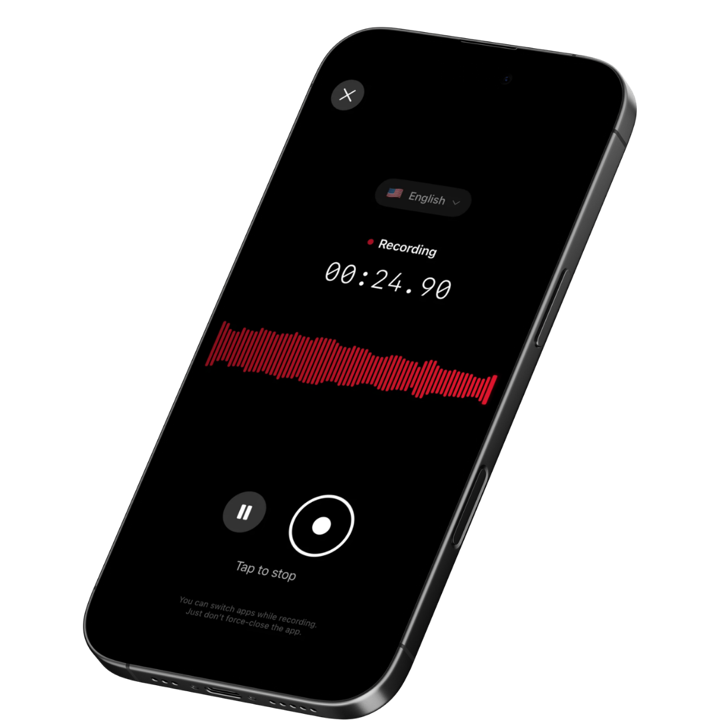
Voice capture solves this without adding complexity. Record onboarding sessions with one tap, get AI-generated summaries and accurate transcripts, and revisit key information anytime. New hires can focus on being present in conversations instead of frantically typing notes. With transcripts syncing directly to Notion, every training session becomes a searchable reference that accelerates learning.
Download Speakwise from the App Store and turn every onboarding conversation into an organized, searchable record that helps new hires ramp up faster.
Join 10,000+ professionals who use voice capture to retain more from meetings, training sessions, and important conversations.
Get Speakwise Free
4.9-star App Store Rating | iOS Optimized

🎯 4.9★ App Store Rating | 📱 Built for iOS
