Remote Team Management Statistics 2026
Used by recruiters, executives, consultants, and more.
Remote Team Management Statistics 2026
78% of managers say their remote teams are outperforming expectations, and 84% of employees report feeling more productive when working remotely. Yet manager engagement has fallen to just 27%, and the average span of control has grown to 12.1 direct reports per manager. With 75% of companies now using hybrid models, these 16 statistics reveal the paradox of remote team management: results are strong, but the people driving them are stretched thin.
Remote work has moved past the debate stage. Over half the global workforce now works remotely or in hybrid arrangements. The question is no longer whether remote teams can be productive. It is whether managers can sustain the performance without burning out. The data suggests a growing gap between team outcomes and manager wellbeing.
This post covers 16 statistics on remote team management performance, hybrid work models, manager challenges, and employee preferences. Whether you lead a distributed team, design management training, or set remote work policy, these numbers provide the evidence base for decisions that affect millions of workers.
1. 78% of managers say remote teams are outperforming expectations
A striking 78% of managers report that their remote teams are not just keeping up but actively outperforming expectations. This finding challenges the narrative that remote work hurts productivity. The outperformance likely reflects a combination of factors: fewer office distractions, eliminated commute time, and the self-selection of high performers into remote roles. For managers, this data validates the remote model. The challenge is sustaining this performance without the in-person management techniques they trained on.
Source: Achievers - Remote Work Statistics 2026
2. 84% of employees feel more productive working remotely or hybrid
Survey data shows that 84% of employees report feeling more productive when working remotely or in a hybrid model compared to fully on-site. A separate study found that 83% of workers share this sentiment. The consistency across surveys reinforces the finding. Employee-perceived productivity matters because it correlates with engagement and satisfaction. People who feel effective in their work environment stay longer, contribute more discretionary effort, and report higher job satisfaction. Dismissing self-reported productivity as bias ignores its relationship to retention.
Source: Vena Solutions - Remote Work Statistics 2026
3. 52% of the global workforce now works remotely or hybrid
Remote work reached 52% of the global workforce in 2026, nearly doubling from pre-pandemic levels. Of these, roughly 52% work in hybrid arrangements and 26% work fully remote. This is not a niche trend. It is the majority configuration for knowledge work. Companies that have not developed remote management capabilities are now managing most of their workforce with outdated practices. The scale of this shift demands that remote team management become a core competency, not an exception.
Source: Yomly - Remote Work Statistics 2026
4. 75% of companies use a hybrid model, most following the 3-2 pattern
About 75% of companies now use a hybrid work approach. The most common configuration is the "3-2" model: three days in the office and two days remote. This pattern creates a predictable "collaborative core" during the week while preserving flexibility. For managers, the 3-2 model introduces a coordination challenge. They must design workflows that leverage in-person days for collaboration and protect remote days for focused individual work. Managers who treat every day the same waste the structural advantages of hybrid.
Source: Gini Talent - Remote Work Trends 2026
5. Manager engagement fell from 30% to 27% in 2024
Gallup found that manager engagement dropped from 30% to 27% in 2024. Young managers and female managers experienced the largest declines. This matters because managers account for 70% of the variation in team engagement. When managers disengage, their teams follow. The drop is particularly concerning in the context of remote work, where managers carry additional responsibilities: maintaining culture, ensuring communication, and supporting wellbeing across distributed teams. Remote management requires more emotional labor, not less.
Source: Gallup - State of the Global Workplace 2025
6. Average span of control grew to 12.1 direct reports per manager in 2025
The average number of direct reports per manager increased from 10.9 in 2024 to 12.1 in 2025, a significant jump in just one year. This continues a longer trend. The average has grown 50% since 2013. More dramatically, supervisors' span of control in small and medium-sized businesses doubled from three to six direct reports between 2019 and 2025. Larger teams mean less time per person. For remote managers, who already lack the informal observation that happens in offices, wider spans make it nearly impossible to provide adequate support and coaching.
Source: Gallup / Bureau of Labor Statistics - Span of Control Data 2025
7. 88% of leaders managing remote teams have no plans to mandate full office returns
In 2025, 88% of leaders managing hybrid or remote teams say they have no plans to mandate full office returns. Around 90% plan to maintain or expand remote work options. This signals that remote team management is not a transitional phase. It is the permanent reality for most organizations. Leaders who accept this are investing in remote management training, asynchronous communication tools, and distributed team structures. Those still hoping for a return to 2019 are falling behind.
Source: Achievers - Remote Work Statistics 2026
8. 98% of professionals want to work remotely at least part-time
Survey data shows that 98% of professionals want to work remotely at least some of the time for the rest of their careers. Additionally, 55% of employees want to work remotely at least three days per week. This near-universal preference means that companies mandating full-time office work are fishing from a shrinking talent pool. For managers, the implication is clear: learning to lead remote teams is not optional. It is a prerequisite for attracting and retaining talent in nearly every professional field.
Source: Remote Coworker - Remote Work Statistics 2026
9. Remote employees are 33% more likely to recommend their managers
Remote employees are 33% more likely than average to recommend their managers. This counterintuitive finding suggests that remote management, when done well, creates stronger manager-employee relationships. The likely explanation is intentionality. Remote managers must schedule check-ins, provide clear direction, and communicate expectations explicitly. This deliberate approach often produces better management than the ad hoc style common in offices, where proximity substitutes for genuine connection.
Source: Pumble - Remote Work Statistics 2026
10. Companies requiring five-day office attendance expected to rise to 30% by 2026
By 2026, companies requiring full five-day office attendance are expected to rise to 30%, and nearly half plan to require four or more days in the office. This return-to-office trend creates a split in the market. Companies mandating full-time office presence will compete for talent against companies offering flexibility. For managers caught between executive mandates and employee preferences, this creates a difficult position. The data suggests that mandates increase turnover among top performers who have the most options.
Source: Founder Reports - Return-to-Office Statistics 2026
11. Managers are most effective when individual contributor work stays below 40%
Gallup research shows that managers are most effective when they spend no more than 40% of their time on individual contributor work. Beyond that threshold, management quality declines. In remote settings, many managers carry heavy IC responsibilities alongside their management duties. The lack of physical proximity makes it harder to manage "in the margins" of the workday, so management tasks compete directly with IC work for calendar time. Organizations that overload managers with IC work undermine the very management quality they need for remote teams.
Source: Gallup - State of the Global Workplace 2025
12. 41% of employees say their companies trimmed management layers in 2025
Korn Ferry's Workforce 2025 report found that 41% of employees say their companies reduced management layers. This "flattening" trend pushes more responsibility onto remaining managers while removing the support structure they relied on. For remote team managers, fewer layers mean wider teams, less mentorship from senior leaders, and more administrative burden. The combination of flatter organizations and wider spans of control is creating a management squeeze that directly impacts remote team effectiveness.
Source: Korn Ferry - Workforce 2025 Power Shifts Report
13. 37% of employees feel directionless without middle management
Research shows that 37% of employees report feeling directionless after their company removed middle management roles. Middle managers translate strategy into execution, provide day-to-day guidance, and serve as the primary relationship point for employees. When these roles disappear, remote workers lose their most important connection to the organization. The data suggests that flattening organizations without investing in alternative support structures creates disengagement, confusion, and higher turnover.
Source: Fortune - The Great Flattening 2025
14. Managers influence 70% of the variation in team engagement
According to Gallup, managers account for 70% of the variance in team engagement scores. No other single factor comes close. This finding makes manager selection, training, and support the highest-leverage investment an organization can make. For remote teams, the impact is even greater because employees have fewer alternative sources of connection and direction. A remote employee with a disengaged manager has almost no organizational touchpoint to compensate. Investing in managers is investing in every person they lead.
Source: Gallup - State of the Global Workplace 2025
15. 13% of managers now supervise teams of 25 or more employees
Gallup data shows that 13% of managers now supervise teams of 25 or more employees. At this scale, individualized management becomes nearly impossible. A manager with 25 direct reports who holds biweekly 30-minute one-on-ones spends 25 hours per month just on check-ins. Add team meetings, project oversight, and administrative tasks, and there is little time left for strategic work or personal development. For remote teams, where check-ins are the primary management tool, this workload is unsustainable.
Source: Gallup - State of the Global Workplace 2025
16. 71% of leaders report significantly higher stress since becoming managers
DDI's Global Leadership Forecast 2025 found that 71% of leaders report experiencing significantly higher stress since stepping into their current management role. The stress comes from competing demands: meeting business targets, supporting team members, navigating organizational politics, and managing their own workload. Remote team management adds another layer: the emotional labor of maintaining connection and culture across screens. Without intervention, this stress leads to burnout, disengagement, and the loss of the very people organizations need most.
Source: DDI - Global Leadership Forecast 2025
The Manager Paradox: Better Results, Higher Burnout
These statistics reveal a contradiction at the heart of remote team management. Teams are performing well. 78% of managers say remote teams outperform, and 84% of employees feel more productive. But the managers driving these results are struggling. Engagement is down to 27%, spans of control are growing, management layers are being cut, and 71% report significantly higher stress.
This is not sustainable. Managers cannot continue absorbing the complexity of distributed work while their support systems erode. The organizations that will thrive are those that treat management as a role requiring dedicated time, training, and reasonable workloads. Asking managers to lead 12+ remote employees while carrying a full individual contributor load is a recipe for burnout.
The trajectory is clear. Remote work is permanent. 88% of leaders plan to maintain or expand it. 98% of employees want it. The companies that invest in their managers, through training, reasonable spans of control, and clear role boundaries, will retain both their managers and the teams they lead. Those that squeeze managers between growing responsibilities and shrinking support will lose both.
Remote teams are outperforming expectations. The question is whether organizations will support the managers making that possible before they burn out.---
Give your managers the tools to lead without the overhead
The data is clear: managers are stretched thin, leading larger remote teams with less support. Every one-on-one, team meeting, and coaching conversation matters more when interactions are fewer and further between. But managers running 12+ direct reports cannot afford to spend hours documenting meeting notes and tracking action items manually.
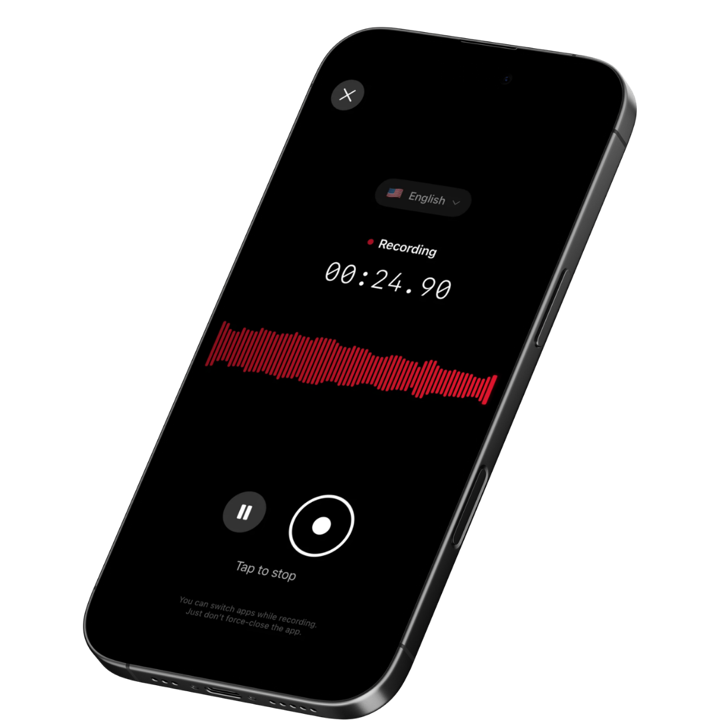
Speakwise turns every management conversation into an organized record. Record one-on-ones with a single tap, get AI-generated summaries with action items, and sync everything to Notion. Managers can focus on the conversation itself instead of splitting attention between listening and note-taking. With 95%+ transcription accuracy and 94% action item extraction, nothing falls through the cracks.
Download Speakwise from the App Store and help your managers lead distributed teams more effectively with AI-powered voice capture and automatic documentation.
Join 10,000+ professionals who use voice notes to manage teams, document decisions, and follow through on commitments.
Get Speakwise Free
4.9-star App Store Rating | iOS Optimized

🎯 4.9★ App Store Rating | 📱 Built for iOS
