Remote Work Communication Statistics 2026: Async Messaging, Video Calls, and Collaboration Challenges
Used by recruiters, executives, consultants, and more.
Remote Work Communication Statistics 2026: Async Messaging, Video Calls, and Collaboration Challenges
The distributed workforce now sends 376 billion emails daily, exchanges 22 billion monthly messages on Microsoft Teams alone, and spends an average of 1 hour and 42 minutes per day on Slack. Yet despite this explosion of communication volume, 29% of remote workers still cite communication gaps as their biggest challenge, and 38% of managers say collaboration has become harder in remote settings. These 17 statistics reveal the paradox of modern remote communication: we've never been more connected, yet feeling understood remains elusive.
Remote work communication has evolved from an emergency pandemic adaptation into a permanent architectural challenge. The tools are mature-Microsoft Teams has reached 320 million monthly active users, Slack handles over 2 billion messages daily, and video conferencing market penetration hit 66% in 2024. Yet the human problems persist: 43% of synchronous communication now happens outside normal business hours, 78% of employees feel overwhelmed by notification volume, and "Zoom fatigue" may have faded only to be replaced by the chronic exhaustion of always-on availability.
In this post, we'll explore 17 statistics that capture the current state of remote work communication. These numbers span the spectrum from raw volume metrics-like the 121 emails the average worker receives daily-to nuanced behavioral patterns, including the 64% of remote workers who keep messaging apps open to signal availability even when not actively working. Whether you're a manager trying to reduce communication overhead, a remote worker drowning in notifications, or a leader weighing async versus sync communication strategies, these data points provide the evidence base for designing communication systems that actually work.
1. Microsoft Teams has reached 320 million monthly active users-up from 2 million in 2017
The scale of workplace communication platforms defies comprehension. Microsoft Teams grew from 2 million daily active users at launch in 2017 to 320 million monthly active users by early 2024, with some reports indicating 360 million by mid-2025. The platform now processes over 5 billion meeting minutes daily and supports communication across more than 1 million organizations worldwide. This 160x growth in seven years represents one of the fastest enterprise software adoptions in history-and a fundamental transformation in how distributed teams coordinate. Source: Microsoft / Statista - Teams Daily Active Users
2. Slack users send an average of 92 messages per person per day
The volume of workplace chat has become staggering. Slack's internal data shows users send an average of 92 messages per person per day, with the platform handling over 2 billion messages daily across its user base. Power users in engineering and product roles average 3.1 hours of active Slack use daily, while typical users spend 1 hour and 42 minutes. The platform processes 50 million searches per day as workers hunt for information buried in past conversations-highlighting both the value of searchable communication and the challenge of information retrieval at scale. Source: SQ Magazine - Slack Statistics 2025
3. The average office worker receives 121 emails and sends 40 per day
Email volume continues to grow despite predictions of its demise. Research shows the average office worker now receives 121 business emails daily while sending approximately 40. Globally, 376 billion emails are sent and received every day in 2025, up from 306 billion in 2020. Despite the rise of chat platforms, 86% of business users still say email is their preferred channel for work communication, and 60% of workers prefer email over phone calls, messaging apps, or social media for professional correspondence. Source: cloudHQ - Workplace Email Statistics 2025
4. 29% of remote workers cite communication gaps as their biggest challenge
Despite unprecedented access to communication tools, disconnection persists. Research shows that 29% of remote workers identify communication gaps as their primary challenge, while 22% report loneliness and 38% of managers say collaboration has become more difficult in remote settings. A separate study found that 25% of managers consider miscommunication in remote teams one of their biggest concerns, and 17% of remote employees report ongoing difficulties with collaboration and communication despite years of practice. Source: Neat - State of Remote Work 2025
5. 91% of enterprises use two or more messaging platforms simultaneously
The dream of unified communication remains unfulfilled. Research from Mio found that 91% of enterprises use two or more messaging platforms at the same time, with 66% using some combination of Slack and Microsoft Teams. This fragmentation creates what researchers call "tool sprawl"-workers must monitor multiple applications, context-switch between different interfaces, and often miss messages that arrive in the "wrong" channel. Only 38% of respondents say their internal communication tools fully integrate with other systems. Source: Mio - State of Workplace Messaging
6. 78% of employees feel overwhelmed by the volume of notifications from communication tools
Notification fatigue has become a recognized workplace hazard. Surveys find that 78% of employees feel overwhelmed by the volume of notifications from communication tools like Slack, Teams, and email. The average employee receives between 21 and 40 alerts daily, with those in IT, support, and logistics roles often exceeding 60 messages per day. Microsoft research found that 68% of workers say they don't have enough uninterrupted time to focus, citing constant communication as a top reason. Source: Zapier Survey / Brosix - Digital Communication Overload
7. 43% of synchronous communication happens outside normal business hours
Time zone coordination has created a hidden tax on distributed workers. Harvard Business School research found that 43% of synchronous communication-real-time conversations requiring immediate response-occurs when at least one employee is working outside local business hours. Workers who need to collaborate across time zones shift their schedules into early mornings or late evenings to maintain real-time availability. This burden falls disproportionately on managers and those handling complex, ambiguous tasks requiring immediate feedback. Source: Harvard Business School - Global Talent, Local Obstacles
8. Video conferencing reached 66% market penetration in 2024, with Zoom leading at 56%
Video calls have become the default meeting format. Video conferencing software reached approximately 66% market penetration in 2024, with Zoom commanding 55.91% market share, Microsoft Teams at 32.29%, and smaller players like WebEx, GoToMeeting, and Google Meet splitting the remainder. The U.S. video conferencing market is expected to grow at a compound annual growth rate exceeding 8% through 2030, reflecting the permanent integration of video into workplace communication. Source: Zoom - Video Conferencing Statistics
9. "Zoom fatigue" may have largely dissipated-but boring video meetings remain exhausting
New research suggests the specific phenomenon of video call exhaustion has normalized. A 2024 study published in the Journal of Occupational Health Psychology found that video meetings are no longer significantly more exhausting than other meeting formats for most employees-a shift from pandemic-era findings. However, researchers observed that when participants rated a video meeting as boring, it was associated with higher exhaustion levels compared to boring meetings in other formats, suggesting that video's under-stimulation becomes problematic when content doesn't engage. Source: PsyPost - New Study on Zoom Fatigue
10. 64% of remote workers keep messaging apps open to signal availability-even when not working
The pressure to appear present has created performative connectivity. Research found that 64% of remote workers admit to keeping their messaging apps open and showing "active" status to appear available, even when they're not actively engaged in work. This "Green Status Effect" reflects anxiety about being perceived as unproductive or unresponsive. The constant monitoring creates a feedback loop: workers who fear judgment maintain visible availability, normalizing the expectation and intensifying pressure on everyone. Source: We Work Remotely - State of Remote Work 2025
11. 67% of companies introduced new async communication tools in 2024
Organizations are actively trying to reduce real-time communication overhead. Research shows that 67% of companies introduced new asynchronous communication or project management tools in 2024 to improve information flow and accommodate flexible schedules. Additionally, 47% of employers have trained employees specifically on using mixed real-time and asynchronous communication methods. This shift recognizes that not every message needs immediate response-and that protecting focused work time requires deliberate communication design. Source: High5Test - Communication in the Workplace Statistics
12. Slack reduces emails by 32% and meetings by 27% for organizations that adopt it
When implemented effectively, team messaging can consolidate communication overhead. Slack's internal research indicates that organizations adopting the platform see a 32% reduction in email volume and a 27% decrease in meetings. The platform also reports handling 2,500 fewer weekly support tickets and 3,800 queries via API automation. However, these gains require intentional implementation-without clear usage norms, organizations risk trading email overload for Slack channel overload without net improvement. Source: Sci-Tech-Today - Slack Statistics
13. 61% of employees feel they regularly waste time in meetings
Meeting skepticism persists despite improved video technology. Project.co research found that 61% of employees feel they regularly waste time in meetings-a slight improvement from 65% the previous year, but still representing a majority of workers. Separately, 28% of workers said that many meetings should have been an email instead, and 54% of employees believe participation in virtual meetings has become "too many." The efficiency gains from easier meeting scheduling may have been offset by meeting proliferation. Source: High5Test - Communication in the Workplace Statistics
14. Workers spend 28% of their time-11 hours per week-managing and organizing emails
Email management has become a significant job function. Research shows employees spend approximately 11 hours per week managing and organizing emails-about 28% of the standard workweek. Workers check their email an average of 11 to 36 times per hour, with 84% keeping their email app open in the background and 64% relying on notifications. Yet only about 30% of received emails actually require immediate action, and 32% of messages may go unread entirely-suggesting much of this time produces little value. Source: cloudHQ - Workplace Email Statistics 2025
15. 40% of workers get stressed waiting for an email reply
The asynchronous nature of email creates its own anxieties. Research found that 40% of workers experience stress while waiting for email responses, with the ambiguity of response time expectations contributing to workplace anxiety. This tension highlights a fundamental challenge: asynchronous communication promises flexibility and reduced interruption, but without clear norms around response windows, it can create worse anxiety than synchronous alternatives where resolution happens immediately. Source: High5Test - Communication in the Workplace Statistics
16. 75% of employees believe their organization's remote work tools require upgrades
Tool satisfaction lags behind tool adoption. Zoom research found that 75% of employees believe their organization's current remote work tools and technology require upgrades. Similarly, 37% of companies upgraded their video meeting technology in 2023, and 83% of employees say good technology plays an important role in their work effectiveness. The gap between tool availability and tool adequacy suggests that many organizations deployed remote work infrastructure quickly during the pandemic without subsequent optimization. Source: Zoom - Remote Work Statistics 2025
17. AI-driven communication tools will be used by 70% of remote teams by 2026 for translation and transcription
Artificial intelligence is reshaping remote communication capabilities. Gartner predicts that by 2025, 70% of remote teams will use AI-driven tools for real-time translation and transcription, breaking language barriers in global teams. Slack GPT reached mainstream adoption in 2025 with over 20 million AI interactions per month, offering features like AI-powered summaries, instant translations, and message rewrites. These tools promise to reduce the friction of distributed communication-though they also add new layers of complexity. Source: OpsMatters - Remote Work 2025 Trends
The Communication Paradox: More Channels, Less Clarity
These statistics reveal a fundamental tension in remote work communication. We've never had more ways to connect-320 million people on Teams, billions of Slack messages, 376 billion daily emails-yet 29% of remote workers still cite communication gaps as their primary challenge, and 38% of managers say collaboration has gotten harder. The tools work; the systems don't.
The problem isn't technological-it's architectural. When 91% of enterprises use multiple messaging platforms, workers spend cognitive resources simply remembering which channel to check. When 78% feel overwhelmed by notifications, the signal-to-noise ratio has collapsed. When 43% of real-time communication happens outside business hours, flexibility has become obligation. The platforms enable connection; the norms create exhaustion.
The statistics point toward deliberate design rather than tool accumulation. Organizations that reduced email by 32% and meetings by 27% did so through intentional Slack implementation, not passive adoption. Companies training employees on async/sync communication methods acknowledge that channel selection is a skill requiring development. The 67% introducing new async tools recognize that not every message deserves immediate interruption. The solution isn't more communication-it's better communication architecture.
The paradox of remote work communication is that solving it requires communicating less, not more-reserving synchronous attention for what truly requires it, protecting async channels from urgency creep, and accepting that some messages can wait.---
Ready to capture conversations without adding to communication overload?
The statistics are clear: remote workers are drowning in 121 daily emails, 92 Slack messages, and the cognitive overhead of monitoring multiple platforms while trying to appear perpetually available. Every important insight from a call, every key decision from a meeting, every thought worth preserving risks getting lost in the noise-or adding to it when documentation requires yet another message in yet another channel.
Voice capture offers an alternative that creates records without creating communication overhead. Speaking is 3x faster than typing, requires no app-switching or channel-selection, and produces transcripts that live outside the notification stream. With AI transcription accuracy now exceeding 96%, your spoken notes become searchable, organized text-capturing what matters without demanding attention from anyone else.
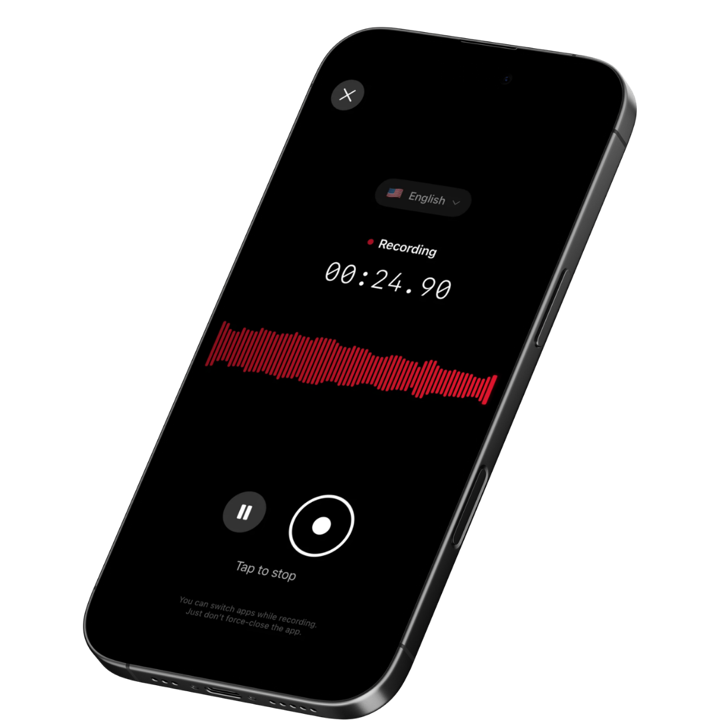
→ Download SpeakWise from the App Store and discover how one-tap recording, real-time AI transcription, intelligent summaries, and seamless Notion integration can help you capture meetings, calls, and ideas without contributing to the communication overload that's exhausting your team.
Join 10,000+ professionals who've discovered that the best way to preserve important information isn't sending another message-it's capturing it in a format that serves you without interrupting anyone else.
Get SpeakWise Free →
4.9★ App Store Rating | iOS Optimized

🎯 4.9★ App Store Rating | 📱 Built for iOS
