Remote Work Productivity Statistics 2026: Output Gains, Isolation Costs, and the Home Office Reality
Used by recruiters, executives, consultants, and more.
Remote Work Productivity Statistics 2026: Output Gains, Isolation Costs, and the Home Office Reality
Remote workers save 55 minutes per day on commuting yet attend 50% more meetings than their office counterparts, while 25% of fully remote employees report significant loneliness. These 17 statistics reveal the complicated truth about working from home-where productivity gains and human costs exist in constant tension.
Remote work is no longer an experiment. Over half a decade after the pandemic forced a global reckoning with office culture, the data on working from home has matured from anecdotal observations into rigorous, peer-reviewed research. And the findings are far more nuanced than either side of the debate typically acknowledges.
The productivity story is real: remote and hybrid workers at well-run companies outperform their office-only counterparts by significant margins. Stanford randomized control trials, Federal Reserve economic analyses, and multi-year studies tracking millions of employees all point in the same direction. Workers accomplish more in less total time when they can skip the commute and control their environment.
But so is the isolation story. Loneliness, communication overload, meeting creep, and ergonomic neglect are extracting hidden costs that rarely appear on a quarterly earnings report. A quarter of fully remote employees report meaningful loneliness. Burnout affects nearly half of all knowledge workers. And the default corporate response-more meetings, more Slack messages, more check-ins-is making the problem worse, not better.
The truth about remote work in 2026 is not that it works or that it does not work. It is that remote work amplifies whatever systems you already have in place. Strong asynchronous communication, clear documentation habits, and intentional human connection turn remote work into a genuine competitive advantage. Poor communication infrastructure, a meeting-heavy culture, and neglected well-being turn it into a slow-motion burnout machine.
In this post, we compile 17 statistics that together paint a comprehensive picture of remote work productivity in 2026. These numbers span output gains, the loneliness epidemic, the home office reality, communication overload, and the financial equation. Each statistic comes from a verifiable, published source-from Stanford and the Federal Reserve to Gallup, Microsoft, and Great Place to Work. Whether you manage a distributed team, work from your kitchen table, or are deciding on your company's future work policy, these data points provide the evidence you need to make informed decisions.
1. A Stanford study found that remote workers showed a 13% performance increase compared to office workers
In one of the most cited remote work studies ever conducted, Stanford economist Nicholas Bloom ran a randomized control trial with 16,000 employees at CTrip, a NASDAQ-listed Chinese travel agency. Call center workers who were randomly assigned to work from home for nine months showed a 13% increase in performance-9% from working more minutes per shift (fewer breaks and sick days) and 4% from handling more calls per minute due to a quieter work environment. Home workers also reported improved job satisfaction and experienced 50% lower attrition. The study was so successful that CTrip rolled out the work-from-home option company-wide. Source: Stanford Graduate School of Business
2. Companies supporting remote or hybrid work demonstrate productivity levels 42% higher than typical U.S. workplaces
A multi-year study by Great Place to Work, analyzing data from 1.3 million employees at certified companies, found that organizations supporting remote or hybrid arrangements showed dramatically higher productivity. Of the 2025 Fortune 100 Best Companies to Work For, 97 support remote or hybrid work. At these firms, 84% of employees say they can count on colleagues to cooperate-compared to just 65% at typical workplaces-and that culture of cooperation proved to be the strongest predictor of sustained productivity, not office presence. Source: Great Place to Work
3. Remote workers save an average of 55 minutes per day by eliminating their commute-239 hours per year
American remote workers reclaim nearly an hour every day that would otherwise be spent in traffic, on trains, or on buses. That adds up to 239 hours annually-the equivalent of nearly six full work weeks. The savings are even more dramatic in major metros: New York City remote workers save an average of 331 hours per year. Globally, the average daily time savings from working at home is 72 minutes across the 27 countries studied. Roughly 40% of this reclaimed time goes back into primary or secondary work activities. Source: Becker Friedman Institute, University of Chicago
4. 25% of fully remote employees report significant loneliness, compared to 16% of on-site workers
A nationally representative study of employed U.S. adults found that fully remote workers experience loneliness at notably higher rates than their in-office counterparts. Hybrid workers fell in between at 21%. The research further showed that individuals working remotely three to four days per week had significantly higher adjusted odds of reporting elevated loneliness than those not working remotely at all. The pattern was consistent across age groups, though older workers (55+) were nearly twice as likely as workers aged 16 to 24 to say they felt the social loss of remote working most acutely. Source: Journal of Affective Disorders / ScienceDirect
5. Remote employees attend 50% more meetings than in-office staff
The meeting tax on remote workers is staggering. While the number of meetings across all workers has tripled since 2020, remote employees bear a disproportionate share of that burden-attending 50% more meetings than their in-office colleagues. The average employee now sits through 10.1 virtual meetings per week, spending a total of 11.3 hours-roughly 28% of their entire workweek-in meetings. That translates to approximately 392 hours per year, or more than 16 full workdays consumed by meetings alone. Source: Archie / Meeting Statistics 2025
6. Hybrid work reduces employee attrition by 33% with no negative impact on productivity or career advancement
In what Stanford's Nicholas Bloom describes as the largest study yet of working-from-home professionals, a randomized control trial at Trip.com (formerly CTrip) found that employees working from home two days a week were just as productive as full-time office workers, equally likely to be promoted, and 33% less likely to quit. The findings challenged the common assumption that remote work damages career trajectories, showing instead that hybrid arrangements create a genuine win-win-win: employees get flexibility, managers retain talent, and companies reduce costly turnover. Source: Stanford Report
7. 20% of the world's employees experience daily loneliness at work, with remote workers disproportionately affected
Gallup's State of the Global Workplace report found that one in five employees worldwide feels lonely on a daily basis. While loneliness afflicts workers across all arrangements, remote workers consistently report higher rates. The report also revealed that global employee engagement fell two percentage points to just 21% in 2024-a decline matching the drop during COVID-19 lockdowns-and that lost productivity from disengagement costs the global economy an estimated $438 billion annually. Remote workers present a paradox: they are more engaged than on-site peers (29% vs. 20%) but also more isolated, stressed, and emotionally strained. Source: Gallup
8. A 1 percentage-point increase in remote work participation is associated with a 0.08 percentage-point increase in total factor productivity growth
Research from the Federal Reserve Bank of San Francisco examined the macroeconomic relationship between remote work adoption and productivity growth across the U.S. economy. The analysis found a small but statistically meaningful positive association: each additional percentage point of remote work participation correlated with a 0.08 percentage-point boost in total factor productivity growth. However, the researchers noted important caveats-industries more adaptable to remote work did not experience meaningfully bigger boosts or declines in productivity since 2020 compared to less adaptable industries, suggesting teleworking has most likely neither substantially held back nor dramatically boosted aggregate productivity growth. Source: Federal Reserve Bank of San Francisco
9. Only 33% of remote workers have a dedicated home office in a separate room
The romantic vision of a perfectly equipped home office is far from reality for most remote workers. Just one-third have a dedicated workspace in a separate room. The rest make do with shared spaces: 15% work primarily at their dining table, 11% work from their couch, and others carve out corners of bedrooms and kitchens. Nearly 25% of people working from home report that finding adequate workspace was somewhat or very difficult. On furniture, only 58% of home workers have an actual office chair-27% use a dining chair, and 15% use a couch, bed, or other non-chair surface. The result: 36% of home office workers report back pain due to poor ergonomic equipment. Source: FlexiSpot / Home Office Ergonomics Research
10. Companies save approximately $11,000 per employee per year by shifting to hybrid or remote work
Research from Global Workplace Analytics found that organizations can save up to $11,000 for every employee working two or three days remotely per week. The savings break down across multiple categories: reduced office rental costs save approximately $5,580 per employee annually, utilities and maintenance account for another $2,000+, and incidentals like office snacks, coffee, and equipment add roughly $2,900 more. But the savings go beyond real estate-the figure also accounts for increased productivity and lower absenteeism and turnover costs. With 88% of employers now providing some form of hybrid work option, these savings have become a significant factor in corporate financial planning. Source: Global Workplace Analytics
11. Microsoft found that employees are interrupted every 2 minutes by a meeting, email, or chat notification
Microsoft's Work Trend Index, surveying 31,000 knowledge workers across 31 markets, found that digital communication now dominates the workday, consuming approximately 60% of employees' time through emails, chats, and meetings-leaving only 40% for deep, creative work. The average knowledge worker receives 153 Teams messages and 117 emails daily. Nearly half of employees (48%) and more than half of leaders (52%) say their work feels chaotic and fragmented. Workers also send an average of 58 chats daily outside of work hours-a 15% year-over-year increase-while meetings after 8 PM have risen 16% year over year. Source: Microsoft Work Trend Index
12. 98% of workers want to work remotely at least some of the time
Buffer's State of Remote Work report found near-universal preference for remote work flexibility. The desire cuts across industries, experience levels, and job types. Even among those who have experienced the downsides-loneliness, communication gaps, blurred boundaries-the overwhelming majority still prefer having the option to work from home at least part of the time. The top challenges cited were communication gaps (29% of remote workers), loneliness (22%), and difficulty maintaining work-life boundaries. Despite these challenges, remote work satisfaction remains remarkably high, suggesting that the benefits-flexibility, autonomy, and eliminated commutes-outweigh the costs for the vast majority of knowledge workers. This near-unanimous preference is a powerful signal to organizations still debating work policies: forcing employees back full-time risks losing talent to competitors who offer the flexibility that 98% of workers now expect. Source: Buffer State of Remote Work
13. 68% of employees struggle with the pace and volume of their work, leading to burnout for nearly half
Microsoft's 2025 research revealed that more than two-thirds of employees feel overwhelmed by the sheer volume and velocity of their work. This cognitive overload translates directly into burnout: 46% of workers report experiencing it. The problem is especially acute for remote workers, who lack the natural boundaries that physical office environments provide-there is no commute to bookend the day, no physical separation between work and rest. The research also found that 57% of meetings are ad hoc calls with no calendar invite at all, making it nearly impossible for remote workers to plan focused work blocks or protect their deep work time. Source: Microsoft Work Trend Index 2025
14. Remote workers produce nearly identical productive hours in less total time: 5 hours 12 minutes productive out of 6 hours 55 minutes total
Detailed time-tracking data reveals that remote workers achieve almost the same productive output as office workers but in significantly less total work time. Remote workers average 5 hours and 12 minutes of productive work within 6 hours and 55 minutes of total work time, compared to office workers who produce 5 hours and 17 minutes of productive work within 7 hours and 44 minutes of total time. The difference-a mere 5 minutes of productive time despite 49 fewer minutes of total work-suggests that remote workers are substantially more efficient with their time, largely because they eliminate commuting, reduce small talk, and face fewer ambient distractions. This data point is particularly important because it challenges the "always on" myth: remote workers are not working more hours to produce the same results. They are working fewer total hours and achieving nearly identical output, which means the real productivity gain is in time efficiency, not time expansion. Source: Vena Solutions / Remote Work Statistics
15. 78% of managers say their remote teams are not just keeping up-they are outperforming expectations
The managerial perspective on remote work has shifted dramatically from the early pandemic skepticism. In recent surveys, 78% of managers report that their remote teams are exceeding, not merely meeting, productivity expectations. This aligns with data showing that 61% of remote workers self-report being more productive at home, and 81.4% report improved work-life balance. The manager confidence figure is particularly significant because it represents observed behavior rather than self-reporting-these are the people evaluating output, reviewing deliverables, and tracking project timelines who are saying remote work is working. Source: Robert Half
16. Meeting time costs an average of $29,000 per employee per year, with unproductive meetings costing businesses $375 billion annually
The financial cost of meeting culture is staggering, and it falls heaviest on remote workers who rely on meetings as a primary means of connection and collaboration. At $29,000 per employee annually in meeting time costs, a 100-person company spends $2.9 million per year just on the labor cost of people sitting in meetings. Across the economy, unproductive meetings-those without clear agendas, actionable outcomes, or necessary attendees-cost businesses upwards of $375 billion annually. For remote teams specifically, this meeting tax is amplified by the 50% more meetings they attend compared to in-office colleagues. Source: Notta / Meeting Statistics
17. 88% of executives managing hybrid or remote teams said they would not enforce a full return to office
Despite high-profile return-to-office mandates from a handful of major companies making headlines in 2024 and 2025, the data tells a very different story for the broader business landscape. Among executives who currently manage hybrid or remote teams, an overwhelming 88% said they have no plans to force a full return to the office. This aligns with the financial incentives ($11,000 per employee in savings), the productivity data (42% higher output at remote-friendly companies), and the retention benefits (33% lower attrition with hybrid work). The executives who are closest to the data and the results are, by and large, choosing to keep remote and hybrid arrangements in place. The gap between the return-to-office narrative in the media and the actual decisions being made by the vast majority of business leaders is one of the most underreported stories in the remote work debate. Source: Yomly / Remote Work Statistics 2026
The Remote Work Paradox: Productive but Disconnected
The seventeen statistics above tell a story that defies simple narratives. Remote work genuinely does boost productivity-the evidence from Stanford's randomized trials, Great Place to Work's multi-year analyses, and detailed time-tracking data is consistent and compelling. Workers accomplish the same or more output in less total time. Companies save $11,000 per employee annually. Attrition drops by a third with hybrid arrangements. And the vast majority of both employees and managers prefer to keep it that way. The 88% of executives who refuse to mandate a full return to office are not being sentimental-they are following the data.
But the human costs are equally real, and they are growing. A quarter of fully remote workers report meaningful loneliness-a rate 56% higher than their on-site counterparts. One in five employees worldwide feels lonely every single day. Communication overload has turned the home office into a notification warzone where workers are interrupted every two minutes and spend 60% of their time in emails, chats, and meetings rather than the deep, creative work they were hired to do. The meeting tax alone-50% more meetings for remote workers, costing $29,000 per employee annually-threatens to consume the very productivity gains that remote work creates. And the irony is brutal: the more companies try to "stay connected" through synchronous communication, the more disconnected and overwhelmed their people feel.
The physical reality of home offices compounds the problem in ways that rarely get discussed in boardroom debates about work policy. Two-thirds of remote workers lack a dedicated workspace in a separate room. Over a third experience back pain from poor ergonomic setups. Fifteen percent of remote workers do their jobs from a dining table, and another eleven percent work from a couch. The image of a polished home office with a standing desk, ergonomic chair, and ring light is the exception, not the rule. For most remote workers, the "office" is a kitchen table shared with family members, a couch corner with a laptop balanced on knees, or a bedroom desk three feet from the bed-and the boundaries between work and rest blur accordingly. It is no surprise that 68% of employees report feeling overwhelmed by work volume and 46% experience burnout when the physical environment itself offers no separation between professional and personal life.
These findings point toward a critical insight: the problem with remote work is not remote work itself. It is the communication and documentation infrastructure that most organizations fail to build around it. When the default response to distance is more meetings, more messages, and more check-ins, remote work collapses under the weight of its own connective tissue. The average knowledge worker now spends 19 hours per week on written messages alone, receives 153 Teams messages daily, and sits through meetings that consume 28% of their workweek. That is not collaboration-that is communication theater that substitutes visibility for genuine productivity.
The resolution to this paradox is not about choosing between remote and office work. The data overwhelmingly shows that hybrid arrangements-two to three days at home, with intentional in-person collaboration-deliver the best outcomes across productivity, retention, engagement, and well-being. But making that model work requires solving the core challenge that every remote worker faces: capturing, organizing, and communicating information effectively across time zones, schedules, and physical distance. The companies that crack asynchronous communication-replacing synchronous meetings with recorded updates, replacing long email threads with searchable voice notes, replacing status check-ins with shared documentation-are the ones whose remote workers thrive. The ones that default to more meetings are the ones burning their people out.
The path forward is clear from the data. Remote work's productivity gains are sustained when workers have autonomy over their time and environment. Isolation costs are mitigated when teams build asynchronous communication habits that maintain human connection without demanding real-time presence. And the meeting tax is reduced when organizations invest in tools and practices that capture information once and make it accessible to everyone, rather than repeating the same updates across multiple calls with overlapping attendees.
The data is clear: remote work's productivity gains are real, but so are its isolation costs. The organizations and individuals who will win in 2026 and beyond are the ones who build systems to capture knowledge and maintain connection without adding yet another meeting to the calendar.---
Ready to stay connected and productive from anywhere?
Remote work's biggest challenge is not discipline or distraction-it is information flow. When you are not in the same room as your colleagues, every idea that goes unrecorded, every meeting insight that gets lost, and every context that fails to transfer becomes a crack in collaboration. Those cracks compound over time: tasks get duplicated, decisions get revisited, and teams drift out of alignment. The default corporate response has been more meetings, more Slack messages, more emails. But as the statistics show, that approach is breaking people-68% feel overwhelmed by work volume, workers are interrupted every two minutes by digital communication, and nearly half experience burnout. The solution is not more synchronous communication. It is better asynchronous capture.
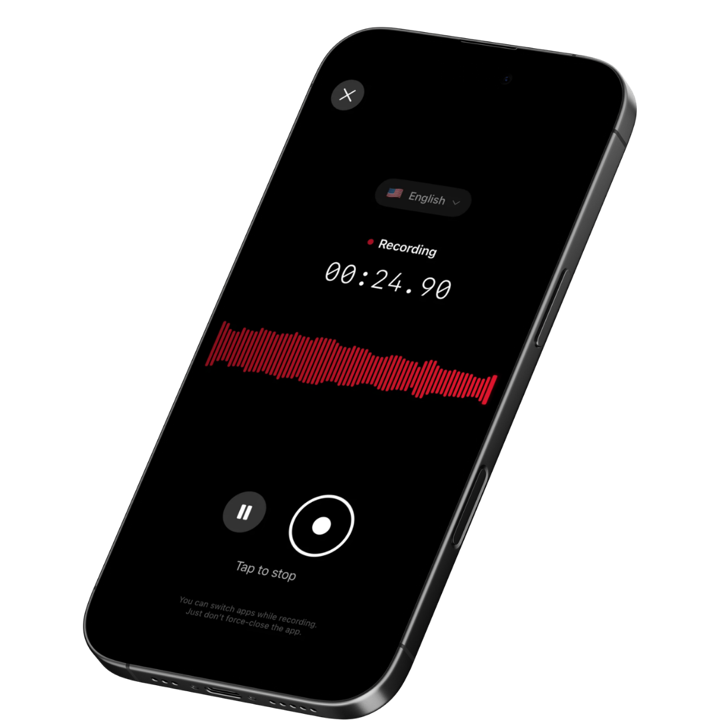
Voice capture offers a fundamentally different approach. Whether you're working from home, a coffee shop, or a coworking space, you simply speak your thoughts-and AI handles the rest. Stay connected with your team through voice updates that get transcribed, summarized, and organized automatically.
Download SpeakWise from the App Store and discover how one-tap recording, AI transcription, intelligent summaries, and Notion integration can help you stay productive and connected from anywhere.
Join 10,000+ professionals who've discovered that remote work productivity isn't about where you sit-it's about how you capture and share information.
Get SpeakWise Free →
4.9★ App Store Rating | iOS Optimized

🎯 4.9★ App Store Rating | 📱 Built for iOS
