Return to Office Statistics 2026: Mandate Rates, Employee Resistance, and Productivity Shifts


Used by recruiters, executives, consultants, and more.
Return to Office Statistics 2026: Mandate Rates, Employee Resistance, and Productivity Shifts
83% of global CEOs predict employees will return to offices full-time within three years, yet 76% of workers say they would quit rather than give up remote flexibility. Meanwhile, office occupancy has crawled to just 52.7% of pre-pandemic levels, and a landmark Stanford study published in Nature found that hybrid work cut quit rates by 33% with zero impact on productivity. These 20 statistics expose the deepening rift between boardroom mandates and on-the-ground reality.
Key Return to Office Statistics (2026)
- Return to office statistics show mandates requiring five-day attendance now cover 30% of U.S. companies in 2026, up from 28% the year before (ResumeBuilder)
- Organizations requiring fixed in-office days jumped to 62% in 2026, up from just 49% a year earlier (JLL Global Occupancy Planning Benchmark Report 2026)
- 83% of CEOs globally predict a full return to office within three years (KPMG CEO Outlook)
- 76% of workers say they would quit their jobs rather than give up remote flexibility (FlexJobs 2025 State of the Workforce)
- Office occupancy across major U.S. metros sits at just 52.7% of pre-pandemic levels as of late August 2026 (Kastle Systems)
- Hybrid work cut quit rates by 33% with zero measurable impact on productivity, per a Stanford-led randomized controlled trial published in Nature (Nature)
- 26% of paid U.S. workdays were still work-from-home days in July 2026, despite the wave of mandates (WFH Research / SWAA)
The return-to-office debate is no longer a hypothetical exercise in pandemic recovery planning. It is the defining workplace conflict of the mid-2020s. On one side, a growing cohort of executives at the world's largest companies are issuing sweeping mandates that require employees back at their desks five days a week. Amazon, Dell, JPMorgan Chase, and dozens of other major corporations have drawn a line in the sand, framing in-person work as essential to collaboration, culture, and competitive advantage. On the other side, employees armed with years of remote-work data and deeply recalibrated expectations about flexibility are pushing back with unprecedented force. Many are not just resisting verbally; they are leaving. The result is a workplace paradox: companies that mandate full-time office attendance are simultaneously losing the senior, skilled, and diverse talent they can least afford to replace, while academic research consistently shows that rigid RTO policies deliver no measurable gains in productivity or financial performance. For professionals navigating this volatile landscape, understanding the real numbers is essential to making informed career and organizational decisions.
In this post, we'll explore 20 return-to-office statistics drawn from peer-reviewed research, large-scale corporate surveys, and workforce analytics platforms. These numbers cover mandate adoption rates, employee resistance levels, productivity outcomes, talent attrition costs, and the emerging hybrid-work consensus. Together, they paint a nuanced picture of where the RTO movement stands in 2026 and where it is likely headed. Whether you are an executive weighing a mandate, a manager trying to retain your team, or an individual contributor evaluating your options, these data points will give you the grounding you need.
1. 83% of CEOs globally predict a full return to office within three years
KPMG's 2024 Global CEO Outlook surveyed 1,325 chief executives across major economies and found that 83% expect employees to be working from the office full-time within the next three years. This represents a dramatic increase from the 64% who said the same thing just one year prior, suggesting that executive conviction is hardening rather than softening. The survey also revealed a generational split among executives themselves: 87% of CEOs aged 60-69 predicted full in-office work compared to only 75% of those aged 40-49, and more male CEOs (84%) bet on a full return than their female counterparts (78%). KPMG noted a "widening gap" between how executives and workers view the future of workplace arrangements, signaling that mandates may reflect leadership preferences and generational assumptions more than operational necessity or evidence-based strategy.
Source: KPMG 2024 CEO Outlook
2. 88% of companies require at least some in-office presence heading into 2026
A ResumeBuilder survey of 978 business leaders found that just 11% of companies let employees choose fully remote work, and only 1% operate as entirely remote organizations — meaning 88% require at least some structured office presence. Among companies with set schedules, 28% required five days a week in the office in 2025, 13% required four days, and 28% required three. Looking ahead to 2026, the trend intensifies: five-day requirements climb to 30%, four-day schedules rise to 17%, and three-day setups slip to 25%, while the share of companies letting employees choose fully remote work falls to 10% (fully remote organizations edge up slightly, to 2%). The trajectory is clear: optional flexibility is shrinking across the corporate landscape.
Source: ResumeBuilder.com
3. Office occupancy sits at just 52.7% of pre-pandemic levels
Despite the wave of return-to-office mandates, actual office usage tells a different story. Kastle Systems, which tracks keycard and security fob data from 2,600 buildings and 41,000 businesses across major U.S. metro areas, reported a national average occupancy of 52.7% in late August 2026, still roughly half below pre-pandemic baselines. This gap between mandate intent and physical attendance suggests that enforcement remains inconsistent and that many employees are finding ways to comply on paper while minimizing time at their desks.
Source: Kastle Systems Back to Work Barometer
4. 76% of workers say they would quit if forced back to the office full-time
FlexJobs' 2025 State of the Workforce report, surveying more than 3,000 U.S. professionals between August 18 and August 31, 2025, found that 76% of workers would consider quitting their jobs if remote work options were eliminated. The resistance is not theoretical: 56% of respondents said they personally know someone who has already quit or plans to quit because of a return-to-office mandate, and of that group, 35% know more than one person who has left. Separately, 57% said they would "absolutely" begin a new job search if they were not allowed to continue working remotely. This statistic underscores the seriousness of employee opposition: for a large majority, office flexibility is not a perk or a pandemic-era novelty but a non-negotiable condition of employment that they will defend with their feet.
Source: FlexJobs 2025 State of the Workforce
5. RTO mandates caused a 14% increase in employee turnover at S&P 500 firms
A University of Pittsburgh study led by Associate Professor Mark Ma analyzed S&P 500 companies that imposed return-to-office mandates between April 2020 and June 2023, using data from three million LinkedIn profiles. The research found a 14% increase in overall employee departures following mandate implementation. More critically, the attrition was not evenly distributed. Female employees saw turnover rise by 20%, compared to 7% for men. Skilled workers experienced an 18% increase, and senior managers' departure rates climbed by nearly 19%. The researchers concluded that RTO mandates disproportionately drive away the employees companies can least afford to lose.
Source: University of Pittsburgh Katz Graduate School of Business
6. Hybrid work cut quit rates by 33% with no negative impact on productivity
A randomized controlled trial conducted by Stanford economist Nicholas Bloom at Trip.com, one of the world's largest online travel agencies, tracked 1,612 employees over two years. One group worked from the office five days a week; the other followed a hybrid schedule of three office days and two remote days. The results, published in Nature in June 2024, were unambiguous: quit rates dropped by 33% in the hybrid group with no measurable impact on performance reviews, promotion rates, or productivity metrics. The retention benefits were especially pronounced among non-managers, female employees, and workers with long commutes, the very groups most likely to leave under rigid office requirements. After reviewing the data, Trip.com's executive committee voted to extend the hybrid policy to all employees across all divisions. Their reasoning: each quit costs the company approximately $20,000 in recruitment and training, meaning the attrition reduction alone translated to millions of dollars in annual savings. By the study's close, even managers who had initially opposed hybrid work changed their minds, coming to believe flexible arrangements could actually improve productivity by 1%.
Source: Nature (Bloom et al., 2024)
7. 80% of companies that implemented RTO mandates lost talent as a direct result
ResumeBuilder's survey of business leaders revealed that 8 in 10 companies acknowledged losing employees specifically because of their return-to-office requirements. Despite this, 25% of these same companies planned to increase mandatory in-office days in the following year. The data reveals a puzzling strategic calculation: organizations recognize that mandates are costing them talent, yet many are doubling down rather than adjusting course.
Source: ResumeBuilder.com
8. It takes companies 23% longer to fill vacancies after implementing RTO mandates
The University of Pittsburgh study also examined hiring outcomes and found that job vacancy duration increased from an average of 51 days to 63 days after RTO mandates were imposed, a 23% increase. Overall hiring rates dropped by 17%, creating a vicious compounding cycle: companies were losing experienced employees at higher rates while simultaneously struggling to bring in replacements. This elongated time-to-hire means critical roles remain unfilled for weeks longer, increasing workload pressure on remaining staff and potentially accelerating further departures as burnout compounds. When you factor in the fully loaded costs of recruiting, onboarding, and training replacements, alongside the lost productivity during extended vacancy periods, the recruitment cost burden alone raises serious questions about whether the financial logic of strict office mandates holds up under scrutiny.
Source: University of Pittsburgh / HR Dive
9. 43% of hybrid employees admitted to "coffee badging" in 2025
Owl Labs' 2025 State of Hybrid Work report found that 43% of U.S. hybrid employees admitted they still sometimes go into the office for a few hours just to show their faces before leaving to work elsewhere, the practice known as "coffee badging." That's essentially flat from the 44% Owl Labs measured in 2024, and an additional 12% say they haven't tried it but would like to. In the 2024 report, 47% of managers admitted to coffee badging, compared to just 34% of individual contributors. The persistence of this behavior signals that mandates may produce physical presence without genuine engagement, undermining the very collaboration they were designed to foster.
Source: Owl Labs State of Hybrid Work 2025
10. 69% of workers would accept a pay cut to keep remote work flexibility
The depth of employee attachment to flexible work is perhaps best illustrated by this statistic: 69% of workers said they would take a pay reduction rather than return to the office full-time, representing an 11% increase over the prior year. This willingness to trade compensation for autonomy reflects a fundamental reordering of workplace priorities. For many professionals, particularly those with long commutes, caregiving responsibilities, or productivity routines built around focused home-office time, the value of flexibility exceeds what any raise can offset. Companies that frame RTO as a benefit or culture-builder are colliding with employees who view it as a direct reduction in their total compensation.
Source: FlexJobs 2025 State of the Workforce
11. RTO mandates produced no improvement in financial performance for S&P 500 firms
The University of Pittsburgh researchers did not stop at measuring turnover. They also analyzed the financial performance and firm valuations of S&P 500 companies that implemented return-to-office mandates and compared them against companies that continued to allow virtual work. The findings were stark: mandates produced no statistically significant improvement in profitability, revenue growth, or market valuation. Companies that enforced strict office attendance performed on par with those offering flexibility. This data directly contradicts the executive narrative that in-person work drives better business outcomes and suggests that the push for RTO may be rooted more in managerial preference and real estate obligations than in evidence-based strategy.
Source: University of Pittsburgh Katz Graduate School of Business
12. In-office workers spend an average of $55 per day on commuting, meals, and incidentals
The financial burden of returning to the office falls squarely on employees. Data from workplace surveys shows that the average in-office worker spends approximately $55 per day, including roughly $15 on commuting and $18 on lunch, with the remainder going to coffee, parking, professional clothing maintenance, and other incidental costs. Over a five-day work week, that totals $275, or roughly $1,100 per month and more than $13,000 per year. Remote workers, by contrast, spend an average of just $18 per day. This nearly $37-per-day gap represents a significant effective pay cut for employees forced back to the office, which helps explain why 69% say they would accept lower salaries to keep working remotely.
Source: Owl Labs State of Hybrid Work 2025
13. The average U.S. worker loses 223 hours per year to commuting
A February 2026 analysis from MyPerfectResume, using Census Bureau commute data and Bureau of Labor Statistics wage data across the 50 largest U.S. metro areas, found that American workers spend an average of 223 hours per year traveling to and from the office, equivalent to roughly six 40-hour work weeks. The estimated economic value of that lost time is $8,158 per worker annually. In high-cost metropolitan areas like San Jose ($13,252), San Francisco ($12,760), and New York ($12,195), the "time value" costs exceed $12,000. For companies mandating full-time office attendance, this represents a hidden tax on employee productivity and well-being that never shows up on the balance sheet but powerfully shapes retention decisions.
Source: MyPerfectResume, via PRNewswire
14. 40% of employees would start job hunting immediately if hybrid work were removed
Owl Labs' 2025 State of Hybrid Work report found that 40% of hybrid employees would begin searching for a new job if their flexible work arrangement were taken away. An additional 22% said they would demand a raise to compensate for the lost flexibility, and 5% indicated they would quit on the spot without another job lined up. Only a minority of workers expressed full willingness to comply without reservations. The data also revealed that 68% of working parents are concerned that caregiving responsibilities would be adversely affected by a full-time return, making RTO mandates a particularly acute retention risk among employees with family obligations.
Source: Owl Labs State of Hybrid Work 2025
15. 37% of millennials said they would actively defy RTO policies
Generational resistance to return-to-office mandates is not uniform, and millennials, now the largest cohort in the workforce, are leading the pushback. A TopResume survey of 1,000 U.S. workers found that 37% of millennials said they would defy their employer's RTO requirements, and 35% stated they would leave their current position rather than comply. Meanwhile, a Deloitte survey found that 65% of Gen Z and millennial workers combined said they would leave their job if forced back to the office full-time. This is significant because millennials occupy a growing share of mid-level and senior management roles, and Gen Z represents the pipeline of future leadership. Their departure does not just create vacancies; it removes institutional knowledge, mentorship capacity, project continuity, and the cultural connective tissue that keeps organizations functioning. Companies that treat RTO resistance as a generational attitude problem or a lack of loyalty may be fundamentally underestimating the structural workforce damage their mandates are causing.
Source: TopResume Workforce Survey
16. Managers say their teams are 62% more productive working hybrid or remotely
Perhaps the most telling statistic in the entire RTO debate comes not from employees advocating for their own comfort but from managers, the people closest to day-to-day team output. Owl Labs' 2024 State of Hybrid Work report found that managers say their teams are 62% more productive when working hybrid or remotely, with an additional 22% saying work location makes no difference at all (down from managers' perception of a 79% productivity boost in 2023, but the direction of the finding hasn't changed). This directly contradicts the C-suite assumption that in-person work is inherently more productive and raises the question of whether RTO mandates are driven by data or by a top-down desire for visibility and control. The managerial perspective matters because these are the people who actually observe output and engagement on a daily basis, making their assessment arguably more reliable than executive surveys conducted from the boardroom.
Source: Owl Labs State of Hybrid Work 2024
17. Planned RTO mandates will reduce work-from-home days by only 0.4 percentage points
Stanford's Survey of Working Arrangements and Attitudes, conducted in December 2024, revealed a striking disconnect between the headlines about sweeping RTO mandates and their actual impact on work patterns. The survey found that all planned return-to-office initiatives combined would reduce the share of paid work-from-home days from 21.2% to just 20.8%, a reduction of 0.4 percentage points. The reason is simple: most companies implementing mandates are moving from liberal hybrid policies to slightly stricter hybrid policies, not from fully remote to fully in-person. The data suggests that despite aggressive corporate rhetoric, work-from-home has become a deeply embedded structural feature of the modern economy that mandates can bend but not break.
Source: Stanford Institute for Economic Policy Research (SIEPR)
18. 62% of organizations now require fixed in-office days, up from 49% in 2025
Real estate advisory firm JLL's Global Occupancy Planning Benchmark Report 2026, drawn from 84 organizations managing 716 million square feet of office space worldwide, found that 62% of companies now require fixed in-office days, up sharply from 49% just a year earlier. The report also found that 70% of employees now attend the office three to five days per week, and that 64% of organizations enforcing office mandates report increased space utilization as a direct result. The rapid jump shows that 2026 has been the year loosely-worded "hybrid" policies hardened into specific, tracked attendance requirements.
Source: JLL Global Occupancy Planning Benchmark Report 2026
19. 8% of companies increasing office days admit it's meant to push employees to quit
Not every RTO mandate is framed as a collaboration or culture play. ResumeBuilder's October 2025 survey of 978 business leaders found that among companies increasing required in-office days for 2026, the leading motivations are strengthening company culture (64%) and improving productivity (62%), but 8% openly admitted they are doing it specifically to push employees to quit. The same survey found that 38% of companies increasing office days say they will definitely or probably expand their office footprint in 2026, suggesting many mandates are backed by long-term real estate commitments rather than short-term policy experiments.
Source: ResumeBuilder.com
20. 26% of paid U.S. workdays were still work-from-home days in July 2026
Despite the wave of mandates documented throughout this post, remote work has proven remarkably sticky at the macro level. The Survey of Working Arrangements and Attitudes (SWAA), run by economists Jose Maria Barrero, Nicholas Bloom, and Steven J. Davis, found that roughly 26% of paid workdays among U.S. employees were work-from-home days in July 2026. That figure has held in a narrow band for more than two years now, reinforcing the Stanford SIEPR finding above that planned RTO mandates are bending the work-from-home share rather than breaking it.
Source: WFH Research (SWAA), August 2026 Update
The RTO Paradox: Why Mandates Are Failing to Deliver What They Promise
The 20 statistics above tell a story that is far more complex than the binary "office vs. remote" narrative that dominates headlines. The data reveals a fundamental paradox at the heart of the return-to-office movement: the companies pushing hardest for full-time office attendance are experiencing the worst outcomes in terms of talent retention, recruitment speed, and employee engagement, while gaining no measurable advantage in productivity or financial performance.
Consider the contradiction embedded in the numbers. Eighty percent of companies that mandated office returns admit they lost talent as a result, yet a quarter of them plan to increase mandatory days. CEOs overwhelmingly predict full-time office work within three years, but actual office occupancy has barely crossed 50% of pre-pandemic levels. Managers on the ground report that hybrid arrangements improve team performance, while executives in corner offices insist that proximity is essential. This is not a debate being settled by evidence. It is a power struggle being waged despite the evidence.
The research from Stanford and the University of Pittsburgh is particularly damaging to the pro-mandate position. A randomized controlled trial, the gold standard of empirical research, published in one of the world's most prestigious scientific journals, found that hybrid work produced identical productivity outcomes with a 33% reduction in turnover. An analysis of S&P 500 companies found that RTO mandates delivered zero financial benefit while driving away senior, skilled, and diverse employees and extending hiring timelines by 23%. These are not opinion surveys. They are rigorous, peer-reviewed studies using large-scale data, and they point overwhelmingly in one direction.
What the data suggests is that the most productive path forward is not a blanket mandate in either direction, but a thoughtful hybrid model that preserves in-person collaboration for the moments when it genuinely adds value while respecting the autonomy and productivity benefits that flexible work provides. The companies that thrive in 2026 and beyond will not be those that win the RTO battle, but those that recognize the battle itself is a distraction. The real competitive advantage lies in building systems and habits that make information flow seamlessly regardless of where people happen to be sitting.
This is ultimately a question of infrastructure, not ideology. When a critical decision is made during a hallway conversation, does it get captured and shared with the remote team members who were not physically present? When a brainstorm happens on a video call, do the insights survive beyond the meeting? When a manager has a breakthrough idea during their morning commute, is there a frictionless way to record and organize it before it fades? The organizations that answer "yes" to these questions will outperform regardless of their office policy. The ones that answer "no" will struggle whether their employees are in the office five days a week or zero.
The return-to-office debate is really a debate about information, not real estate. The companies that solve for how ideas, decisions, and knowledge move through an organization, rather than where bodies sit, will be the ones that attract top talent, retain institutional knowledge, and outperform their mandate-obsessed competitors.---
Ready to make any work environment more productive?
The statistics in this post reveal an uncomfortable truth: the RTO debate is consuming enormous executive attention and organizational energy while missing the point entirely. Whether your team is fully in-office, fully remote, or navigating a three-day hybrid schedule, the real productivity challenge is the same. Critical ideas get lost between meetings. Decisions made in hallway conversations or phone calls disappear into the ether. Insights that emerge during a commute or a walking brainstorm never make it into any system of record. The average knowledge worker attends dozens of meetings per week and retains only a fraction of what was discussed. The location of work matters far less than how effectively information is captured, organized, and made retrievable at the exact moment it is needed. That is the problem worth solving, and it has nothing to do with office zip codes.
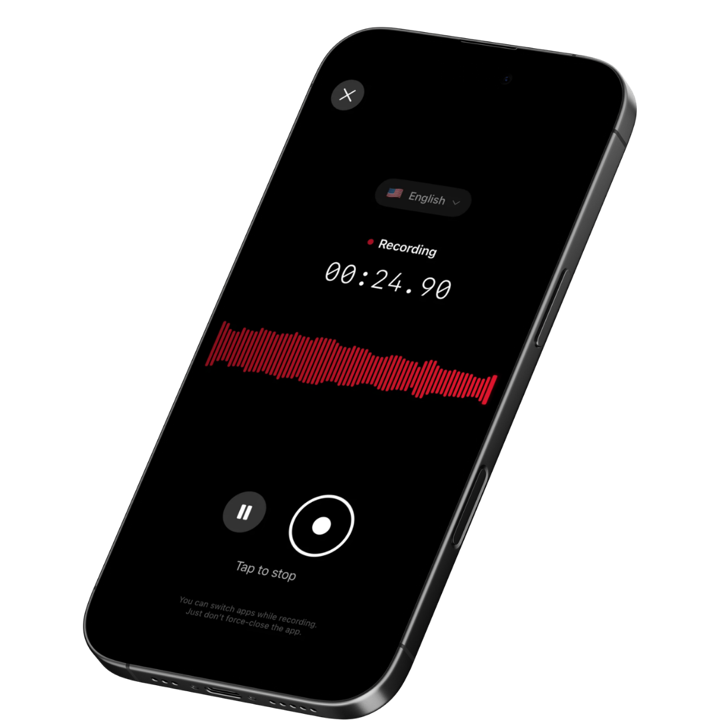
Voice capture works wherever you work. Whether you're in the office, at home, or commuting between the two, you simply speak-and AI handles the rest. Capture meeting notes, brainstorm ideas, or document decisions without being tied to a desk or a laptop.
Download SpeakWise from the App Store and discover how one-tap recording, AI transcription, intelligent summaries, and Notion integration can help you stay productive in any work environment.
Join 10,000+ professionals who've discovered that productivity isn't about where you work-it's about how you capture and process information.
Get SpeakWise Free →
4.9★ App Store Rating | iOS Optimized

🎯 4.9★ App Store Rating | 📱 Built for iOS
