Roam Research vs Logseq: Comparison (2026)


Used by recruiters, executives, consultants, and more.
Roam Research vs Logseq: Which Is Better in 2026?
Logseq is the better choice for most users in 2026. It offers the same core features as Roam Research - bidirectional links, block references, and a daily journal workflow - while being completely free and open source. Logseq stores data locally for better privacy and works offline natively. Roam Research wins on cloud convenience, real-time collaboration, and a more polished multiplayer editing experience. If you want Roam's workflow without the $15/month price tag, Logseq delivers near-complete feature parity at zero cost.
Both Roam Research and Logseq are outliner-based note-taking tools built around bidirectional linking and networked thought. They share a common philosophy: notes should be connected, not siloed. Choosing between them comes down to whether you value cloud convenience or local-first privacy. This comparison covers six key dimensions.
Roam Research vs Logseq at a Glance
| Feature | Roam Research | Logseq |
|---|---|---|
| Best For | Cloud-based networked notes | Local-first private notes |
| Platform | Web (any browser) | Desktop, iOS, Android |
| Data Storage | Cloud-hosted | Local files (Markdown/Org) |
| Bidirectional Links | Yes | Yes |
| Block References | Yes | Yes |
| Collaboration | Real-time multiplayer | Limited sharing |
| Pricing From | $15/month | Free (open source) |
| Open Source | No | Yes |
What Is Roam Research?
Roam Research is a cloud-based note-taking tool built around bidirectional linking and block-level references. It pioneered the "networked thought" movement, letting users connect ideas across notes without rigid folder structures. Roam uses a daily journal as the default entry point, encouraging users to write freely and connect thoughts later. The tool runs entirely in the browser and syncs automatically across devices. Roam charges $15/month or $165/year for its Pro plan, making it one of the more expensive note-taking tools on the market.
Roam Research Key Features
- Bidirectional Links: Create connections between pages automatically, with backlinks showing every mention of a concept across your entire graph.
- Block References: Reference any individual block of text from anywhere in your notes, creating a web of interconnected ideas.
- Daily Notes Journal: Opens to today's date by default, encouraging a journal-first workflow for capturing thoughts.
- Graph View: Visual map of all connections between your notes, helping you discover unexpected relationships.
- Real-Time Collaboration: Multiple users can edit the same graph simultaneously with live cursor tracking.
Roam Research Pricing
- Pro: $15/month or $165/year - full feature access for individual users
- Believer: $500 for 5 years - discounted long-term commitment plan
- Enterprise: Custom pricing for team deployments
- No free tier available, but a 31-day free trial is offered
What Is Logseq?
Logseq is a free, open-source outliner with bidirectional linking, block references, and a journals-first workflow. It was inspired by Roam Research but takes a local-first approach, storing all notes as plain Markdown or Org-mode files on your device. Logseq works offline by default and gives users full ownership of their data. The app is available on macOS, Windows, Linux, iOS, and Android. With native mobile apps and a growing plugin ecosystem, Logseq has become the leading free alternative to Roam Research.
Logseq Key Features
- Local-First Storage: All notes are saved as plain text Markdown or Org-mode files on your device, ensuring full data ownership.
- Bidirectional Links and Block References: Same core linking model as Roam, with automatic backlinks and block-level references.
- PDF Annotation: Highlight and annotate PDFs directly within the app, linking annotations to your notes.
- Plugin Ecosystem: Community-built plugins extend functionality with themes, custom queries, and workflow automations.
- Task Management: Built-in TODO system with priorities, deadlines, and query-based task views.
Logseq Pricing
- Free: All core features included at no cost
- Logseq Sync: ~$5-15/month (supporter tier) for cloud sync between devices via Open Collective
- Self-hosted sync is also possible using Git, iCloud, or Syncthing at no cost
Head-to-Head Comparison
Core Note-Taking Features
Both tools offer nearly identical core functionality. Bidirectional links, block references, daily journal workflow, and graph visualization are present in both. Logseq adds PDF annotation, a built-in TODO system, and support for Org-mode format. Roam offers slightly smoother block reference handling and a more refined query language. For most users, the feature gap is negligible.
Winner: Tie - near-complete feature parity on core networked note-taking capabilities
Privacy and Data Ownership
Logseq wins on privacy by a wide margin. All notes are stored as plain text files on your local device. You can read them with any text editor, even if Logseq disappears. No data ever leaves your machine unless you choose to sync. Roam Research stores everything in the cloud on their servers. While Roam offers data export, your notes live on their infrastructure by default. For privacy-conscious users, Logseq's local-first architecture is fundamentally more private.
Winner: Logseq - local-first storage with full data ownership and no cloud dependency
Offline Experience
Logseq works fully offline out of the box. You can create, edit, and search notes without any internet connection. Roam Research requires an internet connection for its web-based interface. While Roam has improved offline capabilities, it is not designed for extended offline use. Professionals who work in low-connectivity environments or want to reduce cloud dependence will prefer Logseq.
Winner: Logseq - native offline support compared to Roam's cloud-dependent architecture
Collaboration
Roam Research wins on collaboration. It supports real-time multiplayer editing where multiple users can work in the same graph simultaneously with live cursor tracking. This makes Roam viable for team knowledge bases. Logseq's collaboration features are limited. Sharing requires manual file sync or publishing to the web. For teams that need to co-edit notes in real time, Roam is the only option between these two.
Winner: Roam Research - real-time multiplayer editing is a unique advantage
Mobile Experience
Logseq offers native iOS and Android apps that work well for quick capture and review on the go. The mobile apps sync with your local files and provide a functional editing experience. Roam Research's mobile experience relies on its web app, which is usable but not optimized for mobile browsers. For users who need to capture and review notes on their phone, Logseq's native apps provide a better experience.
Winner: Logseq - native mobile apps versus Roam's web-based mobile experience
Pricing and Value
Logseq is free. Roam Research costs $15/month or $165/year. Given the near-complete feature parity, Roam's pricing is hard to justify for most users. The Believer plan at $500 for 5 years reduces the cost to $8.33/month. Roam's pricing made sense when it had no real competitors, but Logseq's free offering fundamentally changed the value equation.
Winner: Logseq - free with near-identical features versus Roam's $15/month
Who Should Choose Roam Research?
- You should choose Roam if you need real-time multiplayer collaboration on a shared knowledge base
- You should choose Roam if you prefer a cloud-based tool that syncs automatically without configuration
- You should choose Roam if you rely on Roam's query language for advanced database-style views
- You should choose Roam if you have already built a large graph in Roam and migration cost is too high
Who Should Choose Logseq?
- You should choose Logseq if you want Roam's workflow without paying $15/month
- You should choose Logseq if data privacy and local file ownership are priorities
- You should choose Logseq if you need reliable offline access to your notes
- You should choose Logseq if you want native mobile apps for iOS and Android
- You should choose Logseq if you prefer open-source software with an active plugin ecosystem
Speakwise gets your hours back.
- ✓Built for in-person meetings, interviews, and site visits.
- ✓Trusted by recruiters, consultants, agents, and field pros.
- ✓One tap to record. Notion-ready summary in minutes.

Frequently Asked Questions
Is Roam Research better than Logseq?
Not for most users. Logseq offers nearly identical core features at no cost. Roam is better if you need real-time collaboration or prefer cloud-hosted convenience. But for individual knowledge workers who want bidirectional linking, block references, and a daily journal workflow, Logseq delivers the same experience for free. Roam's $15/month is difficult to justify when a free alternative with comparable quality exists.
Can I migrate from Roam Research to Logseq?
Yes. Logseq can import Roam Research's JSON export format. The migration preserves page titles, block content, and basic linking structure. Some advanced Roam queries may not transfer perfectly and may need manual adjustment. The Logseq community has published detailed migration guides. Most users report a smooth transition with minimal data loss.
Which is cheaper, Roam Research or Logseq?
Logseq is free. Roam Research costs $15/month or $165/year. If you want cloud sync with Logseq, optional supporter tiers cost $5-15/month, but free alternatives like iCloud or Git sync also work. Even with paid sync, Logseq costs less than Roam. For budget-conscious users, Logseq is the clear winner.
Is there a better alternative to both Roam Research and Logseq?
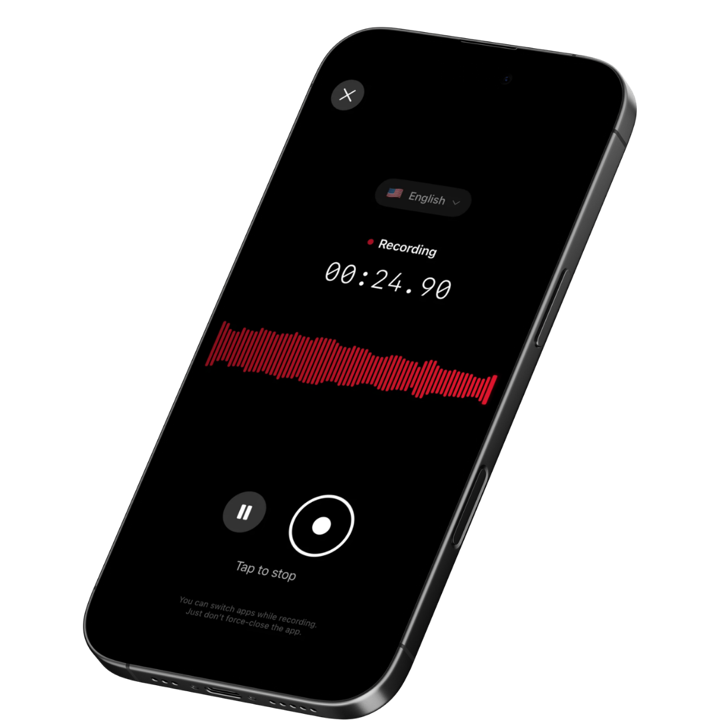
Both tools are designed for typed notes on desktop. If you need to capture spoken ideas, meeting notes, or voice memos, Speakwise offers a different approach. It records voice notes and in-person conversations on your iPhone with 95%+ transcription accuracy, generates AI summaries, and syncs to Notion. At $59.99/year, it complements a note-taking tool like Logseq by capturing ideas you cannot type.
Is Logseq truly free?
Yes. All core features including bidirectional links, block references, daily journal, graph view, PDF annotation, and plugins are free. Logseq is open source under the AGPL license. The only paid option is Logseq Sync for cloud-based device syncing, but you can sync for free using iCloud, Dropbox, Git, or Syncthing.
Final Verdict: Roam Research vs Logseq
Logseq wins for most users in 2026. It matches Roam Research on core features while being free, open source, and local-first. The native mobile apps, offline support, and full data ownership make it the more practical choice for individual knowledge workers.
Roam Research remains the better option for teams that need real-time collaboration on a shared graph. If multiplayer editing is essential to your workflow, Roam justifies its price.
Both tools focus on typed, text-based notes. If you need to capture spoken ideas or in-person conversations, Speakwise offers mobile-first voice recording with AI transcription and Notion sync at $59.99/year.
Bottom line: Logseq is the better value for individual users. Roam wins on collaboration. Speakwise wins for capturing spoken ideas on mobile.> If you want to capture ideas by voice instead of typing, download Speakwise from the App Store and turn spoken thoughts into organized notes with AI transcription and summaries.
🎯 4.9★ App Store Rating | 📱 Built for iOS
