SaaS Overload Statistics 2026
Used by recruiters, executives, consultants, and more.
SaaS Overload Statistics 2026
The average enterprise manages 291 SaaS applications. 51% of SaaS licenses go unused - the highest waste rate ever recorded. Workers toggle between apps 1,200 times daily, losing an average of 9% of their workday to switching. Enterprises waste $18 million annually on unused software. These 16 statistics reveal how SaaS overload has become one of the most expensive and underrecognized productivity problems in the modern workplace.
The promise of SaaS was simple: better tools, easier deployment, lower costs. And for individual applications, that promise holds. The problem emerges at scale. When every team, function, and project adds its own tools, the result is not a streamlined tech stack but a sprawling ecosystem of overlapping, disconnected applications that fragment attention, waste money, and create the very inefficiencies they were supposed to eliminate.
This post presents 16 statistics on SaaS overload in 2026. These numbers cover application proliferation, license waste, the productivity cost of tool switching, and the emerging response from organizations recognizing that more tools do not mean more productivity.
1. The average enterprise manages 291 SaaS applications
Application counts have exploded. Research shows that the average enterprise now manages 291 SaaS applications, up from 254 in 2023 and 110 in 2020. For larger organizations with over 10,000 employees, the number climbs to 447 apps. This growth rate means enterprises have nearly tripled their SaaS portfolios in just six years. Each new application adds licensing costs, security surface area, integration requirements, and cognitive load for employees.
Source: Zylo - 175+ Unmissable SaaS Statistics for 2026
2. 51% of enterprise SaaS licenses go unused
The waste is staggering. Research shows that 51% of SaaS licenses purchased by enterprises go unused - the highest waste rate ever recorded. Only 49% of SaaS users are "active," meaning they logged in within the past 30 days. An additional 23% of licenses show zero usage at any point. Organizations are paying for tools that nobody uses, and the scale of this waste has reached a tipping point that is forcing procurement and IT teams to rethink their SaaS strategies.
Source: BetterCloud - The Big List of 2026 SaaS Statistics
3. Enterprises waste $18 million annually on unused SaaS licenses
The financial cost of SaaS waste is enormous. Research estimates that the average enterprise wastes approximately $18 million annually on unused or underutilized licenses. This waste accumulates through redundant tools with overlapping functionality, licenses provisioned for employees who no longer need them, and premium tiers purchased for features that are never activated. For most organizations, a systematic SaaS audit would yield millions in immediate savings.
Source: BetterCloud - The Big List of 2026 SaaS Statistics
4. Workers toggle between applications 1,200 times per day
The switching frequency is relentless. Research shows that digital workers toggle between applications an average of 1,200 times per day. Each switch requires cognitive reorientation - loading a new interface, recalling the task context, and finding where they left off. While individual switches take seconds, their cumulative effect is substantial. The constant toggling fragments attention and prevents the sustained focus that complex work requires.
Source: BasicOps - The Hidden Cost of Context Switching
5. Workers lose 9% of their workday to app switching
The productivity drain from tool switching is quantifiable. Research shows that workers spend up to 9% of their day switching between SaaS applications, equating to nearly half a workday every week lost to navigating logins, dashboards, and notifications. At an individual level, this translates to approximately $10,000-$11,000 per employee per year in lost productive time. For a 1,000-person organization, that is $10-11 million in annual productivity losses from switching alone.
Source: Lokalise - Too Many Tools, Too Little Time: How Context Switching Is Killing Team Flow
6. The average employee uses 11-13 SaaS apps daily
The daily tool burden on individual employees is substantial. Research shows that the average employee uses 11-13 SaaS applications daily for their core work activities. This number has grown significantly from 7 tools in 2022 - an 85% increase in just two years. Each application requires its own login, interface, notification system, and mental model. The cognitive overhead of managing 13 different tools every day directly reduces the mental capacity available for actual work.
Source: CloudNuro - 50+ Essential SaaS Statistics and Industry Trends for 2026
7. 56% of workers say tool fatigue negatively affects their work weekly
Tool fatigue is not a theoretical concern. It is a weekly reality for most workers. Research shows that over half of workers (56%) say tool fatigue - including toggling, alerts, and redundant platforms - negatively affects their work each week. This fatigue manifests as frustration, reduced focus, and avoidance behaviors where employees stick with familiar tools even when better alternatives exist. The human cost of SaaS overload is as real as the financial cost.
Source: Lokalise - Too Many Tools, Too Little Time: How Context Switching Is Killing Team Flow
8. Each app switch requires 23 minutes to fully refocus
The cognitive cost of switching is not measured in seconds. Research shows that each context switch between applications requires an average of 23 minutes to fully refocus on the original task. While not every switch triggers a full 23-minute recovery, the interruption effect accumulates throughout the day. Workers who switch frequently never achieve the sustained concentration that complex tasks demand, resulting in lower quality output across their entire workday.
Source: BasicOps - The Hidden Cost of Context Switching
9. Over 65% of SaaS apps in the typical workplace are unsanctioned
Shadow IT has become the dominant mode of SaaS adoption. Research shows that in a typical workplace, over 65% of SaaS apps were adopted without IT's knowledge or approval. Employees sign up for tools to solve immediate problems without considering integration, security, or redundancy with existing tools. The result is a tool landscape that nobody fully understands, nobody fully manages, and nobody fully secures. Each unsanctioned app is a potential security risk and a guaranteed silo.
Source: BetterCloud - 2025 State of SaaS Report
10. Organizations add 15-20 new SaaS apps annually while retiring only 5-8
The SaaS accumulation cycle is self-reinforcing. Research shows that organizations add an average of 15-20 new SaaS applications annually while retiring only 5-8. This net growth of 10-12 apps per year means the problem gets worse every year without active management. The retirement gap exists because removing tools requires migration, retraining, and the political challenge of taking away something a team has grown attached to - even if they rarely use it.
Source: JumpCloud - 2025 SaaS Usage Statistics: How Much Is Too Much?
11. Companies spend up to $3,500 per employee per year on SaaS tools
The per-employee cost of SaaS is significant and growing. Research shows that companies spend up to $3,500 per employee each year on SaaS tools spanning communication, project management, and productivity applications. For a 500-person company, that is $1.75 million annually on software subscriptions alone. When 51% of those licenses go unused, the waste per employee approaches $1,785 per year - money that could fund training, raises, or tools employees would actually use.
Source: Vena - 85 SaaS Statistics, Trends and Benchmarks for 2026
12. 17% of workers switch between tools more than 100 times per day
A significant minority of workers face extreme switching loads. Research shows that nearly one in five workers (17%) switch between tabs, apps, or platforms more than 100 times in a single workday. For these workers, the switching overhead is not a minor annoyance. It is the dominant activity of their day. They spend more time navigating between tools than working within any single one. These are often the workers in coordination-heavy roles who would benefit most from tool consolidation.
Source: Lokalise - Too Many Tools, Too Little Time: How Context Switching Is Killing Team Flow
13. 76.5% of organizations worry that cutting SaaS will hurt productivity
The fear of removing tools is as powerful as the cost of keeping them. Research shows that 76.5% of organizations worry that cutting SaaS spending will negatively impact employee productivity. This fear creates a hoarding mentality where organizations keep paying for tools "just in case," even when usage data shows they are barely used. Breaking this cycle requires clear data on actual usage combined with the organizational courage to make cuts based on evidence rather than anxiety.
Source: Backlinko - 10+ Key SaaS Statistics to Know in 2026
14. Workers lose 51 minutes per week to tool fatigue
The weekly time loss from tool fatigue adds up quickly. Research shows that workers lose an average of 51 minutes per week specifically to tool fatigue - the cognitive and procedural overhead of managing multiple applications. Over a year, that totals more than 44 hours of lost time per employee. This is separate from the broader context-switching costs. It represents the pure overhead of logging in, navigating, updating, and synchronizing across a bloated tool stack.
Source: Lokalise - Too Many Tools, Too Little Time: How Context Switching Is Killing Team Flow
15. 79% of employees say their company has not reduced tool fatigue
Despite the documented costs, most organizations have not acted. Research shows that nearly four in five employees (79%) say their company has not taken steps to reduce tool fatigue or consolidate platforms. The gap between awareness and action is wide. While executives acknowledge SaaS overload as a problem, the organizational effort required to audit, consolidate, and migrate tools is significant enough that it perpetually gets deprioritized in favor of more urgent demands.
Source: Lokalise - Too Many Tools, Too Little Time: How Context Switching Is Killing Team Flow
16. SaaS consolidation rate dropped from 14% to 5% year-over-year
The trend is moving in the wrong direction. Research shows that the SaaS consolidation rate has dropped from 14% to just 5% year-over-year. This means fewer organizations are actively reducing their tool count even as the evidence for overload grows stronger. The drop in consolidation activity suggests that the initial wave of pandemic-era tool audits has subsided, and organizations are slipping back into accumulation mode. Without renewed commitment to consolidation, the overload problem will continue to worsen.
Source: BetterCloud - The Big List of 2026 SaaS Statistics
The Tool Trap: More Software, Less Productivity
The irony of SaaS overload is that every individual tool was adopted to improve productivity. Each one solved a specific problem for a specific team at a specific moment. The collective result is the opposite of productivity: fragmented attention, wasted money, and a workforce that spends more time managing its tools than using them.
The solution is not a single platform that does everything. That approach has failed repeatedly. The solution is intentional architecture - a curated set of tools that integrate well, cover essential functions without excessive overlap, and reduce the total number of interfaces employees must navigate daily.
The most successful organizations approach their SaaS stack the same way they approach their team: with clear roles, minimal redundancy, and strong integration between the parts. Every new tool should justify its existence not just by what it adds, but by proving it does not create more problems than it solves.
The goal is not more tools. It is fewer tools that work together.---
Replace five tools with one tap
SaaS overload hits hardest in the communication and documentation layer. Meeting notes in one tool. Action items in another. Transcriptions in a third. Project updates in a fourth. The overhead of moving information between these tools consumes more time than creating the information in the first place.
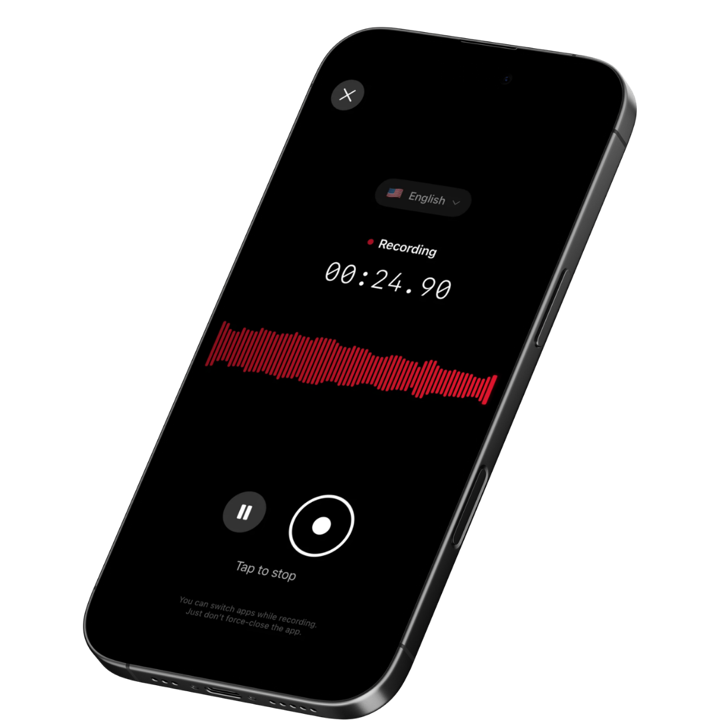
SpeakWise consolidates the capture-to-documentation workflow into a single action. One tap to record. AI handles the transcription, summary, and action item extraction. Everything syncs to Notion automatically. No switching between apps. No copying and pasting between tools. No post-meeting documentation ritual spread across four different platforms.
Download SpeakWise from the App Store and replace the tool-switching overhead of meeting documentation with a single voice capture workflow that handles everything from recording to Notion sync.
Join 10,000+ professionals who have cut their post-meeting tool stack from five apps to one and saved hours every week in the process.
Get SpeakWise Free
4.9-star App Store Rating | iOS Optimized

🎯 4.9★ App Store Rating | 📱 Built for iOS
