Sales Productivity Statistics 2026: Rep Performance


Used by recruiters, executives, consultants, and more.
Sales Productivity Statistics 2026: Rep Performance
Sales reps spend only 30% of their time actually selling, while administrative work consumes the rest. 84% of B2B sales reps missed quota last year. Sellers who partner well with AI tools are 3.7 times more likely to meet quota. And sellers overwhelmed by too many tools are 45% less likely to attain quota. These 17 statistics reveal the gap between how sales teams spend their time and how they could.
Sales productivity has become the defining challenge for revenue organizations. Reps have more tools than ever, yet less than a third of their workday goes to actual selling. Administrative tasks, CRM updates, internal meetings, and tool complexity eat up the majority of their hours. Meanwhile, quota attainment continues to decline, and the average new hire takes 6 to 12 months to become fully productive.
This post covers 17 statistics that define sales productivity in 2026. From time allocation and quota attainment to AI impact and CRM adoption, these numbers provide the evidence base for sales leaders rethinking how their teams spend their time.
Key Sales Productivity Statistics (2026)
- Sales productivity remains critically low industry-wide: reps spend only 30% of their time actually selling, with the rest consumed by admin work (Everstage).
- 84% of B2B sales reps missed their quota last year, underscoring how widespread the productivity gap has become (SPOTIO).
- Sellers who partner well with AI tools are 3.7 times more likely to meet quota than those who don't (Everstage).
- The average seller now juggles 8 tools to close a single deal, and tool overload measurably drags down sales productivity (Salesforce).
- Reps spend 19% of their working hours just updating CRM systems instead of selling (Forbes Advisor).
- Sales automation gives reps back 6 hours per week by eliminating manual data entry and duplicate work (Rep Order Management).
- 88% of reps using AI sales agents say the technology increases their odds of hitting their sales targets, per Salesforce's 2026 State of Sales report (Salesforce).
1. Sales reps spend only 30% of their time actually selling
The single most striking sales productivity statistic: reps spend only 30% of their time on actual selling activities. The remaining 70% goes to administrative work, internal meetings, CRM updates, follow-ups, and other non-revenue tasks. Some analyses put the selling time even lower, at 28%. Either way, the implication is clear. More than two-thirds of a sales rep's workday produces no direct revenue. Any improvement in this ratio has an outsized impact on pipeline and closed deals.
Source: Everstage - Sales Productivity Statistics 2026
2. 84% of B2B sales reps missed quota last year
Quota attainment has reached alarming lows. 84% of B2B sales reps missed their quota last year, according to SPOTIO's 2026 sales statistics compilation, indicating a significant and widening performance gap across teams. The RepVue Cloud Sales Index paints a somewhat less bleak picture, with global quota attainment around 43% in Q4 2024, but both numbers reveal that the majority of sales professionals are underperforming relative to expectations. Low quota attainment suggests either unrealistic targets, insufficient selling time, or both. Most evidence points to the time problem.
Source: SPOTIO - 150+ Sales Statistics for 2026
3. Sellers use an average of 8 tools to close deals
Tool proliferation has become its own productivity problem. The average seller uses 8 tools to close deals, creating constant context switching between platforms. 42% of sales reps feel overwhelmed by too many tools. The administrative burden of managing multiple systems, remembering different interfaces, and keeping data synchronized across tools directly reduces selling time. The irony is that each tool was added to improve productivity, but their cumulative effect is the opposite.
Source: Salesforce - 40 Sales Statistics to Watch for in 2026
4. Sellers overwhelmed by tools are 45% less likely to attain quota
The productivity cost of tool overload is quantifiable. Sellers who feel overwhelmed by their tech stack are 45% less likely to attain quota compared to those who feel their tools are manageable. This statistic turns the "more tools equals more productivity" assumption on its head. Sales organizations that focus on consolidating and simplifying their tech stack may see better results than those adding new point solutions. Tool complexity is not neutral. It actively undermines performance.
Source: Salesforce - 40 Sales Statistics to Watch for in 2026
5. AI sales tools make reps 3.7 times more likely to meet quota
Beyond aggregate productivity gains, AI has a direct impact on individual quota attainment. Reps using AI sales tools are 3.7 times more likely to meet their quota than those who do not. This multiplier effect reflects how AI addresses the core productivity bottleneck. By automating administrative tasks, providing real-time coaching, and surfacing the right information at the right moment, AI tools give reps back the selling time that manual processes consume.
Source: Everstage - Sales Productivity Statistics 2026
6. Reps spend 19% of their time updating CRM systems
CRM data entry is one of the largest single time drains for sales professionals. Reps spend 19% of their workday updating CRM systems - nearly one in five working hours dedicated to data entry rather than customer engagement. CRM data entry automation can reduce this admin time by 17%. For a team of ten reps, a 17% reduction in CRM time translates to roughly 1.5 additional full-time equivalents worth of selling capacity without adding headcount.
Source: Forbes Advisor - 34 Must-Know Sales Statistics; Rep Order Management - 77 Sales Automation Statistics 2026
7. Automation saves sales teams 6 hours per week per rep
Sales automation tools deliver consistent time savings. Teams that implement automation save an average of 6 hours per week per rep by eliminating manual data entry, duplicate work, and repetitive follow-up tasks. Over a year, that adds up to 312 hours per rep - equivalent to nearly 8 additional full work weeks of selling time. For a sales organization of 50 reps, automation effectively adds the equivalent of 15 full-time sellers without hiring anyone.
Source: Rep Order Management - 77 Sales Automation Statistics 2025
8. 94% of businesses report a boost in sales productivity after implementing CRM
CRM adoption remains one of the highest-ROI investments in sales technology. 94% of businesses report a measurable boost in sales productivity after implementing a CRM system. The productivity gains come from centralized customer data, streamlined communication tracking, automated follow-up reminders, and better pipeline visibility. Despite this near-universal positive impact, many sales organizations still struggle with CRM adoption rates among their reps, undermining the tool's potential.
Source: Freshworks - CRM Statistics; Flowlu - 15 Important CRM Statistics to Know in 2026
9. It takes 6 to 12 months for a new sales rep to become fully productive
New hire ramp time is a hidden productivity cost. It takes 6 to 12 months for a new sales rep to become fully productive. During this period, the rep generates below-target revenue while consuming management time, training resources, and a full compensation package. High turnover amplifies this cost. If a team experiences 30% annual turnover, roughly a third of the team is always in a reduced-productivity ramp period, permanently depressing overall team performance.
Source: SPOTIO - 150+ Sales Statistics for 2026
10. Automation has freed 20% of top-performing sellers' capacity
Top-performing B2B sales organizations are using automation to create a significant capacity advantage. Automation has helped these organizations free up about 20% of sellers' capacity and improve productivity by up to 30%. The key distinction is that top performers use automation strategically. They focus on the highest-value tasks and automate everything else. This approach compounds: freed capacity goes to more selling, which drives more revenue, which funds more automation investment.
Source: McKinsey - Sales Automation Research
11. 83% of sales teams using AI automation report increased productivity
AI automation adoption correlates strongly with productivity gains across the sales function. 83% of sales teams that have implemented AI automation report increased productivity. The gains are not limited to individual reps. AI improves pipeline visibility, forecast accuracy, and coaching effectiveness at the management level. When both reps and managers benefit from AI tools, the productivity impact compounds across the entire sales organization.
Source: Rep Order Management - 77 Sales Automation Statistics 2026
12. CRM automation reduces administrative tasks by up to 80%
The administrative burden that consumes 70% of selling time is dramatically reducible. CRM automation can eliminate up to 80% of administrative tasks, translating to 8-14% shorter sales cycles and significantly fewer missed opportunities. The math is compelling: if a rep currently spends 70% of their time on admin and automation removes 80% of that burden, the rep recovers 56% of their workday for revenue-generating activities. That effectively doubles their available selling time.
Source: Nutshell - 20 CRM Statistics That Sales Professionals Need to Know in 2026
13. By 2026, AI-powered automation will handle 60% of sales-related tasks
The automation trajectory in sales is steep. By 2026, AI-powered automation is projected to handle 60% of sales-related tasks, up from current levels. This shift will fundamentally change the sales rep role from one dominated by administrative execution to one focused on relationship building, strategic conversation, and complex deal navigation. Reps who embrace AI tools now will be better positioned for this transition. Those who resist may find their role redefined around them.
Source: Rep Order Management - 77 Sales Automation Statistics 2026
14. 64% of recurring sales meetings lack a structured agenda
Meeting quality is another drag on sales productivity. 64% of recurring meetings lack a structured agenda, meaning sales teams spend significant time in conversations without clear objectives or outcomes. This contributes to the 70% of time spent on non-selling activities. For a sales team meeting twice weekly without agendas, the cumulative time waste over a year can exceed 100 hours per rep - time that produces no pipeline, no closed deals, and no customer value.
Source: Flowtrace - State of Meetings Report 2025
15. 88% of reps with AI agents say it increases their odds of hitting sales targets
AI adoption is now delivering a direct, self-reported boost to quota performance. In Salesforce's 2026 State of Sales report, 88% of reps who use AI sales agents say the technology increases their odds of hitting their sales targets. Agents take over the friction of the job - queuing next steps, drafting follow-ups, and surfacing account context - so reps spend more of their day in front of buyers instead of inside their CRM. Confidence in AI has moved past early-adopter enthusiasm into a broad, reported productivity effect across the sales function.
Source: Salesforce - 40 Sales Statistics that Reveal How Teams Can Succeed in 2026
16. 85% of sales reps say AI frees them to focus on higher-value work
The productivity case for AI in sales is not just about speed - it's about where reps spend their attention. 85% of sales reps who use AI agents say the technology frees them to focus on higher-value work, according to Salesforce's 2026 State of Sales report. With agents handling prospecting research and drafting call summaries, reps get more of their week back for the parts of the job that actually require a human: building relationships and closing deals. This is the same time-reallocation effect running through every automation statistic in this post, this time confirmed directly by reps themselves.
Source: Salesforce - 40 Sales Statistics that Reveal How Teams Can Succeed in 2026
17. Just one in three field sales managers report more than 70% of their team consistently hitting quota
Fresh 2026 survey data adds texture to the quota-attainment crisis. According to SPOTIO's 2026 State of Field Sales research, just one in three field sales managers report that more than 70% of their team is consistently hitting quota, and only 9% report 90%-plus attainment. The gap between top and bottom performers on a team is widening, not narrowing, which points back to the same root cause running through this post: reps who spend more of their week on admin work simply have less time to sell.
Source: SPOTIO - 150+ Sales Statistics for 2026
The Sales Productivity Crisis: Too Much Admin, Not Enough Selling
These 17 statistics reveal a sales function in crisis. Reps spend less than a third of their time selling. 84% miss quota. Tool overload makes things worse, not better. The productivity gap between what sales teams could produce and what they actually deliver is enormous.
The solution is emerging clearly from the data. AI and automation consistently deliver the largest productivity gains. AI users are 3.7 times more likely to hit quota. Automation saves 6 hours per week per rep. CRM automation can eliminate up to 80% of administrative tasks. The technology exists to close the productivity gap. The question is adoption speed.
The strategic implication is straightforward. Sales organizations should audit how their reps spend time, identify the largest non-selling time drains, and systematically automate them. Every hour returned to selling translates directly to pipeline and revenue. In a market where 84% of reps miss quota, the organizations that solve the time allocation problem will significantly outperform those that do not.
When reps spend 70% of their time on tasks that generate zero revenue, the biggest sales productivity gain comes not from better selling skills but from eliminating the work that prevents selling from happening.---
Never Lose Another Sales Conversation Detail
Sales calls are where deals are won or lost. A prospect mentions a specific pain point, a competitor's weakness, or a budget timeline. If that detail is not captured accurately, it cannot be used in the follow-up. But taking notes during a sales call splits attention and undermines the conversation itself.
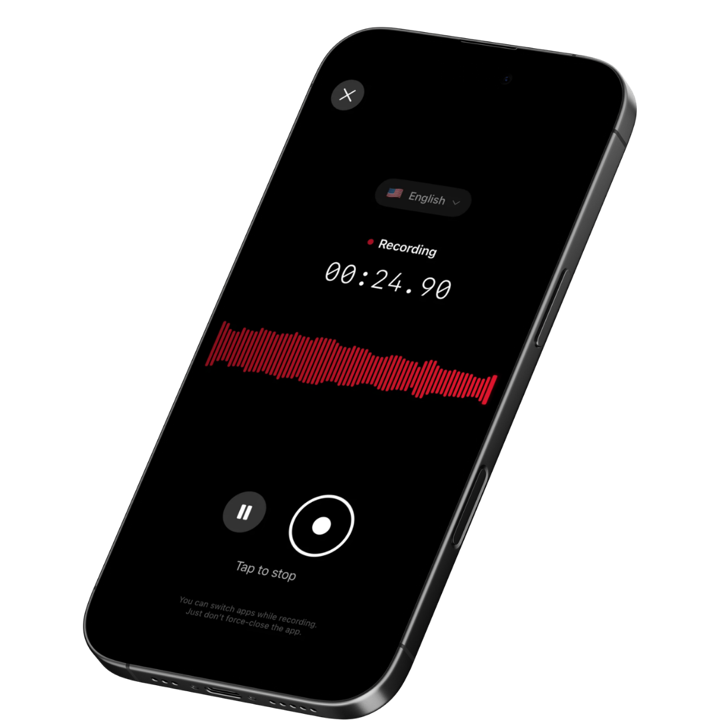
Voice capture solves the sales rep's core documentation challenge. Record client calls, discovery sessions, and team meetings with one tap. AI transcription delivers instant summaries, action items, and key details in searchable text. Every prospect mention, objection, and commitment is captured without breaking conversational flow.
Download Speakwise from the App Store and capture every sales conversation with AI-powered transcription, automatic action items, and Notion sync - so you can focus on selling instead of note-taking.
Join 10,000+ professionals who close more deals by capturing every conversation detail without lifting a pen.
Get Speakwise Free
4.9-star App Store Rating | iOS Optimized

🎯 4.9★ App Store Rating | 📱 Built for iOS
