Screen Time at Work Statistics 2026: Hours Logged, Eye Strain, and Digital Exhaustion
Used by recruiters, executives, consultants, and more.
Screen Time at Work Statistics 2026: Hours Logged, Eye Strain, and Digital Exhaustion
More than 104 million working-age Americans spend over seven hours per day staring at screens, and the economic damage is breathtaking: $151 billion per year in health system costs, productivity losses, and diminished wellbeing. Remote workers now log an average of 13 hours of daily screen time, while nearly 70% of the global workforce suffers from computer vision syndrome. The modern office is not a place of ergonomic chairs and natural light--it is a screen, and we are glued to it.
The screens we stare at all day were supposed to make us more productive. Email was faster than mail. Spreadsheets were faster than ledgers. Video calls were faster than flights. And yet, somewhere along the way, the tools designed to accelerate work began to consume the worker. The average office professional now spends more waking hours looking at a digital display than doing anything else in their life--more than sleeping, more than exercising, more than engaging with family. The result is an epidemic of eye strain, chronic pain, cognitive fatigue, disrupted sleep, and a growing sense that the screens are working us rather than the other way around. The data paints an uncomfortable picture: we have built a modern workplace around an input method--staring at glowing rectangles--that our bodies and brains were never designed to sustain for eight, ten, or thirteen hours per day. The costs are no longer hypothetical. They are measured in billions of dollars, millions of lost workdays, and the quiet deterioration of worker health and focus.
In this post, we'll explore 17 statistics that quantify the true scope of workplace screen time and its consequences. From the sheer number of hours logged to the financial toll of digital eye strain, from the musculoskeletal damage of prolonged sitting to the sleep disruption caused by blue light exposure, these numbers tell a story that every employer, employee, and knowledge worker needs to understand. Whether you are building a case for workplace wellness initiatives, reconsidering your own daily habits, or searching for tools that reduce screen dependency, these statistics provide the data-driven foundation for change.
1. Over 104 million working-age Americans spend more than 7 hours per day on screens
A landmark 2024 report by the American Optometric Association (AOA) and the Deloitte Economics Institute found that more than 104 million working-age Americans are exposed to excessive screen time, defined as more than seven hours per day. This figure represents a significant portion of the American workforce and underscores how deeply screen-dependent modern work has become. The AOA noted that nearly 70% of individuals working in office jobs are exposed to excessive screen time, compared to 42% of workers in other professions. For most knowledge workers, screens are not a tool they occasionally use--screens are the entirety of their work environment.
Source: American Optometric Association / Deloitte Economics Institute
2. Unmanaged screen time costs the U.S. economy $151 billion per year
The same AOA-Deloitte report quantified the economic damage: excessive unmanaged screen time among American workers resulted in an estimated $151 billion in combined costs to health systems, productivity, and wellbeing in 2023 alone. Productivity losses accounted for the largest share, with an estimated $50.6 billion lost from missed workdays and reduced output. Additional costs included $1.2 billion in direct healthcare system expenses. The report emphasized that as little as two hours of screen exposure per day can induce digital eye strain symptoms, meaning even workers with moderate screen use are at risk. The $151 billion figure represents a conservative estimate, as it does not fully account for downstream effects like chronic disease, long-term disability, or the mental health consequences of sustained digital overload.
Source: American Optometric Association / Deloitte Economics Institute
3. The average office worker spends 1,700 hours per year in front of a computer screen
A survey of 2,000 office workers conducted by contact lens manufacturer Acuvue found that the typical office worker spends approximately 1,700 hours per year staring at a computer screen--roughly 6.5 hours per workday. Over a 40-year career, that adds up to 68,000 hours, or nearly eight full years of unbroken screen exposure. The study also found that 37% of respondents regularly squint to read text on their monitors and that the same proportion suffers from recurrent headaches attributed to prolonged screen use. Perhaps most concerning, more than half of respondents said they pay less attention to the health of their eyes than any other organ.
Source: StudyFinds / Acuvue Survey
4. Remote workers spend approximately 13 hours per day staring at screens
A survey of 1,000 American workers conducted by All About Vision found that employees working from home spend an average of 13 hours daily staring at screens--nearly double the screen time of their on-site counterparts. This figure encompasses both work screens (laptops, monitors, tablets) and personal device use that bleeds into and around the workday. The survey also revealed that more than two-thirds of respondents said increased screen time led to new vision problems, and 43% of remote workers reported leaving work early due to vision-related issues. The blurring of boundaries between work and personal screen use means remote workers never truly get a break from digital displays.
Source: All About Vision Survey via The Hill
5. Computer vision syndrome affects 69% of the global population
A systematic review and meta-analysis published in Scientific Reports analyzed data across multiple studies and found that the pooled prevalence of computer vision syndrome (CVS)--also known as digital eye strain--was 66% in the general population and 69.2% among workers. That means roughly seven out of every ten workers experience symptoms including eye strain, headaches, blurred vision, dry eyes, and neck and shoulder pain attributable to prolonged screen use. The COVID-19 pandemic worsened the problem significantly, with studies reporting symptom prevalence as high as 74% during periods of enforced remote work. These numbers represent a workplace health crisis that is almost entirely normalized--most workers simply accept the discomfort as part of the job.
Source: Nature / Scientific Reports -- Systematic Review and Meta-Analysis
6. The U.S. National Institute for Occupational Safety and Health reports that CVS affects up to 90% of workers who spend 3+ hours daily at a computer
While the global average prevalence of computer vision syndrome hovers around 69%, the picture worsens dramatically for heavy screen users. The U.S. National Institute for Occupational Safety and Health (NIOSH) has reported that computer vision syndrome affects about 90% of people who spend three or more hours a day at a computer. Given that most office workers spend well over three hours daily on screens, this means the vast majority of knowledge workers are functionally guaranteed to develop eye strain symptoms at some point during their careers. The American Optometric Association considers CVS a diagnosable condition requiring professional treatment, not simply a minor inconvenience.
Source: American Optometric Association / NIOSH
7. Workers toggle between apps approximately 1,200 times per day, losing 9% of their work time
A Harvard Business Review study tracked 137 employees across 20 teams over five weeks and found that workers toggled between different applications and websites roughly 1,200 times per day. Each toggle required an average of just over two seconds to reorient, which adds up to nearly four hours per week--approximately 9% of total work time--spent simply switching contexts between screens. This constant toggling does not just waste time; it fragments attention, increases cognitive load, and contributes to the mental exhaustion that workers describe as "screen fatigue." Every switch is a micro-interruption, and across 1,200 daily occurrences, the cumulative toll on focus and energy is devastating.
Source: Harvard Business Review
8. 60% of employees feel overwhelmed by workplace technology, and nearly two-thirds have considered quitting over IT complexity
Research into workplace technology overload reveals that six in ten employees feel overwhelmed by the digital tools they are required to use daily. The average enterprise deploys 88 different applications, with tech companies averaging 155 apps each. The cognitive burden is severe: 26% of employees say app overload makes them less efficient at work, and nearly two-thirds have considered quitting their jobs specifically because internal IT systems were too complicated and time-consuming. The paradox is stark--tools designed to boost productivity are so numerous and fragmented that they actively harm it. Each additional app is another screen, another interface, another source of visual and cognitive demand.
Source: IT Pro / CIO Dive
9. Dry eye disease affects approximately 50% of computer users
A meta-analysis examining data from 11,365 individuals found that the overall prevalence of dry eye disease (DED) among computer users was 49.5%, with rates ranging from 9.5% to 87.5% depending on diagnostic criteria and study methodology. Reduced blink rate is the primary culprit: research shows that people blink 66% less frequently when staring at screens, causing the tear film to evaporate and leaving the corneal surface exposed. Chronic dry eye is not merely uncomfortable--it impairs visual acuity, reduces reading speed, and forces the brain to work harder to process visual information, compounding the cognitive fatigue that already accompanies prolonged screen work.
Source: Clinical Ophthalmology / PMC -- Systematic Review
10. 82% of employees are at risk of burnout, with digital fatigue as a primary driver
Research published in early 2025 found that 82% of employees are at risk of burnout, marking a significant escalation from previous years. Among the leading contributors is an "always-on" digital work culture, with 69% of respondents reporting a risk of digital burnout specifically. Among Gen Z workers, burnout rates exceed 50%, driven largely by poor work-life boundaries, constant digital connectivity, and the screen-saturated nature of modern work. Digital fatigue--defined as the mental and physical exhaustion resulting from sustained interaction with digital devices--accounted for 39% of the variance in employee exhaustion and 17% of the variance in negative mental health outcomes, according to a separate study published in SAGE Open.
Source: The Interview Guys -- Workplace Burnout Report 2025 / SAGE Open
11. Neck pain affects up to 71% of computer workers, with prolonged screen time nearly doubling the risk
A cross-sectional study published in the International Journal of Occupational Safety and Ergonomics found that the annual prevalence of neck pain among computer workers reached 71.2%, with shoulder pain affecting 53.5% of respondents. Prolonged computer time was associated with an odds ratio of 1.92, meaning heavy screen users are nearly twice as likely to develop neck pain compared to those with moderate use. The mechanism is straightforward: staring at a screen encourages forward head posture, which places enormous strain on the cervical spine. For every inch the head moves forward from neutral alignment, the effective weight on the neck increases by approximately 10 pounds. Over 1,700 hours per year, this sustained biomechanical stress produces chronic musculoskeletal damage that extends far beyond simple "office stiffness."
Source: International Journal of Occupational Safety and Ergonomics / PMC
12. Average global screen time has reached 6 hours and 40 minutes per day, with Americans averaging over 7 hours
Data compiled by multiple research firms shows that the global average daily screen time across all devices reached approximately 6 hours and 40 minutes in 2024, up from 6 hours and 19 minutes in 2015. Americans exceed the global average, logging an average of 7 hours and 3 minutes per day. South Africans lead the world at 9 hours and 24 minutes daily. Mobile devices account for 53% of total screen time, with average mobile usage alone reaching 4 hours and 37 minutes per day globally. These figures represent total screen time across work and personal use, but for many workers, the two categories are nearly impossible to separate--work emails on phones, personal browsing on work laptops, and the omnipresent glow of screens from morning to bedtime.
Source: DemandSage / Backlinko -- Screen Time Statistics 2026
13. Blue light exposure before bed reduces sleep duration by 16 minutes and significantly suppresses melatonin
A systematic review published in the journal Frontiers in Public Health found that exposure to blue light from screens reduced sleep duration by approximately 16 minutes on average and significantly suppressed melatonin production. Individuals who exceeded four hours of screen time before bed had a 50% higher risk of developing insomnia. Critically, blue light at wavelengths of 400-450 nanometers suppresses melatonin secretion more powerfully than any other color in the visible spectrum, and modern screens emit precisely this wavelength. A study from Indiana University demonstrated that workers who wore blue-light-filtering glasses experienced measurable improvements in sleep quality, work engagement, task performance, and organizational citizenship behavior--confirming the causal chain from screen exposure to sleep disruption to degraded work output.
Source: Frontiers in Public Health / PMC / Indiana University via ScienceDaily
14. It takes 23 minutes and 15 seconds to refocus after a screen-based interruption
Research from the University of California, Irvine found that it takes an average of 23 minutes and 15 seconds to fully regain focus after a single interruption. In a screen-saturated workplace where notifications, emails, Slack messages, and app toggles create a constant barrage of micro-interruptions, this means most workers never achieve sustained deep focus during a typical workday. Combined with the finding that employees switch apps 1,200 times daily, the mathematics of attention become grim: workers spend their days in a perpetual state of partial attention, bouncing between screens and struggling to reorient after each switch. The cognitive cost is not just lost time--it is degraded quality of thought, missed insights, and the chronic low-grade exhaustion that comes from a brain that never gets to settle.
Source: UC Irvine Research
15. The 20-20-20 rule reduces digital eye strain symptoms by up to 46%
The 20-20-20 rule--looking at something 20 feet away for 20 seconds every 20 minutes--was developed by optometrist Dr. Jeffrey Anshel and has been widely endorsed by the American Optometric Association. Research demonstrates that integrating this rule into the workday reduces eye strain symptoms by up to 46%. A 2023 clinical study found that participants following a break-reminder protocol modeled on the rule experienced meaningful reductions in both digital eye strain and dry eye symptoms over a two-week period. Yet despite overwhelming evidence of its effectiveness, most workers do not practice it. The irony is revealing: the solution to screen fatigue requires periodically looking away from screens, but the design of modern work--constant notifications, real-time collaboration expectations, and overflowing inboxes--makes looking away feel impossible.
Source: American Optometric Association / PMC / Contact Lens and Anterior Eye / ScienceDirect
16. 1 in 4 workers who frequently use video calls report feeling worn out by them
A January 2022 Pew Research Center survey found that approximately one in four workers who frequently use video conferencing platforms reported feeling worn out by the experience. Among workers under 50, the figure was higher: 29% described themselves as exhausted by video calls, compared to 18% of workers aged 50 and older. Stanford University research identified four primary causes of video meeting fatigue: excessive close-up eye contact at unnaturally large scale, the cognitive load of constantly seeing oneself on screen (termed "mirror anxiety"), dramatically reduced mobility during calls, and the higher cognitive effort required to send and receive nonverbal signals through a flat screen. While the acute "Zoom fatigue" of the pandemic era has subsided, the fundamental mechanisms--screens demanding sustained visual attention in an unnatural format--remain unchanged.
Source: Pew Research Center / Stanford University
17. Cutting screen time by just one hour per day measurably improves workplace motivation and wellbeing
A study highlighted by Fortune found that reducing daily screen time by as little as one hour produced measurable improvements in workplace motivation, physical activity levels, and overall mental health. The research suggests that the relationship between screen time and wellbeing is not strictly linear--even modest reductions yield significant benefits. This finding is particularly important because it reframes the solution: workers do not need to abandon screens entirely. They need to find ways to accomplish screen-dependent tasks without screens wherever possible. Every hour reclaimed from screen exposure is an hour returned to the body, the eyes, and the brain--an hour that compounds across days, weeks, and careers into materially better health and performance outcomes.
Source: Fortune
The Screen Time Paradox: We Built Productivity Tools That Destroy the Producer
The 17 statistics above tell a story that is both alarming and absurdly predictable. We built a modern economy around digital screens, then discovered--with mounting evidence over two decades--that the human body and brain were not designed to sustain 7, 10, or 13 hours of daily screen exposure. Eyes dry out. Necks seize up. Sleep deteriorates. Focus fragments. Burnout accelerates. And yet, instead of reducing our screen dependency, we respond to each new problem by adding another screen-based solution: another app, another dashboard, another notification system, another video call. The productivity tools themselves become the productivity problem. Consider the absurdity: a worker develops eye strain from eight hours of screen use, so they open a wellness app--on their screen--to set reminders to take screen breaks. A team struggles with meeting overload, so management introduces a new scheduling tool that requires everyone to spend more time on screens configuring their availability. The cycle is self-reinforcing, and the data shows it is accelerating.
The economic data makes the scale of the crisis undeniable. At $151 billion in annual costs, unmanaged screen time is not a wellness concern--it is a macroeconomic drain comparable to the GDP of entire countries. The $50.6 billion in direct productivity losses represents millions of workdays where employees showed up but could not perform at full capacity because their eyes were strained, their attention was fractured, or their sleep-deprived brains simply could not sustain another hour of screen-based cognitive load. These are not lazy workers. These are workers trapped in a system that requires them to damage their health in order to do their jobs. And the cost is not borne equally: remote workers, who spend up to 13 hours daily on screens, absorb a disproportionate share of the physical and cognitive toll. The pandemic accelerated remote work adoption, but no corresponding investment was made in reducing the screen dependency that remote work intensifies.
The musculoskeletal and vision data is particularly sobering. When 69% of the workforce has diagnosable digital eye strain, when 71% of computer workers report chronic neck pain, when half of all screen users develop dry eye disease, we are no longer describing individual health choices--we are describing an occupational hazard. The modern office, with its banks of monitors and open-plan designs optimized for "collaboration," is as physically harmful to its workers as any industrial setting. The difference is that the damage is slow, invisible, and easily dismissed as "just part of office life." No factory would be permitted to operate if 90% of its workers developed a diagnosable physical condition after three hours of exposure to its primary work tool. Yet that is precisely what the NIOSH data tells us about screen-based work--and we treat it as normal.
The attention and cognition data reveals a subtler but equally destructive pattern. Workers who toggle between 1,200 apps per day and require 23 minutes to refocus after each interruption are not working--they are surviving. The modern knowledge worker's day is not a series of productive work sessions punctuated by brief breaks. It is a series of brief, fragmented attention windows punctuated by constant reorientation. The screens demand visual attention at all times, and the notifications demand cognitive attention at all times, leaving no window for the sustained, deep focus that produces the highest-quality work. The irony is that the workers who appear busiest--eyes locked on screens, fingers flying across keyboards, tabs multiplying across monitors--are often the least productive, trapped in a state of performative screen engagement that exhausts without producing.
Perhaps the most important insight from these statistics is also the simplest: even modest reductions in screen time produce meaningful improvements in health, focus, and performance. The 20-20-20 rule cuts eye strain by 46%. Reducing screen time by one hour per day boosts motivation and wellbeing. The solution is not a radical overhaul of how we work--it is a strategic reduction in unnecessary screen exposure. Not every task that currently lives on a screen needs to stay there. Note-taking does not require a screen. Thought capture does not require a screen. Quick reminders, brainstorming, and meeting reflections do not require a screen. The question every organization and professional should be asking is straightforward: which of the hours I spend staring at screens today could be accomplished without a screen at all?
The screens are not going away. But the assumption that every task requires one--every note, every message, every thought--needs to die. The data is clear: our eyes, our bodies, and our productivity depend on finding another way.---
Ready to give your eyes--and your brain--a break?
The statistics in this article point to a single, urgent conclusion: we need to reduce the number of hours we spend staring at screens, especially for tasks that do not actually require visual interaction with a display. Note-taking, thought capture, meeting documentation, brainstorming, and quick reminders are all activities that the modern workplace has forced onto screens--but none of them inherently require one. The gap between what screens demand from us and what the task actually needs represents an enormous opportunity to reclaim hours of screen time every week.
Voice capture offers a fundamentally different approach. Instead of staring at yet another screen to type a note, draft a message, or document a thought, you simply speak--and AI handles the rest. No screen required. No eye strain. No digital exhaustion.
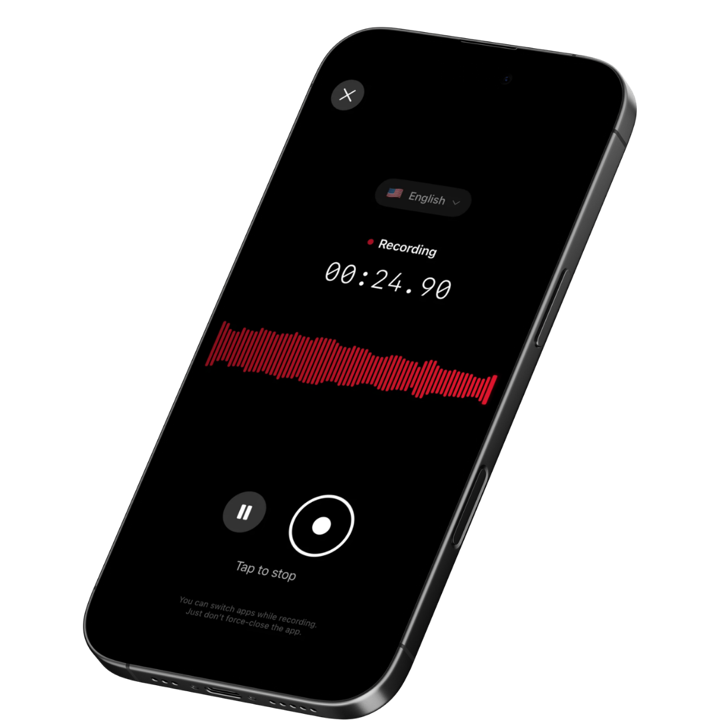
Download SpeakWise from the App Store and discover how one-tap recording, AI transcription, intelligent summaries, and Notion integration can help you capture information without adding to your screen time.
Every voice note you record instead of type is a few minutes returned to your eyes. Every meeting summary generated by AI instead of manually transcribed is an hour freed from screen exposure. Over weeks and months, these small shifts compound into a meaningfully different relationship with your screens--one where you control them rather than the other way around. The research is unambiguous: reducing screen time by even one hour per day improves motivation, wellbeing, and cognitive performance. Voice-first tools make that reduction possible without sacrificing a single piece of captured information.
Join 10,000+ professionals who've discovered that the best way to fight screen fatigue isn't another app on your screen--it's a tool that works with your voice.
Get SpeakWise Free ->
4.9★ App Store Rating | iOS Optimized

🎯 4.9★ App Store Rating | 📱 Built for iOS
