Sitting at Work Statistics 2026: Health Risks and Data
TL;DR
Sitting at work statistics show that most office workers sit for most of the workday. Long periods of sitting are linked to heart disease, type 2 diabetes, and earlier death. Switching between sitting and standing with short walks works better than standing alone. This post collects 16 statistics on sitting at work.


Used by recruiters, executives, consultants, and more.
Sitting at Work Statistics 2026: Health Risks and Data
Office workers spend about 70% of their work time sedentary. Sitting for more than 6 hours daily raises mortality risk by approximately 30%. Each two-hour increase in sitting time raises diabetes risk by 7% and obesity risk by 5%. And remote workers sit an average of 378 minutes per workday - even more than their office counterparts. These 16 statistics reveal the health crisis hiding in plain sight at every desk.
Prolonged sitting has emerged as one of the most significant workplace health risks of the modern era. The phrase "sitting is the new smoking" may be overused, but the underlying data is serious. Cardiovascular disease, type 2 diabetes, musculoskeletal disorders, and increased mortality all correlate with excessive sedentary time. For office workers who spend the majority of their day seated, the cumulative health impact is substantial.
This post covers 16 statistics about sitting at work in 2026. From health risk data to intervention effectiveness, these numbers provide the evidence base for understanding why sedentary work is a growing concern and what can be done about it.
1. Office workers spend about 70% of their work time sedentary
The sedentary reality of desk work is stark. Office workers spend approximately 70% of their work time in a seated or sedentary position. When expanded to total waking hours, the number is nearly as high: about 66% of all waking time is spent sedentary. This means the average office worker is sedentary for roughly 10-11 hours of their waking day when combining work and non-work sitting. The human body evolved for movement, not for the static postures that modern knowledge work demands.
Source: PMC - Adverse Effects of Prolonged Sitting Behavior on the General Health of Office Workers
2. Sitting for more than 6 hours daily raises mortality risk by approximately 30%
The dose-response relationship between sitting and mortality is now well established. Studies show that individuals who sit for more than 6 to 8 hours daily face approximately 30% higher mortality risk, particularly from cardiovascular disease and cancer. This elevated risk persists even for individuals who exercise regularly, although physical activity does partially offset the effects. The implication is that exercise alone cannot fully compensate for a workday spent seated. Reducing total sitting time matters independently.
Source: JAMA Network Open - Occupational Sitting Time, Leisure Physical Activity, and All-Cause Mortality
3. Each two-hour increase in sitting time raises diabetes risk by 7% and obesity risk by 5%
The health impact of sitting accumulates with duration. For each two-hour increment in daily sitting time, the risk of developing type 2 diabetes increases by 7% and the risk of obesity increases by 5%. These are not negligible changes. An office worker who sits for 10 hours daily faces meaningfully higher metabolic risk than one who sits for 6 hours. The incremental nature of this relationship means that even modest reductions in sitting time can produce measurable health benefits.
Source: PMC - Adverse Effects of Prolonged Sitting Behavior on the General Health of Office Workers
4. 38.9% of workers in the European Union spend most of their work time seated
Sedentary work is a global issue. In the European Union, 38.9% of workers spend most of their time at work seated. This figure represents hundreds of millions of workers across the EU economy who face the health risks associated with prolonged sitting. Different sectors show varying rates, with administrative, financial, and IT roles having the highest sedentary percentages. The scale of sedentary work means that workplace sitting is a public health issue, not just an individual health choice.
Source: PMC - Comparison of Sedentary Time in Different Office Environments
5. Remote workers sit an average of 378 minutes (6.3 hours) per workday
Working from home appears to increase sedentary behavior. Research shows that remote workers spend an average of 378 minutes - 6.3 hours - being sedentary per workday. Remote workers also take fewer steps (an average of 1,257 per workday) and make fewer sit-to-stand transitions (20.9 per day). The loss of incidental movement - walking to meeting rooms, visiting colleagues, commuting - means remote workers must be more intentional about movement. Without deliberate breaks, the home office becomes a sedentary trap.
Source: BMC Public Health - The Impact of Working from Home on Sedentary Behaviour
6. Prolonged sitting doubles the risk of cardiovascular disease
The cardiovascular impact of prolonged sitting is dramatic. Sitting for extended periods more than doubles the risk of cardiovascular disease and results in a 90% increase in cardiovascular disease-related deaths. The mechanism involves reduced blood flow, impaired vascular function, and metabolic changes that promote atherosclerosis. For office workers who sit 6-10 hours daily for decades, the cumulative cardiovascular burden is substantial. Regular movement breaks throughout the workday are essential for vascular health.
Source: News-Medical - Health Implications of Office Jobs
7. Greater sitting time increases sarcopenia risk by 33% per additional hour
Muscle loss is a lesser-known consequence of excessive sitting. A greater overall sitting time is associated with an increased risk of sarcopenia - the age-related loss of muscle mass and strength - which climbs by 33% for each one-hour increment of sitting. For office workers who sit 8-10 hours daily, the cumulative sarcopenia risk is significant. Muscle loss reduces metabolic rate, increases fall risk in later life, and diminishes physical capability. Sitting literally wastes muscles over time.
Source: PMC - Adverse Effects of Prolonged Sitting Behavior on the General Health of Office Workers
8. Prolonged sitting increases cardiac death risk by 18% and cancer death risk by 17%
A comprehensive meta-analysis quantified the mortality risks of sedentary behavior across multiple causes. Prolonged sitting was associated with a 1.18-fold increased risk of cardiac death and a 1.17-fold increased risk of cancer death. It also showed a 1.91-fold increased risk of diabetes and a 1.24-fold increased risk of all-cause death. These are independent risk factors, meaning they apply even after controlling for exercise habits, diet, and other health behaviors. Sitting itself is the risk.
Source: JAMA Network Open - Occupational Sitting Time and Mortality
9. The average office worker sits nearly 6 hours during their workday
On a typical workday, the average office employee spends nearly 6 hours seated. Some estimates are higher, with certain studies reporting up to 15 hours of total daily sitting when combining work and non-work time. The 6-hour workday average places most office workers above the risk thresholds identified in mortality studies. For workers in back-to-back meetings or intensive desk roles, actual sitting time may be significantly higher than the average suggests.
Source: O'Brien Physical Therapy - The Rise in Postural Issues
10. Working from home increases sedentary behavior compared to office work
A systematic review and meta-analysis published in BMC Public Health confirmed that working from home increases sedentary behavior compared to working on-site. The additional sedentary time comes from the elimination of commuting-related movement, fewer spontaneous walks to meeting rooms or colleagues' desks, and reduced need to physically move within a larger office environment. Home office setups are typically more compact, requiring less movement to access everything a worker needs throughout the day.
Source: BMC Public Health - Working from Home and Sedentary Behaviour
11. Workplace interventions reduce sitting time by an average of 38 minutes per workday
The good news is that interventions work. A systematic review and meta-analysis found that all types of workplace interventions in combination significantly reduced sitting by an average of 38 minutes per workday. The most effective interventions combined multiple approaches: sit-stand desks, regular break reminders, walking meetings, and organizational policy changes. A 38-minute daily reduction translates to roughly 152 hours less sitting per year, which research suggests is enough to produce measurable health benefits.
Source: ScienceDirect - Effectiveness of Interventions on Sedentary Behaviors in Office Workers
12. Prolonged standing does not reduce heart disease risk and may cause its own problems
The standing desk solution is more nuanced than many assume. A study of over 83,000 participants found that prolonged standing did not reduce the risk of heart disease and stroke. Spending too much time standing was linked to a higher risk of varicose veins and orthostatic issues like dizziness. Research indicates that added health risk from static standing begins at just 2 hours per day. The takeaway is not that standing desks are useless, but that alternating between sitting and standing, combined with regular movement, is the optimal approach.
Source: CNN - Standing Desks May Harm Your Health, Research Finds
13. Alternating between sitting and standing with brief walks is more effective than standing alone
Recent research has clarified the optimal approach to workplace posture. Rather than simply replacing sitting with standing, alternating between sitting and standing combined with brief walks produces better health outcomes than any single posture maintained for long periods. The key factor is variety of movement and posture changes, not the specific position. Regular transitions - every 30 to 60 minutes - keep blood flowing, engage different muscle groups, and prevent the metabolic slowdown associated with prolonged static postures.
Source: Health News Florida - A Standing Desk Is Not Necessarily the Answer
14. Prolonged sitting increases diabetes risk by 91%
Among all the health conditions linked to sedentary behavior, diabetes shows one of the strongest associations. Prolonged sedentary behavior is associated with a 1.91-fold - nearly double - increased risk of developing type 2 diabetes. This strong association reflects the metabolic impact of prolonged sitting: reduced insulin sensitivity, impaired glucose uptake in muscles, and increased fat storage. For the millions of office workers sitting 6-10 hours daily, this diabetes risk is compounding with every sedentary workday.
Source: JAMA Network Open - Occupational Sitting Time and Mortality
15. Prolonged sitting raises all-cause mortality risk by 50%
The mortality data on excessive sitting is sobering. Research shows that prolonged sitting results in a 50% increase in overall mortality risk. This elevated risk applies broadly, not just to cardiovascular or cancer deaths. It encompasses the full spectrum of health conditions that are worsened by sedentary behavior. For context, a 50% increase in all-cause mortality is comparable to the risk increase associated with other major health factors like obesity and smoking.
Source: News-Medical - Health Implications of Office Jobs
16. Reducing sedentary behavior factors are different for home office workers
Research from Nature's Scientific Reports found that the factors influencing sedentary reduction differ between office and home workers. Home office employees require different interventions because their sedentary patterns have different drivers. Without commute movement, colleague interactions, and physical office transitions, remote workers need more structured movement reminders and deliberately designed break routines. One-size-fits-all wellness programs miss these distinctions, leaving the fastest-growing work segment underserved.
Source: Nature Scientific Reports - Factors Influencing Reducing Sedentary Time in Home Office Employees
The Sedentary Crisis: Sitting Is Silently Eroding Worker Health
These 16 statistics reveal a workplace health crisis that is both pervasive and largely unaddressed. Office workers sit for 70% of their work time. Remote workers sit even more. The health consequences are severe and well documented: doubled cardiovascular risk, 91% higher diabetes risk, 33% increased sarcopenia risk per additional sitting hour, and a 50% increase in all-cause mortality.
The response to this crisis has been incomplete. Standing desks, which were embraced as a solution, turn out to have their own risks when used for prolonged periods. The evidence now clearly favors movement variety: alternating between sitting, standing, and walking throughout the day. Workplace interventions that combine multiple approaches reduce sitting by 38 minutes daily - enough to make a meaningful health difference.
The deeper challenge is structural. Knowledge work, by its nature, anchors people to screens and desks. Meetings, emails, documents, and collaborative tools all require seated engagement with a computer. Breaking this pattern requires rethinking not just individual habits but how work itself is organized. Walking meetings, movement breaks built into schedules, and tools that reduce screen time all contribute to a less sedentary workday.
The data is clear: the way we sit at work is making us sick. The solution is not standing all day. It is building movement and variety into the structure of how we work.---
Capture Ideas on the Move - No Desk Required
The sitting statistics point to a clear need: more movement during the workday. But many professionals stay chained to their desks because their work requires typing, note-taking, and documentation. Voice capture breaks that link between productive work and sedentary posture.
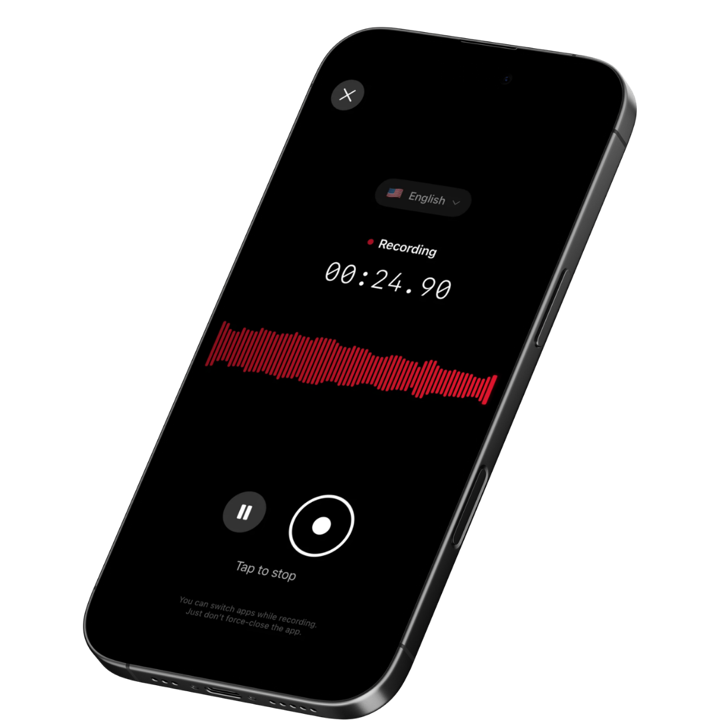
With voice notes, you can capture meeting summaries while walking, record ideas during a standing break, or dictate action items while stretching. AI transcription turns your spoken words into organized, searchable text. You stay productive without staying seated. Speaking is 3x faster than typing and requires zero screen time.
Download Speakwise from the App Store and capture thoughts, meeting notes, and action items while moving - break free from your desk without losing a single idea.
Join 10,000+ professionals who stay productive on the move with AI-powered voice capture.
Get Speakwise Free
4.9-star App Store Rating | iOS Optimized

🎯 4.9★ App Store Rating | 📱 Built for iOS
