Slack Messaging Statistics 2026: Channel Noise, DM Volume, and Communication Sprawl
Used by recruiters, executives, consultants, and more.
Slack Messaging Statistics 2026: Channel Noise, DM Volume, and Communication Sprawl
More than 1.5 billion messages are sent through Slack every single day. The platform's 47 million daily active users spend over 90 minutes per workday actively engaging with channels, DMs, and threads-and remain signed in for an average of nine hours. With 77% of Fortune 100 companies now running on Slack and workers receiving hundreds of pings per day across all communication tools, these 20 statistics reveal how the world's most popular workplace messaging platform has become both a productivity engine and a productivity crisis.
Slack launched in 2013 as a tool to reduce email overload. A decade later, it has succeeded-and created an entirely new category of overload in the process. What began as a streamlined alternative to inbox clutter has evolved into a sprawling ecosystem of channels, threads, DMs, huddles, and integrations that demands constant attention throughout the workday. The average knowledge worker now navigates dozens of channels, responds to messages within minutes, and checks Slack compulsively throughout the day-and often well into the evening. Power users in engineering and product roles spend upwards of three hours daily inside the platform, while even casual users remain tethered to it for the majority of their working hours. The platform hasn't just changed how we communicate at work; it has redefined what it means to be "available," blurring the boundaries between productive collaboration and digital noise. For many workers, Slack is simultaneously the most useful and most distracting tool on their screen-a paradox that grows sharper with every new channel created and every notification that lights up their phone at dinner.
In this post, we'll explore 20 statistics that quantify the scale of Slack messaging, its dominance in the enterprise, and the hidden costs of always-on workplace chat. These numbers reveal not just how much we message, but what that volume does to focus, wellbeing, and actual output. Whether you're a team lead trying to understand why your engineers can't find flow state, an operations manager drowning in channel notifications, or a remote worker who ends every day exhausted from typing rather than thinking, these data points illuminate the messaging paradox-and point toward a fundamentally different approach to workplace communication.
Key Slack Messaging Statistics (2026)
- Slack messaging volume totals more than 1.5 billion messages sent every single day across the platform (DemandSage).
- Slack's daily active users reached 47.2 million worldwide in 2025, up from 38.8 million in 2024 (DemandSage).
- Slack usage among paid customers averages 90 minutes of active engagement per workday-reading, replying, and navigating channels (Slack Blog).
- Slack's enterprise reach now covers 77% of Fortune 100 companies, with more than 200,000 paid customer accounts (DemandSage).
- Slack Connect has proven so valuable that 83% of users say losing access to partner collaboration would hurt their work (SQ Magazine).
- Workplace inboxes add to the load too: the average worker receives 117 emails a day, most skimmed in under 60 seconds (Microsoft Work Trend Index 2025).
- Communication overhead consumes 60% of the average knowledge worker's day in "work about work" like messaging and coordination (Asana Anatomy of Work Index).
1. Slack users send more than 1.5 billion messages every day
The sheer volume of daily messaging on Slack is staggering. According to data compiled by DemandSage, more than 1.5 billion messages are exchanged on Slack every single day across its global user base. To put that in perspective, that is roughly 17,361 messages sent every second, around the clock-a volume that dwarfs many social media platforms. Each message represents a notification, a context shift, a decision to read or ignore-and collectively, they form a river of communication that never stops flowing. For individual workers, this global volume translates into a constant stream of channel updates, thread replies, and DM pings that define the rhythm of the modern workday. When your team's messages are just a drop in this 1.5 billion-message ocean, the scale of the noise problem becomes viscerally clear. Source: DemandSage - Slack Statistics 2026
2. Slack has 47.2 million daily active users worldwide
Slack's reach across the global workforce continues to expand at a remarkable pace. As of 2025, the platform serves approximately 47.2 million daily active users and 79 million monthly active users, according to DemandSage's analysis of Slack's growth trajectory. This represents steady year-over-year growth from 32.3 million DAU in 2023 and 38.8 million in 2024-roughly 22% growth in the most recent year alone-demonstrating that even in a market dominated by Microsoft Teams' bundled distribution, Slack continues to attract and retain deeply engaged users. The platform is now used by over 750,000 organizations in more than 150 countries and supports 12 languages-making its messaging patterns a reliable proxy for global workplace communication behavior. Each of those 47 million daily users is navigating channels, fielding DMs, and managing notifications-creating a collective communication load that scales exponentially with adoption. Source: DemandSage - Slack Statistics 2026
3. The average Slack user spends 90 minutes per workday actively using the platform
While users stay signed in for roughly nine hours per workday, the active engagement window is itself substantial. Slack's own data, published in an official blog post, revealed that among paid customers, users spend about 90 minutes per workday actively using Slack-reading messages, composing replies, navigating channels, and interacting with integrations. This represents a significant chunk of the workday dedicated solely to one messaging platform-time that comes directly at the expense of deep, focused work on core responsibilities. For power users in engineering and product roles, that figure climbs to over three hours daily. The distinction between "signed in" and "actively using" also understates the cognitive toll: even when not actively typing, the awareness that messages are accumulating creates a background anxiety that fragments attention. Source: Slack Blog - Work Is Fueled by True Engagement
4. 77% of Fortune 100 companies have adopted Slack
Slack's penetration at the highest levels of enterprise is remarkable. According to DemandSage's analysis of Slack's enterprise data, 77% of Fortune 100 companies have adopted the platform in at least one department or team. Slack also commands an 18% share of the business communications software market, competing directly against Microsoft Teams' bundled distribution. With over 200,000 paid customer accounts, Slack is no longer a startup communication tool; it is core infrastructure for the world's largest corporations. This level of adoption means that Slack's messaging patterns don't just affect individual users-they shape the communication culture of entire industries. Source: DemandSage - Slack Statistics 2026
5. Slack users perform 5 billion actions per week across the platform
Messaging is only one dimension of Slack activity. According to Slack's official reporting, users perform more than 5 billion actions per week-a figure that encompasses sending messages, reading messages, uploading files, commenting on documents, performing searches, interacting with apps and bots, and similar actions indicating active engagement, with the platform's reach extending well beyond the desktop and into commutes, lunch breaks, and evenings. With integrations connecting more than 2,600 apps in the Slack Marketplace-per SQ Magazine's 2026 update-Slack has become far more than a messaging tool-it is an entire work operating system where communication, documentation, and app interaction blend into a continuous stream of digital activity that demands constant attention throughout every waking hour. Source: Slack Blog - Work Is Fueled by True Engagement
6. Communication consumes 60% of the average knowledge worker's day on "work about work"
Slack does not exist in isolation-it is one layer in a communication stack that dominates the workday. Asana's Anatomy of Work Index, which surveys knowledge workers globally, found that they continue to spend 60% of their day on "work about work"-things like messaging, searching for information, and switching between apps-rather than the skilled job they were actually hired to do. For Slack-heavy organizations, the messaging platform accounts for a substantial portion of that communication time, effectively competing with the actual work it was designed to facilitate. When most of your day is spent communicating about work rather than doing it, the tool has become the task. Source: Asana - Anatomy of Work Index
7. Employees are interrupted every 2 minutes-275 times per day-by messages, emails, and meetings
The relentless pace of digital communication has created what Microsoft calls the "infinite workday." Their 2025 Work Trend Index analysis found that during core work hours, employees face a ping-from meetings, emails, or chats-every two minutes, adding up to 275 interruptions per day. For Slack users, this means channel notifications, DM alerts, thread updates, and @mentions arrive in a near-continuous stream. Combined with research showing it takes 23 minutes to fully refocus after an interruption, the math becomes impossible: there are not enough minutes in a workday to recover from the interruptions that workday contains. Source: Microsoft Work Trend Index 2025
8. Slack and email cost companies an average of $28,209 per employee per year
The financial cost of messaging overload is quantifiable-and substantial. RescueTime analyzed the anonymized daily activity data of 50,000 knowledge workers and found that time spent on email and instant messaging tools like Slack costs companies an average of $28,209 per employee per year in lost productivity. For a 500-person company, that translates to more than $14 million per year spent on email- and Slack-related communication overhead-a hidden cost that rarely appears in any budget line item but silently drains the organization's capacity for productive output. These are not theoretical numbers; they are derived from actual time-tracking data measuring how workers spend their days. Source: RescueTime - Slack and Email Cost
9. Knowledge workers check communication tools every 6 minutes on average
The compulsion to stay current with messaging is relentless. RescueTime's research, based on analysis of 50,000 knowledge workers' daily activity, revealed that most workers "check in" on communication tools-primarily Slack and email-every 6 minutes throughout the workday. This means workers get, at best, six-minute windows of uninterrupted focus before the pull of notifications, unread badges, or simple habit draws them back to their messaging apps. The result is a workday fragmented into tiny increments, each far too short for the kind of deep, concentrated thinking that produces meaningful output. It is not the messages themselves that destroy productivity-it is the compulsive checking, the badge-clearing, the fear that something important is being missed. Source: RescueTime - Slack and Email Cost
10. 77% of employees say notifications from work messaging apps contribute to their stress levels
Slack was designed to make work communication easier, but for most workers it has become a significant source of anxiety. Reporting on workplace communication research, AllWork found that 77% of employees-and 71% of managers-experience significant distractions and stress from notifications and digital tools like Slack and Microsoft Teams. This stress manifests in multiple ways: notification anxiety triggered by every buzz and banner, the pressure to maintain an "active" status indicator throughout the day, fear of missing important messages buried in busy channels, and the cognitive burden of managing dozens of simultaneous conversations across channels and DMs. The green dot next to your name has become a digital leash-and most workers feel it pulling. Source: AllWork - Why Muting Your Work Notifications Could Be the Healthiest Thing You Do
11. 37% of workers log on outside standard hours at least weekly, driven partly by messaging expectations
Slack's always-on nature is a primary driver of extended work hours. According to Slack's own Workforce Index research, about two out of every five desk workers-37%-log on outside of their company's standard hours at least weekly, and more than half of those workers (54%) say it's because they feel pressured to, not because they choose to. The combination of mobile Slack access, push notifications, and cultural expectations around response times has effectively blurred the boundary between work and personal time. When your workspace lives in your pocket, every notification is an invitation to extend the workday-and many workers accept. Source: Slack Blog - The Surprising Connection Between After-Hours Work and Decreased Productivity
12. Employees who work after hours register 20% lower productivity scores
The irony of after-hours messaging is that it backfires. Slack's Workforce Index data reveals that employees who feel obligated to work after hours-often responding to Slack messages and notifications-register 20% lower productivity scores than those who log off at the end of the standard workday. They are also twice as likely to report burnout. The data demolishes the myth that more availability equals more output. Instead, it confirms what neuroscience has long suggested: the brain requires genuine downtime to consolidate learning, restore cognitive resources, and prepare for the next day's demands. Answering one more Slack message at 9 PM doesn't add value-it borrows from tomorrow. Source: Slack Blog - The Surprising Connection Between After-Hours Work and Decreased Productivity
13. Miscommunication in the workplace costs US businesses $1.2 trillion annually
The aggregate economic toll of communication dysfunction is enormous. Grammarly's 2024 State of Business Communication report, developed in partnership with The Harris Poll and surveying over 1,000 knowledge workers and business leaders, found that miscommunication costs US businesses an estimated $1.2 trillion every year. The report also found that 78% of professionals report increased communication frequency, 73% are using more communication channels than ever, and a striking 100% of knowledge workers face miscommunications weekly. More channels and more messages have not produced better understanding-they have produced more noise, more misinterpretation, and more expensive confusion at scale. The trillion-dollar question is whether adding another Slack message to the pile makes things clearer or simply adds to the cost. Source: Grammarly - 2024 State of Business Communication Report
14. Workers spend 88% of their workweek communicating across multiple channels
The dominance of communication over actual work has reached an extreme. Grammarly's research found that knowledge workers spend a staggering 88% of their workweek on communication tasks-spanning email, Slack, Teams, meetings, and other channels. That leaves just 12% of the workweek for the focused, creative, and strategic work that defines professional value. To illustrate: in a standard 40-hour week, just 4.8 hours are spent on the skilled work an employee was actually hired to do. The remaining 35.2 hours are consumed by reading, writing, discussing, clarifying, and managing communication across platforms. For Slack-dependent teams, the platform commands a significant share of that 88%, with channel monitoring, thread participation, DM conversations, and integration management consuming hours that could otherwise be spent on the work being discussed in all those messages. Source: Grammarly - 2024 State of Business Communication Report
15. 60% of people experience high stress and burnout due to online communication fatigue
The psychological toll of constant messaging is severe and widespread. Research highlighted by Brosix on digital communication overload found that 60% of people experience high stress and burnout specifically due to online communication fatigue-the exhaustion that comes from perpetual availability, unrelenting notifications, and the cognitive load of managing multiple simultaneous conversations across platforms. Additionally, 53% of professionals report anxiety about misinterpreting written messages, 55% say they spend too much time crafting or deciphering messages, and 38% say they receive too many messages at work and feel overwhelmed by the volume. The compounding effect is telling: workers are not just tired of messaging-they are being cognitively overwhelmed by it. The tools designed to connect us are burning us out, and the data suggests the problem is accelerating as communication channels multiply and message volume grows year over year. Source: Brosix - Digital Communication Overload
16. It takes 23 minutes and 15 seconds to refocus after a Slack interruption-but interruptions arrive every 2 minutes
The fundamental mathematics of Slack-driven work are broken. Gloria Mark's landmark research at the University of California, Irvine established that most interrupted work is resumed the same day, and it is resumed, on average, in 23 minutes and 15 seconds. Yet Microsoft's data shows interruptions arrive every two minutes during core work hours. This creates an irreconcilable tension: the recovery time required by each notification exceeds the interval before the next notification arrives. Deep work in a Slack-heavy environment doesn't just require discipline-it requires defying the structural logic of the platform itself. The system is designed for responsiveness, but the brain is designed for sustained focus. Something has to give, and right now, it's focus. Source: Gloria Mark via Gallup Business Journal
17. 74% of Slack users send messages through public channels rather than private DMs
Channel-based communication, not private messaging, is the default way most people use Slack. DemandSage's 2026 analysis of Slack usage patterns found that 74% of Slack users send messages through public channels rather than direct messages, meaning the majority of workplace chatter happens in shared, searchable spaces rather than one-on-one threads. That default has real consequences for noise: a public channel with dozens of members turns every update into a notification for everyone in it, not just the intended recipient. The channel-first design that made Slack a transparency win in 2013 is the same design that now floods active channels with messages most members never needed to see. Source: DemandSage - Slack Statistics 2026
18. 83% of Slack Connect users say losing partner access would hurt their work
Slack's cross-organization messaging has become deeply embedded in how companies collaborate with outside partners. More than 100,000 organizations now use Slack Connect to message directly with vendors, clients, and partners outside their own workspace, and Slack reports that 83% of users say losing access to that cross-company channel would negatively affect their work. Each Slack Connect channel can host up to 250 organizations at once, extending the same always-on messaging expectations-and the same interruption risk-beyond the walls of a single company. Source: SQ Magazine - Slack Statistics 2026
19. The average worker now receives 117 emails a day on top of chat messages
Slack messaging doesn't replace other channels-it stacks on top of them. Microsoft's 2025 Work Trend Index found that the average worker receives 117 emails daily, most of them skimmed in under 60 seconds, even as chat platforms like Slack and Teams have become the default for anything urgent. Mass emails with 20 or more recipients are up 7% year-over-year, while one-on-one email threads are declining, suggesting that broadcast-style communication is migrating into group channels rather than disappearing. For a Slack user, that means email volume adds to-rather than replaces-the channel and DM load already competing for attention. Source: Microsoft Work Trend Index 2025
20. Chat-platform messages are climbing fast: Teams volume is up 6% year-over-year, and over 20% in some regions
Messaging volume is still climbing, not plateauing. Microsoft's 2025 Work Trend Index found that the average worker now receives 153 Microsoft Teams messages per weekday, with messages per person up 6% year-over-year globally-more than 20% in regions like Central and Eastern Europe, the Middle East, and Africa, and over 15% in the UK and South Korea. Slack's own message volume follows the same trajectory: chat-based platforms are absorbing more of the workday's communication every year, not less, across the wider messaging-app category Slack competes in. Source: Microsoft Work Trend Index 2025
The Messaging Paradox: Designed to Help, Built to Overwhelm
The 20 statistics above tell a story that no product roadmap anticipated. Slack was created to solve a real problem-fragmented email communication, lost context, siloed information-and it succeeded brilliantly. But in solving the old problem, it created a new one: a communication environment so rich, so immediate, and so pervasive that it now competes with the focused work it was meant to facilitate. When 1.5 billion messages flow through a platform daily and workers check their messaging apps every six minutes, we have not eliminated communication friction. We have accelerated it.
The data reveals a particularly insidious dynamic. Each individual message seems reasonable-a quick question, a helpful update, a relevant thread. But the cumulative effect of hundreds of daily messages, dozens of active channels, and an always-on notification system is a workday defined by reactivity rather than intentionality. Workers spend 60% of their time on work about work, 88% of their week managing messages, and only a sliver doing the deep work that creates actual value. The tool has become the task.
The after-hours dimension makes this worse. When 37% of workers log on outside standard hours and those who do register 20% lower productivity, the data is clear: more messaging does not equal more output. The organizations pouring the most hours into Slack are often getting the least return-not because Slack is a bad tool, but because volume and quality are fundamentally different things. A thousand rapid-fire messages in a channel thread may feel productive. A single thoughtful voice memo that captures the same decision in 90 seconds actually is.
What makes this particularly troubling is the self-reinforcing nature of the cycle. The more messages that flow through Slack, the more anxious workers become about missing something important, which drives more frequent checking, which drives more responsiveness, which drives more messages. The 77% who report stress from messaging-app notifications are not experiencing a personal failing-they are responding rationally to a system that punishes disconnection and rewards constant presence. The green "active" status dot has become an implicit performance metric, and the psychological cost of switching it to "away" is one that most workers quietly pay rather than face.
The path forward is not abandoning messaging-it is recognizing that not every thought, update, or decision needs to be typed into a text box and fired into a channel. Some information is better captured by voice, structured by AI, and delivered asynchronously-preserving the substance of communication while eliminating the interruption tax. The goal is not fewer ideas. It is fewer interruptions.
In a world where 47 million people send 1.5 billion messages per day and still feel like they can't keep up, the answer isn't typing faster-it's communicating differently.---
Ready to communicate without the noise?
The irony is impossible to miss: messaging tools exist to make communication easier, but the sheer volume of messages has become the primary obstacle to clear thinking and productive work. Slack channels multiply, DMs pile up, threads sprawl across topics, and every notification pulls you further from the task that actually matters. The information you need to share is real. The method is what's breaking.
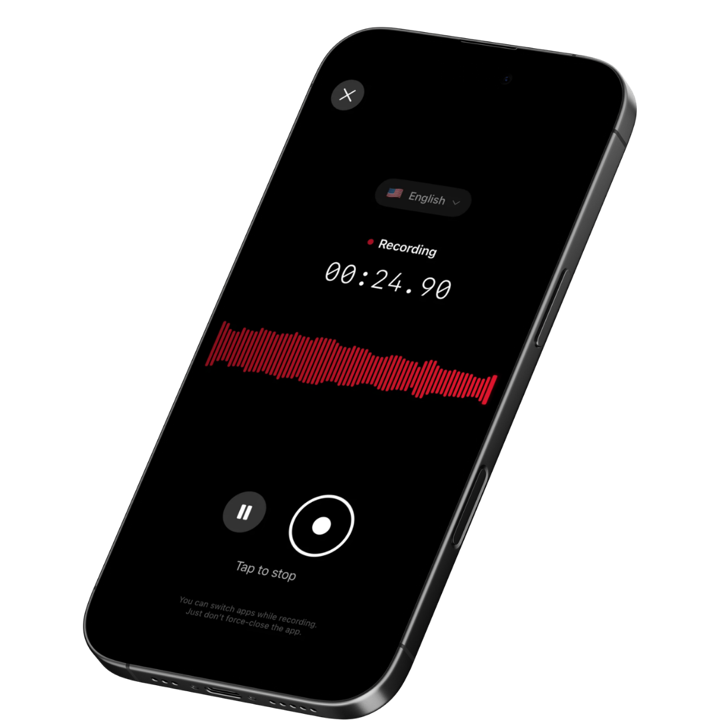
Voice capture offers a fundamentally different approach. Instead of typing another Slack message, composing another thread, or sending another DM, you simply speak-and AI handles the rest. No typing. No channel hunting. No message anxiety.
Download SpeakWise from the App Store and discover how one-tap recording, AI transcription, intelligent summaries, and Notion integration can help you capture and share information without adding to the message flood.
Join 10,000+ professionals who've discovered that the best way to fight message overload isn't fewer messages-it's a tool that captures your thoughts without demanding your fingers.
Get SpeakWise Free →
4.9★ App Store Rating | iOS Optimized

🎯 4.9★ App Store Rating | 📱 Built for iOS
