Sleep Deprivation at Work Statistics 2026: Key Data
Used by recruiters, executives, consultants, and more.
Sleep Deprivation at Work Statistics 2026: Key Data
More than 43% of U.S. workers are sleep deprived. Sleep deprivation costs the U.S. economy up to $411 billion annually - 2.28% of GDP. 58% of workers say poor sleep negatively impacts their productivity. And 27% of workers report experiencing microsleeps on the job. These 16 statistics reveal how sleep loss is silently eroding workforce performance, health, and safety across every industry.
Sleep deprivation is one of the most underestimated workplace productivity killers. Unlike absenteeism or disengagement, sleep loss is invisible. Employees show up to work, sit at their desks, and appear functional. But their cognitive performance, decision-making, creativity, and interpersonal skills are all significantly impaired. The economic toll runs into hundreds of billions. The health consequences are severe. And the problem is getting worse, not better.
This post covers 16 statistics that map the impact of sleep deprivation on work in 2026. From economic costs and productivity losses to health risks and employer responses, these data points reveal why sleep is a workplace issue, not just a personal one.
1. More than 43% of U.S. workers are sleep deprived
Sleep deprivation is a majority-adjacent workplace problem. More than 43% of U.S. workers report being sleep deprived, and broader population data shows that 6 out of every 10 adults do not get enough sleep. The implications for workplace performance are significant. Nearly half the workforce operates daily with impaired cognition, reduced emotional regulation, and diminished focus. These are not minor deficits. Sleep deprivation at the levels reported by workers produces measurable declines in every dimension of job performance.
Source: Shortlister - The Link Between Work Productivity and Sleep
2. Sleep deprivation costs the U.S. economy up to $411 billion annually
The RAND Corporation has quantified the economic toll of insufficient sleep. The U.S. loses up to $411 billion annually from absenteeism and lost productivity caused by sleep deprivation, representing 2.28% of GDP. To put this in perspective, this exceeds the GDP of most countries. The economic impact extends across every sector and job function. Sleep loss does not discriminate by industry. It degrades performance wherever it exists, from factory floors to executive suites.
Source: RAND - Why Sleep Matters: The Economic Costs of Insufficient Sleep
3. 58% of workers say poor sleep negatively impacts their productivity
The productivity impact of sleep loss is directly felt by most workers. 58% report that not getting enough sleep negatively affects their productivity. This is not a subtle effect. Workers notice their impaired performance: difficulty handling workloads, completing tasks without mistakes, and sustaining focus through the day. When nearly six in ten workers self-report productivity impairment from sleep loss, the aggregate impact on organizational output is enormous.
Source: National Sleep Foundation - 2025 Sleep in America Poll
4. 1.2 million working days are lost each year in the U.S. due to sleep deprivation
Sleep deprivation does not just impair performance. It removes workers from the workforce entirely. 1.2 million working days are lost each year in the United States due to sleep deprivation, encompassing sick days, late arrivals, early departures, and absenteeism caused by fatigue-related health issues. For employers, these lost days represent concrete capacity gaps that must be filled by remaining team members or simply absorbed as reduced output.
Source: RAND - Why Sleep Matters: The Economic Costs of Insufficient Sleep
5. 27% of workers report experiencing microsleeps on the job
Microsleeps - brief, involuntary episodes of sleep lasting from a fraction of a second to several seconds - occur in more than a quarter of the workforce. 27% of workers report experiencing microsleeps on the job. During a microsleep, a person is functionally unconscious. For workers operating machinery, driving, or making safety-critical decisions, microsleeps pose serious hazard risks. Even for desk workers, microsleeps signal a level of fatigue that undermines sustained cognitive performance.
Source: Health eSystems - Sleep Woes: Fatigue in the Workplace
6. Fatigue costs employers more than $136 billion per year in health-related lost productivity
Beyond the broader economic costs, employers bear a direct financial burden from worker fatigue. Fatigue is estimated to cost employers more than $136 billion per year in health-related lost productivity, translating to $1,200 to $3,100 per employee annually. These per-employee costs compound across organizations. A company with 1,000 employees may be losing $1.2 to $3.1 million annually to fatigue-related productivity losses, much of it invisible in standard performance metrics.
Source: Health eSystems - Sleep Woes: Fatigue in the Workplace
7. 45% of sleep-deprived workers struggle to interact with people in meetings and on calls
Sleep deprivation does not just affect individual task performance. It degrades interpersonal effectiveness. 45% of sleep-deprived workers say they struggle to interact with people in person, in meetings, or on the phone. This is particularly damaging for roles that depend on communication: sales, management, client relations, coaching, and collaboration. A sleep-deprived employee in a client meeting or team discussion is operating with impaired social cognition, reduced empathy, and diminished patience.
Source: National Sleep Foundation - 2025 Sleep in America Poll
8. 45% of sleep-deprived workers have difficulty controlling their temper at work
Emotional regulation is one of the first casualties of sleep loss. 45% of workers who do not get enough sleep report difficulty controlling their temper in front of colleagues. Sleep deprivation impairs the prefrontal cortex - the brain region responsible for impulse control and emotional regulation. This means that sleep-deprived workers are more likely to react poorly to stress, conflict, and frustration. The workplace impact ranges from damaged relationships to hostile interactions to poor management decisions.
Source: National Sleep Foundation - 2025 Sleep in America Poll
9. 58% of workers struggle to handle workloads and complete tasks without mistakes
Task accuracy declines significantly with sleep loss. 58% of sleep-deprived workers report difficulty handling their workload and completing tasks without errors. The error-rate increase from sleep deprivation has been extensively documented in research. Sleep-deprived workers make more mistakes, take longer to catch errors, and produce lower-quality output. In roles where accuracy matters - finance, healthcare, engineering, legal - the cost of sleep-related errors can be catastrophic.
Source: National Sleep Foundation - 2025 Sleep in America Poll
10. 54% of sleep-deprived workers find it difficult to work their required hours
Sleep loss creates a capacity problem. 54% of workers who do not sleep enough say it is difficult to work their required hours. This does not mean they are absent. It means they are present but struggling to sustain productive effort across a full workday. The concept of "presenteeism" - being physically present but functionally impaired - captures this dynamic. Presenteeism from sleep deprivation costs more than absenteeism because it is harder to measure and affects the entire workday.
Source: National Sleep Foundation - 2025 Sleep in America Poll
11. Workers with sleep disorders face $2,496 in average annual wage loss
Sleep deprivation does not just cost employers. It costs workers directly. Workers with sleep disorders face an average annual wage loss of $2,496. Over a career spanning 30-40 years, this cumulative wage penalty can exceed $75,000. The wage loss comes from reduced performance, missed promotions, and career progression that lags behind well-rested peers. Sleep quality and career trajectory are more connected than most workers realize.
Source: PMC - Impact of Sleep Disturbances on Employment and Work
12. 47% of employers report decreased workforce productivity due to fatigue
Sleep deprivation is visible at the organizational level. 47% of employers report experiencing decreased productivity in their workforce due to fatigue. Nearly half of employers can see the impact of sleep loss in their productivity metrics. This employer-side recognition is significant because it means fatigue is not just a subjective employee complaint. It is showing up in the data that organizations use to measure performance, suggesting the impact is large enough to be detectable without individual-level analysis.
Source: Health eSystems - Sleep Woes: Fatigue in the Workplace
13. Sleep deprivation costs the UK economy 1.3% of GDP, or $41.4 billion annually
The sleep deprivation problem is global, not just American. The UK loses 1.3% of its economic output every year to insufficient sleep, translating to $41.4 billion. France loses approximately $36.3 billion. Australia and Canada each lose more than $19 billion. Across the five OECD countries studied by RAND, total losses from sleep deprivation could reach $718 billion by 2025. This global perspective reveals that sleep loss is a universal productivity drain, not a uniquely American problem.
Source: RAND - Insomnia: The Multibillion-Dollar Problem Sapping World Productivity
14. Sleep-deprived workers are more than half likely to struggle to focus in meetings
The meeting-specific impact of sleep deprivation is striking. Over half of sleep-deprived workers admit to struggling to stay focused in meetings, taking longer to complete tasks, and finding it challenging to generate new ideas. Given that the average knowledge worker spends 28% of their workweek in meetings, impaired meeting performance from sleep loss affects a substantial portion of work time. Sleep-deprived employees are physically present in meetings but cognitively absent.
Source: National Sleep Foundation - Good Sleep? Good Job! How Sleep Health Boosts Productivity
15. Healthcare costs from sleep disorders total $94.9 billion annually in the U.S.
The health system costs of sleep problems are staggering. Direct healthcare costs from sleep disorders reach $94.9 billion annually in the United States. This figure covers diagnosis, treatment, medication, and management of conditions like insomnia, sleep apnea, and restless leg syndrome. Combined with the $411 billion in lost productivity, the total economic burden of sleep problems in the U.S. exceeds $500 billion annually. Sleep is not just a wellness issue. It is an economic emergency.
Source: Gallup - Poor Sleep Linked to $44 Billion in Lost Productivity
16. Shifting sleep from less than 6 hours to 6-7 hours could add $226.4 billion to the U.S. economy
The RAND study modeled the economic impact of modest sleep improvements. If workers who currently sleep less than 6 hours per night started sleeping 6 to 7 hours, it could add $226.4 billion to the U.S. economy annually. This is not about achieving perfect sleep. It is about moving from severely insufficient sleep to merely insufficient sleep. Even small improvements in average sleep duration across the workforce produce enormous economic returns, making sleep one of the highest-leverage public health interventions available.
Source: RAND - Why Sleep Matters: The Economic Costs of Insufficient Sleep
The Silent Productivity Killer: Sleep Deprivation Is Costing More Than We Measure
These 16 statistics reveal sleep deprivation as one of the most expensive and least addressed workplace problems. The economic toll is staggering: $411 billion in the U.S. alone, 1.2 million lost working days, and $136 billion in employer-borne fatigue costs. The performance impact is pervasive: 58% of workers report productivity impairment, 45% struggle in meetings, and 27% experience involuntary microsleeps.
What makes sleep deprivation uniquely challenging is its invisibility. Unlike absenteeism, it does not show up in attendance records. Unlike disengagement, it is not captured in surveys. Sleep-deprived workers are present, appearing to work, but operating with impaired cognition, emotional regulation, and decision-making. The organizations that rely on these workers' judgment - which is all organizations - are unknowingly making decisions through a fog of collective fatigue.
The most encouraging statistic is the last one. Modest improvements in sleep duration could add $226 billion to the U.S. economy. The problem is massive, but the solution does not require perfection. Small shifts in organizational culture - protecting recovery time, discouraging late-night emails, supporting flexible schedules that accommodate sleep needs - can produce outsized economic returns.
Sleep deprivation costs more than most companies spend on their entire workforce. Addressing it is not a wellness perk. It is a business imperative with a measurable return on investment.---
Capture Your Best Thinking When It Happens - Even When You Are Running Low on Sleep
When sleep-deprived workers have moments of clarity, those moments are precious and fleeting. Good ideas, important decisions, and key insights that emerge during brief windows of focus need to be captured immediately. Relying on memory when fatigued means losing critical information.
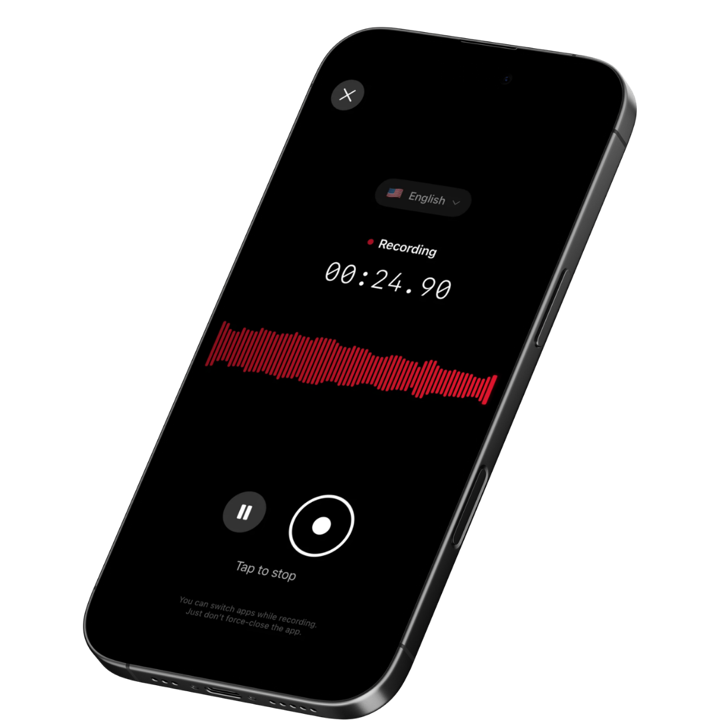
Voice capture is the fastest way to save a thought before it fades. Speak an idea, a meeting takeaway, or an action item in seconds. AI transcription converts it to organized, searchable text. No typing, no app switching, no cognitive overhead. For workers battling fatigue, the ability to capture insights with minimal effort can be the difference between retaining valuable information and losing it to the next wave of brain fog.
Download Speakwise from the App Store and capture ideas, meeting notes, and action items the moment they happen - with one tap and zero cognitive effort.
Join 10,000+ professionals who never lose important thoughts, even on their lowest-energy days.
Get Speakwise Free
4.9-star App Store Rating | iOS Optimized

🎯 4.9★ App Store Rating | 📱 Built for iOS
