Sunday Scaries Statistics 2026: Key Data


Used by recruiters, executives, consultants, and more.
Sunday Scaries Statistics 2026: Key Data
82% of full-time workers experience Sunday scaries before the workweek begins. 73% report physical symptoms like insomnia and headaches from pre-work anxiety. The dread typically sets in around 3:54 p.m. on Sundays, and for 32% of workers, the anxiety lingers into Monday. Nearly 1 in 5 workers have considered quitting their job because of Sunday scaries alone. These 16 statistics reveal how widespread pre-Monday anxiety has become across the modern workforce.
Sunday scaries are no longer a quirky cultural phenomenon. They represent a growing mental health challenge that affects productivity, retention, and wellbeing across every industry. As work-life boundaries blur and always-on communication tools keep employees tethered to their jobs, the weekend has stopped providing the psychological reset it once did.
This post covers 16 statistics that capture the scope of Sunday scaries in 2026. The data draws from surveys by LinkedIn, Zety, Adobe, the American Academy of Sleep Medicine, and other credible sources. Whether you manage a team or experience the Sunday dread yourself, these numbers reveal the true cost of pre-work anxiety.
1. 82% of full-time workers experience Sunday scaries
82% of Adobe survey participants reported being plagued by Sunday scaries to some degree. This makes pre-Monday anxiety a near-universal experience among the American workforce. The figure rises even higher among younger workers. What was once dismissed as a minor case of the "Monday blues" now affects the vast majority of working adults. For employers, the implication is clear: this is not an individual problem. It is a systemic one rooted in workplace culture, communication norms, and workload expectations.
Source: Resume.io - Sunday Scaries Index
2. 94% of Gen Z workers report experiencing Sunday scaries
Gen Z is hit hardest by pre-work anxiety. Among Gen Z respondents, 94% reported experiencing Sunday scaries, far exceeding the rates of older generations. Gen X reported 45% and Boomers just 23%. This generational divide likely reflects several factors: younger workers face more job instability, carry heavier student debt, and entered the workforce during a period of rapid digital acceleration. The always-connected nature of modern work hits hardest when you have never known anything different.
Source: Kickresume - Sunday Scaries Survey
3. 73% of employees report physical symptoms from pre-work anxiety
Sunday scaries are not just a mental experience. A 2025 Zety report found that 73% of employees report physical symptoms tied to pre-work anxiety. These include insomnia, headaches, stomach discomfort, and muscle tension. For 9% of respondents, the anxiety escalates into full panic attacks. The physical toll confirms that Sunday scaries are not an exaggeration. They produce measurable physiological stress responses that degrade both health and weekend recovery time.
Source: Zety - Sunday Scaries Report
4. Sunday scaries typically begin at 3:54 p.m.
The dread has a precise start time. Research shows that Sunday scaries typically set in around 3:54 p.m. on Sunday afternoon. This timing coincides with the psychological shift from "weekend mode" to "work anticipation mode." Once the transition begins, the remaining hours of the weekend become colored by anxiety rather than rest. This finding matters because it reveals how much weekend time is lost not to work itself, but to the anticipation of work.
Source: StudyFinds - Spend Sundays Terrified
5. 36% of workers experience Sunday scaries every single week
More than one in three workers deal with Sunday scaries on a weekly basis. This is not an occasional inconvenience for these individuals. It is a recurring cycle of dread that erodes 52 weekends per year. Weekly sufferers report significantly lower weekend satisfaction and reduced ability to recharge. The consistency of the pattern suggests that the root causes are structural rather than situational. Changing jobs, improving boundaries, or redesigning workloads are more effective than coping strategies alone.
Source: Inc. - Sunday Scaries Are Worse and More Widespread
6. Nearly 80% of adults have trouble falling asleep on Sunday nights
Sleep disruption is the most common physical manifestation of Sunday scaries. According to the American Academy of Sleep Medicine, nearly 80% of U.S. adults report having trouble falling asleep on Sunday nights compared to other nights of the week. Poor Sunday sleep then cascades into Monday performance problems. Workers start the week sleep-deprived, which impairs focus, decision-making, and emotional regulation. The Sunday scaries thus create a self-reinforcing cycle of anxiety and underperformance.
Source: Sleep Foundation - Sunday Scaries and Sleep
7. For 32% of workers, the anxiety continues through Monday
Sunday scaries do not end on Sunday. Research shows that for 32% of respondents, the anxiety carries over into Monday. Another 22% say the stress extends into Tuesday, and 13% report it lasting until Wednesday. This means that for a significant portion of the workforce, nearly half the workweek is affected by anxiety that originated before work even started. The productivity implications are substantial when workers spend multiple days recovering from anticipatory stress.
Source: Zety - Sunday Scaries Report
8. 39% of workers have taken sick days due to Sunday scaries severity
The impact is severe enough to drive absenteeism. 39% of survey participants reported taking sick days because their Sunday scaries symptoms were too intense to work through. This translates directly into lost productivity and increased costs for employers. When nearly four in ten workers are occasionally too anxious to show up on Monday, the organizational cost goes far beyond individual discomfort. It becomes a measurable drag on output, team reliability, and operational consistency.
Source: Zety - Sunday Scaries Report
9. 1 in 5 workers have considered quitting due to Sunday scaries
Sunday scaries are a retention risk. Research shows that 1 in 5 workers have considered quitting their job because of Sunday scaries, and 1 in 16 have actually left a job for this reason. Among Gen Z, the numbers are even more striking: 45.9% have considered quitting due to Sunday stress. For employers struggling with turnover, these statistics suggest that the answer may not be higher pay or better perks. It may be reducing the anxiety that makes employees dread returning to work.
Source: HR Grapevine - Gen Z Quitting Jobs Over Sunday Scaries
10. On-site workers are 47% more likely to see Sunday scaries worsen
Work arrangement matters. On-site workers are 47% more likely than remote workers to say their pre-work anxiety has worsened over the past year. The data suggests that the physical commute, rigid schedules, and lack of autonomy associated with office work amplify anticipatory stress. Remote workers still experience Sunday scaries, but at lower intensity. This finding adds to the growing evidence that workplace flexibility is not just a perk. It is a mental health intervention.
Source: Fast Company - On-site Workers Sunday Scaries
11. 54% of Americans feel anxious as the weekend winds down
More than half the country shares this experience. 54% of Americans say they feel anxious as Sunday progresses toward Monday. Nearly a quarter report feeling outright depressed on Sundays. These are not niche numbers from a self-selected anxious population. They represent majority experiences across age groups, industries, and job levels. The ubiquity of the problem suggests it is baked into how modern work is structured rather than reflecting individual fragility.
Source: Yahoo - Sunday Scaries Data
12. 18.4% of Gen Z professionals experience Sunday anxiety every week
Nearly one in five Gen Z professionals deals with Sunday anxiety on a weekly basis. This weekly recurrence is particularly concerning given that Gen Z represents the youngest segment of the workforce. If the pattern continues, these workers face decades of weekly anxiety cycles. Early-career Sunday scaries are often driven by unclear expectations, lack of mentorship, and the pressure to prove oneself in a competitive job market. Addressing these root causes early could prevent chronic workplace anxiety.
Source: Kickresume - Sunday Scaries Survey
13. 61% of workers feel anxiety or dread on Sundays before the workweek
A clear majority of workers experience distinct anxiety or dread on Sundays specifically tied to the upcoming workweek. This 61% figure captures the emotional weight that Monday's approach carries. The distinction between general weekend sadness and work-specific dread is important. Workers are not mourning the end of leisure. They are actively dreading what awaits them. This points to workplace conditions - toxic managers, excessive meetings, unclear priorities - as the primary drivers.
Source: Resume.io - Sunday Scaries Index
14. Millennials experience 72% Sunday scaries rates with economic anxiety as a factor
Millennials report Sunday scaries at a rate of 72%, with economic anxiety and parenting responsibilities cited as amplifying factors. Unlike Gen Z, whose anxiety centers on career uncertainty, Millennials face a compound stress load. They often juggle caregiving responsibilities, mortgage pressures, and mid-career stagnation alongside the standard work dread. This generation-specific profile matters for employers designing wellbeing programs. A one-size-fits-all approach misses the different stress triggers at each career stage.
Source: Reframe - Millennial and Gen Z Hangxiety 2025
15. Managers cite unclear priorities as a top driver of employee Sunday anxiety
Research shows that one-third of employees feel their priorities change frequently, creating confusion that fuels anticipatory stress. When workers do not know what Monday will demand of them, the uncertainty itself becomes the stressor. The connection between unclear expectations and Sunday scaries is direct. Gallup's engagement data shows only 46% of employees strongly agree they know what is expected of them at work. Ambiguity breeds anxiety, especially when it arrives every Sunday afternoon.
Source: Gallup - State of the Global Workplace 2025
16. Only 21% of employees globally are engaged at work
Gallup's 2025 State of the Global Workplace report found that just 21% of employees globally are engaged at work. Low engagement and Sunday scaries share the same root causes: poor management, unclear expectations, and lack of autonomy. Disengaged employees are far more likely to dread returning to work each week. The $8.9 trillion global cost of disengagement includes the lost productivity that begins not on Monday morning, but on Sunday afternoon when the scaries set in.
Source: Gallup - State of the Global Workplace 2025
The Sunday Scaries Reflect a Broken Relationship With Work
These statistics paint a picture that goes beyond individual anxiety. Sunday scaries are a symptom of how modern work is designed. When 82% of workers dread the workweek and 73% experience physical symptoms, the problem is not nervousness. It is a structural failure in how organizations communicate, set expectations, and protect employee recovery time.
The generational data reveals that the problem is accelerating. Gen Z workers, who have never known a workplace without constant digital connectivity, report the highest rates of Sunday anxiety. If current trends continue, Sunday scaries will become even more pervasive as always-on work culture deepens.
The most effective solutions address root causes rather than symptoms. Organizations that provide clear expectations, flexible arrangements, and genuine autonomy see lower rates of pre-work anxiety. Workers who know what Monday will bring and feel empowered to manage their time experience fewer scaries. The data consistently shows that the cure is better work design, not better coping mechanisms.
Sunday scaries are the workforce's weekly referendum on workplace culture, and the overwhelming majority is voting no confidence.---
Capture your Monday prep without the Sunday stress
Much of Sunday anxiety stems from unresolved tasks, forgotten commitments, and the fear of walking into Monday unprepared. When your week's priorities live in your head rather than a system, every Sunday becomes a mental inventory of everything you might have missed.
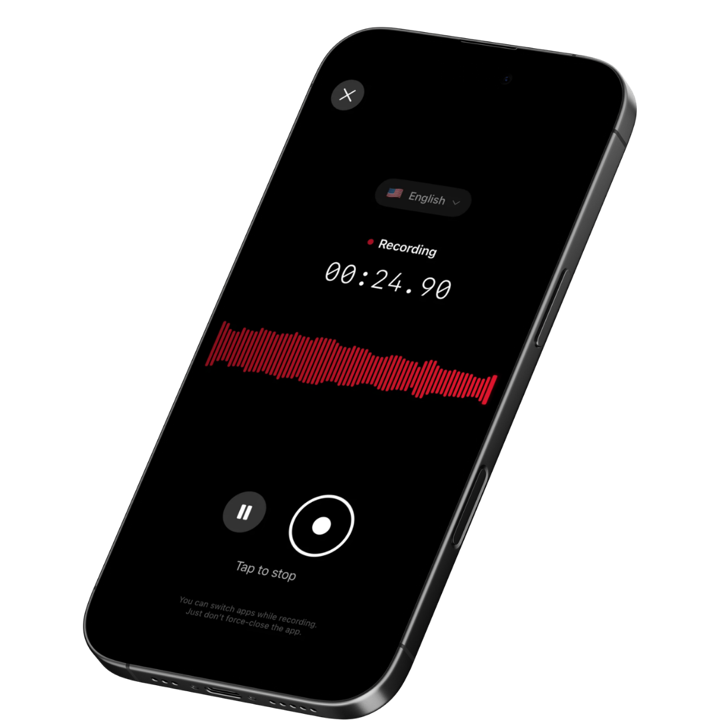
Voice capture changes this dynamic. A quick voice note on Friday afternoon can document next week's priorities. A recorded summary after your last meeting captures every decision and action item. When your thoughts are captured and organized, Sunday becomes a day of rest instead of a day of dread.
Download SpeakWise from the App Store and start your week with clarity. One-tap voice recording, AI-powered summaries, and automatic action item extraction mean nothing gets forgotten between Friday and Monday.
Join 10,000+ professionals who have replaced Sunday anxiety with Sunday confidence by capturing everything that matters before the weekend begins.
Get SpeakWise Free
4.9-star App Store Rating | iOS Optimized

🎯 4.9★ App Store Rating | 📱 Built for iOS
