Task Management Overload Statistics 2026: Ticket Sprawl, Priority Paralysis, and Workflow Fragmentation
Used by recruiters, executives, consultants, and more.
Task Management Overload Statistics 2026: Ticket Sprawl, Priority Paralysis, and Workflow Fragmentation
Knowledge workers now spend 60% of their time on coordination rather than skilled work. The average company uses 106 SaaS applications, employees toggle between them 1,200 times per day, and managers complete barely half of planned tasks each week. Meanwhile, 88% of workers say time-sensitive projects have fallen through the cracks because of sheer task volume. These 17 statistics expose the paradox of task management overload: the more tools we deploy to organize work, the less work actually gets done.
The modern knowledge worker doesn't suffer from a lack of task management options. They suffer from a catastrophic excess of them. Between Jira boards, Asana projects, Trello cards, ClickUp spaces, Notion databases, Monday.com dashboards, Todoist lists, and the inevitable spillover into Slack threads, email chains, and sticky notes, the average professional now manages a sprawling ecosystem of tickets, to-dos, and action items that span more platforms than any human brain can reasonably track. The result isn't organized productivity. It's a new category of dysfunction: task management overload.
This overload manifests in several recognizable patterns. There's ticket sprawl, where tasks proliferate across tools until no one knows what's been captured, what's been duplicated, and what's been forgotten. There's priority paralysis, where the sheer volume of competing tasks makes it psychologically impossible to decide what to do first. And there's workflow fragmentation, where the work of managing work across multiple platforms becomes a full-time job that leaves no time for the actual work itself. Each of these patterns is well-documented, widely experienced, and quietly devastating to organizational productivity.
In this post, we examine 17 statistics that quantify the scale of task management overload in 2025 and 2026. These numbers reveal not just how many tools we use or how much time we waste switching between them, but the deeper structural problem: task management has become its own form of busywork-a recursive loop where organizing tasks generates more tasks, managing workflows creates more workflows, and the pursuit of productivity produces its opposite. Whether you're a project manager drowning in sprint backlogs, a team lead juggling competing roadmaps, or an individual contributor who spends more time updating Jira tickets than writing code, these statistics explain the mechanics of what's going wrong-and why the solution might be simpler than another tool.
1. Knowledge workers spend 60% of their time on "work about work" instead of skilled tasks
The single most damning statistic in the task management overload conversation is this: according to Asana's Anatomy of Work Index, which surveyed more than 10,000 knowledge workers globally, 60% of the average knowledge worker's day is spent on "work about work." Asana defines this category as activities like communicating about tasks, searching for information, switching between apps, managing shifting priorities, and chasing the status of work. Only about 26% of time goes to skilled work-the coding, designing, writing, analyzing, and creating that people were actually hired to do-and a mere 14% goes to strategic thinking and planning. The implication is staggering: for every eight-hour workday, fewer than two and a half hours are spent on meaningful, skilled output. The remaining five and a half hours are consumed by the overhead of organizing, tracking, and coordinating the work itself. Task management, intended to facilitate productivity, has become the primary competitor for the time that productivity requires. Source: Asana - Work About Work
2. The average company uses 106 SaaS applications
The proliferation of task management and productivity tools has reached industrial scale. According to BetterCloud's 2024 State of SaaSOps report, the average company uses 106 SaaS applications-down slightly from 112 in 2023 as some organizations attempt consolidation, but still representing an enormous footprint. Larger enterprises with more than 10,000 employees use an average of 447 SaaS applications. Every one of these tools generates its own notifications, dashboards, workflows, and task queues. For the individual worker navigating this landscape, each tool is another inbox to check, another board to update, another place where critical information might be hiding. The problem isn't that any single tool is bad-it's that the aggregate effect of 106 tools is an environment where managing tools becomes the primary task. Source: BetterCloud - SaaS Statistics
3. 88% of knowledge workers say time-sensitive projects have fallen through the cracks due to task volume
The most concrete evidence of task management overload's impact on actual outcomes comes from Asana's research: 88% of knowledge workers agree that time-sensitive projects and large initiatives have fallen behind or dropped entirely because of the sheer volume of tasks on their plate. This isn't a story about lazy workers or poor time management-it's a story about systems that generate more tasks than any person can track. When your Jira board has 200 open tickets, your email has 47 flagged items, your Slack has 12 unread threads with action items, and your Notion workspace has three project databases with overlapping deliverables, something is going to fall through the cracks. The question isn't whether-it's what, and when you'll discover the gap. Source: Asana - Anatomy of Work Index
4. Workers toggle between apps and websites 1,200 times per day
A 2022 study published in the Harvard Business Review examined 20 teams across three Fortune 500 companies and found that the average digital worker toggles between different applications and websites nearly 1,200 times every day. The researchers documented this by tracking actual software usage patterns, not self-reporting-meaning the real number may be even higher for workers who also switch between physical contexts like notebooks, whiteboards, or in-person conversations. At 1,200 switches across an eight-hour day, that's 150 per hour, or one switch roughly every 24 seconds. Each switch carries what the researchers termed a "toggle tax"-an average cost of just over two seconds per switch. Those two seconds seem trivial in isolation, but across 1,200 daily switches, they compound into nearly four hours per week of pure reorientation time. Source: Harvard Business Review - How Much Time Do We Waste Toggling Between Applications
5. 70% of employees lose more than 20 hours per week to fragmented systems
Perhaps the most alarming statistic in the entire workflow fragmentation landscape comes from a 2023 Quickbase report titled "Roadblocks to the Dynamic Enterprise," which surveyed 1,000 workers across multiple industries. The report found that close to 70% of employees spend upwards of 20 hours per week-half of the standard 40-hour workweek-chasing information across different technologies instead of doing their actual jobs. The report further found that employees spend up to half their workweek on what Quickbase calls "gray work": creating ad-hoc solutions and workarounds to bridge the gaps between fragmented tools, systems, and processes. This isn't a minor inefficiency. It means that for the majority of workers, the tools that are supposed to streamline work consume as much time as the work itself. Source: BusinessWire - Quickbase Report
6. Managers only complete 52.6% of planned tasks for their team each week
Reclaim.ai's Task Management Trends Report, which surveyed over 2,000 professionals using platforms like Jira, Asana, Todoist, Trello, and ClickUp, found that the average manager only achieves 52.6% of planned tasks for their team every week. Barely more than half. The reason is revealing: the average manager spends 49.8% of their heads-down focus time on unproductive work, including back-and-forth emails, reprioritizing timelines, and fielding non-urgent interruptions. In other words, managers-the people responsible for keeping work on track-lose nearly half their own focus time to the administrative overhead of task management. They're caught in a loop: the work of managing tasks prevents them from ensuring tasks get done. Source: Reclaim.ai - Task Management Trends Report
7. It takes 9.5 minutes on average to regain a productive workflow after switching apps
A joint study by software company Qatalog and the Ellis Idea Lab at Cornell University, surveying 1,000 workers, found that it takes about 9.5 minutes on average to get back into a productive workflow after toggling to a different digital application. This means that every time a project manager switches from Jira to Slack to check a thread, from Slack to email to respond to a stakeholder, and from email back to Jira to update a ticket, they're losing nearly 30 minutes across those three switches-not because the tasks themselves take long, but because each transition requires the brain to reload context, remember where it left off, and re-engage with a different type of cognitive demand. Over a day with dozens of such switches, these recovery periods silently consume hours of potential productive output. Source: CIO Dive - Drain of App Switching
8. Individual contributors can only spend 21 hours per week on actual productive work
The same Reclaim.ai report found that individual contributors-the people who are supposed to be executing the tasks on all those project boards-only manage to spend 21 hours per week on their actual productive work. That's barely more than half of a standard 40-hour workweek. The remaining 19 hours are consumed by meetings, administrative overhead, task management busywork, and context-switching recovery. Even more striking, only 12.4% of individual contributors are able to dedicate more than six hours per day to task work, and only 53.3% of the time spent nominally "working on tasks" is actually productive. The other 46.7% is overhead: reading ticket descriptions, updating statuses, searching for related documents, and coordinating with colleagues about who's doing what. Source: Reclaim.ai - Task Management Trends Report
9. 48% of employees say their work feels chaotic and fragmented
Microsoft's 2025 Work Trend Index, one of the largest studies of workplace dynamics ever conducted-surveying 31,000 knowledge workers across 31 countries-found that nearly half of employees (48%) describe their work as feeling "chaotic and fragmented." Among leaders, the number is even higher: 52%. This isn't a perception problem; it's a structural one. Microsoft's analysis of trillions of productivity signals found that employees are interrupted every two minutes during core work hours by meetings, emails, or chat messages, adding up to 275 interruptions per day. The average employee receives 153 Teams messages and 117 emails daily. When you combine this interruption frequency with the 9.5-minute recovery time documented by the Qatalog-Cornell study, the math makes sustained focus on any single task nearly impossible. Source: Microsoft Work Trend Index 2025
10. Workers spend an average of 4 hours and 38 minutes per week on duplicate tasks
The global average time people spend on duplicate tasks-work that has already been completed by someone else on the team-is 4 hours and 38 minutes per week. Over a year, this amounts to approximately 219 hours lost to tasks that didn't need doing because they'd already been done. The core driver is workflow fragmentation: when work is tracked across multiple tools with no single source of truth, two team members frequently complete the same task independently because neither knows the other is working on it. They're both looking at different boards, different lists, different systems-each showing the task as unassigned or incomplete. The tools designed to create visibility into who's doing what instead create silos that guarantee duplication. Source: Clockify - Time Spent on Recurring Tasks
11. 56% of workers say tool overload impacts their performance every week
The subjective experience of task management overload is widespread and consistent. Research has found that 56% of workers report that tool overload affects their performance every single week, not occasionally, not once a month-every week. An additional 22% report losing more than two hours per week just managing their tool stack-not using the tools productively, but managing the tools themselves: updating, syncing, troubleshooting, learning new features, and navigating between interfaces. Perhaps most telling, 36% of workers say their stress levels have increased specifically because of tool overload, and nearly 80% of respondents say their company has not taken meaningful steps to address the problem. The tools keep multiplying, the overhead keeps growing, and no one is fixing it. Source: Breeze - Task Management Statistics
12. 45% of workers say too many apps make them less productive, and 43% find it mentally exhausting
The Qatalog and Cornell University research found that 45% of workers report that toggling between too many apps makes them less productive, while 43% say it is mentally exhausting to constantly switch between tools and contexts. These two findings together reveal the dual burden of task management overload: it simultaneously reduces output and increases cognitive strain. Workers aren't just doing less-they're working harder to do less. The effort of maintaining mental models across multiple task management platforms, remembering which system tracks which project, and translating priorities from one tool's framework to another creates a persistent low-grade cognitive load that depletes energy throughout the day. By 3 PM, workers aren't just unproductive-they're drained. Source: CIO Dive - Drain of App Switching
13. Employees spend 3.6 hours per week managing internal workplace communication
An APQC survey of knowledge workers found that respondents estimate spending 3.6 hours per week managing internal workplace communication, 2.8 hours per week looking for or requesting needed information, and 2.2 hours per week participating in unnecessary or unproductive meetings. Combined, these three activities consume 8.6 hours per week-more than a full workday-on coordination overhead that produces no deliverable output. And these figures represent only the time workers are aware of losing. The unconscious costs-the background cognitive load of knowing there are unread messages, the anxiety of possibly missing an update, the habitual checking of notification badges-aren't captured in self-reported surveys but are well-documented in cognitive psychology research. The actual toll is almost certainly higher. Source: APQC - Knowledge Workers' Time Lost to Productivity Drains
14. Workers are interrupted 31.6 times per day, pulling them out of focused task work
Reclaim.ai's analysis of task management patterns found that individual contributors face an average of 31.6 interruptions per day that pull them out of focused work. These interruptions come from meetings, Slack messages, email notifications, task assignment updates, status requests, and the constant ambient noise of a connected workplace. At 31.6 daily interruptions, and with research showing that each interruption requires minutes of recovery time to return to a productive state, the cumulative effect is devastating. Managers, aware of the problem, rate their ability to minimize distractions and interruptions for their team at only 5.3 on a 1-to-10 scale. They know the problem exists. They feel powerless to solve it within the current tool ecosystem. Source: Reclaim.ai - Task Management Trends Report
15. 80% of employees report lacking the time and energy to meet rising expectations
Microsoft's 2025 Work Trend Index revealed a critical gap: while 53% of leaders say productivity must improve, 80% of employees report that they lack the time and energy to meet the expectations already placed on them. This isn't a motivation problem. It's a capacity problem created by task management overhead. When workers spend the majority of their day coordinating, communicating, switching tools, and updating tickets, there simply aren't enough hours left for the skilled work that leadership expects. The demand for higher output collides with systems that consume more and more of the time needed to produce that output. Employees aren't underperforming; they're over-administered. Source: Microsoft Work Trend Index 2025
16. Employee burnout has reached an all-time high of 66%, with workload as the primary driver
According to a Modern Health study cited by Forbes, employee burnout has reached an all-time high of 66% in 2025, with 82% of employees considered at risk of burnout. Workers identify workload (47%), inadequate compensation (42%), understaffing (37%), and poor leadership (40%) as the top drivers of workplace stress. The connection between task management overload and burnout is direct: when workers spend more than half their day on administrative coordination, the actual skilled work gets compressed into fewer hours, creating time pressure and chronic stress. Tasks pile up not because workers are slow, but because the system that's supposed to help them manage tasks consumes the time they need to complete them. The tool stack becomes the stressor. Source: TeamOut - Employee Burnout Statistics 2025
17. Workers lose an average of 51 minutes per week to tool fatigue, adding up to 44 hours per year
Research has found that workers lose an average of 51 minutes per week specifically to tool fatigue-the cognitive and administrative overhead of managing their technology stack rather than using it productively. Over a year, this compounds to more than 44 hours of lost time, equivalent to more than a full workweek vanishing into the gap between tools that don't talk to each other, interfaces that demand manual updating, and workflows that require constant human intervention to keep synchronized. And this figure captures only the direct tool management overhead. It doesn't include the broader "work about work" time documented by Asana, the reorientation time measured by Harvard Business Review, or the duplicate work tracked by Clockify. The 44-hour figure is the floor, not the ceiling. Source: Digital Information World - Too Many Tools
The Task Management Paradox: Why More Organization Creates More Chaos
The seventeen statistics above tell a story that contradicts one of the foundational assumptions of modern work: that more organization leads to better outcomes. The data reveals something closer to the opposite. Each new task management tool, each additional project board, each supplementary workflow automation adds a layer of administrative overhead that consumes more productivity than it creates. The tools aren't failing at what they're designed to do-they're succeeding at creating organized visibility into work. The problem is that creating and maintaining that visibility has itself become the dominant form of work.
This is the task management paradox. When a company adopts Jira for engineering, Asana for marketing, Trello for design, and Monday.com for cross-functional projects, each team gets a tool optimized for its workflow. But the organization as a whole gets four separate systems that don't share context, four sets of notifications competing for attention, four different interfaces requiring cognitive load to navigate, and four separate places where tasks can fall through the cracks. The per-team optimization creates organizational fragmentation-and no amount of integration middleware fully solves the problem because the integrations themselves become another system to manage.
The human cost extends beyond hours lost. Priority paralysis-the inability to decide what to work on when everything appears urgent-is a direct consequence of having too many visible tasks across too many systems. When your Jira board shows 15 high-priority tickets, your email has 8 urgent requests, your Slack has 6 threads where people are waiting on you, and your Asana project has 4 overdue tasks, the cognitive load of simply deciding where to start can be overwhelming enough to prevent starting at all. This isn't laziness. It's the predictable neurological response to an environment that presents more competing demands than the prefrontal cortex can evaluate simultaneously. The research on decision fatigue is unambiguous: the more choices you face, the worse your decisions become, and the more likely you are to default to doing nothing-or doing whatever is easiest rather than whatever is most important.
The most effective responses to task management overload share a common principle: reduce the number of steps and systems between having a thought and capturing it as an actionable item. Every field to fill in, every project to select, every priority level to assign, and every tool to open represents friction that either prevents capture entirely or adds overhead that compounds across hundreds of daily micro-decisions. The organizations and individuals who maintain productivity amid the current tool landscape aren't the ones with the most sophisticated task management systems. They're the ones who've found ways to bypass the complexity-capturing work quickly and simply, then letting structure emerge afterward rather than demanding it upfront.
The data is clear: the biggest threat to task completion isn't a lack of task management-it's too much of it. When workers spend 60% of their time on coordination, complete only half their planned work, and lose 20 hours per week to fragmented systems, the most productive change isn't a better tool. It's fewer steps between intention and action.---
Ready to capture tasks without the management overhead?
The irony of task management overload is that every tool in the stack was adopted to solve a real problem. The Jira board exists because engineering needed visibility. The Asana project exists because marketing needed coordination. The Trello board exists because someone needed something simpler than both. Each tool solves its specific problem-but collectively, they create a meta-problem that's larger than any of the individual problems they solved. The overhead of maintaining five task management systems exceeds the overhead of the disorganization they were meant to eliminate.
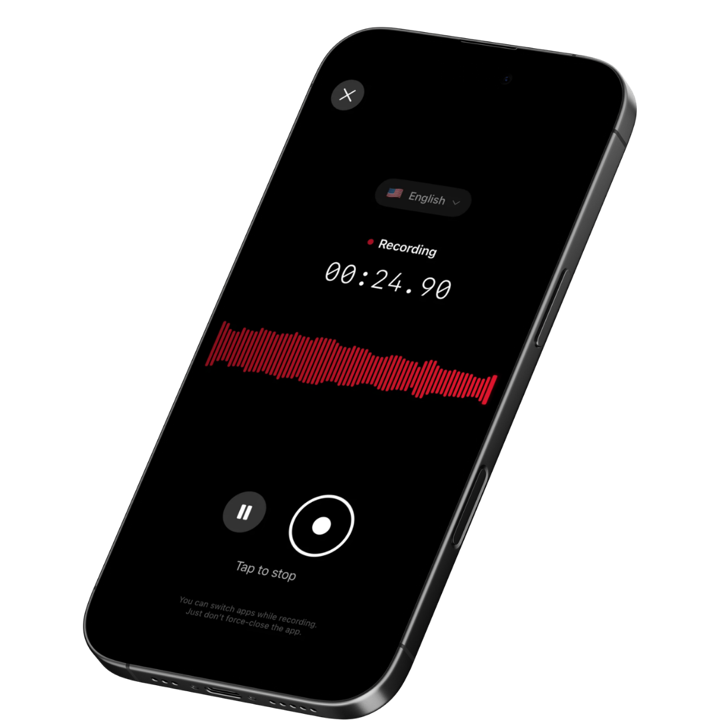
Voice capture offers a fundamentally different approach. Instead of opening a task management app, finding the right project, filling in fields, and assigning priorities, you simply speak your task-and AI handles the rest. Capture action items in seconds, get them transcribed and summarized, and push them to Notion where they belong.
Download SpeakWise from the App Store and discover how one-tap recording, AI transcription, intelligent summaries, and Notion integration can help you capture tasks instantly without the overhead of managing them.
Join 10,000+ professionals who've discovered that the fastest way to manage a task is to speak it into existence.
Get SpeakWise Free →
4.9★ App Store Rating | iOS Optimized

🎯 4.9★ App Store Rating | 📱 Built for iOS
