Team Morale Statistics 2026


Used by recruiters, executives, consultants, and more.
Team Morale Statistics 2026
Only 21% of employees globally feel engaged at work, costing the world economy $8.9 trillion in lost productivity. 59% of the workforce falls into the "quiet quitting" category. 55% of U.S. workers report burnout, with rates hitting 66% among Gen Z. Yet companies with highly engaged teams see 21% higher profitability and 59% lower turnover. These 16 statistics reveal the scale of the team morale crisis and the measurable value of fixing it.
Team morale is not a soft metric. It is a leading indicator of productivity, retention, and profitability. When morale drops, the effects are immediate and measurable: higher absenteeism, lower output, more turnover, and a corrosive effect on the people who remain. The data is clear that most organizations are failing at morale, and the cost of that failure is enormous.
This post presents 16 statistics that quantify team morale, employee engagement, and workplace wellbeing in 2026. These numbers cover the global engagement crisis, burnout trends, the role of managers, and the business impact of getting morale right.
1. Only 21% of employees globally feel engaged at work
The global engagement picture is bleak. Gallup's State of the Global Workplace report shows that just 21% of employees worldwide feel engaged. This means roughly four out of five workers are either not engaged or actively disengaged. The cost to the global economy is $8.9 trillion annually in lost productivity. This is not a new problem, but it is getting worse. Global engagement fell two percentage points in the latest report, reversing years of slow gains.
Source: Gallup - State of the Global Workplace
2. U.S. employee engagement hit an 11-year low
The engagement decline is especially sharp in the United States. U.S. employee engagement has hit an 11-year low, with 4.8 million fewer employees classified as engaged in Q1 2025 compared to Q4 2023. This decline spans industries, roles, and seniority levels. The speed of the drop suggests it is not a gradual trend but a response to specific workplace conditions: return-to-office mandates, organizational restructuring, and eroding trust between workers and leadership.
Source: Cerkl - 20 Employee Engagement Statistics for 2025
3. 59% of employees are "quietly quitting"
The majority of the workforce is checked out. Gallup identifies 59% of employees globally as "quiet quitting" - fulfilling the bare minimum of their job responsibilities without investing discretionary effort, creativity, or enthusiasm. These workers show up, complete assigned tasks, and leave. They are not sabotaging the organization, but they are not building it either. The quiet quitting phenomenon represents the largest category of workers and the greatest untapped opportunity for performance improvement.
Source: Gallup - State of the Global Workplace
4. 18% of employees are actively disengaged
Beyond quiet quitting, a significant minority is actively undermining morale. Gallup classifies 18% of the global workforce as "actively disengaged" - workers who are not just checked out but are vocal about their unhappiness. These employees spread negativity, resist initiatives, and erode the engagement of colleagues around them. Their impact is disproportionate to their numbers because negativity is contagious in ways that enthusiasm often is not.
Source: Gallup - State of the Global Workplace
5. 55% of U.S. workers report experiencing burnout
More than half the American workforce is burned out. Eagle Hill Consulting research shows that 55% of U.S. workers report experiencing burnout. The rate varies by generation: 66% among Gen Z, 58% among Millennials, 53% among Gen X, and 37% among Baby Boomers. The generational skew toward younger workers suggests that burnout is not improving over time. If anything, the conditions creating burnout are intensifying for those earlier in their careers.
Source: Eagle Hill Consulting - Workforce Burnout Survey 2025
6. Burnout costs businesses $322 billion annually in lost productivity
The financial toll of burnout is staggering. Research estimates that employee burnout costs businesses $322 billion annually through reduced output, increased errors, absenteeism, and healthcare costs. At the individual level, burnout can reduce productivity by 18-20% of total output. These are not marginal losses. They represent a significant drag on organizational performance that many companies fail to quantify because it shows up as gradual decline rather than a single acute event.
Source: Meditopia - Employee Burnout Statistics 2026
7. Burned-out employees are 3x more likely to plan to leave
Burnout does not just reduce performance. It drives turnover. Research shows that burned-out employees are nearly three times more likely to say they plan to leave their employer in the coming year. This creates a vicious cycle: burnout increases workload on remaining team members, which increases their burnout, which increases their likelihood of leaving. Organizations that fail to address burnout early pay the compounding cost of cascading departures.
Source: Quantum Workplace - Employee Burnout Trends: HR Strategies
8. 34% of workers report a lack of recognition for contributions
Recognition is one of the simplest and most effective morale levers. Yet 34% of U.S. workers report feeling that their contributions go unrecognized. Additionally, 25% of employees identify insufficient recognition as a direct cause of their burnout. Recognition does not need to be expensive or elaborate. A specific, timely acknowledgment of good work from a manager or peer can shift morale significantly. The gap between what recognition costs and what its absence costs makes this one of the highest-ROI interventions available.
Source: Cake - Workplace Statistics to Elevate Your Employee Engagement in 2025
9. Manager engagement fell from 30% to 27% in 2024
The morale crisis starts at the management level. Gallup found that manager engagement dropped from 30% to 27% in 2024. Since 70% of team engagement is attributable to the manager, disengaged managers create disengaged teams. Managers are caught between executive demands and employee needs with shrinking resources and expanding responsibilities. Until organizations address the specific pressures on managers, team morale improvements will remain superficial.
Source: Gallup - State of the Global Workplace
10. 6 hours of leader communication per week boosts engagement by 30%
Communication frequency from leadership directly shapes morale. Research shows that employees who receive 6 hours of leader communication per week are 29% more inspired and 30% more engaged than those who receive only 1 hour. This does not mean leaders need to schedule more meetings. It means leaders need to be visible, accessible, and communicative through whatever channels their teams use. The quantity and quality of leader communication is one of the strongest predictors of team morale.
Source: People Managing People - 15 Employee Engagement Statistics You Need To Know In 2026
11. Companies with high engagement see 41% lower absenteeism
Engaged teams show up. Research consistently shows that organizations with high engagement levels experience a 41% reduction in absenteeism compared to those with low engagement. Absenteeism is one of the most direct and measurable consequences of low morale. When employees do not want to be at work, they find reasons not to be. Conversely, when they feel valued and connected, attendance becomes natural rather than forced.
Source: WellSteps - Employee Engagement Statistics: 25+ Critical Insights for 2025
12. Employee engagement dropped from 85% to 81% year-over-year
The decline is accelerating. Detailed survey data shows that overall employee engagement scores dropped from 84.98% in 2023 to 80.65% in 2024. The biggest shift was in pride, which dropped from 89.5% to 86.41%. Intent to stay dropped from 87% to 84%. Advocacy dropped from 81.8% to 77%. Motivation dropped from 81.6% to 75.1%. Every dimension of engagement is declining simultaneously, suggesting a systemic rather than isolated problem.
Source: People Insight - Employee Engagement Statistics 2026
13. Only 42% of burned-out workers tell their manager
The burnout problem is largely invisible to leadership. Research shows that only 42% of employees experiencing burnout have told their manager about it. Among those who do speak up, 42% say their manager takes no action. This creates a dangerous blind spot. Managers may believe morale is acceptable while more than half their team suffers in silence. Organizations need systems that surface morale data proactively rather than relying on employees to self-report problems.
Source: Quantum Workplace - Employee Burnout Trends: HR Strategies
14. High engagement drives 21% higher profitability
The business case for morale is clear. Gallup data shows that companies with highly engaged workforces experience 21% higher profitability. This figure accounts for the combined effects of higher productivity, lower turnover, reduced absenteeism, and fewer quality defects. Morale is not a cost center. It is a profit driver. The organizations that invest in engagement as a strategic priority consistently outperform those that treat it as an HR afterthought.
Source: WellSteps - Employee Engagement Statistics: 25+ Critical Insights for 2025
15. Companies with wellbeing programs see 25-40% lower turnover
Investing in employee wellbeing pays measurable dividends. Research shows that companies offering structured wellbeing programs experience 25-40% lower turnover rates. These programs do not need to be elaborate. They include practical supports: flexible scheduling, mental health resources, workload management, and regular check-ins. The key is consistency and genuine investment rather than performative wellness initiatives that employees see through immediately.
Source: TriNet - Workplace Wellness 2026: Why Wellbeing Drives Engagement
16. 83% of employees say their company makes them want to do their best work
There is reason for cautious optimism. People Insight data shows that 83% of employees say that working at their company makes them want to do their best work - up 4% from the previous year. This suggests that while overall engagement metrics are declining, the desire to contribute remains strong. The workforce is not apathetic. They are frustrated. The gap between wanting to do great work and being able to do great work is where the morale crisis lives.
Source: People Insight - Employee Engagement Statistics 2026
The Morale Equation: Small Signals, Big Consequences
The statistics paint a clear picture. Most workers are disengaged, many are burned out, and the business cost is enormous. But the data also reveals that the levers for improvement are neither expensive nor complex. More communication from leaders. Consistent recognition. Workload management. Genuine flexibility. These are not moonshot initiatives. They are operational choices.
The most revealing statistic may be the simplest: 83% of employees want to do their best work. The problem is not motivation. The problem is that organizations have built systems that prevent motivated people from thriving. Too many meetings, too little recognition, too much surveillance, too few resources.
The organizations that reverse the morale decline will be those that listen to what their people are saying - through surveys, through turnover data, and through the daily signals that engaged leaders learn to read.
The team morale crisis is not a people problem. It is a systems problem. And systems problems have systems solutions.---
Better communication starts with actually hearing your team
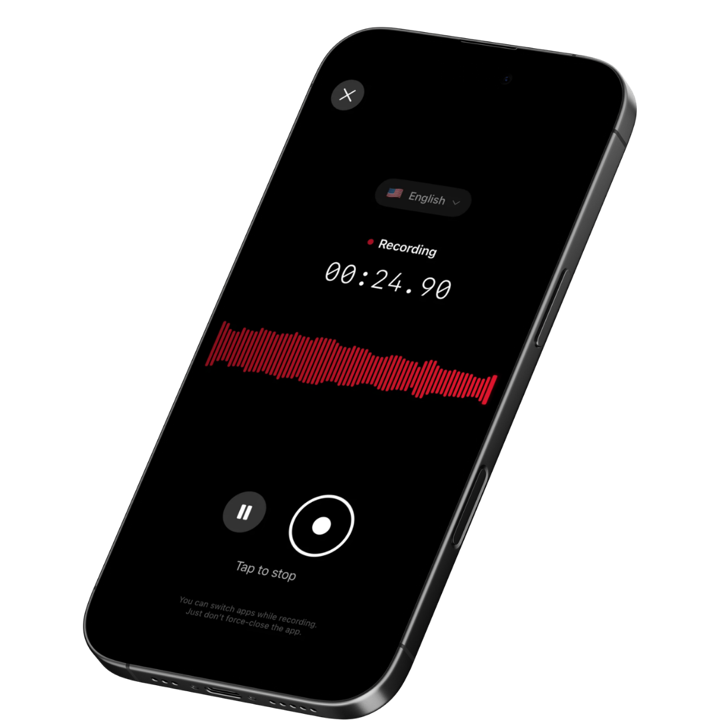
The data is clear: more leader communication drives higher engagement. But "more communication" does not have to mean more meetings. It can mean a quick voice debrief after a project milestone. A recorded thought shared with the team asynchronously. A meeting summary that keeps remote members in the loop without requiring their attendance.
When information flows, people feel included. When people feel included, morale improves. Voice capture makes this cycle effortless.
Download SpeakWise from the App Store and give your team a simple way to share updates, capture decisions, and stay connected - without adding more meetings to an already-full calendar.
Join 10,000+ professionals who have found that the fastest way to improve team morale is to make sure everyone feels heard and informed.
Get SpeakWise Free
4.9-star App Store Rating | iOS Optimized

🎯 4.9★ App Store Rating | 📱 Built for iOS
