Time Management Statistics 2026: Key Data
Used by recruiters, executives, consultants, and more.
Time Management Statistics 2026: Key Data
82% of people have no time management system in place. The average employee is truly productive for just 2 hours and 53 minutes out of an eight-hour workday. Workers spend 51% of their time on tasks of little to no value, and knowledge workers spend 60% of their time on "work about work" rather than skilled work. These numbers reveal a workforce working hard but managing time poorly.
Time is the one resource that cannot be recovered. Yet most professionals have no structured approach to managing it. Between constant interruptions, excessive meetings, and email overload, the modern workday has become a fragmented mess where deep, meaningful work barely gets a look in. The data shows this is not a minor inefficiency - it is a systemic failure.
This post presents 10 statistics that expose the true state of time management in today's workplace. These numbers draw from productivity research, workplace surveys, and behavioral studies to show where time actually goes - and how much of it is wasted.
Key Time Management Statistics (2026)
- Time management is largely absent from the modern workplace: 82% of workers have no formal system for allocating their time (My Hours).
- The average employee is genuinely productive for only 2 hours and 53 minutes of a standard eight-hour workday (Vouchercloud).
- Workers spend 51% of their time on low-value or no-value tasks rather than meaningful work (Hubstaff).
- Employees spend 57% of their time communicating and only 43% creating, according to Microsoft's Work Trend Index (Microsoft).
- Interruptions strike roughly every 12 minutes, and it takes more than 23 minutes to fully refocus afterward (Gallup Business Journal).
- Knowledge workers spend 60% of their time on "work about work" instead of skills-based tasks (Asana).
- Only 31% of employees feel engaged at work, while 17% are actively disengaged (Gallup).
1. 82% of people do not use any time management system
82% of the working population operates without a formal time management system. They rely on memory, loose to-do lists, or simply react to whatever feels most urgent in the moment. Without a system, workers default to reactive mode - responding to emails, attending meetings, and handling tasks in the order they arrive rather than the order they matter. Research consistently shows that structured time management correlates with higher productivity, lower stress, and better goal attainment. Yet the vast majority of workers have never adopted any deliberate framework for allocating their most finite resource.
Source: My Hours - 50+ Surprising Time Management Statistics
2. The average employee is productive for only 2 hours and 53 minutes per day
Out of a standard eight-hour workday, the average employee produces meaningful work for just 2 hours and 53 minutes. The remaining five-plus hours are consumed by meetings, email, social media, non-work conversations, and other low-value activities. This statistic is one of the most widely cited in productivity research because it exposes the gap between time spent at work and time spent working. Organizations that measure performance by hours logged rather than output produced are measuring the wrong thing entirely. The eight-hour day provides a container, but most workers fill less than half of it with genuinely productive effort.
Source: Vouchercloud - Survey Reveals Employee Productivity Averages 2 Hours and 53 Minutes a Day
3. Workers spend 51% of their time on low-value or no-value tasks
The average worker devotes 51% of their workday to tasks that deliver little to no value. These include unnecessary administrative work, redundant status updates, searching for information that should be easily accessible, and attending meetings that could have been an email. The implication is striking: more than half of the workweek is structurally wasted. This is not a problem of lazy workers - it is a problem of poorly designed workflows, excessive communication overhead, and organizational systems that generate busywork faster than people can complete it.
Source: Hubstaff - Time Management Statistics Businesses Should Use for Efficiency Gains
4. Employees spend 57% of their time communicating, not creating
The average employee spends 57% of their time on communication activities - meetings, email, and chat - and only 43% on creating, thinking, or producing actual work. Communication is essential, but when it consumes more than half the workday, it crowds out the focused effort that drives real results. This ratio has been steadily worsening as organizations add more communication channels. Slack, Teams, email, video calls, and in-person meetings now compete for the same limited hours. Each channel has its own notification system, its own expectations for response time, and its own way of fragmenting attention.
Source: Microsoft Work Trend Index - Will AI Fix Work?
5. Employees are interrupted roughly every 12 minutes during focused work
On average, employees spend just 12 minutes on a task before an interruption arrives. Regaining focus afterward takes more than 23 minutes, according to UC Irvine research. The math reveals why deep work has become nearly impossible: if interruptions arrive every 12 minutes and recovery takes 23 minutes, workers never fully refocus before the next disruption hits. This creates a perpetual state of partial attention where work gets done slowly, with more errors, and at a higher cognitive cost. The 12-minute window is simply too short for complex thinking, strategic planning, or creative work.
Source: Gallup Business Journal - Too Many Interruptions at Work? (Gloria Mark, UC Irvine)
6. Employees lose over seven hours per week to workplace interruptions
Interruptions consume more than seven hours of productive time per week for the average employee. That is nearly one full workday lost to disruptions every single week. Over a year, it adds up to approximately 365 hours - more than nine full working weeks of lost productivity. The sources of these interruptions are varied: colleague questions, phone calls, email notifications, chat messages, and impromptu meetings. What makes interruptions so costly is not the interruption itself but the recovery time. Each disruption triggers a cognitive reset that takes far longer than the interruption lasted.
Source: BeOnBoard - Time Management Statistics And Facts in 2025
7. Only 31% of employees feel engaged at work
Gallup's annual update of U.S. employee engagement found that only 31% of employees feel engaged in their work, while 17% are actively disengaged - the lowest engagement level in a decade. The remaining 52% fall into the "not engaged" category - present but not invested. Poor time management is both a cause and a symptom of disengagement. Workers who feel their time is wasted on low-value tasks lose motivation. Disengaged workers, in turn, manage their time less effectively, creating a downward spiral. Organizations that help employees protect and prioritize their time see direct improvements in engagement scores.
Source: Gallup - U.S. Employee Engagement Sinks to 10-Year Low
8. Multitasking reduces productivity by up to 40%
Research from the American Psychological Association shows that task switching can consume up to 40% of productive time. What people call multitasking is actually rapid switching between tasks, and each switch imposes a cognitive tax. The brain must disengage from one task's rules and context and load another. This cost compounds with constant device use, where notifications and app-switching invite task switching throughout the day. An eight-hour multitasking day yields only 4.8 hours of effective output - a massive hidden cost that most workers do not recognize because the switching feels seamless even though it is not.
Source: American Psychological Association - Multitasking: Switching Costs
9. Knowledge workers spend 60% of their time on "work about work"
Asana's Anatomy of Work Index, which surveyed more than 10,000 knowledge workers globally, found that 60% of a person's time at work goes to "work about work" rather than the skilled work they were hired to do - chasing status updates, searching for information, switching between tools, and attending meetings that exist only to coordinate other work. This is time management's most systemic failure: the workday is dominated not by the work itself, but by the coordination overhead surrounding it. Eliminating even a fraction of this overhead would represent a bigger productivity gain than most individual time management techniques combined.
Source: Asana - How Work About Work Gets in the Way of Real Work
10. Low employee engagement costs the global economy $10 trillion a year
Gallup's 2026 State of the Global Workplace report found that global employee engagement fell to 20% in 2025, and that low engagement costs the world economy approximately $10 trillion in lost productivity - equivalent to 9% of global GDP. Engagement and time management are directly linked: disengaged employees are less likely to plan their day, protect focus time, or use the hours they have deliberately. The scale of the number underscores that time management is not just a personal productivity habit - it is a macroeconomic issue that compounds across millions of workers and organizations.
Source: Gallup - State of the Global Workplace
The Time Management Crisis: Busy Is Not Productive
These ten statistics paint a consistent picture: the modern workforce is spending enormous amounts of time at work but managing very little of it effectively. When the average worker is productive for under three hours per day and 82% have no system for managing their time, the inefficiency is structural, not individual. Organizations have added communication tools, meeting platforms, and project management software - all designed to improve coordination. Instead, these tools have consumed the very time they were meant to save.
The data also reveals where the return on attention is highest. Cutting workplace interruptions alone would return more than seven hours a week to the average employee. Redirecting even a fraction of the 60% of time knowledge workers lose to "work about work" would transform output for most teams. These are not marginal gains - they represent transformative changes in how people work. Yet most organizations invest heavily in technology and training while ignoring the foundational skill of time allocation.
The trajectory is concerning. As communication channels multiply and notifications increase, the amount of protected, focused time continues to shrink. Workers who do not adopt deliberate time management practices will fall further behind, while those who structure their time intentionally will gain an ever-larger advantage.
The average employee is productive for 2 hours and 53 minutes out of an eight-hour day. The gap between time spent and time productive is the single largest opportunity for improvement in most organizations.---
Reclaim your time with voice-first capture
These 10 statistics show that time management fails when the tools designed to help actually create more overhead. Opening apps, typing notes, switching between platforms - each action eats into the productive minutes you are trying to protect. The friction of documentation becomes another task to manage, another thing stealing time from real work.
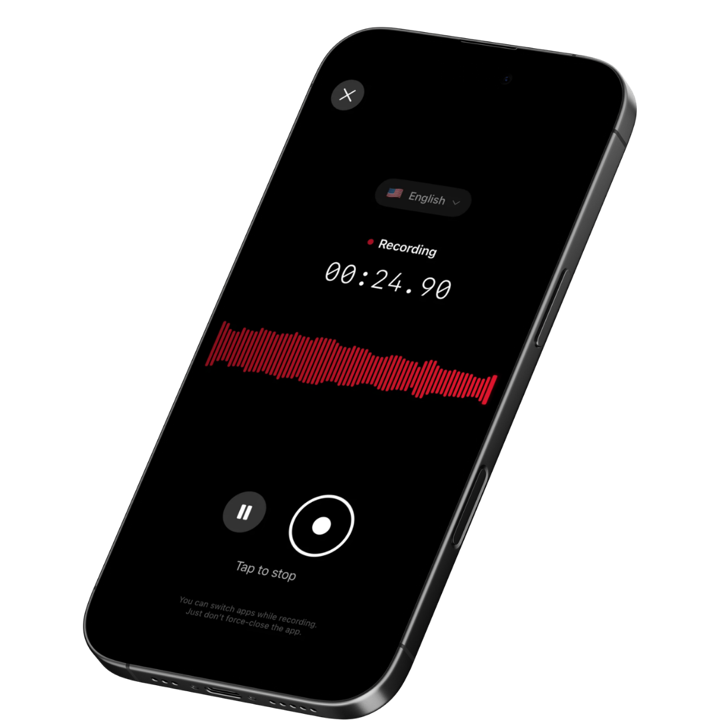
Voice capture removes that friction entirely. Speak your meeting takeaways, action items, and priorities in seconds. AI handles the transcription, summary, and organization. Your time stays focused on the work that matters.
Download Speakwise from the App Store and turn your voice into structured notes, action items, and searchable records - without losing a minute to typing or app switching.
Join 10,000+ professionals who save 73% of their post-meeting follow-up time by speaking instead of typing.
Get Speakwise Free
4.9-star App Store Rating | iOS Optimized

🎯 4.9★ App Store Rating | 📱 Built for iOS
