Time Spent in Meetings Statistics 2026: Hours Lost, Calendar Analysis, and Productivity Impact
Used by recruiters, executives, consultants, and more.
Time Spent in Meetings Statistics 2026: Hours Lost, Calendar Analysis, and Productivity Impact
The average employee now spends 11.3 hours per week in meetings-28% of their entire workweek. That adds up to 392 hours annually, equivalent to nearly ten full workweeks. With meetings tripling since 2020 and costing organizations $29,000 per employee per year, these 20 statistics reveal the true scale of the meeting time crisis and its cascading impact on productivity, focus, and the modern calendar.
Something fundamental has shifted in how we spend our work hours. What used to be a tool for decision-making and collaboration has become the default mode of work itself. Calendars that once showed scattered meeting blocks now display solid walls of color, with "free time" reduced to 15-minute gaps barely long enough to refill a coffee cup.
The numbers are staggering: 11 million meetings happen every day in the United States alone. Organizations collectively spend 15% of their total working hours in meetings. And the trend shows no signs of reversing-meeting time has grown by 8-10% every year for the past two decades, with the pandemic accelerating this trajectory dramatically.
In this post, we'll explore 20 statistics that capture the full scope of time spent in meetings in 2026. These data points reveal not just how many hours we're losing, but who's most affected, what it costs, and why calendars have become the battleground for productivity in the modern workplace. Whether you're a CEO whose week consists of 37 meetings, a manager spending 16 hours in synchronous calls, or an individual contributor fighting for focus time, these numbers offer both clarity and a path forward.
Key Time Spent in Meetings Statistics (2026)
- Time spent in meetings has climbed to 11.3 hours per week for the average employee-28% of the entire workweek (Fellow State of Meetings Report).
- Employees log 392 hours per year in meetings, equivalent to nearly ten full workweeks (Flowtrace State of Meetings Report 2025).
- Meeting volume has tripled since 2020, a 192% increase in Teams meetings and calls per week (Microsoft Work Trend Index / CNBC).
- The United States alone hosts 11 million meetings every day, more than 1 billion a year (Verizon Meetings in America).
- CEOs spend 72% of their work time in meetings, averaging 37 meetings a week (Harvard Business Review / MGMA).
- Meeting time costs organizations $29,000 per employee every year (Flowtrace State of Meetings Report 2025).
- A fresh 2026 survey found employees now average 11.8 hours a week in meetings, and 52.9% name "too many meetings" their single biggest work challenge (Reclaim.ai 2026 SXSW Work Trends Report).
1. The average employee spends 11.3 hours per week in meetings-28% of their workweek
Meeting time has reached unprecedented levels. Fellow's State of Meetings Report, analyzing data from over 30,000 companies, found that the average employee now spends 11.3 hours in meetings each week-equivalent to 28.3% of the standard 40-hour workweek. That's more than one full day out of every five spent in synchronous gatherings rather than doing focused, individual work. For many professionals, this figure represents a fundamental shift in what "work" actually means. Source: Fellow State of Meetings Report
2. Employees spend 392 hours per year in meetings-nearly ten full workweeks
The annual toll of meeting time is staggering. Flowtrace's analysis of millions of meetings found that employees spend 392 hours per year in meetings-equivalent to 16 full workdays or nearly ten complete workweeks. This figure represents meeting attendance alone, before accounting for preparation, follow-up, or the cognitive recovery time needed between sessions. When organizations treat every hour of synchronous time as "free," they fail to recognize that 392 hours represents a massive allocation of their most scarce resource: employee attention. Source: Flowtrace State of Meetings Report 2025
3. The number of meetings has tripled since 2020
The pandemic didn't just change where we work-it fundamentally transformed how much time we spend in meetings. Microsoft's Work Trend Index found that employees are now in three times as many Teams meetings and calls per week compared to February 2020, representing a 192% increase. Remote and hybrid work eliminated hallway conversations and spontaneous check-ins, replacing them with scheduled calendar blocks. As Fellow's CEO noted, "There are no more water cooler conversations, there are no more taps on the shoulder-people are just scheduling meetings for everything." Source: Microsoft Work Trend Index / CNBC
4. 11 million meetings happen every day in the United States-over 1 billion per year
The sheer volume of meetings across the American workforce defies comprehension. Approximately 11 million meetings take place every day in the United States, translating to 55 million meetings per week and over 1 billion meetings annually. With roughly 55 million American workers attending at least one meeting daily, meetings have become the dominant activity of professional life. This volume creates a collective time sink measured in billions of hours-hours that could otherwise be devoted to the work that meetings are ostensibly supposed to advance. Source: Verizon Meetings in America
5. CEOs spend 72% of their work time in meetings-averaging 37 meetings per week
For those at the top of organizations, meetings consume nearly everything. A landmark Harvard Business Review study tracking 27 CEOs across 60,000 hours found that the average CEO spends 72% of their total work time in meetings, attending an average of 37 meetings per week. VPs and top-level executives attend between 12 and 17 meetings weekly. While CEOs work an average of 62.5 hours per week, nearly 45 of those hours are spent in meetings-leaving precious little time for the strategic thinking and reflection that leadership requires. Source: Harvard Business Review / MGMA
6. Executives spend 23 hours per week in meetings-more than double the 1960s level
Meeting time for senior leaders has exploded over the past six decades. Harvard Business Review research reveals that executives now spend an average of nearly 23 hours per week in meetings-more than double the approximately 10 hours executives spent in meetings during the 1960s. This steady escalation reflects changes in organizational structure, the rise of matrix organizations, and the increasing complexity of business decisions. But it also raises a fundamental question: if executives spend their entire workweek in meetings, when does actual executive work get done? Source: Harvard Business Review
7. Meeting time costs organizations an average of $29,000 per employee per year
Meetings carry a massive hidden cost. Flowtrace's analysis found that meeting time costs organizations an average of $29,000 per employee per year when accounting for salary, benefits, and opportunity costs. For a company with 100 employees, that's $2.9 million annually invested in synchronous gatherings. The question every organization should ask: is this investment generating proportional returns? When 71% of meetings are considered unproductive, the answer for most companies is a resounding no. Source: Flowtrace State of Meetings Report 2025
8. Unproductive meetings cost U.S. businesses $37 billion annually
The financial drain from ineffective meetings reaches staggering proportions at the national level. Harvard Business Review research estimates that unnecessary meetings cost U.S. businesses approximately $37 billion in salary costs annually. For large enterprises, the impact is even more severe-one study found that a single company with 5,000 employees could lose up to $101 million per year from inefficient meeting time alone. When multiplied across the economy, meetings represent one of the largest productivity drains in American business. Source: Harvard Business Review / CBS News
9. Remote employees attend 50% more meetings than in-office staff
The flexibility of remote work comes with a hidden cost: more meetings. Flowtrace's research found that remote employees attend 50% more meetings than their in-office counterparts. Without the organic interactions that happen in physical offices-the quick questions, the impromptu updates, the overheard conversations-remote workers compensate by scheduling formal meetings for exchanges that once happened naturally. This increase explains why meeting fatigue has become such a defining characteristic of the remote work era. Source: Flowtrace State of Meetings Report 2025
10. 83% of employees spend up to one-third of their workweek in meetings
The meeting burden affects nearly everyone. A Dialpad survey of over 2,800 U.S. workers found that 83.13% of employees spend up to one-third of their workweek in meetings. Additionally, 30% of workers spend more than 5 hours per week in meetings, while 59% of enterprise employees at larger companies log over 5 meeting hours weekly-compared to just 32% at smaller firms. As organizations grow, meetings proliferate, creating a scaling problem where larger companies face disproportionately larger meeting loads. Source: TechRepublic / Dialpad
11. Time spent in meetings has increased by 8-10% every year since 2000
The growth of meeting culture isn't a recent phenomenon-it's a multi-decade trend that shows no signs of reversing. Research shows that time spent in meetings has been rising by 8% to 10% annually since the year 2000. This steady escalation predates remote work, video conferencing, and the pandemic. Organizations have gradually shifted toward synchronous collaboration as the default mode of work, with each year adding another layer to already-crowded calendars. The pandemic merely accelerated an existing trajectory. Source: Cross River Therapy Meeting Statistics
12. Meeting time varies dramatically by seniority: 8 hours for ICs, 16 hours for managers, 19+ hours for executives
Not everyone experiences meeting culture equally. Flowtrace's data reveals distinct "meeting tiers" across organizational levels: individual contributors spend approximately 8 hours per week in meetings, managers spend around 16 hours, and executives spend 19+ hours weekly. These three distinct groups-visible at the 8-hour, 16-hour, and 19-hour marks in the data-represent fundamentally different work experiences. For executives, meetings consume nearly half the workweek; for individual contributors, they consume one-fifth. This disparity means that as employees advance in their careers, their available focus time shrinks dramatically. Source: Flowtrace State of Meetings Report 2025
13. 50% of meetings start late, wasting an average of 10 minutes and 40 seconds per meeting
Even when meetings are scheduled, they rarely run on time. Flowtrace found that 50% of all meetings start late, with an average delay of 75 seconds. Other research puts the average meeting delay at 10 minutes and 40 seconds, with senior executives experiencing even longer delays averaging 15 minutes and 42 seconds. When calculated across all meetings attended annually, these delays cost each employee the equivalent of 3 days and 2 hours per year-time spent simply waiting for meetings to begin. For senior executives, delays cost nearly 6 full days annually. Source: Flowtrace State of Meetings Report 2025
14. Employees spend 31 hours per month-nearly four full workdays-in unproductive meetings
Not all meeting time creates value. Atlassian's research found that employees spend approximately 31 hours per month in meetings they consider unproductive-equivalent to nearly four full workdays. That means roughly one out of every five work days is consumed by meetings that participants themselves recognize as wasteful. This figure represents the gap between meeting time invested and meeting value delivered, a gap that organizations continue to ignore despite its massive productivity implications. Source: Atlassian / Ambitions ABA
15. 43% of people spend 3+ hours per week just scheduling meetings
The time cost of meetings extends far beyond the meetings themselves. Calendly's research found that 43% of professionals spend 3 or more hours per week simply scheduling meetings-coordinating calendars, negotiating times, handling rescheduling requests, and managing the administrative overhead of synchronous work. This scheduling tax adds roughly 150 hours per year of meeting-related work that never shows up on anyone's calendar. The irony is painful: we spend hours arranging to have more meetings. Source: Calendly / Archie Meeting Statistics 2025
16. Half of all meetings cluster between 9-11 AM and 1-3 PM-the most productive hours
Meeting timing creates a secondary productivity crisis. Microsoft's 2025 research found that approximately 50% of all meetings happen between 9-11 AM or 1-3 PM-precisely the hours when most knowledge workers do their best focused work. Tuesday has become the most meeting-heavy day, capturing 23% of all weekly meetings, while Friday accounts for only 16%. Meetings peak around 11 AM, creating what Microsoft calls "the most overloaded hour of the day." By clustering meetings during peak cognitive hours, organizations inadvertently destroy the conditions required for deep work. Source: Microsoft Work Trend Index 2025 / Archie
17. Context switching between meetings can reduce productivity by up to 40%
The hidden cost of meeting-fragmented days is cognitive. Research from the American Psychological Association found that task-switching can reduce productivity by up to 40%. Every transition from focused work to a meeting and back again incurs a cognitive penalty-it takes an average of 23 minutes to fully regain focus after an interruption. For workers whose calendars show scattered 30-minute gaps between meetings, these fragments are often too short for meaningful deep work, rendering the "free time" nearly useless. The result is a calendar full of meetings and empty of productivity. Source: American Psychological Association / Gallup Business Journal
18. Employees now average 11.8 hours per week in meetings, matching 2026's record pace
The meeting load isn't easing up. A live survey of hundreds of professionals conducted at SXSW 2026 found that employees now average 11.8 hours per week in meetings, with 65.3% spending between 5 and 20 hours a week in synchronous calls. Managers report an even heavier load, spending 35% to 50% of their time in meetings depending on seniority. Combined with earlier estimates of 11.3 hours per week, the data suggests meeting time has held steady at record highs rather than reversing course. Source: Reclaim.ai 2026 SXSW Work Trends Report
19. 52.9% of employees cite "too many meetings" as their top work challenge
When asked to name their single biggest obstacle to getting work done, more employees pointed to meeting overload than anything else. Reclaim.ai's 2026 SXSW Work Trends Report found that 52.9% of respondents cited "too many meetings" as their top work challenge, ahead of interruptions, context switching, and fragmented workflows. The finding reinforces that meeting volume isn't just a productivity statistic-it's the complaint employees themselves raise first when asked what's broken about how they work. Source: Reclaim.ai 2026 SXSW Work Trends Report
20. 57% of meetings now happen with no calendar invite at all
Meeting culture isn't just growing-it's becoming less structured. Microsoft's 2025 Work Trend Index research on the "infinite workday" found that 57% of meetings are ad hoc calls without a calendar invite, and 1 in 10 scheduled meetings are booked at the last minute. Unplanned meetings compound the scheduling chaos documented elsewhere in this list, since they fragment the day in ways that don't even show up when employees look ahead at their calendars. Source: Microsoft Work Trend Index / WorkLab
The Calendar Paradox: More Time Together, Less Time to Work
The statistics reveal a fundamental paradox at the heart of modern work. Organizations schedule more meetings than ever in pursuit of alignment, collaboration, and decision-making-yet the volume of meetings actively prevents the focused work that collaboration is supposed to enable.
Consider the math: if an employee spends 392 hours per year in meetings, plus 31 hours per month in unproductive meetings, plus 3 hours per week scheduling meetings, plus cognitive recovery time between sessions, the remaining hours for actual focused work shrink to a startlingly small number. For managers and executives, the situation is even more dire-with 16-23 hours of weekly meetings, "real work" must happen in evenings and weekends.
The root cause isn't that meetings are inherently bad. It's that they've become the path of least resistance. Need to share information? Schedule a meeting. Need a decision? Schedule a meeting. Need to align on priorities? Schedule a meeting. When every organizational need gets addressed with synchronous time, calendars fill to capacity, and the actual value of being together gets diluted across too many low-stakes gatherings.
The solution requires rethinking meetings as a finite, expensive resource rather than a free and unlimited one. Organizations need clear criteria for when synchronous time is truly necessary, aggressive defaults toward shorter meetings, and investment in asynchronous alternatives that let information flow without requiring everyone to be present at the same time.
The question isn't whether to have meetings-it's whether to treat every hour of employee attention as the precious, non-renewable resource it truly is.---
Ready to reclaim your meeting hours without losing the information?
The cruel irony of meeting overload is that the information shared in meetings often matters-it's the format that fails. Important decisions get made, key context gets shared, and valuable ideas emerge. But without a way to capture that information, the meeting must be attended live, repeated for those who missed it, or summarized in follow-up messages that add to everyone's communication burden.
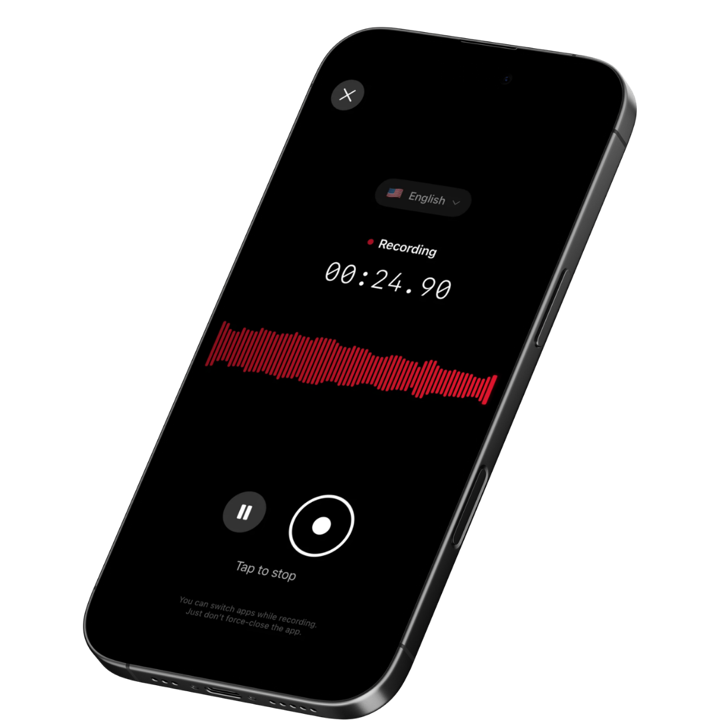
Voice recording and AI transcription offer a way out of this trap. By capturing meetings effortlessly, you create a searchable record that lets teammates catch up asynchronously, reference key decisions later, and stop attending meetings "just in case something important comes up." The information flows without requiring everyone's simultaneous presence.
→ Download SpeakWise from the App Store and discover how one-tap recording, AI transcription, intelligent summaries, and Notion integration can help you escape the meeting time crisis-without missing the information that actually matters.
Join 10,000+ professionals who've discovered that the best way to fight meeting overload isn't attending fewer meetings-it's capturing more of what matters and reviewing it on your own time.
Get SpeakWise Free →
4.9★ App Store Rating | iOS Optimized

🎯 4.9★ App Store Rating | 📱 Built for iOS
