Toxic Workplace Statistics 2026: Key Data


Used by recruiters, executives, consultants, and more.
Toxic Workplace Statistics 2026: Key Data
80% of U.S. workers now say they work in a toxic environment - up from 67% just one year ago. Toxic culture is 10x more likely to drive attrition than pay dissatisfaction. Culture-driven turnover has cost American businesses $223 billion. With 93% of employees saying their employer is not doing enough to support their mental health, these 19 statistics show how toxic workplaces are reshaping the workforce.
Toxic workplaces are no longer a niche problem. They affect the majority of workers across industries, roles, and seniority levels. The data from 2025 and 2026 paints a clear picture: organizations that ignore workplace toxicity pay for it in turnover, healthcare costs, and lost productivity.
This post compiles 19 statistics that capture the scope of toxic workplace culture today. Whether you lead a team, manage HR strategy, or simply want to understand the landscape, these numbers provide the evidence base you need.
Key Toxic Workplace Statistics (2026)
- Toxic workplace culture now affects the vast majority of U.S. workers, with 80% saying they work in a toxic environment, up from 67% in 2024 (Monster).
- Toxic culture is 10 times more predictive of employee turnover than pay dissatisfaction (MIT Sloan Management Review).
- Culture-driven turnover has cost American businesses $223 billion over the past five years (SHRM).
- 93% of employees say their employer is not doing enough to support their mental health (Monster).
- More than 7 in 10 workers (71%) admit they have stayed in a job they knew was toxic, per Monster's 2026 State of Workplace Mental Health Report (Monster).
- Global employee engagement fell to just 20% in 2025, costing the world economy $10 trillion in lost productivity (Gallup).
- 69% of employees have worked for an employer they consider toxic, according to iHire's 2026 Toxic Workplace Trends Report (iHire).
1. 80% of U.S. workers say their workplace is toxic
Monster's 2025 Mental Health in the Workplace poll surveyed more than 1,100 U.S. workers. 80% reported working in a toxic environment. That is up from 67% in 2024 - a 13-point jump in a single year. This sharp increase suggests that conditions are deteriorating faster than organizations can respond. When four out of five workers describe their environment as toxic, the problem has moved well beyond isolated bad managers or difficult teams into something systemic.
Source: Monster - Mental Health in the Workplace Poll 2025
2. 75% of employees have experienced a toxic workplace culture
A study of over 2,000 employees across industries found that 75% reported experiencing a toxic workplace culture. Of those, 87% said it had a direct impact on their mental health. The overlap between toxic culture and mental health damage is nearly total. This means that workplace toxicity is not just an annoyance or a retention risk. It is a mental health crisis that organizations are actively creating and perpetuating through inaction.
Source: Edstellar - Toxic Work Environment Signs 2026
3. Toxic culture is 10x more likely to drive attrition than pay
Research consistently shows that toxic culture is 10 times more predictive of employee turnover than compensation. Workers will endure lower pay, longer commutes, and fewer perks if the environment feels healthy. But they will not tolerate disrespect, exclusion, or chronic stress regardless of salary. This finding flips the traditional retention playbook. Raising wages without fixing culture is throwing money at the wrong problem.
Source: MIT Sloan Management Review - Toxic Culture Is Driving the Great Resignation
4. 71% of workers rate their mental health as poor or fair
Monster's poll found that 71% of workers rate their mental health as poor (40%) or merely fair (31%). Only 29% describe their mental health positively. When nearly three-quarters of the workforce reports subpar mental health, the question shifts from individual resilience to organizational responsibility. These numbers suggest that work itself has become the primary source of psychological distress for most Americans.
Source: Monster - Mental Health in the Workplace Poll 2025
5. 93% say their employer is not doing enough for mental health
The gap between awareness and action is enormous. 93% of employees say their employer is not doing enough to support their mental health. That is up from 78% the previous year. Despite a flood of corporate wellness announcements, employees overwhelmingly feel unsupported. Token programs like meditation apps and wellness webinars do not address the structural causes of toxicity: poor management, excessive workloads, and broken communication.
Source: Monster - Mental Health in the Workplace Poll 2025
6. 59% say toxic culture is the top cause of poor mental health
When asked to identify the primary cause of their mental health struggles, 59% of workers pointed to toxic workplace culture. Bad managers came in second at 54%. These findings confirm that culture is not a soft metric. It is the single biggest driver of employee mental health outcomes. Organizations that treat culture as a nice-to-have are ignoring the root cause of their workforce's psychological distress.
Source: Monster - Mental Health in the Workplace Poll 2025
7. 57% of workers would quit rather than stay in a toxic workplace
More than half of employees (57%) say they would leave their job rather than endure a toxic environment. Some would go even further: 29% would accept a pay cut, and 14% would give up vacation days for an entire year to escape toxicity. These numbers reveal how deeply employees value a healthy work environment. They also show that toxic culture is an active talent repellent, not just a passive drag on morale.
Source: Monster - Mental Health in the Workplace Poll 2025
8. Culture-driven turnover has cost U.S. businesses $223 billion
The financial damage from toxic culture is not theoretical. Research shows that culture-driven turnover has cost American businesses $223 billion in the past five years. This figure captures only direct replacement costs. The indirect costs - lost institutional knowledge, disrupted team dynamics, and reduced client confidence - push the real number far higher. For CFOs and CEOs, toxic culture is a balance-sheet problem.
Source: SHRM - Toxic Workplace Cultures Cost Billions
9. Toxic workplaces cost employers $24 billion annually in healthcare
Organizations with toxic cultures see healthcare expenditures that are 50% higher than healthy companies. In total, toxic workplaces cost employers $24 billion annually in sickness and healthcare costs, with employees 35% more likely to suffer major diseases. Chronic stress drives up rates of cardiovascular disease, depression, anxiety, and substance abuse. These costs show up directly on employer insurance premiums and indirectly through absenteeism and presenteeism.
Source: Ex Nihilo Magazine - The True Cost of Toxic Work Culture
10. 69% of iHire survey respondents worked for a toxic employer
iHire's 2026 Toxic Workplace Trends Report surveyed 1,220 workers across 57 industries. Nearly 69% (68.9%) said they had worked for an employer with a toxic workplace at some point in their career, down slightly from 74.9% the year before. The report also found that unethical, unaccountable, or unsupportive leadership was the most frequently cited cause of toxicity, cited by 79.1% of those who experienced it. When more than two-thirds of the workforce has experienced toxicity firsthand, it remains a near-universal phenomenon rather than an outlier experience.
Source: iHire - Toxic Workplace Trends Report 2026
11. 47% of young workers say their job hurts their mental health
The mental health toll falls disproportionately on younger employees. Nearly half (47%) of workers aged 18-29 report that their job has negatively affected their mental health. This generation entered the workforce during a period of remote work upheaval and now faces return-to-office mandates, economic uncertainty, and always-on digital communication. If organizations cannot retain young workers, they face a talent pipeline crisis that compounds over time.
Source: Gallup - The Economic Cost of Poor Employee Mental Health
12. Untreated mental health issues cost employers $105 billion annually
In the U.S. alone, untreated mental health issues cost employers over $105 billion annually, including the costs of absenteeism, presenteeism, and high employee turnover. When depression specifically is isolated, the figure rises to $210.5 billion per year in absenteeism, reduced productivity and medical costs. This number reveals that ignoring employee mental health is not a cost-saving strategy. It is the most expensive option available. Prevention and early intervention cost a fraction of the downstream damage.
Source: Enthea - The Hidden Cost of Poor Mental Health; APA Center for Workplace Mental Health - Depression Calculator
13. 57% of workers cannot confirm mental health support exists
A majority of employees (57%) cannot confirm that accessible mental health support services exist at their workplace. Among them, 24% say such services do not exist, and 33% simply do not know. This awareness gap means that even organizations with mental health programs are failing to communicate their availability. A benefit that employees do not know about is functionally the same as no benefit at all.
Source: Gallup - The Economic Cost of Poor Employee Mental Health
14. Disengaged employees cost companies 34% of their salary
Disengaged employees are 20% less productive than their engaged counterparts. The total cost of disengagement amounts to roughly 34% of each disengaged employee's annual salary in lost productivity. For a team of 50 with an average salary of $60,000, that translates to over $1 million annually in wasted capacity. Toxic culture is the primary driver of disengagement, making it the most expensive cultural failure an organization can have.
Source: Ex Nihilo Magazine - The True Cost of Toxic Work Culture
15. U.S. employee turnover costs businesses $1 trillion yearly
Employee turnover - much of it driven by toxic culture - costs U.S. businesses $1 trillion per year. Replacing a single employee typically costs between 50% and 200% of their annual salary when factoring in recruitment, onboarding, training, and lost productivity during the transition. Toxic organizations experience significantly higher turnover rates, meaning they pay this replacement cost far more frequently than healthy competitors.
Source: Gallup - This Fixable Problem Costs U.S. Businesses $1 Trillion
16. The APA reports rising workplace stress and declining trust
The American Psychological Association's 2025 Work in America report documents rising workplace stress alongside declining employee trust in organizational leadership. Workers increasingly report feeling undervalued, overworked, and unsupported. The combination of rising stress and falling trust creates a feedback loop: stressed employees disengage, disengaged employees communicate less, and poor communication breeds more toxicity.
Source: APA - 2025 Work in America Report
17. 71% of workers have stayed in a job they knew was toxic
Monster's 2026 State of Workplace Mental Health Report found that more than 7 in 10 workers (71%) say they have stayed in a job they knew was toxic. The same report found 59% say their job negatively impacts their mental health at least monthly, and 46% report burnout from work-related stress. This gap between knowing a job is harmful and actually leaving it points to financial pressure, job uncertainty, and limited alternatives rather than a lack of awareness. Toxicity is not just driving people out - it is trapping many of them in place.
Source: Monster - 2026 State of Workplace Mental Health Report
18. Global employee engagement fell to 20%, costing $10 trillion
Gallup's State of the Global Workplace 2026 report found that global employee engagement fell to 20% in 2025, its lowest level since 2020, down from a peak of 23% in 2022. That decline in engagement cost the world economy an estimated $10 trillion in lost productivity, equivalent to about 9% of global GDP. Toxic workplace culture is a primary driver of disengagement, meaning the economic toll of toxicity extends far beyond any single company's turnover or healthcare costs.
Source: Gallup - State of the Global Workplace 2026
19. Workers with a good manager relationship are far less likely to call their job toxic
The APA's 2025 Work in America survey found that workers satisfied with their relationship with their manager were far less likely to describe their work experience as toxic - 10%, compared with 55% of workers who were unsatisfied with that relationship. The gap underscores how much of workplace toxicity is a management problem rather than an inherent feature of a role or industry. Organizations that invest in the manager-employee relationship see a direct, measurable drop in how toxic their culture feels to employees.
Source: APA - 2025 Work in America Report
The Toxicity Trap: Why Awareness Alone Fails
The data tells a paradoxical story. Awareness of toxic workplace culture has never been higher. Surveys, reports, and media coverage have made toxicity a mainstream concern. Yet the numbers are getting worse, not better. The 13-point jump in perceived toxicity over a single year suggests that corporate wellness programs and culture statements are failing to address root causes.
The root causes are structural, not individual. Poor leadership, excessive meetings, blurred work-life boundaries, and inadequate communication channels create environments where toxicity thrives. No amount of mindfulness training can fix a culture where managers lack conflict resolution skills and employees feel unheard.
The organizations that will win the talent war in 2026 and beyond are those that treat culture as infrastructure - not decoration. That means investing in manager training, building genuine feedback loops, reducing meeting overload, and creating systems that capture information without requiring everyone to be present for every conversation.
Toxic culture is now the single most expensive problem most organizations face - and the data shows that most are still treating it as an HR footnote rather than a strategic priority.---
Capture what matters without the toxic meeting overload
One of the clearest drivers of toxic culture is communication overload. Too many meetings, too many messages, and too much pressure to be present for everything. The information shared in those meetings matters. The exhausting format does not.
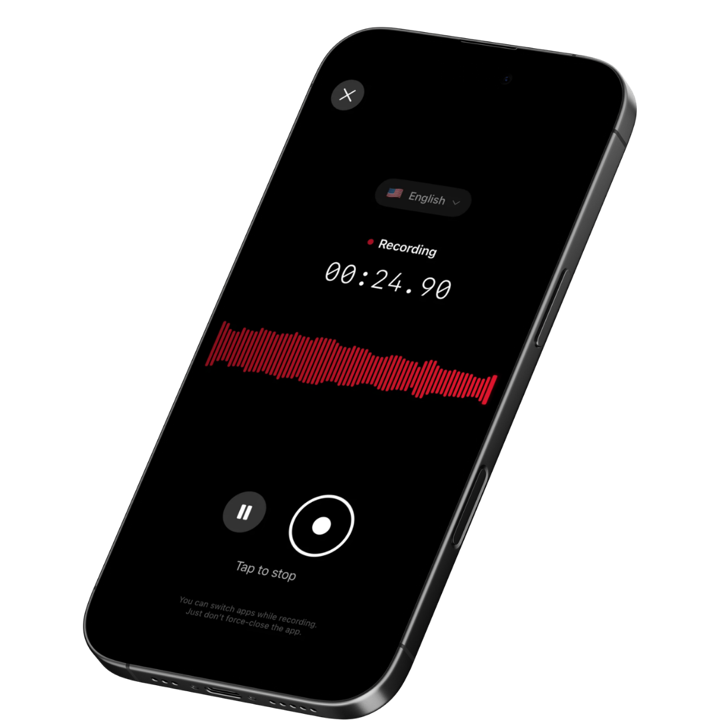
Voice recording and AI transcription let you capture conversations, decisions, and action items without requiring everyone to sit through another hour-long call. Record once, share the summary, and let people engage with the content on their own time.
Download SpeakWise from the App Store and start reducing meeting overload with one-tap recording, AI transcription, instant summaries, and automatic Notion sync.
Join 10,000+ professionals who are fighting back against toxic meeting culture by capturing more and attending less.
Get SpeakWise Free
4.9-star App Store Rating | iOS Optimized

🎯 4.9★ App Store Rating | 📱 Built for iOS
