Unnecessary Meetings Statistics 2026: Wasted Hours, Agenda Gaps, and Calendar Bloat
Used by recruiters, executives, consultants, and more.
Unnecessary Meetings Statistics 2026: Wasted Hours, Agenda Gaps, and Calendar Bloat
71% of senior managers admit their meetings are unproductive and inefficient. One-third of all meetings are classified as unnecessary, costing companies with 5,000+ employees over $100 million annually. Meanwhile, 52% of employees admit to multitasking often or always during virtual meetings, and 59% name a missing agenda as a top reason meetings feel unproductive. The modern calendar is not a productivity tool---it is a graveyard of wasted hours.
The modern workplace runs on meetings. Standups, syncs, check-ins, retrospectives, kickoffs, brainstorms, all-hands, one-on-ones, skip-levels, post-mortems, pre-reads, planning sessions, alignment calls. The vocabulary alone suggests an organization obsessed with gathering people together. And yet, despite this relentless commitment to synchronous time, the overwhelming evidence points to a disturbing conclusion: a massive portion of these meetings should never have been scheduled in the first place. They lack agendas, produce no decisions, include too many passive attendees, and exist primarily because "we've always had this meeting" or because someone defaulted to a calendar invite instead of an email, a Slack message, or a shared document. The result is a workforce drowning in calendar commitments while starving for the uninterrupted focus time that actually produces results. The meetings epidemic is not a minor annoyance---it is a structural crisis costing the global economy hundreds of billions of dollars, eroding employee engagement, and creating a culture where busyness masquerades as productivity.
In this post, we'll explore 20 statistics that quantify the true cost of unnecessary meetings in the modern workplace. These data points span financial waste, time loss, engagement collapse, agenda failures, and the cascading productivity damage that meeting overload inflicts. From the boardroom to the individual contributor's desk, these numbers reveal a system fundamentally broken by its own communication habits---and why the most productive organizations are finding ways to replace meetings with smarter, asynchronous alternatives.
Key Unnecessary Meetings Statistics (2026)
- Unnecessary meetings cost companies with 5,000+ employees over $100 million a year, with almost one-third of all meetings deemed unnecessary by the employees who attend them (Otter.ai / Dr. Steven Rogelberg).
- 71% of senior managers say their own meetings are unproductive and inefficient (Harvard Business Review).
- Individual contributors now lose 3.7 hours a week to unproductive meetings, an 118% jump since 2019 (Asana 2024 State of Work Innovation).
- Poorly organized meetings cost the U.S. economy $399 billion and the U.K. $58 billion every year (Doodle State of Meetings Report 2019).
- 57% of meetings now happen without a calendar invite, as ad hoc calls swallow the workday (Microsoft Work Trend Index).
- 51% of workers say they would send an AI avatar to sit in on a meeting for them (Owl Labs 2025 State of Hybrid Work Report).
- Professionals spend 14.8 hours a week in meetings---37% of the standard workweek (Reclaim.ai Smart Meetings Report).
1. 71% of senior managers say meetings are unproductive and inefficient
A Harvard Business Review survey of 182 senior managers across a range of industries delivered one of the most cited findings in meeting research: 71% of respondents said meetings are unproductive and inefficient. These are not disengaged junior employees venting about Monday morning standups. These are senior leaders---the very people who schedule and lead the majority of organizational meetings---acknowledging that the system they perpetuate is fundamentally broken. If the people running the meetings admit they don't work, the question is no longer whether meetings need reform. It's why organizations continue to rely on a format that their own leadership has declared ineffective. Source: Harvard Business Review
2. One-third of all meetings are unnecessary, costing companies with 5,000+ employees over $100 million per year
Research conducted by Dr. Steven Rogelberg of the University of North Carolina at Charlotte, in partnership with Otter.ai, surveyed thousands of professionals and found that almost one-third of meetings are deemed unnecessary by their own attendees. The financial impact is severe: companies pay an average of $80,000 per professional employee annually to attend meetings, and $25,000 of that---31%---is spent on meetings employees themselves classify as unnecessary. For organizations with 100+ employees, eliminating unnecessary meetings would save over $2 million per year. For companies with 5,000 or more employees, that figure climbs past $100 million annually. Source: Otter.ai / University of North Carolina at Charlotte
3. 65% of senior managers say meetings keep them from completing their own work
The same Harvard Business Review research that revealed the 71% unproductive figure uncovered an equally damaging finding: 65% of senior managers said meetings prevent them from completing their own work. This creates a paradoxical loop. Leaders schedule meetings to drive organizational progress, but those same meetings prevent the leaders from doing the strategic work---analysis, decision-making, long-term planning---that the organization actually needs. The meeting becomes not just a waste of the time it consumes, but a blocker of the high-value work it displaces. When the people with the most organizational leverage are the ones most constrained by meetings, the entire company suffers the consequences. Source: Harvard Business Review
4. Unproductive meeting time for individual contributors has jumped 118% since 2019
Asana's 2024 State of Work Innovation report revealed a startling acceleration in meeting burden for individual contributors. Unproductive meeting hours for ICs have jumped from 1.7 hours per week in 2019 to 3.7 hours per week in 2024---an increase of 118%. This is not a marginal increase. It represents a doubling of wasted synchronous time for the very people who are supposed to be doing the hands-on, focused execution work that organizations depend on. When ICs lose nearly four hours per week to meetings they consider unproductive, the ripple effects on project timelines, code quality, creative output, and overall delivery velocity are enormous. Source: Asana 2024 State of Work Innovation
5. 59% of workers cite a lack of a clear agenda or objectives as a top reason meetings feel unproductive
A Harvard Business Review survey on the toll of "meeting hangovers" asked respondents to name the biggest problems with their unproductive meetings, and 59% pointed to a lack of a clear agenda or objectives---tied for the single most common complaint. This finding explains a substantial portion of why meetings fail. Without an agenda, meetings lack structure, drift between topics, run over time, and end without clear outcomes or action items. Participants arrive unprepared because there is nothing to prepare for. Discussions meander because there is no framework to follow. Decisions stall because nobody defined what decisions needed to be made. The meeting without an agenda is the organizational equivalent of a ship without a rudder---it moves, it consumes fuel, but it arrives nowhere useful. Source: Notta Meeting Statistics / Harvard Business Review
6. 52% of workers multitask often or always during virtual meetings
Calendly's 2024 State of Meetings report found that 52% of workers admit to multitasking often (34%) or always (18%) during virtual meetings with two or more attendees. This is not a minor behavioral quirk---it is an indictment of meeting relevance. When more than half of participants are not fully present, the meeting has failed before it begins. The reason employees multitask is not that they are lazy or unfocused. It is that the meeting does not demand or deserve their full attention, because the content is irrelevant to them, the format is passive, or the information could have been shared asynchronously. Source: Calendly State of Meetings 2024
7. Poorly organized meetings cost $399 billion in the U.S. and $58 billion in the U.K. annually
Doodle's 2019 State of Meetings report, which analyzed 19 million meetings and surveyed over 6,500 professionals across the U.S., U.K., and Germany, calculated that the cost of poorly organized meetings reached $399 billion in the U.S. and $58 billion in the U.K. annually. "Poorly organized" encompasses meetings without agendas, meetings with the wrong attendees, meetings that start late, meetings that run long, and meetings that produce no actionable outcomes. At $399 billion, poorly organized meetings cost more than the GDP of most countries. This is not an abstract economic figure---it represents real salary hours consumed by gatherings that actively subtracted value instead of adding it. Source: Doodle State of Meetings Report 2019
8. Employees want to decline 31% of meeting invites but actually decline only 14%
Dr. Steven Rogelberg's research, published in collaboration with Otter.ai, uncovered a revealing gap between intention and behavior. Employees reported wanting to decline 31% of meeting invitations they receive, but they actually decline only 14%. The reasons are deeply cultural: fear of being seen as disengaged, worry about missing important information, pressure from organizational norms, and the absence of any explicit permission to skip meetings deemed unnecessary. This gap---the 17-percentage-point delta between meetings people want to skip and meetings they actually skip---represents one of the purest measures of meeting waste. These are meetings that attendees themselves have pre-judged as unnecessary, yet they attend anyway because the culture demands it. Source: Entrepreneur / Otter.ai & Dr. Steven Rogelberg
9. The number of weekly meetings has increased 153% since the start of the pandemic
Microsoft's Work Trend Index, which analyzes trillions of productivity signals across Microsoft 365, found that the number of meetings per week has increased by 153% globally for the average Teams user since the start of the pandemic, with no indication the trend is reversing. This dramatic escalation is largely driven by the shift to remote and hybrid work, which eliminated hallway conversations, desk drop-bys, and other informal communication channels. Every quick question, every status update, every piece of context that once flowed organically through physical proximity now requires a scheduled calendar event. The result is calendar bloat on a scale never before seen in workplace history---and a growing recognition that many of these meetings exist not because they need to, but because no one has built a better alternative into daily workflow. Source: Microsoft Work Trend Index
10. Shopify eliminated 12,000 meetings and projected savings of 322,000 hours in a single year
In January 2023, Shopify made headlines by canceling all recurring meetings involving more than two people and discouraging meetings on Wednesdays entirely. The result: 12,000 meetings eliminated from employee calendars, with projected savings of 322,000 hours and 474,000 discrete meeting events for the year. Shopify's meeting cost calculator, released later that year, revealed that a typical 30-minute meeting with three employees costs between $700 and $1,600 when accounting for loaded salaries and opportunity costs. Over the first five months, average meeting time per worker decreased by 14% compared to the previous year. When one of the world's most successful tech companies treats meetings as a cost center and starts cutting, the rest of the industry should pay attention. Source: Fortune / Shopify
11. 68% of employees say frequent meetings leave them without enough uninterrupted focus time
A survey featured in My Hours' 2025 meeting statistics roundup found that 68% of people report that frequent meetings and communication interruptions deprive them of enough uninterrupted focus time during the workday. This finding strikes at the heart of why unnecessary meetings are so damaging. The problem is not just the hours consumed by meetings themselves, but the way scattered meetings fragment the remaining hours into pieces too small for meaningful deep work. A day with six hours of "free time" but four meetings scattered throughout is functionally worse than a day with four hours of free time in a single unbroken block. Meetings don't just steal time---they destroy the quality of whatever time remains. Source: My Hours Meeting Statistics 2025
12. 28% of meetings produce a "meeting hangover"---lingering brain fog and frustration
Asana's 2024 research introduced the concept of the "meeting hangover"---the lingering cognitive fog, frustration, and lost momentum that follows a particularly draining or pointless meeting. Their data showed that workers experience meeting hangovers after 28% of their meetings. Additionally, 84% of workers reported spending part of their post-meeting cooldown period venting to colleagues about bad meetings, creating a secondary productivity drain. The meeting hangover reveals that the cost of an unnecessary meeting extends well beyond its scheduled time block. A 30-minute meeting that produces a hangover can easily destroy an hour or more of productive time as employees struggle to re-engage with focused work. Source: Asana 2024 State of Work Innovation
13. Professionals spend an average of 14.8 hours per week in meetings---37% of their workweek
Reclaim.ai's 2024 Smart Meetings report, analyzing data from 1,300 professionals, found that the average professional spends 14.8 hours per week in meetings---37% of the standard 40-hour workweek. While this figure has actually declined from a pandemic peak of 21.5 hours per week in 2021 (a 31.2% decrease), it still represents an extraordinary allocation of working time. Professionals additionally spend up to 3 hours per week just scheduling and rescheduling meetings, bringing the total meeting-related time investment close to 18 hours weekly. When nearly four out of every ten working hours are spent in meetings, the margin for focused, productive work becomes dangerously thin. Source: Reclaim.ai Smart Meetings Report
14. 55% of remote workers believe the majority of their meetings could have been an email
A survey of remote workers found that over 55% believe a majority of their meetings could have been replaced by an email or another form of asynchronous communication. This figure is particularly significant because remote workers---who have the most meetings, as documented by Microsoft and Flowtrace's research---are also the ones most keenly aware that many of those meetings are unnecessary. The "this meeting could have been an email" complaint has become a workplace cliche, but the data shows it reflects a genuine structural problem: organizations default to synchronous communication for information-sharing tasks that require no real-time interaction. Status updates, announcements, progress reports, and FYI briefings are all categories of meeting content that can be delivered more efficiently in written or recorded form. Source: Zippia Meeting Statistics
15. 44% of workers say most status meetings could be replaced by an email or shared document
Harvard Business Review reported that 44% of workers specifically identify status meetings---the regular check-ins, standups, and progress updates that fill calendars across every organization---as meetings that could be replaced by an email or a shared document. Status meetings are the most common recurring meeting type, yet they are also the type most frequently cited as unnecessary. The reason is structural: a status meeting exists to share information that has already been generated. The meeting adds no new value---it simply creates a synchronous bottleneck for information that could flow asynchronously. When nearly half the workforce recognizes that the most common meeting type is redundant, the problem is not with the workers. It is with the system. Source: Harvard Business Review
16. 44% of workers say they dread meetings
Asana's 2024 research found that 44% of workers openly say they dread meetings. Not "mildly dislike." Not "would prefer fewer." Dread. This emotional response reflects years of accumulated frustration with meetings that waste time, lack purpose, exclude meaningful participation, and prevent people from doing the work they were hired to do. Meeting dread is not laziness---it is a rational emotional response to a system that repeatedly consumes time without delivering proportional value. When nearly half the workforce approaches meetings with a sense of dread, organizations face not just a productivity crisis but an engagement and retention crisis. Talent does not stay at companies where they spend their days dreading the primary activity on their calendar. Source: Asana 2024 State of Work Innovation
17. Organizations lose 24 billion hours to inefficient meetings every single year
Doodle's State of Meetings research puts the collective cost of meeting waste into a figure that defies comprehension: 24 billion hours lost to pointless meetings every year. To put that number in perspective, 24 billion hours is equivalent to 2.74 million years of continuous human work. It is more time than it took to build every pyramid in Egypt, every cathedral in Europe, and every skyscraper in Manhattan---combined, many times over. These are not hours lost to illness, vacation, or commuting. They are hours that employees showed up, sat down, and were actively engaged in something their organization scheduled---and the result was nothing. No decisions made. No problems solved. No information shared that couldn't have been shared another way. Twenty-four billion hours, vanished into the void of conference rooms and Zoom calls. Source: Doodle State of Meetings Report 2019
18. 57% of meetings now happen without a calendar invite
Microsoft's 2025 Work Trend Index research, "Breaking Down the Infinite Workday," found that 57% of meetings are now ad hoc calls thrown together without a calendar invite, and roughly 1 in 10 scheduled meetings gets booked at the last minute. The calendar invite---once the gatekeeper that forced at least some planning and intentionality onto a meeting---has been bypassed entirely for the majority of gatherings. An ad hoc meeting carries none of the structure that might otherwise prevent it: no agenda circulated in advance, no explicit list of required attendees, no stated purpose beyond "got a sec?" This shift helps explain why meeting quality keeps declining even as meeting volume keeps climbing: the meetings least likely to be necessary are also the ones least likely to have been planned. Source: Microsoft Work Trend Index: Breaking Down the Infinite Workday
19. Meetings after 8 PM are up 16% year over year
The same 2025 Microsoft Work Trend Index research found that meetings starting after 8 p.m. increased 16% year over year, driven largely by teams collaborating across time zones---nearly a third of meetings now span multiple time zones, up 8 percentage points since 2021. The traditional workday's boundaries are dissolving, and meetings are leading the charge into employees' evenings. Combined with Microsoft's finding that the average employee sends or receives more than 50 messages outside of core business hours, the data points to a meeting culture that no longer respects the edges of the workday at all. An unnecessary meeting scheduled during business hours is a productivity problem; an unnecessary meeting scheduled at 9 p.m. is a work-life balance problem. Source: Microsoft Work Trend Index: Breaking Down the Infinite Workday
20. 51% of workers would send an AI avatar to attend a meeting for them
Owl Labs' 2025 State of Hybrid Work report, its ninth annual survey of full-time knowledge workers, found that just over half of respondents (51%) said they would be interested in having an AI avatar sit in on a meeting on their behalf. When more than half the workforce would rather delegate meeting attendance to a piece of software than show up in person, it is hard to interpret that as anything other than a referendum on how pointless many meetings feel to attend. Employees are not asking for better meeting tools---they are asking to be somewhere else entirely. It is one of the clearest signals yet that the meeting, in its current form, has lost the trust of the people required to sit through it. Source: Owl Labs 2025 State of Hybrid Work Report
The Meeting Paradox: Why We Keep Scheduling What We Know Doesn't Work
The 20 statistics above paint a picture that should alarm every CEO, every people leader, and every individual contributor fighting for focus time. The data is unambiguous: a massive portion of workplace meetings are unnecessary, unproductive, and actively harmful to organizational performance. We know this. Senior managers know this. Individual contributors know this. Everyone involved knows this---and yet the meetings persist.
The reason is structural, not behavioral. Organizations lack the infrastructure for effective asynchronous communication. When someone needs to share a project update, announce a decision, provide context on a change, or align a team on priorities, the calendar invite is the path of least resistance. It requires no writing, no documentation, no careful structuring of information. You simply invite people, talk for 30 to 60 minutes, and trust that the information has been absorbed. The problem, of course, is that it hasn't---because 52% of attendees were multitasking often or always, a missing agenda was the single most common complaint about unproductive meetings, and 28% of participants left with a meeting hangover that poisoned their remaining productive hours.
The companies that are solving this problem---Shopify, Automattic, GitLab, Basecamp, and a growing number of forward-thinking organizations---share a common strategy. They don't try to make meetings better. They try to have fewer meetings by replacing information-sharing meetings with asynchronous alternatives. Written updates replace status standups. Recorded walkthroughs replace demo meetings. Async voice memos replace alignment calls. The meeting is reserved for what it does best---real-time deliberation, complex problem-solving, and human connection---and stripped of everything else.
The math is simple. If one-third of meetings are unnecessary, and those meetings cost $25,000 per employee per year, then every company is sitting on a massive productivity windfall waiting to be unlocked. The only thing standing between the current state---$399 billion in wasted meeting costs, 24 billion lost hours, 71% unproductive meetings---and a dramatically better future is the willingness to rethink the meeting as the default unit of collaboration. The technology exists. The research is clear. The only question is whether your organization will act on it---or schedule another meeting to discuss it.
The most productive meeting is the one that never needed to happen. The most valuable information is the kind that flows without requiring everyone to stop working at the same time.---
Ready to replace unnecessary meetings with something that actually works?
The data tells a clear story: most meetings exist to share information that could be captured, structured, and delivered asynchronously. Status updates, project briefings, decision announcements, weekly recaps, team alignment calls---these meetings exist not because real-time interaction is required, but because organizations lack a frictionless alternative. The result is billions of wasted hours and hundreds of billions of wasted dollars, all because the information had no other way to travel.
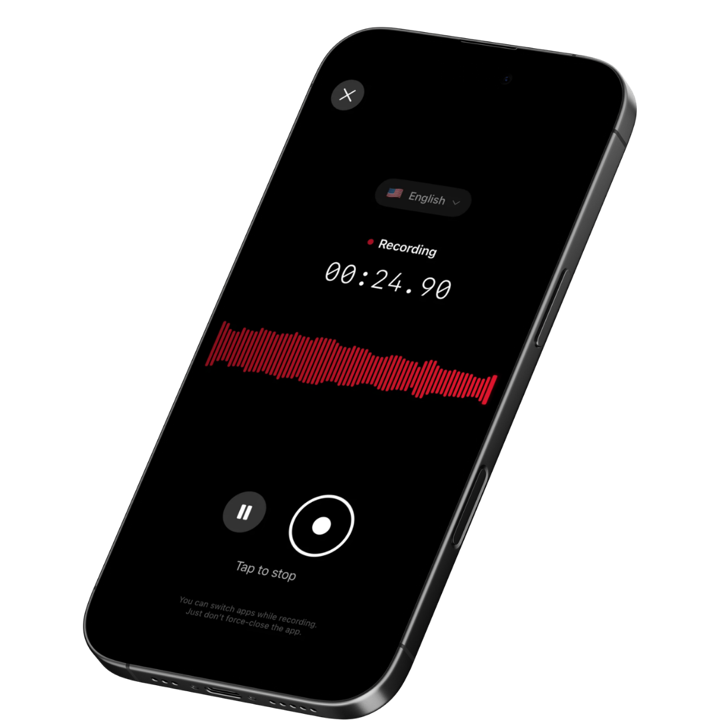
Voice capture offers a fundamentally different approach. Instead of scheduling a 30-minute meeting to share an update, you simply speak---and AI handles the rest. Record a voice memo, get an instant transcript and summary, and share it with your team. No calendar invite. No scheduling conflict. No wasted hour.
Download SpeakWise from the App Store and discover how one-tap recording, AI transcription, intelligent summaries, and Notion integration can help you share information without scheduling another meeting.
Join 10,000+ professionals who've discovered that the best way to fight meeting overload isn't better meetings---it's fewer meetings replaced by voice-first async communication.
Get SpeakWise Free →
4.9★ App Store Rating | iOS Optimized

🎯 4.9★ App Store Rating | 📱 Built for iOS
