Virtual Team Building Statistics 2026


Used by recruiters, executives, consultants, and more.
Virtual Team Building Statistics 2026
Only 32% of US employees are engaged at work in 2025, among the lowest levels ever recorded. Yet companies investing in team building see $4 returned for every $1 spent, and organizations with comprehensive engagement programs report an 87% reduction in turnover. Virtual team-building events cost 75% less than in-person alternatives while delivering up to 12% higher ROI. These 16 statistics reveal why virtual team building has become a critical lever for retention and performance in distributed workforces.
Employee engagement has dropped to alarming levels. Globally, just 21% of workers report being engaged, contributing to a $438 billion productivity loss worldwide. For remote and hybrid teams, the challenge is even sharper. Without shared physical spaces, connection must be intentional. Virtual team building has evolved from awkward Zoom icebreakers into a structured discipline backed by real data.
This post covers 16 statistics on virtual team building effectiveness, costs, market growth, and business impact. These numbers are relevant for managers leading distributed teams, HR leaders designing engagement programs, and executives weighing the ROI of connection initiatives.
1. Only 32% of US employees are engaged at work in 2025
Gallup's 2025 State of the Global Workplace report found that just 32% of US employees are engaged at work. This is among the lowest levels Gallup has recorded. Globally, engagement sits at just 21%. Engaged employees are emotionally committed to their work and organization. The remaining 68% in the US are either not engaged or actively disengaged. This baseline makes the case for team building not as a perk but as a business necessity. Every percentage point of engagement improvement translates directly into productivity, retention, and profitability.
Source: Gallup - State of the Global Workplace 2025
2. Investment in team building yields $4 for every $1 spent
Research shows that investment in team-building activities yields an average return of $4 for every $1 spent in the US. This ROI comes from reduced turnover costs, higher productivity, and fewer sick days. Teams that feel connected make better decisions, communicate more efficiently, and resolve conflicts faster. The $4 return is an average. Companies that target team building toward high-turnover or low-engagement groups often see even higher returns because the baseline is worse and the improvement potential is greater.
Source: HRStacks - Virtual Team Building Statistics 2025
3. Virtual team-building events cost 75% less than in-person events
Virtual team-building events cost approximately 75% less than in-person alternatives, saving an average of $42,000 per session. Despite the lower cost, they deliver up to 12% higher ROI according to industry benchmarks. The savings come from eliminating travel, venue rental, catering, and accommodation expenses. For companies with distributed teams across multiple locations, virtual events are often the only practical option. The cost advantage makes it possible to run activities more frequently, which compounds the engagement benefits over time.
Source: HRStacks - Virtual Team Building Statistics 2025
4. Organizations with engagement programs see 87% less turnover
According to Gallup, organizations that invest in comprehensive engagement programs, including team building, see an 87% reduction in turnover rates. Turnover is one of the most expensive problems in business. Replacing an employee costs 0.5x to 2x their annual salary when factoring in recruiting, onboarding, training, and lost productivity. An 87% reduction represents massive savings. The key word is "comprehensive." Isolated events without follow-up or cultural integration produce minimal results. Sustained, regular connection programs drive the biggest reductions.
Source: Gallup - State of the Global Workplace 2025
5. The virtual team building market is projected to reach $7.86 billion in 2025
The global virtual team building market reached an estimated $7.86 billion in 2025, with a compound annual growth rate of 7.03% projected through 2033. This growth reflects a permanent shift in how companies invest in culture. What started as a pandemic necessity has become a mainstream business function. Large companies with over 100 employees represent approximately 60% of the market, driven by their need for engagement solutions that scale across locations and time zones.
Source: Archive Market Research - Virtual Team Building 2026-2033
6. Virtual team-building adoption grew 25x since the pandemic
Searches and bookings for online team activities spiked approximately 25x during the pandemic and remain well above pre-COVID levels. The initial surge was driven by necessity. The sustained demand reflects genuine value. Companies discovered that virtual activities, when well-designed, create meaningful connection without the logistical overhead of in-person events. The 25x growth also created a mature vendor ecosystem, giving organizations more options and better quality than the early pandemic era.
Source: TeamBuilding.com - Team Building Statistics
7. Global employee disengagement costs $438 billion in lost productivity
Global employee engagement dropped to 21% in 2024, contributing to a $438 billion productivity loss worldwide. This number from Gallup represents the economic cost of employees who show up but do not contribute their full effort. For a 100-person company with an average salary of $60,000, even a 5% productivity gap from disengagement represents $300,000 in lost output annually. Virtual team building is one of the most cost-effective interventions available because the cost per employee is minimal compared to the productivity gains from even small engagement improvements.
Source: Gallup - State of the Global Workplace 2025
8. Engaged teams are 18% more productive and 23% more profitable
Gallup research consistently shows that highly engaged teams are 18% more productive and 23% more profitable than their disengaged counterparts. These are not theoretical projections. They are measured outcomes across thousands of organizations. The productivity gain comes from discretionary effort. Engaged employees solve problems proactively, collaborate more effectively, and maintain quality standards without constant oversight. The profitability gain follows from both the productivity increase and lower costs related to turnover, absenteeism, and quality defects.
Source: Gallup - State of the Global Workplace 2025
9. Manager engagement fell from 30% to 27% in 2024
Manager engagement dropped from 30% to 27% in 2024, with young managers and female managers experiencing the largest declines. This matters enormously because managers account for 70% of the variation in team engagement. When managers are disengaged, their teams follow. Virtual team building must include managers as participants, not just organizers. Managers who feel connected to their peers and supported by leadership are far more effective at fostering engagement within their own teams.
Source: Gallup - State of the Global Workplace 2025
10. Regular connection programs reduce turnover by up to 33%
Companies running regular connection programs see significant drops in turnover, with some reporting up to one in three employees choosing to stay who otherwise would have left. The word "regular" is critical. One-off team-building events produce short-lived boosts. Consistent, recurring activities build the relational infrastructure that makes people feel they belong. For remote teams, regularity replaces the daily social interactions that happen naturally in an office. Weekly or biweekly touchpoints maintain connection better than quarterly events.
Source: HRStacks - Virtual Team Building Statistics 2025
11. 31% of fully remote employees report high engagement
Gallup data shows that 31% of fully remote employees report high engagement, slightly below the 32% US average but higher than many hybrid configurations. However, remote workers also report higher levels of stress, loneliness, and negative emotions. This paradox suggests that remote work does not inherently destroy engagement, but it creates emotional risks that require active management. Virtual team building directly addresses the loneliness and disconnection that erode remote worker wellbeing over time.
Source: Gallup - State of the Global Workplace 2025
12. Large companies represent 60% of the virtual team building market
Companies with over 100 employees account for approximately 60% of the virtual team building market. Their dominance reflects both budget availability and the complexity of keeping large distributed teams connected. However, the fastest growth is coming from mid-size companies with 50-200 employees that are scaling remote teams and recognizing the need for structured connection. Small companies often rely on informal social interactions, which work well at small scale but break down as teams grow beyond 15-20 people.
Source: Archive Market Research - Virtual Team Building 2026-2033
13. Employees who receive regular recognition are 3.6x more likely to be engaged
Employees who receive regular praise and recognition are 3.6 times more likely to be actively engaged in their roles. Recognition is a core component of effective team building. It does not require formal programs or budgets. A manager acknowledging good work during a virtual team meeting creates connection and reinforcement simultaneously. For remote teams, recognition must be visible and frequent because there are fewer opportunities for informal acknowledgment. Public recognition in team channels and meetings amplifies the effect.
Source: HiBob - Employee Engagement Retention Statistics
14. Replacing an employee costs 0.5x to 2x their annual salary
The cost of replacing a departing employee ranges from 0.5x to 2x their annual salary. For a senior knowledge worker earning $100,000, that translates to $50,000-$200,000 per departure. These costs include recruiting, interviewing, onboarding, training, and the productivity loss during ramp-up. Virtual team building that costs a few hundred dollars per employee per year looks insignificant compared to these replacement costs. Even preventing one departure per quarter justifies substantial investment in engagement activities.
Source: Gallup - State of the Global Workplace 2025
15. 17% boost in productivity from high engagement
Gallup links high engagement to a 17% boost in productivity across organizations. This productivity gain is consistent across industries, job types, and company sizes. For teams that move from low to high engagement, the improvement is even more dramatic. Virtual team building contributes to engagement by creating psychological safety, building trust, and fostering the personal connections that make collaboration easier. Teams that know each other beyond work tasks communicate more efficiently and solve problems faster.
Source: Gallup - State of the Global Workplace 2025
16. Virtual team building services market projected to reach $3.46 billion by 2033
The global virtual team building services market is projected to reach $3.46 billion by 2033, exhibiting a compound annual growth rate of 12.5%. Market projections show values of $1.35 billion in 2025 and $1.52 billion in 2026. This growth trajectory confirms that virtual team building is not a trend. It is an established market with sustained demand. The 12.5% CAGR outpaces overall HR technology spending, reflecting the priority organizations place on solving the engagement crisis through connection.
Source: Archive Market Research - Virtual Team Building Services 2025-2033
The Connection Deficit: Why Virtual Team Building Matters More Than Ever
These statistics tell a story of urgency. Employee engagement is at historic lows, costing the global economy $438 billion in lost productivity. Managers, the people most responsible for team engagement, are themselves disengaging. Remote workers face higher rates of loneliness and stress despite reporting competitive engagement numbers. The human infrastructure of work is fraying.
Virtual team building is not the complete answer, but it addresses the core problem: distributed teams lack the organic social interactions that build trust, belonging, and psychological safety. The data shows that regular connection programs reduce turnover by up to 33%, that engaged teams are 23% more profitable, and that every dollar invested returns four. These are not aspirational targets. They are measured outcomes.
The market is responding accordingly. Virtual team building has grown 25x since the pandemic and shows no signs of slowing. The companies investing in structured connection programs are seeing measurable returns in retention, productivity, and profitability. Those waiting for employees to connect on their own are watching engagement erode.
The cost of virtual team building is trivial compared to the cost of replacing disengaged employees who leave. The real question is not whether to invest in connection, but how much disengagement you can afford.---
Turn team conversations into lasting connections and clear action items
The statistics make it clear: distributed teams need intentional connection to stay engaged. But team-building sessions, retrospectives, and virtual offsites generate valuable conversations that often evaporate after the call ends. Insights shared, commitments made, and ideas sparked during these moments deserve to be captured, not forgotten.
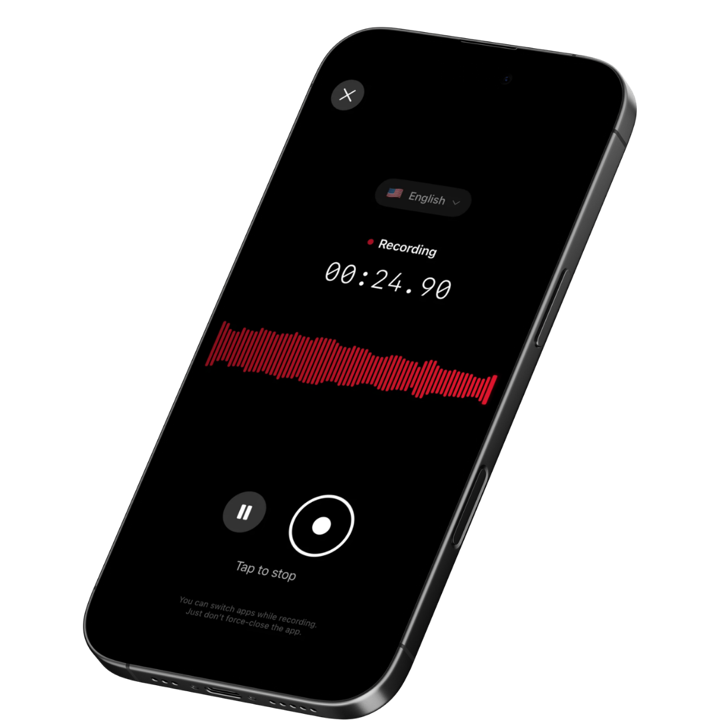
With one-tap voice recording and AI transcription, you can capture the substance of every team interaction without disrupting the flow of conversation. Automatic summaries highlight key takeaways, and action items are extracted so follow-through actually happens. Everything syncs to Notion for easy reference.
Download Speakwise from the App Store and make sure your team's best conversations turn into documented insights and completed action items.
Join 10,000+ professionals who capture meetings and conversations with AI-powered voice notes that keep distributed teams aligned.
Get Speakwise Free
4.9-star App Store Rating | iOS Optimized

🎯 4.9★ App Store Rating | 📱 Built for iOS
