Voice Note Statistics: 17 Reasons Why Professionals Are Ditching Traditional Notes


Used by recruiters, executives, consultants, and more.
Voice Note Statistics: 17 Reasons Why Professionals Are Ditching Traditional Notes
Speaking is 3x faster than typing, yet the average person forgets 50% of new information within an hour. With 7 billion voice messages sent daily on WhatsApp alone and 84% of Gen Z embracing voice notes, these 17 statistics reveal why voice-based capture has become essential for competitive professionals.
We've all been there: a brilliant idea strikes in the shower, during a commute, or mid-conversation-only to vanish before we can write it down. Traditional note-taking methods simply can't keep pace with the speed of human thought. While our fingers fumble with keyboards at 40 words per minute, our minds race ahead at 150.
In this post, we'll explore 17 compelling statistics that explain why voice notes are rapidly replacing typed notes across professional and personal contexts. These numbers reveal the science behind why we forget, the hidden costs of lost ideas, and the explosive growth of voice-based solutions that are transforming how professionals capture what matters most.
Whether you're losing insights to forgetful memory, struggling to document meetings, or watching brilliant ideas slip away during everyday moments, these statistics provide a clear, data-driven case for making the switch to voice.
1. Speaking is 3x faster than typing on mobile devices
A Stanford University study found that speech input was 3.0 times faster than keyboard typing for English (161 vs. 53 words per minute) and 2.8 times faster for Mandarin Chinese. Even more striking: speech had 20.4% lower error rates than typing in English. When every minute counts, voice capture isn't just faster-it's more accurate. Source: Stanford HCI Research
2. 7 billion voice messages are sent on WhatsApp every single day
That's not a typo-seven billion voice notes traverse WhatsApp daily, alongside 100+ billion total messages. This staggering volume demonstrates that voice-based communication has moved from novelty to necessity. When billions of people choose voice over text for daily communication, the preference is clear. Source: WhatsApp/yCloud Statistics
3. People forget 50% of new information within one hour
According to Ebbinghaus's forgetting curve research, humans lose half of newly learned information within 60 minutes if they don't actively capture it. Within 24 hours, that figure climbs to 70%. Within a week, only 25% remains. Voice notes let you capture insights the moment they occur-before memory decay begins. Source: Ebbinghaus Forgetting Curve Research/TalentCards
4. 84% of Gen Z actively uses voice notes for communication
Gen Z is leading a generational shift in communication preferences. A Preply study found that 84% of Gen Z uses voice notes, followed by 63% of millennials, 56% of Gen X, and even 47% of baby boomers. Voice-first communication isn't a young person's fad-it's a cross-generational movement. Source: Preply Voice Notes Study
5. The voice recorder app market will grow from $1.6 billion to $3.3 billion by 2033
The voice recorder app market is projected to achieve 8.7% compound annual growth through 2033. In 2023, over 75% of smartphone users worldwide utilized voice recording features, reflecting the critical role these tools play in communication, education, and content creation. Source: Verified Market Reports
6. Knowledge workers spend 8.2 hours per week searching for and recreating information
That's more than a full workday every week lost to information management failures. When brilliant ideas escape capture, professionals waste countless hours trying to reconstruct what they already knew. Voice notes create a searchable archive of your thoughts, eliminating the endless hunt for lost information. Source: APQC Research
7. 48% of Americans prefer voice notes for sharing complex ideas
Nearly half of Americans say they prefer voice notes specifically because they're better for conveying complex thoughts. Text strips away tone, emotion, and nuance. Voice preserves the full richness of human expression-making it ideal for explaining complicated concepts or capturing multifaceted ideas. Source: Preply Voice Notes Study
8. 20% of the most significant creative ideas occur during non-work activities
Research published in Psychological Science found that approximately 20% of professionals' most significant creative breakthroughs happen while doing something other than working-in the shower, on walks, or during commutes. These "aha moments" are more likely to solve previously unsolvable problems-but only if captured before they vanish. Source: National Geographic/Psychological Science
9. The average person speaks at 150 words per minute but types only 40
The math is simple but profound: you can articulate ideas nearly four times faster by speaking than by typing. Professional typists reach 50-80 WPM, but the average person composes new text at just 19-32 WPM. For capturing spontaneous thoughts, voice eliminates the bottleneck between mind and memory. Source: Wikipedia/Typing Research
10. 2 in 3 Americans actively use voice notes when communicating
Voice notes have achieved mainstream adoption. According to Preply research, 62% of Americans have sent a voice note, and 30% use them weekly, daily, or multiple times per day. Among young adults aged 18-29, that figure rises to 43% using voice notes at least weekly. Source: The Hustle/Vox
11. 31 hours are spent on unproductive meetings monthly-more than a full day of work
Employees waste 31 hours per month in unproductive meetings, and 30% don't complete actions agreed upon during meetings due to not recalling key information afterward. Voice recording transforms every meeting into a searchable transcript, ensuring nothing slips through the cracks. Source: BOOQED Meeting Statistics
12. Working memory holds only 4-9 items before information is lost
Cognitive science confirms what we intuitively know: our brains can only juggle a handful of items in working memory. When a new idea arrives, it's competing for limited mental real estate. Without immediate capture, that insight gets pushed out by the next thought. Voice notes offload ideas instantly, freeing your mind to keep creating. Source: Asian Efficiency/Cognitive Research
13. 8.4 billion voice assistants are now in use worldwide
The number of digital voice assistants doubled from 4.2 billion in 2020 to 8.4 billion by 2024-more than the world's population. This explosive growth reflects a fundamental shift in how humans interact with technology: through natural speech rather than typing. Voice-first interfaces have become the new normal. Source: Statista/DemandSage
14. 37% of 18-34 year-olds prefer voice notes over phone calls
Voice notes have emerged as the perfect middle ground between text and calls. The Uswitch survey reveals that over a third of young adults prefer voice notes to traditional phone calls-enjoying the personal touch of hearing someone's voice without the pressure of real-time conversation. Source: Outlook India/Uswitch Survey
15. Speech-to-text accuracy now exceeds 96% in optimal conditions
Modern AI transcription has achieved remarkable accuracy, with the best speech to text apps reaching over 96% accuracy rates. This means voice notes can be automatically converted to searchable text with minimal errors-giving you the speed of speech with the permanence and searchability of written notes. Source: AssemblyAI Benchmarks
16. 50% of voice note users say they strengthen relationships
Voice notes aren't just efficient-they're emotionally powerful. Half of Americans who use voice notes report that they've strengthened their relationships, and 38% say voice notes make them feel less lonely. In professional contexts, this means voice notes can build rapport and connection that text simply can't match. Source: Preply Voice Notes Study
17. The speech-to-text API market is projected to reach $21 billion by 2034
Growing at a 15.2% compound annual growth rate, the speech-to-text market reflects massive enterprise investment in voice technology. Companies across healthcare, legal, media, and business sectors are racing to implement voice-powered solutions-because the ROI of capturing every word is undeniable. Source: Allied Market Research
Why Traditional Capture Can't Keep Up
The statistics paint a clear picture: the gap between how fast we think and how fast we can type has become a critical bottleneck. While our minds generate ideas at conversational speed-150 words per minute-our fingers struggle to keep pace at 40. And when we can't capture thoughts immediately, the forgetting curve begins its relentless work, erasing 50% within the hour.
Voice notes solve this fundamental mismatch. They capture ideas at the speed of thought, preserve emotional nuance that text strips away, and create searchable archives that eliminate the hours wasted hunting for lost information. From shower thoughts to meeting action items, voice-based capture ensures nothing valuable escapes.
For professionals drowning in information, losing brilliant ideas to distraction, or watching insights evaporate between conception and documentation, voice notes aren't just convenient-they're transformative. The data is clear: voice capture is faster, more accurate, and increasingly preferred across every generation.
The question isn't whether voice notes can improve your productivity. It's how many ideas have you already lost by not using them?---
Ready to capture every brilliant idea?
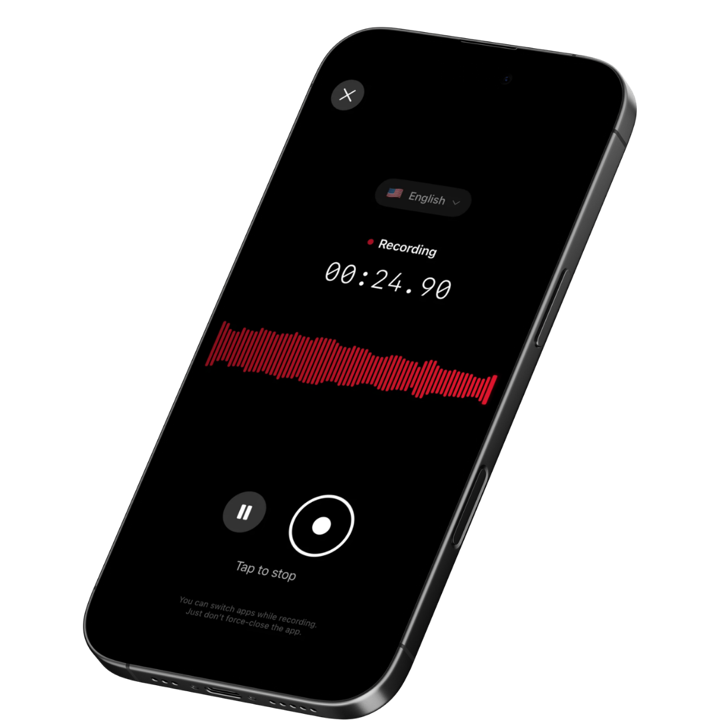
→ Download SpeakWise from the App Store and see how one-tap recording, AI transcription, and intelligent summaries sent directly to Notion can ensure you never lose a thought again.
Join 10,000+ professionals who've already discovered the power of voice-based capture. From shower thoughts to meeting notes, capture everything that matters-before memory decay begins.
Get SpeakWise Free →
4.9★ App Store Rating | iOS Optimized

🎯 4.9★ App Store Rating | 📱 Built for iOS
