Walking Meeting Statistics 2026: Research
TL;DR
Walking meeting statistics for 2026 show that walking during a meeting lifts creativity and offsets the health risks of sitting all day. The average office worker sits 8.5 hours per day (PMC). This post collects 16 statistics on walking meetings. Speakwise records the conversation with one tap so walking meetings still produce a transcript and summary.


Used by recruiters, executives, consultants, and more.
Walking Meeting Statistics 2026: Research
Stanford research found that walking increases creative output by an average of 60%. Employees who participate in walking meetings are 8.5% more likely to feel highly engaged. Sitting for more than 6 hours per day raises mortality risk by 30%. Walking just 15 minutes daily can add 3 years of life expectancy. These 16 statistics make the scientific case for replacing seated meetings with walking ones.
The walking meeting is one of the simplest workplace interventions available. It requires no budget, no technology, and no organizational restructuring. Yet the research supporting it spans creativity, health, engagement, and cognitive performance. In a world where the average office worker sits for 8.5 hours per day and attends meetings that could easily happen on foot, the walking meeting addresses multiple problems simultaneously.
This post presents 16 statistics on walking meetings, sedentary behavior, and the science of movement at work. The data supports anyone looking to improve meeting quality, personal health, or team creativity by simply getting up and moving.
1. Walking increases creative output by an average of 60%
Stanford researchers Marily Oppezzo and Daniel Schwartz found that a person's creative output increased by an average of 60% while walking. The study, which tested 176 participants across four experiments, measured divergent thinking - the ability to generate multiple solutions to open-ended problems. This is precisely the kind of thinking needed in brainstorming sessions, strategy discussions, and problem-solving meetings.
Source: Stanford Report - Walking Improves Creativity
2. The creativity boost works indoors and outdoors equally
The Stanford study revealed a surprising finding: walking indoors on a treadmill facing a blank wall produced the same creativity boost as walking outdoors. The act of walking itself, not the environment, was the primary driver of creative improvement. This means walking meetings do not require nice weather, a park, or outdoor space. A hallway or indoor track delivers the same cognitive benefits.
Source: Stanford Report - Walking Improves Creativity
3. Creative benefits persist even after sitting back down
The Stanford research also found that creative output remained elevated even after participants sat back down following a walk. The creative priming effect of walking extends beyond the walk itself, meaning that a short pre-meeting walk can boost creative thinking during a subsequent seated discussion. A 10-minute walk before a brainstorming session could improve the entire session's output.
Source: Stanford Report - Walking Improves Creativity
4. Employees in walking meetings are 8.5% more likely to feel highly engaged
Johnson & Johnson conducted a study of 90 walking meetings and found that employees who participated were 8.5% more likely to report feeling highly engaged. Participants also felt more energized, more focused on their jobs, and more connected to colleagues and the company. Walking together creates a shared physical experience that seated meetings cannot replicate.
Source: Baylor University - The Benefits of Walking Meetings
5. Walking meetings increase moderate-to-vigorous physical activity by 10 minutes
The CDC's Walking Meeting Pilot Study at the University of Miami found that converting traditional seated meetings to walking format increased moderate, vigorous, and very vigorous physical activity by 10 minutes per session among white-collar workers. For employees who spend most of their day sitting, these additional active minutes accumulate into meaningful health improvements over time.
Source: CDC - Walking Meeting Pilot Study
6. People who sit more than 6 hours daily face 30% higher mortality risk
Prolonged sitting is a serious health risk. Studies show that individuals who sit for more than 6 to 8 hours daily face approximately 30% higher risk of premature death, particularly from heart disease and cancer. Walking meetings directly address this risk by converting sedentary meeting time into active time. Even replacing one or two seated meetings per week with walking alternatives reduces total sitting hours.
Source: JAMA Network Open - Occupational Sitting Time and Mortality
7. The average office worker sits 8.5 hours per day
Western populations spend an average of 8.5 hours per day sedentary - nearly 60 hours per week. Many workers spend more than half of their entire workday seated. This level of inactivity is associated with cardiovascular disease, diabetes, obesity, and metabolic syndrome. Walking meetings offer a practical countermeasure that fits into existing work structures without requiring dedicated exercise time.
Source: PMC - Targeting Reductions in Sitting Time
8. 15 minutes of brisk walking daily can add 3 years of life expectancy
The health returns from walking are substantial even at modest levels. Engaging in brisk walking for just 15 minutes per day - the length of a short walking meeting - can add up to 3 years of life expectancy. The CDC recommends 10,000 steps daily, but even incremental increases above baseline provide measurable health benefits. Every walking meeting moves employees closer to these targets.
Source: CDC - Walking Meeting Pilot Study
9. Breaking up sitting time improves metabolic profiles
Research published in the European Heart Journal found that frequent breaks in prolonged sitting time correlate with better metabolic profiles. Employees who interrupted sitting with brief walking periods showed improvements in waist circumference, BMI, triglyceride levels, and blood glucose levels. Walking meetings provide natural, productive breaks that deliver these metabolic benefits without additional time investment.
Source: PMC - Targeting Reductions in Sitting Time
10. Standing meetings reduce sitting by 59 minutes per 8-hour workday
The CDC's Take-a-Stand Project found that employees who participated in standing meetings regularly sat 59 minutes less per 8-hour workday. Walking meetings likely produce even larger reductions since they replace sitting with active movement rather than static standing. Both formats represent improvements over the standard seated meeting, but walking adds cardiovascular and cognitive benefits that standing alone does not.
Source: PMC - Standing Meetings Feasibility Study
11. Low-intensity walking has the greatest benefit for divergent thinking
Research found that low-intensity walking - even three to four minutes - had the greatest benefit for divergent thinking. This is important because walking meetings naturally involve a relaxed, conversational pace. Intense exercise can actually impair certain types of creative thinking. The gentle movement of a walking meeting hits the sweet spot: enough physical activation to boost cognition without enough exertion to tax mental resources.
Source: Psychology Today - Benefits of Walking at Work
12. Walking meetings work best with 2-3 participants
Practical research suggests walking meetings are most effective with two or three participants. Larger groups face logistical challenges: maintaining conversation, staying together, and managing noise levels. The small-group format aligns well with one-on-one check-ins, mentorship conversations, and brainstorming pairs. Starting with 10- to 20-minute sessions helps teams build the habit before extending to longer walks.
Source: George Mason University - Walking Meetings
13. Walking meetings reduce feelings of social isolation
The University of Miami study found that walking meeting participants reported reduced feelings of social isolation compared to their standard meeting experiences. Walking side-by-side creates a different social dynamic than sitting across a conference table. The shared physical activity, informal setting, and reduced eye contact pressure make conversations feel less hierarchical and more collaborative.
Source: University of Miami - Walking Meetings Study
14. Sedentary behavior causes musculoskeletal problems including lower back pain
Prolonged sitting does not just affect cardiovascular health. Sedentary work is linked to lower back pain, neck stiffness, muscle weakness, and poor posture. These musculoskeletal problems account for a significant portion of workplace absenteeism and disability claims. Walking meetings reduce cumulative sitting time, directly addressing one of the most common physical complaints among office workers.
Source: O'Brien Physical Therapy - Desk Jobs and Physical Strain
15. Walking meeting participants report feeling more relaxed and energized
Multiple studies confirm that walking meeting participants report improvements in both relaxation and energy levels. This combination is significant: meetings often leave participants feeling either stressed (from difficult discussions) or drained (from passive listening). Walking meetings produce the opposite effect - participants feel both calmer and more alert. The physical movement regulates stress hormones while increasing blood flow to the brain.
Source: University of Miami - Walking Meetings Study
16. Prolonged sitting increases obesity risk by 6% per additional hour
Each additional hour of daily sitting is associated with a 6% increase in obesity likelihood. For workers who sit through 4-5 hours of meetings per day on top of desk work, the cumulative risk is substantial. Walking meetings convert some of those sedentary hours into active ones, directly reducing the dose of sitting that drives obesity risk. The intervention is proportional: more walking meetings mean less sitting exposure.
Source: SparkMap - Health, Environmental, and Economic Impacts of Commuting
Walk More, Sit Less, Think Better
The 16 statistics in this post converge on a clear conclusion: walking meetings improve creativity, engagement, health, and mood simultaneously. The 60% creativity boost from Stanford's research alone justifies the practice. Add the cardiovascular benefits, the engagement gains, and the metabolic improvements, and the case becomes overwhelming.
The barriers to adoption are cultural, not practical. Walking meetings require no budget and no new technology. They fit naturally into existing schedules - any 1:1 or small-group discussion can become a walking meeting. The optimal format of 2-3 people for 10-20 minutes matches how many conversations already occur. The only change is standing up and moving.
The health imperative adds urgency. With office workers sitting 8.5 hours per day and facing 30% higher mortality risk from sedentary behavior, walking meetings are not a nice-to-have - they are a health intervention disguised as a meeting format. Organizations that normalize walking meetings invest in both productivity and employee longevity.
The best meeting room has no walls, no chairs, and no ceiling. It has a path.---
Record walking meetings without missing a step
The one challenge of walking meetings is capturing what was discussed. You cannot take notes while walking. Details from creative conversations - ideas, decisions, action items - risk being lost by the time you return to your desk. Voice recording solves this completely.
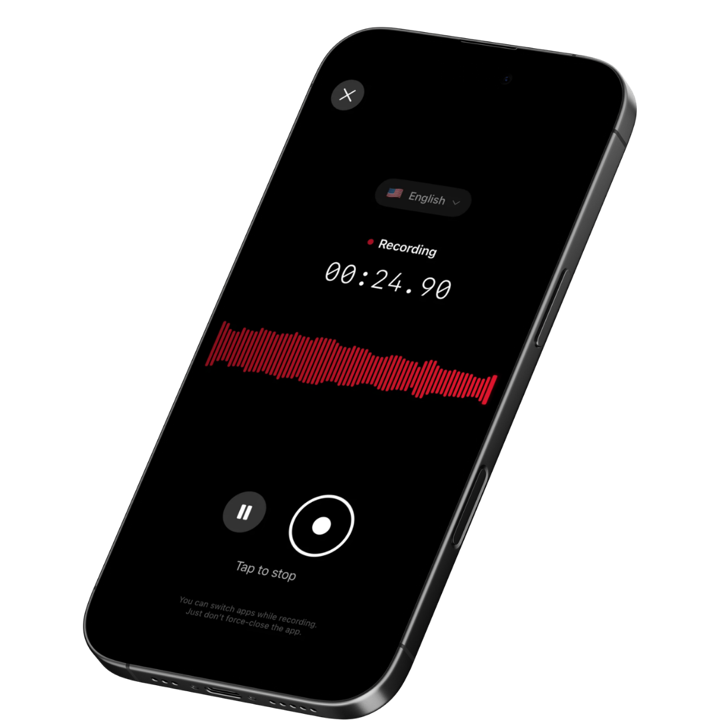
Start a recording with one tap before the walk begins. SpeakWise captures the entire conversation, transcribes it with AI, and extracts the key points. You walk, talk, and create - the technology handles the rest.
Download SpeakWise from the App Store and make walking meetings your most productive format. One-tap recording via iPhone or AirPods, AI transcription in 100+ languages, and automatic Notion sync mean every walking meeting produces a complete, organized record.
Join 10,000+ professionals who combine the creativity of walking with the capture power of AI.
Get SpeakWise Free
4.9-star App Store Rating | iOS Optimized

🎯 4.9★ App Store Rating | 📱 Built for iOS
