What Is Speaker Diarization? (2026 Guide)
Used by recruiters, executives, consultants, and more.
What Is Speaker Diarization?
Speaker diarization is the process of working out "who spoke when" in an audio recording. It splits the audio into segments and labels each one by speaker (Speaker 1, Speaker 2, and so on), without needing to know anyone's real name. Pair it with transcription and you get a transcript that shows who said what, instead of one undivided wall of text. Modern systems handle many voices at once - the free Speakwise tool labels up to 32 speakers across 90+ languages. You can try it now with our free speaker diarization tool: upload an audio file and get a speaker-labeled transcript in minutes, no install.
The word comes from "diary" - the system keeps a running log of who is talking at each moment. If you have ever read a meeting transcript and could not tell whether the client or the account manager raised an objection, diarization is the missing layer. This guide explains how it works, how it differs from plain transcription, where people use it, and the fastest way to label speakers in your own audio.
How Does Speaker Diarization Work?
Speaker diarization runs as a short pipeline. First, voice activity detection (VAD) separates speech from silence, music, and background noise. Next, each speech segment is turned into a numerical "embedding" - a fingerprint of that voice. A clustering algorithm then groups segments with similar fingerprints, and each cluster becomes a speaker label. Finally, those labels are aligned with the transcript so every sentence carries a speaker tag.
Accuracy is measured with Diarization Error Rate (DER), which adds up three mistakes: missed speech, false alarms, and speaker confusion, divided by total speech time. Lower is better. On clean recordings, strong systems land in the low teens or single digits for DER; messy, overlapping audio pushes it higher. The hard part is rarely hearing the words - it is deciding how many distinct voices exist and drawing the line between them.
Speaker Diarization vs Transcription: What's the Difference?
Transcription captures what was said. Diarization captures who said it. They answer different questions, and most useful transcripts need both. A transcription tool gives you the words; a diarization layer assigns each line to a speaker. Combine them and you get the "who said what" output people actually want from a meeting or interview.
Plenty of transcription tools skip diarization entirely, which is why their output reads as a single unbroken block. That is fine for a solo voice memo or dictation, but useless for a four-person panel. For the bigger picture on how transcription accuracy and adoption are trending, see our AI transcription statistics roundup. When you need speaker labels specifically, look for a tool that advertises diarization or "speaker identification," not just transcription.
Speaker Diarization vs Speaker Recognition
Speaker diarization is anonymous. It tells you there are three distinct voices and labels them Speaker 1, 2, and 3 - but it does not know their names. Speaker recognition (also called speaker identification) goes further: it matches a voice to a known person using a stored voiceprint. Diarization asks "how many voices and when?"; recognition asks "is this specific person speaking?"
For most everyday work - meetings, interviews, podcasts - diarization is what you want. You can rename the anonymous labels yourself once you know who is who. Speaker recognition is reserved for cases that need verified identity, like voice authentication or forensic analysis, and it raises privacy and consent questions that simple "who spoke when" labeling does not.
What Is Speaker Diarization Used For?
Speaker diarization is most valuable any time more than one person talks and the record matters. Common uses include:
- Meetings and calls: separate each participant so action items and decisions trace back to the right person.
- Interviews and qualitative research: keep the interviewer and subject distinct for clean quotes and coding.
- Podcasts and panels: produce host and guest labels for show notes, subtitles, and searchable archives.
- Sales and support calls: split rep from customer to analyze objections, talk ratio, and follow-ups.
- Legal and medical records: attribute statements accurately where misattribution has real consequences.
- Subtitles and captions: label changing speakers so viewers can follow a multi-person conversation.
The thread across all of these is attribution. A transcript that says a commitment was made is helpful; a transcript that shows exactly who made it is actionable.
Why Is Speaker Diarization Difficult?
The hardest problems are not about hearing words clearly - they are about telling voices apart. Overlapping speech, where two people talk at once, is the single biggest source of error because the audio carries two fingerprints in the same frame. Similar-sounding voices, short interruptions ("yeah," "right"), background noise, and crosstalk all degrade accuracy and inflate DER.
The other challenge is the unknown speaker count. A good diarizer has to figure out whether a recording has two voices or six, with no one telling it in advance. That is why letting you set the number of speakers, when you know it, improves results. The free Speakwise speaker diarization tool auto-detects the count by default, but you can specify it for cleaner separation on tricky audio.
How to Get a Speaker-Labeled Transcript (Free)
The fastest path is a browser tool that does transcription and diarization together. Upload your audio, and it returns a transcript with each line tagged by speaker - no code, no setup. The free Speakwise tool handles up to 32 speakers across 90+ languages, accepts files up to 70 MB (about an hour of audio), and exports clean TXT and SRT. Your audio is auto-deleted within 24 hours and the transcript after 30 days, and Speakwise never trains AI on either.
Developers who want full control can self-host open-source libraries like pyannote.audio or WhisperX, which pair OpenAI Whisper transcription with pyannote diarization. Cloud APIs such as AssemblyAI add diarization to their speech-to-text - see our AssemblyAI alternatives breakdown if you are comparing developer options. Meeting tools like Otter.ai include speaker labels too, though they are built around live capture rather than one-off uploads.
How These Options Compare
| Speakwise Free Tool | pyannote (DIY) | Otter.ai | ScreenApp | |
|---|---|---|---|---|
| Setup | None - browser, Google sign-in | Python + ML setup | Account signup | Account signup |
| Free limit | 1 file per day | Unlimited (self-hosted) | 300 min per month | 3 files per month |
| Max speakers | Up to 32 | Configurable | Auto | Up to 10 |
| Output | TXT, SRT, copy | Raw code output | In-app, export | Timestamped transcript |
| Audio retention | Deleted within 24h | Stays on your machine | Cloud (per their policy) | Cloud (per their policy) |
| Best for | Quick speaker-labeled transcripts | Developers, custom pipelines | Live meeting capture | Occasional browser use |
For non-technical users who just need a clean transcript that shows who said what, a browser tool wins on speed. For developers building a product feature, open-source libraries give the most control.
How to Label Speakers in Your Own Audio
- Open the free tool: go to the Speakwise speaker diarization tool and sign in with Google. Your file stays ready while you sign in.
- Upload your audio: drag in an mp3, m4a, wav, aac, or ogg file up to 70 MB. Leave speakers on auto-detect, or set the exact count if you know it.
- Run it: the tool transcribes and diarizes together, returning a transcript with each line labeled Speaker 1, Speaker 2, and so on.
- Edit and export: rename the speaker labels to real names, copy the text, or download TXT or SRT for subtitles.
Frequently Asked Questions
What is speaker diarization in simple terms?
Speaker diarization is the process of figuring out "who spoke when" in a recording. It splits the audio by speaker and labels each one (Speaker 1, Speaker 2, and so on), separate from transcribing the actual words. Combine it with transcription and you get a transcript that shows who said what. It does not need to know anyone's real name - the labels are anonymous until you rename them. The free Speakwise tool labels up to 32 speakers across 90+ languages directly in your browser.
What is the difference between diarization and transcription?
Transcription captures what was said. Diarization captures who said it. Transcription alone produces one block of text with no indication of who is speaking, which is fine for a solo voice memo but confusing for a multi-person meeting. Diarization adds the speaker layer on top, assigning every line to a voice. The most useful tools do both at once, giving you a speaker-labeled transcript. When comparing tools, check that they advertise diarization or speaker identification, not just transcription.
Is there a free tool to label speakers in audio?
Yes. The free Speakwise speaker diarization tool runs in your browser: upload an audio file, sign in with Google, and get a transcript that labels who said what. It handles up to 32 speakers across 90+ languages, accepts files up to 70 MB (about an hour), and exports TXT and SRT. Open-source libraries like pyannote.audio and WhisperX are also free but require Python and setup, so they suit developers rather than people who just want a quick transcript.
How accurate is speaker diarization?
Accuracy is measured by Diarization Error Rate (DER), which combines missed speech, false alarms, and speaker confusion. On clean, well-recorded audio, strong systems reach the low teens or single digits for DER. Accuracy drops on noisy recordings, similar-sounding voices, and especially overlapping speech, where two people talk at once. Setting the known number of speakers, when you have it, usually improves separation. No diarizer is perfect on messy audio, so reviewing and renaming labels afterward is normal.
Can ChatGPT do speaker diarization?
No. ChatGPT cannot listen to an audio file and work out who spoke when - it processes text, not raw audio waveforms. To label speakers you need a dedicated diarization tool that analyzes the sound itself. A free browser option like the Speakwise speaker diarization tool produces the speaker-labeled transcript, which you can then paste into ChatGPT for summarizing or analysis. In short, use a diarization tool to get "who said what," then use ChatGPT on the resulting text.
Final Verdict
Speaker diarization is the layer that turns a transcript into a record you can actually act on. It answers "who spoke when," and combined with transcription it tells you who said what - the difference between a useful meeting note and an unusable wall of text. The technology is mature; the only real question is whether you want to build it yourself or use a tool.
For most people, the fastest path is a free browser tool. For developers, open-source libraries like pyannote.audio give full control. Either way, you no longer need to manually tag speakers by hand.
Try the free Speakwise speaker diarization tool - upload your audio and get a transcript that labels every speaker, free, no install.
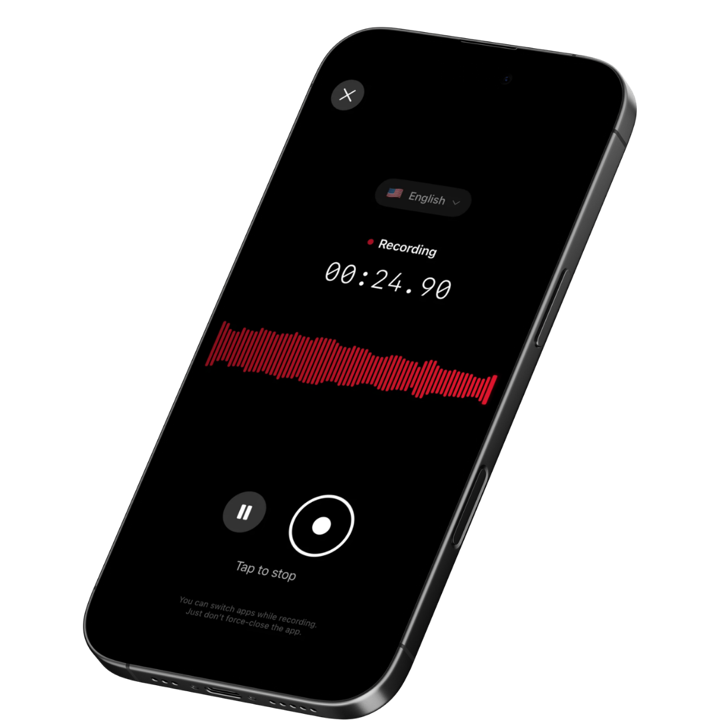
If you record meetings and interviews live on your iPhone, Speakwise captures the conversation with one tap and delivers transcripts, AI summaries, and action items in 100+ languages.

🎯 4.9★ App Store Rating | 📱 Built for iOS
