Work-Life Balance Statistics 2026: Overtime Trends, Boundary Erosion, and the Always-On Workforce
Used by recruiters, executives, consultants, and more.
Work-Life Balance Statistics 2026: Overtime Trends, Boundary Erosion, and the Always-On Workforce
60% of U.S. workers say they have no boundaries between work and personal life. 40% check email before 6 a.m. 85% receive work communications outside standard hours. With 18% working 60+ hour weeks and overtime workers facing 60% higher heart disease risk, these 17 statistics reveal why work-life balance isn't a lifestyle preference-it's a survival imperative that the modern workplace systematically undermines.
The phrase "work-life balance" implies two separate spheres that need equilibrating. For most knowledge workers, that separation no longer exists. Smartphones mean email follows you everywhere. Slack pings arrive during dinner. Meeting invitations land on your calendar while you're at your child's soccer game. The "infinite workday" that Microsoft's research describes isn't a metaphor-it's the daily reality for hundreds of millions of workers whose work has no off switch.
In this post, we'll explore 17 statistics that capture the true state of work-life balance in 2025 and 2026. These numbers reveal not just how many hours people work, but the boundary erosion, health consequences, and organizational costs of a culture that treats constant availability as commitment. Whether you're a leader questioning your team's after-hours email culture, an HR professional designing wellbeing programs, or a worker who can't remember the last time you fully disconnected, these data points offer both a mirror and a mandate.
1. 60% of U.S. workers say they have no boundaries between work and personal life
The dissolution of work-life boundaries has become the norm rather than the exception. Research shows that 60% of U.S. workers report having no clear boundaries between their work responsibilities and their personal lives-a figure that has increased significantly since the pandemic normalized remote work and always-on communication. When six in ten workers can't distinguish where work ends and life begins, the concept of "balance" becomes meaningless. Source: SurveyMonkey - Work-Life Balance Statistics 2025
2. 40% of employees check email before 6 a.m.
The workday now starts before dawn for a alarming portion of the workforce. Microsoft's Work Trend Index reveals that 40% of employees check their email before 6 a.m.-not because of urgent deadlines but because of the ambient anxiety that something might have accumulated overnight. This pre-dawn email ritual means workers are already partially depleted before their official workday begins, having sacrificed the morning recovery time that sleep science identifies as critical for cognitive performance. Source: Microsoft Work Trend Index 2025
3. 85% of employees receive work communications outside standard hours
The always-on culture has normalized what previous generations would have considered boundary violations. Survey data shows that 85% of employees receive work-related communications outside standard work hours at least a few times per month, with 60% receiving them multiple times per week. Only 6% of workers report never receiving after-hours messages. The digital leash of work communication means true disconnection-the kind that enables genuine recovery-has become virtually impossible. Source: SurveyMonkey - Work-Life Balance Statistics 2025
4. 18% of workers work 60 or more hours per week
Extreme work hours remain common despite decades of productivity research showing diminishing returns beyond 50 hours. Research shows that 18% of workers regularly put in 60 or more hours per week, while 94% of workers in professional service industries work over 50 hours weekly. These aren't occasional sprints during busy seasons-they represent sustained patterns of overwork that compound physical and cognitive depletion week after week. Source: LifeHack Method - Work-Life Balance Statistics 2025
5. Workers who consistently work 3+ overtime hours face 60% higher risk of heart problems
The health consequences of chronic overwork are measurable and severe. Research shows that white-collar workers who consistently worked three or more hours beyond their required hours faced a 60% higher risk of heart-related problems compared to counterparts who didn't work overtime. This statistic transforms the work-life balance conversation from an abstract wellbeing discussion into a concrete matter of physical health-your inbox is not worth a heart attack. Source: Clockify - Work-Life Quality Balance
6. 54% of workers check email while on vacation
Even scheduled recovery time is routinely invaded by work. Research shows that 54% of workers check their work email while on vacation, while 28% report being directly asked to do work during their time off. The result is that vacations-the most basic recovery mechanism available to workers-are degraded into "working from a different location." Without genuine disconnection, the restorative benefits of time off are significantly diminished. Source: SurveyMonkey - Work-Life Balance Statistics 2025
7. 40% of remote workers struggle to disconnect after hours
Remote work delivered flexibility but introduced a new boundary challenge. Research shows that 40% of remote workers struggle to disconnect from work after their scheduled hours end, blurring the line between "working from home" and "living at work." Without the physical separation that a commute and office building once provided, the transition from work mode to personal mode never fully happens-leading to a persistent low-level engagement with work that prevents genuine rest. Source: Apollo Technical - Remote Work Burnout Statistics
8. 59% of employees have considered quitting due to burnout from poor work-life balance
Work-life imbalance isn't just uncomfortable-it's a primary driver of attrition. Research shows that 59% of employees have actively contemplated quitting their jobs because of burnout risks linked to poor work-life balance. Critically, employees are now more likely to leave over work-life balance issues (59%) than over a toxic work environment (34%), making it the single most potent turnover risk that organizations face. Source: CareerCloud - Work-Life Balance Statistics
9. 32% say it's difficult to disconnect from work while on vacation
Beyond checking email, a significant portion of workers find genuine mental disconnection impossible. Research shows that 32% of employees say they find it difficult to mentally disconnect from work while on vacation-even when they're not actively working. The cognitive weight of unfinished projects, pending decisions, and anticipated return-to-work tasks follows workers into their time off, reducing the psychological benefits of vacation by turning "time away" into "time worrying about work from a different location." Source: SurveyMonkey - Work-Life Balance Statistics 2025
10. Evening meetings have surged 16% year-over-year
The expansion of the workday into personal hours is accelerating. Microsoft's research found that evening meetings have increased by 16% year-over-year, and nearly a third of workers return to their inbox by 10 p.m. This encroachment on evening time-historically reserved for family, rest, and personal pursuits-represents a creeping normalization of always-on culture. Each evening meeting that goes unchallenged makes the next one easier to schedule. Source: Microsoft Work Trend Index 2025
11. Gen X workers log the most overtime-12.06% work 15+ extra hours weekly
Generational differences in overtime patterns reveal who bears the heaviest burden. Research shows that Gen X workers are the most likely to work extreme overtime, with 12.06% logging 15 or more extra hours per week, followed by Boomers (11.08%), Gen Z (9.51%), and Millennials (8.80%). Gen X workers, often sandwiched between caregiving for aging parents and supporting children, face a triple burden of work demands, family obligations, and their own eroding boundaries. Source: LifeHack Method - Work-Life Balance Statistics 2025
12. 58% of workers respond to work communications outside of work hours at least weekly
The expectation of after-hours responsiveness has become deeply embedded. Survey data shows that 58% of workers respond to work-related messages outside of standard hours at least a few times a week, with many reporting that they feel an implicit or explicit expectation to do so. This response pattern creates a self-reinforcing cycle: the more people respond after hours, the more others expect immediate responses, gradually normalizing 24/7 availability as the default. Source: SurveyMonkey - Work-Life Balance Statistics 2025
13. 14% feel anxious and 18% feel annoyed about out-of-hours communication
After-hours work communications don't just take time-they trigger negative emotional responses. Research shows that 14% of workers feel anxious or stressed when they receive work messages outside standard hours, while 18% report feeling annoyed. These emotional reactions occur even before the message is opened, suggesting that the notification itself-the mere signal that work has intruded on personal time-is sufficient to disrupt recovery and relaxation. Source: Agility EOR - Work-Life Balance Statistics UK 2025
14. 19% of remote workers often feel pressure to respond to messages outside usual hours
Remote workers face a unique pressure to demonstrate availability. Research shows that 19% of remote workers frequently feel the need to respond to work messages outside their usual hours-driven by a combination of time zone differences, the visibility anxiety of not being physically present, and the implicit expectation that flexibility means availability. This pressure converts the freedom of remote work into a different form of constraint: the feeling that you must always be "on" to justify working from home. Source: Clockify - Work-Life Quality Balance
15. 28% of workers are asked to do actual work while on vacation
Beyond email checking, more than a quarter of workers report active work demands during their time off. Research shows that 28% of employees say they are directly asked to complete work tasks while on vacation. This isn't ambient inbox monitoring-it's being pulled into projects, joining calls, and producing deliverables during what should be protected recovery time. Organizations that permit this behavior are essentially stealing from their employees' future productivity to service today's urgency. Source: SurveyMonkey - Work-Life Balance Statistics 2025
16. Work-life balance is more important than pay for many workers
The prioritization of balance has reshaped the employment value proposition. Multiple surveys consistently show that work-life balance ranks as the top or second-most-important factor when evaluating job opportunities-frequently outranking compensation. Workers are increasingly willing to accept lower pay in exchange for genuine flexibility, reasonable hours, and respected boundaries. Organizations that offer high salaries but poor balance are discovering that money can't compensate for chronic exhaustion. Source: 4 Day Week - Work-Life Balance Statistics 2025
17. Countries with better work-life balance policies show higher productivity per hour worked
The notion that more hours equals more output is contradicted by international data. OECD data consistently shows that countries with stronger work-life balance protections-shorter work weeks, generous vacation policies, and right-to-disconnect legislation-achieve higher productivity per hour worked than countries with longer average work hours. Denmark, the Netherlands, and Germany, which prioritize balance, consistently outperform the U.S. and Japan in productivity per hour despite working fewer total hours. Source: Clockify - Work-Life Quality Balance
The Balance Paradox: More Flexibility, Less Disconnection
The statistics reveal a cruel irony. We have more workplace flexibility than ever-remote work, hybrid schedules, async tools-yet workers report worse boundaries than ever. The technology that freed us from the office also tethered us to work permanently. The smartphone that lets you work from anywhere ensures you work from everywhere.
The root cause isn't technology itself but the cultural norms that surround it. When responding to a 10 p.m. email is seen as "committed" rather than "unhealthy," when checking Slack on vacation is "staying on top of things" rather than "failing to disconnect," and when evening meetings are "flexible" rather than "invasive," no amount of wellness programming can restore genuine balance.
The solution requires both organizational boundaries and individual tools. Organizations need explicit after-hours communication policies, protected vacation time, and meeting-free evenings. Individuals need ways to capture work information efficiently during work hours so there's nothing to "catch up on" during personal time.
The question isn't whether work-life balance matters-the health data and attrition data make that undeniable. The question is whether organizations will build the boundaries the data demands, or continue hoping that yoga apps and mental health days can compensate for a culture that never stops pinging.---
Ready to capture your work without letting it capture your evenings?
The root of after-hours work is often unfinished capture-thoughts that weren't recorded, meetings that weren't summarized, and decisions that need to be recalled. When information isn't captured during the workday, the evening becomes catch-up time.
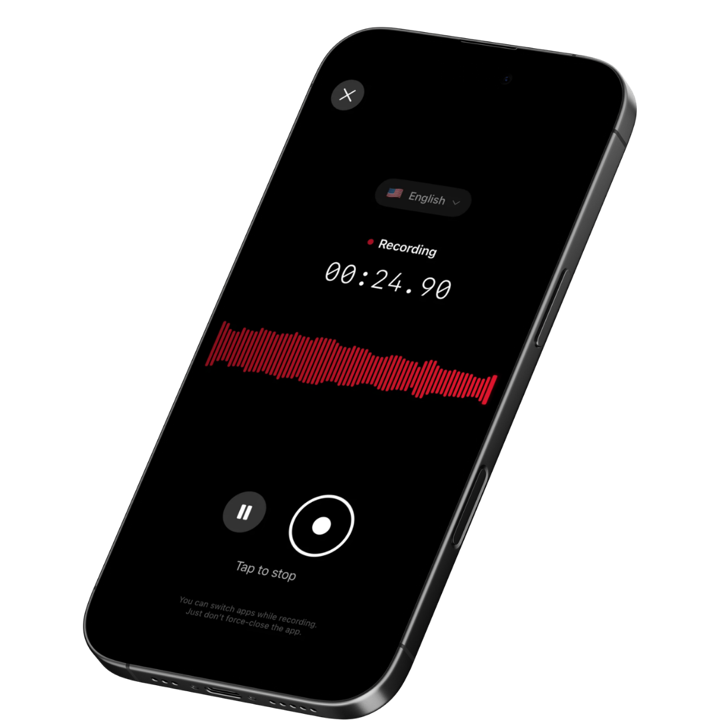
Voice notes offer a faster path to information capture. Speak your thoughts in seconds, let AI transcribe and organize them, and walk away from your phone knowing everything important has been captured-without a single after-hours email thread.
Download SpeakWise from the App Store and discover how one-tap recording, AI transcription, intelligent summaries, and Notion integration can help you finish your work during work hours-so your evenings belong to you.
Join 10,000+ professionals who've discovered that the best way to protect personal time isn't working faster-it's capturing smarter.
Get SpeakWise Free →
4.9★ App Store Rating | iOS Optimized

🎯 4.9★ App Store Rating | 📱 Built for iOS
