Workplace Accountability Statistics 2026


Used by recruiters, executives, consultants, and more.
Workplace Accountability Statistics 2026
93% of employees are unable to align their work or take accountability for desired results. 82% either try but fail or avoid holding others accountable altogether. Only 15% of leaders have clearly defined and communicated their key results. These 16 statistics reveal that the accountability crisis is not about individual discipline. It is about systems, leadership, and organizational design.
Accountability is the connective tissue between commitments and results. Without it, strategies become wishful thinking, meetings produce talk without action, and teams drift without direction. Yet the data shows that most organizations are failing at accountability despite recognizing its importance. The gap between knowing what accountability looks like and building systems that produce it remains one of the biggest unsolved problems in management.
This post covers 16 statistics on workplace accountability in 2026. The data comes from Gallup, Culture Partners, Deloitte, and major workplace research firms. Whether you lead an organization, manage a team, or want to strengthen your own accountability habits, these numbers reveal where the breakdowns occur and what drives them.
1. 93% of employees cannot align their work to desired results
The scale of the accountability problem is staggering. A landmark workplace study found that 93% of employees surveyed are unable to align their work or take accountability for desired results. This means fewer than 1 in 10 workers consistently connect their daily activities to organizational outcomes. The issue is not laziness or apathy. It is a failure of clarity. When workers do not understand what results matter, they cannot be accountable for delivering them. Alignment precedes accountability.
Source: Culture Partners - Landmark Workplace Study
2. 82% of people try but fail or avoid holding others accountable
Accountability is not just about individual performance. It is about the willingness to hold peers and direct reports to commitments. Research shows that 82% of survey participants say they either try but fail or actively avoid holding others accountable. This avoidance creates a culture where missed deadlines, broken promises, and unfinished tasks go unaddressed. Over time, the absence of peer accountability normalizes underperformance and erodes trust across the entire team.
Source: Culture Partners - Landmark Workplace Study
3. 84% cite leadership behavior as the most important factor in accountability
Accountability starts at the top. 84% of survey respondents identified the way leaders behave as the single most important factor influencing accountability in their organizations. When leaders model accountability by following through on commitments, communicating openly about failures, and holding themselves to the same standards they expect from others, the entire organization follows. When they do not, no amount of performance management systems or accountability frameworks can compensate.
Source: Culture Partners - Landmark Workplace Study
4. Only 15% of leaders have clearly defined and communicated key results
Accountability requires clarity, and clarity is in short supply. Just 15% of leaders have successfully defined and broadly communicated the key results their teams should be driving toward. The remaining 85% leave their teams guessing about what success looks like. Without clear key results, workers cannot prioritize, cannot measure their progress, and cannot take meaningful ownership of outcomes. The accountability crisis is, at its root, a clarity crisis.
Source: Culture Partners - Landmark Workplace Study
5. Only 21% of employees globally are engaged at work
Gallup's 2025 State of the Global Workplace report found that just 21% of employees worldwide are engaged at work. Engagement and accountability are deeply intertwined. Engaged employees take ownership of their work, follow through on commitments, and hold themselves to high standards. Disengaged employees do the minimum. When nearly 80% of the global workforce is disengaged, accountability becomes almost impossible to sustain at scale. The engagement crisis is the accountability crisis by another name.
Source: Gallup - State of the Global Workplace 2025
6. Low engagement costs the global economy $8.9 trillion per year
The financial cost of the accountability and engagement crisis is almost incomprehensible. Gallup estimates that low employee engagement costs the global economy $8.9 trillion annually, equivalent to approximately 9% of global GDP. This figure captures the cumulative effect of millions of workers who show up but do not fully contribute. The cost manifests as missed deadlines, unfinished projects, poor customer service, and innovation that never happens because no one took ownership.
Source: Gallup - State of the Global Workplace 2025
7. U.S. employee engagement fell to 31% in 2024, a 10-year low
The U.S. workforce is experiencing an engagement recession. Employee engagement dropped to 31% in 2024, the lowest level in a decade. This decline signals that accountability is becoming harder, not easier, despite billions of dollars invested in performance management tools and programs. The root causes include unclear expectations, insufficient feedback, remote work disconnection, and manager burnout. Reversing the trend requires addressing these systemic issues rather than demanding more individual accountability.
Source: Gallup - State of the Global Workplace 2025
8. Only 46% of employees strongly agree they know what is expected of them
Clarity of expectations is the foundation of accountability, and it is crumbling. Only 46% of U.S. employees strongly agree that they know what is expected of them at work, according to Gallup. This means more than half the workforce operates with unclear or ambiguous expectations. When people do not know what they are supposed to deliver, accountability conversations become unfair. You cannot hold someone accountable for expectations that were never clearly communicated.
Source: Gallup - State of the Global Workplace 2025
9. Managers influence 70% of employee engagement variance
Managers are the linchpin of workplace accountability. Research shows that managers account for 70% of the variance in employee engagement scores. A great manager creates clarity, provides feedback, removes obstacles, and holds people accountable through supportive relationships. A poor manager does the opposite. The data is unambiguous: if you want to fix accountability in your organization, start with your managers. They are the transmission mechanism between organizational goals and individual performance.
Source: Gallup - State of the Global Workplace 2025
10. Less than half of managers have received management training
Despite their outsized influence on accountability and engagement, most managers are underprepared for their role. Less than 44% of managers globally have received any formal management training. Managers who received training are half as likely to be actively disengaged as those who were not trained. This training gap is one of the most addressable causes of the accountability crisis. Teaching managers how to set clear expectations, give feedback, and hold productive accountability conversations can produce immediate improvement.
Source: Gallup - State of the Global Workplace 2025
11. Engaged teams report 81% lower absenteeism
Accountability and engagement produce measurable behavioral differences. Teams that are engaged report 81% lower absenteeism compared to disengaged teams. When workers feel accountable to their team and their commitments, they show up. When they do not, they find reasons to stay home. Absenteeism is one of the most visible symptoms of an accountability deficit. It represents the point where disengagement becomes non-participation.
Source: SSR - Performance Management Statistics 2026
12. Engaged teams experience 43% lower turnover
Accountability cultures retain talent. Research shows that engaged teams experience 43% lower turnover than disengaged teams. Workers who feel clear about expectations, supported by their managers, and connected to results are far less likely to leave. By contrast, environments where accountability is absent or punitive drive talented people away. The distinction matters: healthy accountability is about clarity and support, not surveillance and blame.
Source: SSR - Performance Management Statistics 2026
13. One-third of employees feel their priorities change frequently
Accountability requires stable targets, but many organizations fail to provide them. One-third of employees report that their priorities change frequently, creating confusion about what they should be accountable for. Constant priority shifts undermine the psychological contract of accountability. When goals move before they can be achieved, workers learn that effort does not reliably lead to recognition. The result is learned helplessness disguised as disengagement.
Source: Culture Partners - Landmark Workplace Study
14. 95% of companies have formal performance management systems
Nearly every organization has invested in the infrastructure of accountability. 95% of companies have implemented formal performance management systems, and 80% have redesigned their processes since 2019. Yet the accountability gap persists. This disconnection between systems and outcomes reveals that accountability cannot be solved by software or processes alone. It requires the human elements of clear communication, consistent follow-through, and leadership by example that no system can automate.
Source: SSR - Performance Management Statistics 2026
15. Companies with continuous feedback see 31% lower turnover
The frequency and quality of feedback directly affects accountability and retention. Companies that prioritize continuous feedback and development see 31% lower turnover rates compared to those relying on annual reviews. Continuous feedback keeps accountability current. It prevents small misalignments from growing into major performance problems. Workers who receive regular, constructive feedback can correct course in real time rather than discovering at year-end that they missed expectations set months ago.
Source: SSR - Performance Management Statistics 2026
16. Around 80% of businesses monitor their workforce in some form
Surveillance is often confused with accountability, but the data reveals the limits of this approach. Around 80% of businesses now monitor their workforce in some way, from time tracking to screen monitoring. However, more than half of monitored workers in the UK say they would consider quitting if monitored. This finding highlights the difference between accountability and surveillance. True accountability comes from clarity and commitment. Monitoring measures presence, not ownership.
Source: Flowace - Employee Monitoring Statistics 2026
Accountability Is a System, Not a Personality Trait
The data paints a clear picture: workplace accountability is not failing because individual workers lack discipline. It is failing because organizations lack the systems, clarity, and leadership behaviors that make accountability possible. When 93% of workers cannot align to results and 85% of leaders have not communicated key results, the problem is architectural, not motivational.
The most telling statistic is that 82% of people avoid holding others accountable. This avoidance is rational in environments where expectations are unclear, priorities shift constantly, and leadership does not model the behavior it demands. Accountability requires psychological safety, clear goals, and consistent follow-through at every level.
Organizations that build genuine accountability cultures share common traits. Their leaders communicate key results clearly and repeatedly. Their managers receive training in feedback and coaching. Their systems track commitments and make progress visible. And they treat accountability as a supportive practice rather than a punitive one.
The accountability crisis costs $8.9 trillion globally, and it starts with a single question most organizations cannot answer: what are we accountable for?---
Make every commitment visible and trackable
The accountability gap often begins in meetings. Decisions are made, commitments are voiced, and action items are assigned. But without a reliable capture system, these commitments fade from memory within hours. When no one remembers what was agreed, no one can be held accountable for delivering it.
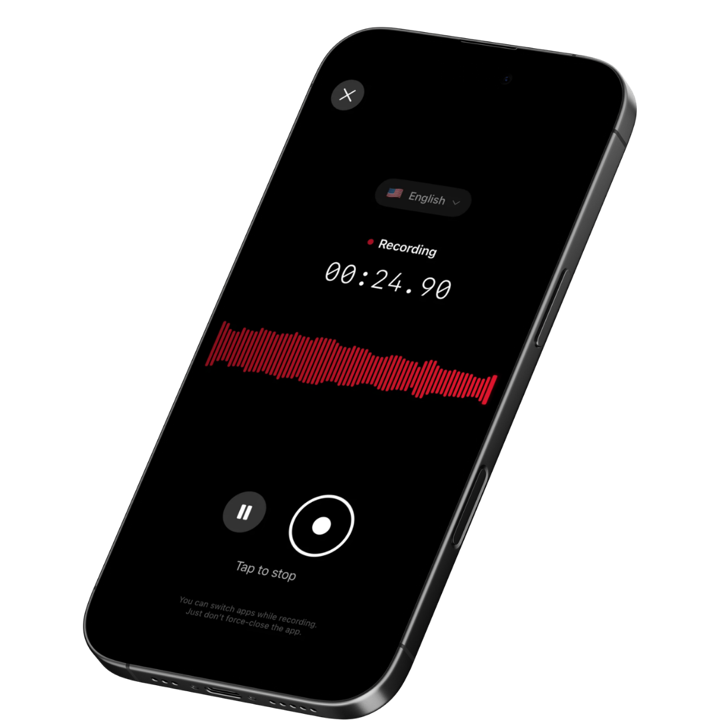
Voice recording closes this gap by capturing every commitment exactly as it was spoken. AI-powered action item extraction turns verbal agreements into documented, assignable tasks that cannot be forgotten or reinterpreted.
Download SpeakWise from the App Store and transform your meetings from accountability gaps into accountability engines. Automatic transcription, AI summaries, and action item extraction ensure every commitment is captured and trackable.
Join 10,000+ professionals who use voice capture to build accountability into every conversation.
Get SpeakWise Free
4.9-star App Store Rating | iOS Optimized

🎯 4.9★ App Store Rating | 📱 Built for iOS
