Workplace Anxiety Statistics 2026: Performance Pressure, Digital Overwhelm, and Mental Health Costs
Used by recruiters, executives, consultants, and more.
Workplace Anxiety Statistics 2026: Performance Pressure, Digital Overwhelm, and Mental Health Costs
80% of employees report "productivity anxiety," 12 billion working days are lost globally each year to depression and anxiety at work, and 48% of employees have left a job for mental-health-related reasons. The modern workplace isn't just stressful-it's becoming psychologically unsustainable.
Workplace anxiety has moved far beyond the occasional deadline crunch or pre-presentation jitters. It has become a pervasive, chronic condition that shapes how millions of professionals experience their daily work. The numbers paint a stark picture: employees are overwhelmed by information, exhausted by meetings, haunted by the fear of missing critical details, and locked in a cycle of performance pressure that chips away at their mental health one notification at a time. What was once considered an individual weakness-an inability to "handle the pressure"-is now recognized as a systemic crisis affecting the vast majority of the global workforce.
The consequences extend well beyond individual discomfort. Organizations are hemorrhaging billions in lost productivity, employee turnover, and healthcare costs. Entire generations of workers are entering the workforce already burned out, questioning whether the demands of professional life are compatible with psychological wellbeing. Meanwhile, the tools and workflows meant to boost productivity-endless Slack channels, overflowing email inboxes, back-to-back video calls-are often making things worse, not better. The irony is painful: the systems designed to help us stay on top of everything are the very systems fueling our anxiety about falling behind. Each new platform promises to streamline communication, but in practice it adds another stream of notifications demanding attention, another place where a critical message might be buried, another reason to feel that you are perpetually behind.
In this post, we'll explore 17 statistics that expose the true scope of workplace anxiety in 2026. From the financial toll on employers to the psychological cost on individual workers, from digital overwhelm to the burnout epidemic, these data points reveal a crisis that demands new approaches to how we capture, process, and manage information at work.
Whether you're a manager trying to understand why your team is struggling, an individual contributor fighting to keep your head above water, or a leader building the case for better mental health support, these statistics provide the evidence you need to understand what's happening-and why the status quo is failing. The research comes from some of the most respected organizations in workplace science: the World Health Organization, Gallup, the American Psychological Association, the Anxiety and Depression Association of America, and Microsoft, among others.
1. 80% of employees report having "productivity anxiety"
A Workhuman survey of 1,000 full-time employees found that four out of five workers experience "productivity anxiety"-the persistent feeling that there is always more they should be doing. Over one-third experience this anxiety multiple times per week, and among Gen Z workers, 30% battle it daily while 58% experience it numerous times weekly. This isn't occasional stress; it's a chronic psychological state where employees never feel their output is sufficient, even when they are objectively meeting their goals. The constant pressure to demonstrate productivity has become its own source of paralysis, where the anxiety about whether you are doing enough actively prevents you from doing your best work. It is a phenomenon uniquely amplified by the always-visible, always-measured nature of digital work environments, where every task leaves a trail and every idle moment feels like a liability.
Source: The American Institute of Stress
2. 12 billion working days are lost globally each year to depression and anxiety, costing $1 trillion in lost productivity
The World Health Organization estimates that depression and anxiety disorders drain the equivalent of 12 billion working days from the global economy every single year. That translates to roughly $1 trillion annually in lost productivity alone-before factoring in healthcare costs, turnover expenses, or the human suffering behind the numbers. To put this in perspective, 12 billion working days is the equivalent of more than 46 million full-time workers producing absolutely nothing for an entire year. These are not fringe cases. An estimated 15% of working-age adults have a mental health disorder, and for many, the workplace is both a trigger and an amplifier of their condition. The COVID-19 pandemic triggered a further 25% increase in global anxiety and depression, compounding a problem that was already severe before 2020.
Source: World Health Organization
3. 83% of U.S. workers report currently feeling work-related stress
The vast majority of American workers are not just occasionally stressed-they are living in a state of ongoing work-related tension. According to the American Institute of Stress, 83% of U.S. working adults say they currently experience stress tied to their jobs. This figure has remained stubbornly high across multiple years of measurement, suggesting that workplace stress is not a temporary spike driven by economic uncertainty or pandemic disruption. It has become a structural feature of how modern work operates. What makes this statistic particularly alarming is its breadth: when more than eight out of ten workers report stress, the condition can no longer be attributed to specific roles, industries, or personality types. It is the default experience of working in the contemporary economy.
Source: The American Institute of Stress
4. Workplace stress costs American employers more than $300 billion annually
The financial toll of workplace stress on U.S. businesses is staggering. Between healthcare expenditures, absenteeism, presenteeism (showing up but performing poorly), and employee turnover, stress-related costs exceed $300 billion every year. That figure represents a massive drag on organizational performance-money that flows not toward innovation or growth, but toward patching the damage caused by unsustainable working conditions. For context, $300 billion exceeds the entire GDP of countries like Finland or Chile. It also dwarfs most corporate wellness budgets by orders of magnitude, suggesting that organizations are spending far more on the consequences of stress than they are on preventing it. Every dollar invested in mental health support yields an estimated $4 return in productivity gains, making the failure to address workplace anxiety not just a moral failing but a financial one.
Source: The American Institute of Stress
5. 49% of American and Canadian workers experience work-related stress daily
Nearly half of all workers in the United States and Canada report experiencing work-related stress on a daily basis, according to Gallup's global workplace research. This is not occasional pressure around quarterly reviews or annual deadlines-it is a daily reality that employees wake up to, endure throughout their working hours, and carry home with them. U.S. and Canadian workers rank among the most stressed in the world, with daily stress levels at 49%, trailing only the Middle East and North Africa region at 52%. The relentlessness of this daily burden is what transforms manageable pressure into chronic anxiety. Acute stress can sharpen focus and drive performance; daily, unrelenting stress does the opposite-it erodes cognitive function, impairs decision-making, and gradually wears down the psychological resources that employees need to function effectively.
Source: Gallup State of the Global Workplace Report
6. Employees spend 57% of their workday communicating rather than doing focused work
Microsoft's Work Trend Index found that the average employee now spends 57% of their working time on communication activities-meetings, email, and chat-and only 43% on actual creation in documents, spreadsheets, and presentations. This communication-heavy workday leaves employees in a constant state of reactivity, responding to requests rather than producing their best work. The anxiety of falling behind on messages compounds throughout the day, creating a vicious cycle where trying to stay responsive crowds out the deep work that actually matters. Workers report that their days feel "chaotic and fragmented"-48% of employees and 52% of leaders describe their work experience this way. When the majority of your day is spent reacting rather than creating, the sense that you are not making meaningful progress becomes impossible to shake, and the anxiety it produces is relentless.
Source: Microsoft Work Trend Index
7. 68% of employees say they don't have enough uninterrupted focus time during the workday
More than two-thirds of workers report that constant meetings, emails, and notifications prevent them from entering a state of sustained concentration. Additionally, 62% of respondents say they struggle with too much time spent searching for information during their workday. This lack of focus time doesn't just reduce productivity-it generates anxiety. Workers know they need deep focus to do quality work, yet they are structurally prevented from achieving it. The resulting tension between what employees need and what their workday allows creates a pervasive sense of inadequacy and falling behind that compounds over weeks and months. Psychologists call this "role conflict"-the gap between what you know you should be doing and what your environment forces you to do. Sustained role conflict is one of the most reliable predictors of workplace anxiety and eventual burnout.
Source: Microsoft Work Trend Index
8. 48% of employees have left a job for reasons tied to their mental health
Nearly half of all U.S. employees have walked away from a position because of its impact on their mental wellbeing-and two-thirds of those departures were voluntary. The numbers are even more dramatic among younger workers: 81% of Gen Z employees and 68% of millennials report leaving a job for mental-health-related reasons. This represents an enormous cost to employers-not just in recruitment and training expenses (which can reach up to 213% of an employee's annual salary for senior roles), but in the institutional knowledge and team continuity that vanishes with every departure. When organizations lose nearly half their workforce to mental health-driven turnover over time, the message is clear: anxiety is not just a wellness issue, it is a retention crisis that threatens the very continuity of businesses.
Source: Grow Therapy
9. Employees are interrupted every 2 minutes during core work hours
According to Microsoft's research across Microsoft 365 usage data, employees face an interruption from a meeting, email, or chat notification an average of every two minutes during core working hours. Over a full workday, that adds up to roughly 275 interruptions. Each one pulls attention away from the task at hand, requiring cognitive effort to re-engage. Research from UC Irvine has shown that it takes an average of 23 minutes and 15 seconds to fully refocus after a single interruption-meaning that in a world of constant interruptions, sustained focus becomes mathematically impossible. The constant barrage creates a state of hypervigilance-workers become anxious not about the interruptions themselves, but about the certainty that the next one is always just seconds away. This anticipatory anxiety alone is enough to prevent deep concentration even during the brief gaps between disruptions.
Source: Microsoft Worklab
10. 52% of employees reported feeling burned out in 2024, with 82% at risk
More than half of employees surveyed in 2024 said they were actively experiencing burnout, while a striking 82% were classified as being at risk of burnout according to the Mercer Global Talent Trends report. Burnout is not merely exhaustion-it is a state of emotional depletion, cynicism, and reduced professional efficacy that the World Health Organization recognizes as an occupational phenomenon. The gender disparity is notable: women experience burnout at 59% compared to 46% for men, and Gen Z workers report peak burnout at age 25-a full 17 years earlier than the average American's peak burnout age of 42. When the vast majority of your workforce is either burned out or approaching it, the problem is systemic, not individual. No amount of meditation apps or pizza parties can fix a structural crisis this deep.
Source: Fortune / Mercer Global Talent Trends
11. 56% of employees say anxiety directly affects their job performance
According to the ADAA Workplace Stress and Anxiety Disorders Survey, more than half of all workers report that stress and anxiety have a direct, measurable impact on their workplace productivity. The same survey found that 51% say anxiety affects their relationships with coworkers and peers, 43% avoid participating in meetings because of anxiety, and 50% say it impacts their quality of work. Deadlines are the top stressor (cited by 55% of respondents), followed by interpersonal relationships (53%) and staff management (50%). These aren't abstract feelings-they translate into missed contributions, withdrawn participation, and suboptimal output across the entire organization. When more than half your workforce is performing below their potential because of anxiety, the aggregate productivity loss is enormous, even if it remains invisible on any individual day.
Source: Anxiety and Depression Association of America
12. 76% of the global workforce says information overload causes daily stress and anxiety
More than three-quarters of workers worldwide report that the sheer volume of information they are expected to process generates stress and anxiety on a daily basis. Economists estimate that information overload costs the global economy approximately $1 trillion annually. This isn't about lazy workers failing to keep up-it's about a fundamental mismatch between human cognitive capacity and the fire hose of data, messages, documents, and updates that modern work demands we absorb. The average knowledge worker now juggles multiple communication platforms simultaneously, with 84% of business leaders confirming they communicate through more channels than ever before. The anxiety of potentially missing something critical in the flood of information has become one of the defining psychological challenges of professional life-a constant, low-grade fear that the one thing you didn't read was the one thing that mattered.
Source: LumApps
13. 51% of employees work overtime at least a few days per week due to meeting overload
More than half of all workers report that meetings consume so much of their scheduled workday that they must regularly work beyond normal hours to complete their actual tasks. For director-level employees and above, that figure rises to 67%. The average employee now attends 10.1 virtual meetings per week and spends 392 hours per year in meetings-more than 16 full workdays. Additionally, 76% of workers agree that they feel drained on days heavy with meetings. The result is a workday that effectively never ends: meetings fill the calendar from morning to evening, and the "real work" gets pushed into evenings and weekends. This dynamic generates profound anxiety-employees feel they can never truly be done, because the work that matters most always comes last. The boundary between work time and personal time dissolves, and with it goes the psychological recovery that prevents stress from becoming chronic.
Source: Fellow State of Meetings Report
14. Global employee engagement fell to 21% in 2024, costing $438 billion in lost productivity
Gallup's 2024 global workplace research revealed that only one in five employees worldwide is actively engaged at work-a two-percentage-point decline from the previous year. This disengagement, much of it driven by chronic stress and poor management, translates to an estimated $438 billion in lost productivity globally. Meanwhile, 58% of workers worldwide say they are merely "struggling" rather than "thriving," and only 34% report thriving in their overall wellbeing. When employees are anxious, overwhelmed, and burned out, they don't disengage out of apathy-they disengage as a survival mechanism, withdrawing effort to protect what remains of their mental health. This protective disengagement is rational at the individual level, but catastrophic at scale, draining organizations of the discretionary effort that drives innovation, customer satisfaction, and competitive advantage.
Source: Gallup State of the Global Workplace Report
15. Workers with a poor manager are 60% more likely to feel stressed
Leadership quality is one of the strongest predictors of workplace anxiety. Gallup found that employees with ineffective managers are nearly 60% more likely to experience daily stress compared to those with supportive leadership. Compounding the problem, manager engagement itself fell from 30% to 27% in 2024, with particularly steep declines among young managers under 35 (down five points) and female managers (down seven points). This creates a cascading effect: stressed managers make worse decisions, communicate less effectively, and provide less support to their teams-which increases team-level anxiety, which further strains the manager, and so on. When the people responsible for buffering workplace stress are themselves overwhelmed and disengaged, the anxiety cascades throughout the entire organization like a contagion, leaving no level of the hierarchy untouched.
Source: Gallup State of the Global Workplace Report
16. 77% of workers say workplace stress carries over into their personal life
The ADAA survey found that more than three-quarters of employees who experience workplace stress say it spills into their personal relationships, sleep quality, and overall life satisfaction. Men are particularly affected, with 83% reporting personal-life spillover compared to 72% of women. The mechanisms are well-documented: cortisol levels elevated by chronic workplace stress don't simply reset when you leave the office. They disrupt sleep architecture, reduce emotional regulation, and diminish the capacity for empathy and patience that healthy relationships require. Workplace anxiety doesn't clock out when you do. It follows you home, erodes your evenings, disrupts your sleep, and shapes how you show up for the people who matter most-creating a secondary layer of anxiety about the damage your work stress is causing outside of work. The result is a compounding spiral where work anxiety damages personal life, and damaged personal life reduces resilience at work.
Source: Anxiety and Depression Association of America
17. 15% of workers describe their workplace as "toxic," and those in toxic environments are 3x more likely to experience mental health harm
The American Psychological Association's 2024 Work in America survey found that 15% of U.S. workers characterize their workplace environment as toxic-defined by a lack of psychological safety, trust, and support. Workers in these environments are three times more likely to report that their workplace has harmed their mental health compared to those in psychologically safe settings. Additionally, 76% of employees in toxic workplaces say the environment negatively impacts their mental health, and workers in these settings report feeling tense or stressed at a rate of 61%, compared to just 27% among those who experience higher psychological safety. The APA data also reveals a retention dimension: workers in low-safety environments are more than twice as likely to be looking for a new job (41% vs. 19%). The link between workplace culture and mental health outcomes is not subtle-it is direct, powerful, and well-documented.
Source: American Psychological Association Work in America Report
The Anxiety Paradox: Why Doing More Makes Us Feel Worse
These seventeen statistics reveal something deeply counterintuitive about modern work: the harder we try to stay on top of everything, the more anxious we become. This is the anxiety paradox at the heart of today's workplace crisis. We are not suffering from a shortage of effort. We are suffering from an excess of demands that outstrips human cognitive capacity, compounded by tools and systems that promise to help but often make the overload worse.
Consider the feedback loop. Organizations adopt more communication tools to keep teams connected, which generates more messages, more notifications, and more channels to monitor. Employees respond by working longer hours and checking their devices more frequently, which reduces their recovery time and erodes their cognitive capacity. The resulting decline in focus and performance triggers more anxiety about falling behind, which drives more frantic communication and longer hours. The cycle accelerates until burnout becomes inevitable. This is not a failure of individual willpower. It is an emergent property of a system designed to maximize information flow without accounting for the finite capacity of the humans who must process it.
The data tells us that the root of workplace anxiety is not laziness, weakness, or a lack of resilience among modern workers. It is a fundamental mismatch between the volume of information workers must process and the tools available to help them do so. When 76% of the global workforce reports daily stress from information overload, when 68% say they lack uninterrupted focus time, and when employees are interrupted every two minutes during their core working hours, the problem is architectural. We have built workplaces that generate more information than humans can absorb, and then we blame individuals when they fail to absorb it all. The $300 billion annual cost to American employers and the $1 trillion global productivity loss are not the price of lazy workers-they are the price of broken systems.
The most insidious form of workplace anxiety isn't about the work itself-it's about what you might be missing. The fear of an overlooked detail in a meeting. A forgotten action item from a conversation. A critical piece of information lost because you couldn't write fast enough or weren't paying attention at the precise moment it was mentioned. This "capture anxiety" sits beneath many of the statistics above, quietly driving the productivity obsession, the overtime, the inability to disconnect, and the chronic stress that bleeds into personal life. When you can't trust that important information has been reliably captured, every moment becomes a potential failure point, and relaxation becomes impossible. You check your email one more time. You reread your notes and wonder what you missed. You lie awake replaying a conversation, trying to remember whether someone said Tuesday or Thursday. The anxiety is not about the work-it is about the gap between what happened and what you managed to record.
The path forward isn't working harder or adopting yet another communication tool. It's fundamentally rethinking how we capture, organize, and retrieve the information that matters-so our brains can stop trying to hold everything and start focusing on what they do best: thinking, creating, and connecting.---
Ready to work without the anxiety of missing something important?
Workplace anxiety is fueled by one persistent fear: that something important will slip through the cracks. A key insight from a client call. A critical action item from a team meeting. A brilliant idea that surfaced during a conversation but vanished before you could write it down. This fear drives the constant note-taking, the obsessive inbox checking, and the nagging sense that no matter how hard you try, something essential is being lost.
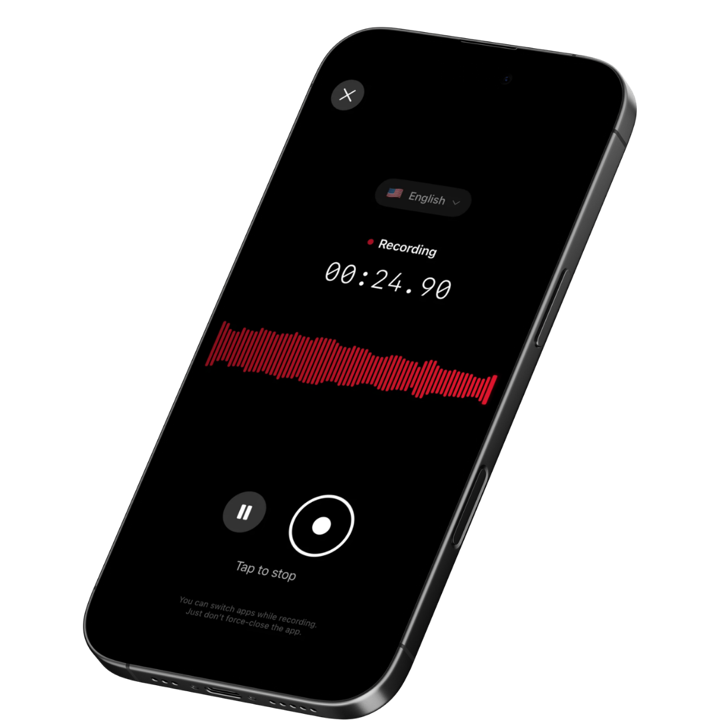
Voice capture offers a fundamentally different approach. Instead of anxiously trying to remember everything from a meeting or conversation, you simply speak-and AI handles the rest. Every detail captured. Every action item extracted. Zero anxiety about what you might have missed.
Download SpeakWise from the App Store and discover how one-tap recording, AI transcription, intelligent summaries, and Notion integration can help you capture everything without the anxiety of forgetting anything.
Join 10,000+ professionals who've discovered that the best antidote to workplace anxiety isn't working harder-it's knowing nothing slips through the cracks.
Get SpeakWise Free →
4.9★ App Store Rating | iOS Optimized

🎯 4.9★ App Store Rating | 📱 Built for iOS
