Workplace Boredom Statistics 2026: Data
Used by recruiters, executives, consultants, and more.
Workplace Boredom Statistics 2026: Data
43% of employees report feeling bored at work regularly, with the average worker spending over 10 hours per week on tasks they find meaningless. Boredom-driven disengagement costs the U.S. economy $450 to $550 billion annually. Workers who feel chronically understimulated are 2.5 times more likely to quit. These 16 statistics reveal why workplace boredom is one of the most underestimated threats to productivity and retention.
Workplace boredom rarely makes headlines. It lacks the dramatic urgency of burnout or the visible tension of conflict. Yet the data tells a different story. Boredom quietly erodes motivation, creativity, and retention from within. It turns high performers into clock-watchers and transforms promising careers into dead ends.
In this post, we explore 16 statistics that reveal the true scope of workplace boredom. From the hours lost to meaningless tasks to the financial toll on organizations, these numbers show why boredom deserves the same attention as stress and burnout.
1. 43% of employees report feeling bored at work regularly
Workplace boredom is far more common than most leaders assume. A Korn Ferry survey of over 5,000 professionals found that 43% of employees regularly feel bored at work. This isn't occasional restlessness. It represents a chronic state of understimulation that saps energy, kills motivation, and drives talented people out the door. When nearly half your workforce is bored, the problem isn't individual laziness. It's a systemic failure to provide meaningful, challenging work.
Source: Korn Ferry - Workplace Boredom Survey
2. Boredom-driven disengagement costs the U.S. economy $450-$550 billion per year
The financial impact of boredom is staggering. Gallup estimates that actively disengaged employees - many of whom cite boredom and lack of challenge as primary drivers - cost the U.S. economy between $450 and $550 billion annually in lost productivity. Bored employees don't just do less. They make more errors, take more sick days, and drag down the morale of everyone around them. The economic toll rivals that of workplace stress.
Source: Gallup - State of the American Workplace
3. The average worker spends 10.5 hours per week in unproductive meetings
One of the biggest drivers of workplace boredom is meeting overload. Research by Atlassian found that the average employee spends 10.5 hours per week in meetings, with 73% admitting they do other work during meetings. These hours represent time where workers sit passively, contributing nothing meaningful and gaining nothing valuable. The meeting itself becomes a breeding ground for boredom.
Source: Atlassian - Time Wasting at Work
4. 33% of employees say lack of challenge is their primary reason for leaving
Boredom doesn't just waste time. It drives turnover. A Korn Ferry survey found that 33% of professionals who left their jobs cited boredom and lack of challenge as the primary reason. Not compensation, not management, not culture. Simply not being stimulated enough to stay. In a market where replacing a knowledge worker costs 50-200% of their salary, boredom-driven departures represent an enormous preventable expense.
Source: Korn Ferry - Why Workers Leave
5. 87% of workers worldwide are either disengaged or actively disengaged
Global disengagement has reached alarming levels. Gallup's research shows that 87% of workers worldwide fall into the "not engaged" or "actively disengaged" categories. While not all disengagement stems from boredom alone, lack of stimulation and meaningful work are consistently cited as top drivers. When nearly 9 in 10 workers aren't fully committed, the global workforce is operating at a fraction of its potential.
Source: Gallup - State of the Global Workplace
6. Workers are productive for only 2 hours and 53 minutes in an 8-hour day
Despite clocking in for eight hours, the average worker is truly productive for less than three. A study by Vouchercloud found that the average office worker is productive for just 2 hours and 53 minutes per day. The remaining five-plus hours are consumed by boredom-driven behaviors: browsing social media, chatting with coworkers about non-work topics, and searching for new jobs. The gap between presence and productivity reveals the true cost of unstimulating work.
Source: Vouchercloud - How Many Productive Hours in a Work Day
7. 71% of employees don't feel engaged by their daily tasks
Engagement at the task level paints an even bleaker picture. A Udemy survey found that 71% of employees say they don't feel engaged by the work they do on a daily basis. This task-level disengagement is the core mechanism of workplace boredom. Workers may believe in their company's mission, but when the actual tasks are repetitive, unchallenging, or disconnected from outcomes, motivation evaporates one mundane assignment at a time.
Source: Udemy - 2018 Workplace Boredom Study
8. 46% of bored employees plan to leave within 3-6 months
Boredom operates on a shorter fuse than most leaders realize. Research from Udemy's workplace boredom study found that 46% of employees who feel bored at work plan to leave their current job within three to six months. This timeline is far shorter than the typical retention planning horizon. By the time managers notice a team member is disengaged, the departure decision has often already been made.
Source: Udemy - 2018 Workplace Boredom Study
9. Repetitive tasks are the #1 cause of workplace boredom for 29% of workers
When asked to identify the root cause of their boredom, 29% of employees in a Udemy survey pointed to repetitive, monotonous tasks as the primary culprit. Another 27% cited too little challenge, while 25% blamed lack of learning opportunities. The pattern is clear. Boredom stems not from having too little to do, but from doing work that fails to grow, challenge, or develop the person doing it.
Source: Udemy - 2018 Workplace Boredom Study
10. Bored workers are 2.5 times more likely to be actively job searching
Boredom doesn't just make employees unhappy. It puts them on the market. Research shows that chronically bored employees are 2.5 times more likely to be actively searching for a new job compared to engaged colleagues. This multiplier effect means that boredom quietly builds a pipeline of departures that most organizations never see coming until resignation letters start landing.
Source: SHRM - Managing Employee Retention
11. 80% of knowledge workers lack the time or energy to do their jobs well
Microsoft's 2025 Work Trend Index revealed that 80% of the global workforce reports lacking the time or energy to do their job effectively. This "capacity gap" creates a paradox where workers feel both overwhelmed and bored simultaneously. They're drowning in meetings and administrative tasks while starved of the deep, challenging work that generates engagement. Busyness and boredom coexist.
Source: Microsoft Work Trend Index 2025
12. Employees with a best friend at work are 7x more likely to be engaged
Social connection is a powerful antidote to boredom. Gallup found that employees who have a best friend at work are seven times more likely to be engaged in their jobs. The inverse also holds. Isolation amplifies boredom. Workers who lack meaningful workplace relationships are more vulnerable to the creeping monotony that drives disengagement and turnover.
Source: Gallup - State of the American Workplace
13. Only 21% of employees feel their performance is managed in a way that motivates them
Even well-designed roles can become boring when feedback and recognition are absent. Gallup research shows that only 21% of employees feel their performance is managed in a way that motivates them to do outstanding work. The other 79% operate in a feedback vacuum where effort feels invisible. Without regular, meaningful recognition, even challenging work can start to feel pointless.
Source: Gallup - Re-Engineering Performance Management
14. Workers who use their strengths daily are 6x more likely to be engaged
One of the most effective cures for boredom is strength alignment. Gallup found that employees who use their strengths every day are six times more likely to be engaged at work. When people do work that leverages their natural talents, boredom doesn't stand a chance. Yet most organizations assign work based on availability rather than aptitude, ensuring that talented people spend their days on tasks that fail to challenge them.
Source: Gallup - Strengths-Based Workplace
15. 85% of employees are more motivated when internal communication is effective
Clear, transparent communication combats boredom by connecting daily tasks to larger purpose. Research shows that 85% of employees say effective internal communication motivates them to perform better. When workers understand how their contributions fit into the bigger picture, even routine tasks gain meaning. Poor communication creates an information void that boredom rushes to fill.
Source: Cerkl - Employee Engagement Statistics
16. Companies that invest in employee development see 24% higher profit margins
Learning opportunities are the single most powerful weapon against workplace boredom. Research shows that companies investing in comprehensive employee training and development programs see profit margins 24% higher than those that spend less on training. Workers who feel they're growing don't get bored. They get engaged. Development isn't a perk. It's an engagement strategy that pays for itself.
Source: Association for Talent Development - State of the Industry
The Hidden Crisis: When Busyness Masks Boredom
The data reveals a counterintuitive truth. Most bored workers aren't idle. They're busy - drowning in meetings, emails, and administrative tasks that keep their calendars full while leaving their minds empty. Modern knowledge work has perfected the art of creating busyness without creating meaning.
This matters because traditional management approaches assume that full calendars equal engaged employees. The statistics say otherwise. Workers can be simultaneously overbooked and understimulated, attending meetings where they contribute nothing, completing reports no one reads, and following processes that exist purely out of organizational inertia.
The solution requires rethinking what "productive work" actually means. Organizations that reduce meeting overhead, automate repetitive tasks, and connect daily work to meaningful outcomes see boredom evaporate. The cure for boredom isn't more work. It's better work.
The question is whether leaders will recognize that boredom is a design problem, not a motivation problem, and restructure work to challenge the people doing it.---
Ready to replace boring meetings with efficient voice capture?
Much of workplace boredom comes from passive participation in meetings, calls, and syncs that could have been summaries. Workers sit through hours of discussions, contributing nothing, absorbing little, and watching their motivation drain away.
Voice recording and AI transcription eliminate the need to attend meetings "just in case." Capture what matters, skip what doesn't, and reclaim the hours currently lost to boredom-inducing calendar filler.
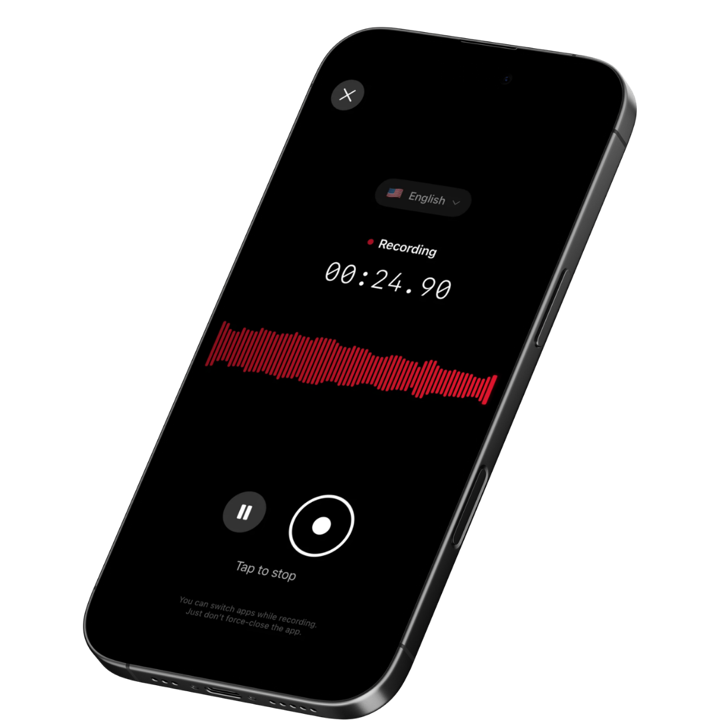
Download SpeakWise from the App Store and replace passive meeting attendance with intelligent voice capture, AI summaries, and searchable transcripts that keep you informed without keeping you bored.
Join 10,000+ professionals who've discovered that the best cure for workplace boredom is spending less time in meetings and more time on work that matters.
Get SpeakWise Free
4.9-star App Store Rating | iOS Optimized

🎯 4.9★ App Store Rating | 📱 Built for iOS
