Workplace Boundaries Statistics 2026
Used by recruiters, executives, consultants, and more.
Workplace Boundaries Statistics 2026
60% of U.S. workers say they have no boundaries between work and personal life. 85% receive work communications after hours, and 81% of remote workers check email outside work hours. Burnout now costs businesses $322 billion annually. Work-life balance has surpassed pay as the top employee priority for the first time in 22 years. These 16 statistics map the workplace boundary crisis.
The traditional separation between work and personal life has dissolved for most workers. Remote work, smartphones, and always-on communication tools have erased the physical and temporal boundaries that once defined a workday. The result is a workforce that never fully disconnects, with predictable consequences for health, productivity, and retention.
This post covers 16 statistics on workplace boundaries in 2026. From after-hours communication to burnout costs to right-to-disconnect legislation, these numbers reveal the scope of the boundary crisis and what workers and organizations are doing about it.
1. 60% of U.S. workers have no boundaries between work and personal life
Six out of ten American workers report that no meaningful boundary exists between their work responsibilities and personal lives. This is not just a remote work problem - it affects hybrid and in-office workers as well. The blurring is driven by smartphones, email access, messaging apps, and cultural expectations of constant availability. When 60% of the workforce cannot identify where work ends and life begins, boundary erosion has become the norm.
Source: Codegnan - Work-Life Balance Statistics 2026
2. 85% of employees receive work communications outside standard hours
The vast majority of workers are contacted about work during personal time. Survey data shows 85% of employees receive work-related communications outside standard hours at least a few times a month. Sixty percent receive them a few times a week or more. Only 6% of workers never receive after-hours messages. The expectation of availability has quietly expanded the workday far beyond its official boundaries.
Source: SurveyMonkey - Work-Life Balance Statistics 2025
3. Work-life balance has surpassed pay as the top employee priority
For the first time in Randstad's Workmonitor study's 22-year history, work-life balance has overtaken compensation as the most important factor for employees. This shift signals a fundamental change in what workers value. It is no longer enough to pay well - organizations must also respect boundaries. Companies that ignore this shift will struggle to attract and retain talent, regardless of salary offerings.
Source: Archie App - Workplace Statistics 2026
4. Burnout costs businesses $322 billion annually in lost productivity
The financial impact of boundary erosion manifests primarily through burnout. Workplace burnout costs organizations $322 billion per year in lost productivity, with healthcare costs adding another $125 to $190 billion annually. These are not theoretical projections - they represent real costs in absenteeism, presenteeism, turnover, and reduced output. When workers never disconnect, the eventual cost is far higher than the productivity gained from extra hours.
Source: The Interview Guys - Workplace Burnout 2025 Research Report
5. 81% of remote workers check email outside work hours
Remote work promised better boundaries. The reality is different. Eighty-one percent of remote workers check email outside of work hours, including 63% who check on weekends and 34% who check during vacations. The home office - which was supposed to provide flexibility - has instead become a permanent extension of the workplace. Without physical separation, many remote workers find it impossible to mentally disconnect.
Source: Apollo Technical - Remote Work Burnout Statistics 2026
6. 53% of remote workers now work more hours than when they were in the office
The flexibility of remote work has paradoxically increased working hours for many. More than half of remote workers report working more hours than they did in an office setting. The commute time that was supposed to be reclaimed by employees has been absorbed by work. Without the natural boundary of leaving a physical workplace, the workday expands to fill available time - often well into evenings and weekends.
Source: Perk - Remote Work Burnout Statistics 2025
7. 83% of workers would accept lower pay for better work-life balance
The value workers place on boundaries is tangible enough to affect salary expectations. Eighty-three percent of employees say they would accept a lower-paying job if it offered better work-life balance. Even more striking, 56% say no amount of money would convince them to sacrifice their balance. These numbers give organizations a concrete incentive to improve boundaries - it is cheaper than the raises needed to compensate for poor balance.
Source: Apollo Technical - Statistics on Work-Life Balance
8. Over 80% of employees are at risk of burnout in 2025
The Mercer Global Talent Trends report found that more than 80% of employees face burnout risk. This is not a marginal population - it is the overwhelming majority of the workforce. Two-thirds of employees actively report experiencing burnout symptoms. The connection to boundaries is direct: workers who cannot disconnect cannot recover. Without recovery, burnout becomes inevitable, not just possible.
Source: TeamOut - Employee Burnout Statistics 2025
9. 58% of workers respond to after-hours communications at least weekly
Not only do workers receive after-hours messages - most respond to them. Fifty-eight percent of employees reply to work communications outside of standard hours at least a few times per week. This behavior reinforces the expectation of constant availability. When responding becomes the norm, not responding feels like a career risk. The cycle is self-perpetuating: each response sets a precedent that makes the next message more likely.
Source: SurveyMonkey - Work-Life Balance Statistics 2025
10. 28% of workers are asked to work while on vacation
More than a quarter of employees receive work requests during their time off. Combined with the 54% who check email during vacation and the 32% who find it difficult to disconnect while away, the data paints a picture of vacations that provide incomplete recovery. True rest requires full disconnection. When workers return from vacation without having fully recharged, the burnout prevention value of time off is lost.
Source: SurveyMonkey - Work-Life Balance Statistics 2025
11. Remote workers face a 20% higher burnout risk than in-office workers
Contrary to popular assumptions, remote work increases burnout risk by 20%. The always-on nature of home offices, combined with isolation and blurred boundaries, creates conditions where burnout thrives. Without the commute as a transition ritual, without colleagues as social support, and without a physical door to close at the end of the day, remote workers must create their own boundaries from scratch - something most struggle to do consistently.
Source: Perk - Remote Work Burnout Statistics 2025
12. Gen Z experiences peak burnout at age 25 - seventeen years earlier than average
The boundary crisis hits younger workers hardest. Gen Z and millennials report peak burnout at just 25 years old, compared to the average American who experiences peak burnout at 42. Starting careers in an always-on digital environment, younger workers have never known a workplace with firm boundaries. Women are also disproportionately affected, with 49% experiencing work-related burnout compared to 43% of men.
Source: Wellhub - Work-Related Stress in the United States
13. 33% of hybrid workers struggle to set boundaries between home and work time
A third of hybrid employees specifically cite boundary-setting as a challenge. The hybrid model introduces unique complications: on office days, the workplace provides structure; on remote days, that structure disappears. The inconsistency makes it harder to establish and maintain routines. Hybrid workers must essentially manage two different boundary systems, switching between them multiple times per week.
Source: Codegnan - Work-Life Balance Statistics 2026
14. 56% of Australian employers had employees raise right-to-disconnect concerns
In the 12 months since Australia enacted its right-to-disconnect law in August 2024, more than half of employers (56%) had employees formally raise concerns or make requests related to their right to disconnect. Additionally, 21% of employers adjusted project timelines to ensure work hours were the only hours counted. This legislative approach is spreading: France, Belgium, and several other countries have enacted similar laws, signaling a global trend toward legally protected boundaries.
Source: Robert Half - Right to Disconnect Australia
15. 74% of workers worked while sick within the past year
Boundary erosion extends beyond hours to health. Three-quarters of workers report working while sick in the past year. This "presenteeism" is amplified by remote work, where calling in sick feels harder to justify when your office is your home. The result: workers who should be recovering instead push through, prolonging illness, reducing output quality, and potentially spreading illness to others in hybrid settings.
Source: SurveyMonkey - Work-Life Balance Statistics 2025
16. 36% of HR professionals cite burnout as the top driver of employee turnover
More than a third of HR leaders identify burnout - the direct consequence of poor workplace boundaries - as the number one reason employees leave. This ranks above compensation, career growth, and management quality. When boundaries fail, burnout follows. When burnout takes hold, turnover becomes inevitable. The retention cost of poor boundaries far exceeds the cost of implementing and respecting them.
Source: SurveyMonkey - Work-Life Balance Statistics 2025
Boundaries Are Not a Perk. They Are Infrastructure.
These statistics dismantle the idea that workplace boundaries are a personal responsibility. When 85% of workers receive after-hours communications, when 60% report no boundary between work and life, and when burnout costs $322 billion annually, the problem is systemic. It requires systemic solutions.
The organizations leading on this issue are not just offering wellness programs. They are changing how work is structured. Right-to-disconnect policies, meeting-free windows, after-hours communication guidelines, and genuine support for time off all signal that boundaries are organizational commitments, not individual preferences.
The economic argument is clear. When 83% of workers would accept less pay for better balance, and when burnout is the top driver of turnover, respecting boundaries is cheaper than the alternative. The organizations that figure this out will attract better talent, retain them longer, and get more sustainable productivity in return.
Boundaries are not the enemy of productivity. Lack of boundaries is the enemy of sustained performance.---
Protect your boundaries with async voice
Most boundary violations start with a message that demands an immediate response. An email at 9 p.m. A Slack message on Saturday. A "quick question" during vacation. The fix is not working less - it is communicating differently. Async voice notes let you capture and share ideas on your schedule, not someone else's.
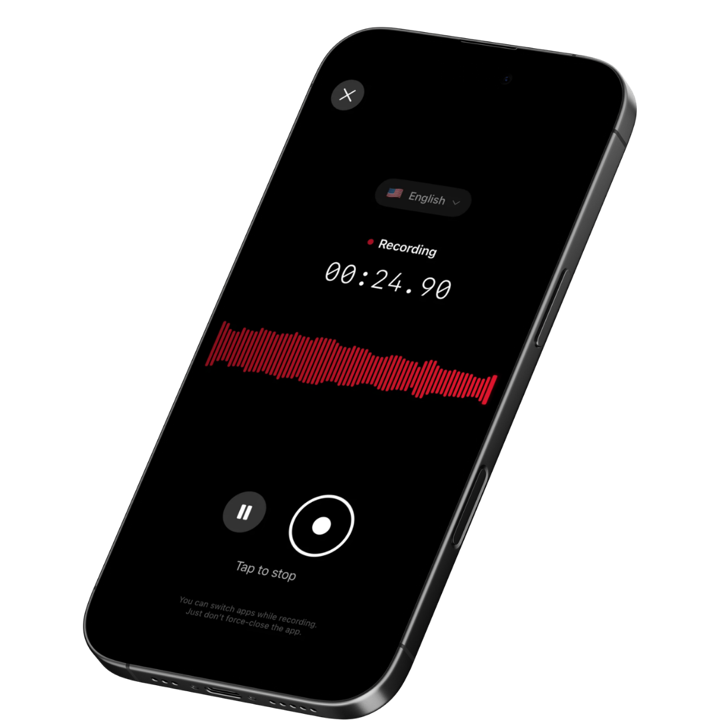
Record a thought in 30 seconds. Send it when you are ready. Let the recipient listen when they are ready. No one's evening gets interrupted. No one's vacation gets disrupted.
Download Speakwise from the App Store and communicate on your own terms with voice notes, AI transcription, and Notion sync - without breaking anyone's boundaries.
Join 10,000+ professionals who protect their boundaries and still capture every important thought.
Get Speakwise Free
4.9-star App Store Rating | iOS Optimized

🎯 4.9★ App Store Rating | 📱 Built for iOS
