Workplace Collaboration Statistics 2026: Tool Fragmentation, Cross-Team Friction, and Coordination Costs
Used by recruiters, executives, consultants, and more.
Workplace Collaboration Statistics 2026: Tool Fragmentation, Cross-Team Friction, and Coordination Costs
Collaborative work now consumes 85% or more of most people's work weeks. Knowledge workers spend 60% of their time on "work about work" instead of the skilled tasks they were hired to do. And 75% of cross-functional teams are dysfunctional. These 20 statistics reveal the uncomfortable truth about modern workplace collaboration: more tools, more meetings, and more coordination haven't made us more effective-they've created an entirely new category of productivity loss.
Workplace collaboration was supposed to be the great unlocked advantage of the digital era. The logic seemed bulletproof: give teams better tools for communicating, sharing, and coordinating, and productivity would soar. Organizations invested billions in collaboration platforms-from Slack and Teams to Asana, Notion, Monday, Confluence, and dozens more. The global collaboration software market reached $18.2 billion in 2024 and continues expanding at a 7.7% compound annual growth rate.
But something went wrong. Instead of eliminating friction, each new tool introduced another layer of it. Instead of reducing meetings, collaboration platforms generated more things to discuss, more threads to monitor, and more status updates to chase. Instead of freeing workers to focus on high-value work, the coordination overhead of collaboration itself became the dominant activity of the modern workday. Harvard Business Review researchers found that the time spent on collaborative activities has ballooned by 50% or more over the past two decades, and it shows no signs of slowing down.
In this post, we examine 20 compelling statistics that expose the true cost of workplace collaboration in its current form. From tool fragmentation and cross-team friction to coordination overload and the burnout it creates, these numbers reveal a systemic problem that no single app can fix-and point toward a fundamentally different approach to working together.
Key Workplace Collaboration Statistics (2026)
- Workplace collaboration now consumes 85% or more of most people's work weeks, leaving little room for focused, high-value work (Harvard Business Review).
- Knowledge workers spend 60% of their time on "work about work" instead of the skilled tasks they were hired to do (Asana).
- 75% of cross-functional teams are dysfunctional, failing at least three of five core success criteria (Harvard Business Review).
- AI-driven fragmentation now costs the Fortune 500 an estimated $161 billion a year, because team coordination hasn't kept pace with individual AI speed (Atlassian).
- 87% of knowledge workers say they lack the time or capacity to coordinate with everyone in "execution mode" (Atlassian).
- The average company now runs 118 SaaS applications, up from 106 the year before (BetterCloud).
- 84% of marketing leaders and employees experience high "collaboration drag" from cross-functional work (Gartner).
1. Collaborative work now consumes 85% or more of most people's work weeks
The scale of collaboration's dominance over the modern workday is staggering. According to research published in Harvard Business Review, time spent in collaborative activities-email, instant messaging, phone calls, video conferences, and meetings-has risen by 50% or more over the past decade and now consumes 85% or more of most people's work weeks. This leaves a vanishingly small window for the deep, focused work that produces actual business value. Consider what this means in practice: in a 40-hour work week, the average knowledge worker has fewer than 6 hours-barely more than one hour per day-for the uninterrupted, creative, strategic thinking that actually drives business outcomes. The implication is clear: for most knowledge workers, collaboration isn't something they do between tasks-it is the task. Source: Harvard Business Review - Collaboration Overload Is Sinking Productivity
2. Knowledge workers spend 60% of their time on "work about work"
Asana's Anatomy of Work Index, based on a global survey of over 10,000 knowledge workers, found that 60% of the average knowledge worker's time is consumed by coordination activities rather than the skilled, strategic work they were hired to perform. These coordination tasks include communicating about work, searching for information, switching between apps, managing shifting priorities, and chasing status updates. Only about a quarter of their time goes to skilled work, and just 13% to strategic planning. The result is a workforce that spends the majority of every day servicing the machinery of collaboration rather than producing outcomes. Source: Asana - The Way We Work Isn't Working
3. The average company now runs 118 SaaS applications
Tool proliferation has reached extraordinary levels. Research from BetterCloud shows the average company used 118 SaaS applications in 2026, up from 106 the year before-an 11% year-over-year increase that reverses two years of consolidation. Each tool has its own interface, notification system, login credentials, and organizational logic. The cognitive overhead of navigating this fragmented landscape doesn't just waste time-it fundamentally changes how people work, shifting their primary activity from creating value to managing the tools that are supposed to help them create value. The irony is sharp: the tools purchased to improve productivity have themselves become a primary source of unproductive work. Source: BetterCloud - The Big List of SaaS Statistics
4. Employees using more than 10 apps report communication issues at nearly double the rate of those using fewer than five
Tool fragmentation doesn't just slow people down-it actively degrades communication quality. Research cited by Zoom found that employees who use more than 10 applications report communication issues at a rate of 54%, compared to 34% among those who use fewer than five apps. This 20-percentage-point gap reveals a counterintuitive truth: the more communication tools an organization deploys, the worse its communication actually becomes. Each additional tool creates another silo, another notification stream, and another place where critical information can get lost. Source: Zoom - Workplace Collaboration Statistics
5. 75% of cross-functional teams are dysfunctional
In a landmark study of 95 teams across 25 leading corporations, Harvard Business Review researcher Behnam Tabrizi found that nearly 75% of cross-functional teams are dysfunctional. Teams were evaluated against five criteria: meeting a planned budget, staying on schedule, adhering to specifications, meeting customer expectations, and maintaining alignment with company goals. Three out of four teams failed on at least three of these five measures. The dysfunction stems not from individual incompetence but from systemic problems-unclear governance, lack of accountability, goals that lack specificity, and organizations' failure to prioritize cross-functional success. Source: Harvard Business Review - 75% of Cross-Functional Teams Are Dysfunctional
6. 84% of marketing leaders and employees experience high "collaboration drag" from cross-functional work
Gartner coined the term "collaboration drag" to describe the organizational friction created by excessive cross-functional coordination, and the data behind it is stark. A 2024 Gartner survey found that 84% of marketing leaders and employees report experiencing high collaboration drag when working with other functions. This drag manifests as misaligned processes, slow execution, cumbersome review procedures, and unclear ownership-all of which compound when multiple departments must coordinate on shared initiatives. The finding extends well beyond marketing: any function that depends on cross-team alignment faces similar headwinds. Source: Gartner Press Release - Collaboration Drag Survey 2024
7. High collaboration drag makes organizations 37% less likely to exceed revenue and profit targets
Collaboration friction isn't just an operational inconvenience-it directly impacts the bottom line. Gartner's research found that organizations experiencing high levels of collaboration drag are 37% less likely to achieve their revenue and profit goals. The mechanism is straightforward: when teams spend excessive time coordinating, reviewing, and waiting for approvals, they execute more slowly, miss market windows, and fail to capitalize on strategic opportunities. The 37% revenue gap represents the tangible financial cost of treating collaboration as a process problem rather than a strategic design challenge. Source: Gartner Press Release - Collaboration Drag Survey 2024
8. Employees spend 1.8 hours per day-9.3 hours per week-just searching for information
A McKinsey Global Institute report found that the average knowledge worker spends an estimated 28% of the workweek managing email and nearly 20% searching for internal information or tracking down colleagues who can help with specific tasks. In practical terms, employees spend 1.8 hours every day-9.3 hours per week-searching and gathering information. Over the course of a year, that adds up to approximately nine full work weeks per employee spent not producing, not strategizing, not collaborating meaningfully, but simply hunting for the information needed to do their job. Source: McKinsey Global Institute - The Social Economy
9. It takes 9.5 minutes to regain productive flow after switching to a different app
A joint study by Qatalog and the Ellis Idea Lab at Cornell University, surveying 1,000 workers, examined the cognitive cost of toggling between digital tools and found that it takes an average of 9.5 minutes to get back into a productive workflow after switching to a different application. Given that the average worker switches between apps and tools dozens of times per day, these recovery periods accumulate rapidly-employees spend almost four hours per week simply reorienting themselves after switching between applications, which over a full year equals roughly five working weeks lost entirely to tool navigation overhead. The study also found that 45% of workers report that toggling between too many apps makes them less productive, while 43% say the constant switching is mentally exhausting. The implication is devastating for organizations that keep adding tools to their collaboration stack: each new application doesn't just add its own learning curve and notification stream-it multiplies the number of transitions every employee must make throughout the day. Source: Conclude.io - Context Switching Is Killing Your Productivity
10. Context switching consumes up to 40% of productive time
The full economic impact of fragmented attention is enormous. Research on context switching shows that chronic multitasking and frequent toggling between tasks, tools, and conversations can consume up to 40% of a person's productive time. For a standard 8-hour workday, losing 40% of productive capacity means approximately 3.2 hours per day vanish into the overhead of reorienting, refocusing, and resuming interrupted work. What makes this particularly insidious is that context switching feels like productivity-you're responding to messages, updating project boards, switching between documents. But the cognitive research is unambiguous: every switch carries a tax, and the cumulative cost is far greater than most people or organizations realize. Source: Conclude.io - Context Switching Is Killing Your Productivity
11. Only 29% of organizations are satisfied with their digital collaboration tools-down from 40% in 2022
Despite the explosion of collaboration software, user satisfaction is declining sharply. Research compiled by Reworked and cited by Haiilo shows that only 29% of organizations reported satisfaction with their digital tools in 2024, a steep drop from 40% in 2022. This downward trend suggests that the problem isn't a lack of features or options-the market offers more sophisticated tools than ever. The problem is that adding more tools to an already fragmented stack creates diminishing returns: each new platform solves one problem while introducing new ones in the form of additional notification streams, learning curves, and integration challenges. Source: Haiilo - Digital Fatigue: How Fragmented Tools Are Hurting Your Team
12. Poor communication caused by fragmented tools reduces productivity by 40%
When collaboration tools fragment rather than unify communication, the productivity penalty is severe. Research by Grammarly, as cited in Haiilo's analysis of digital fatigue, found that poor communication caused by fragmented tool ecosystems reduces workplace productivity by 40%. The fragmentation creates information silos where knowledge gets trapped in platform-specific threads-a decision made in Slack never reaches the team member who only checks email, a project update in Asana is invisible to the stakeholder monitoring Jira. The result is duplicated effort, misaligned priorities, and decisions made on incomplete information. Source: Haiilo - Digital Fatigue: How Fragmented Tools Are Hurting Your Team
13. The COVID-19 shift doubled voice and video call times while increasing instant messaging traffic by 65%
The pandemic didn't just accelerate remote work-it dramatically intensified collaborative demands. Harvard Business Review research documented that during the COVID transition, voice and video call times doubled, and instant messaging traffic increased by 65%. At Uber specifically, the shift triggered a 40% increase in meetings, a 45% increase in average meeting participants, a greater than 3x increase in both Zoom meetings and Slack messages, and a 30% decrease in focus time (defined as two or more uninterrupted hours per day). These patterns didn't fully reverse when offices reopened-they became the new baseline. Source: Harvard Business Review - Collaboration Overload Is Sinking Productivity
14. 20% to 35% of value-added collaborations come from only 3% to 5% of employees
Collaboration isn't just excessive-it's also remarkably unequal. Research conducted across more than 300 organizations over two decades, published in Harvard Business Review, found that 20% to 35% of value-added collaborations come from only 3% to 5% of employees. These "extra milers" become organizational bottlenecks not because they hoard work but because the structure of modern collaboration funnels requests toward them. They become the go-to people for information, decisions, and cross-team coordination-and they burn out at disproportionate rates. Meanwhile, the rest of the organization engages in high volumes of collaboration that produces far less value. This concentration effect means that most organizations are simultaneously over-collaborating (in terms of volume) and under-collaborating (in terms of outcomes). The top quartile of productive companies, the researchers found, lose 50% less time to unnecessary and ineffective collaboration than average-suggesting the problem isn't collaboration itself but how it's structured and distributed. Source: Harvard Business Review - Collaborative Overload
15. 60% of workers experience high stress and burnout due to online communication fatigue
The human cost of collaboration overload is measurable and growing. Research on digital communication overload found that 60% of workers experience high stress and burnout specifically due to online communication fatigue. This isn't general workplace stress-it's stress directly attributable to the volume and fragmentation of digital collaboration demands. The always-on culture compounds the problem: 58% of remote employees feel pressured to be available around the clock, which blurs work-life boundaries and makes disconnecting nearly impossible. The always-on expectation means there is no recovery period; the collaboration never stops, and neither does the cognitive load it imposes. Source: Brosix - Digital Communication Overload
16. Employees overwhelmed by poor digital tools are 2x more likely to leave their jobs
Tool fragmentation doesn't just drain productivity-it drives attrition. Research cited by Haiilo found that employees who feel overwhelmed by poorly implemented or excessively fragmented digital tools are twice as likely to leave their jobs compared to those with streamlined digital environments. Conversely, 69% of employees are more likely to stay with companies that offer effective, well-integrated digital tools. In an era where replacing a knowledge worker costs an estimated 50% to 200% of their annual salary, tool-driven turnover represents one of the most overlooked and expensive consequences of collaboration overload. Consider a company of 1,000 knowledge workers: if even 5% leave annually due to digital tool frustration-a modest estimate given the 2x attrition multiplier-the replacement cost could reach millions of dollars, far exceeding the original investment in the collaboration tools that drove them away. Source: Haiilo - Digital Fatigue: How Fragmented Tools Are Hurting Your Team
17. Unproductive meeting load for individual contributors jumped 118% between 2019 and 2024
The meeting burden has more than doubled in just five years. Asana's 2024 State of Work Innovation report found that unproductive meeting load for individual contributors jumped from 1.7 hours per week in 2019 to 3.7 hours per week in 2024-a 118% increase. This figure represents only the meetings workers themselves identify as unproductive, meaning the actual time lost to low-value meetings is almost certainly higher. Across a 50-week work year, those 3.7 unproductive hours per week translate to 185 hours-more than four full work weeks-spent in meetings that participants themselves consider a waste of their time. The trend reveals that despite widespread awareness of meeting overload and despite the rise of asynchronous tools that were supposed to replace unnecessary meetings, organizations have been unable to reverse the tide-in fact, the problem is accelerating year over year. Source: Asana - 2024 State of Work Innovation Report
18. AI's "fragmentation tax" costs the Fortune 500 an estimated $161 billion a year
The newest wave of collaboration friction comes from AI itself. Atlassian's Teamwork Lab surveyed 12,035 knowledge workers and 173 Fortune 1000 executives in early 2026 and found that as individuals use AI to move faster, team coordination hasn't kept pace-reviews, sign-offs, and alignment decisions can't absorb the flood of new work AI produces. The result is what the report calls a "fragmentation tax": an estimated $161 billion a year in lost value across the Fortune 500 alone. Companies have invested billions in AI to speed up individual output, but without redesigning how teams coordinate around that output, the speed gains dissolve into coordination debt. Source: Atlassian - The State of Teams 2026
19. 87% of knowledge workers say they lack the time or capacity to coordinate
The same Atlassian research found that 87% of knowledge workers say that with everyone in "execution mode," they simply don't have the time or capacity to coordinate with teammates. Compounding the problem, 85% of knowledge workers now use AI at work, but only 29% have embedded it into their actual flow of work-meaning most AI use adds another disconnected step rather than removing coordination overhead. The minority of teams that have solved this-just 14% of those surveyed-are up to 9.4 times more likely to say AI increases collaboration rather than fragmenting it. Source: Atlassian - The State of Teams 2026
20. Low employee engagement now costs the world economy an estimated $10 trillion a year
Collaboration overload doesn't just erode productivity-it erodes the engagement that makes collaboration worthwhile in the first place. Gallup's 2026 State of the Global Workplace report found that global employee engagement has dropped to 20%, down from a peak of 23% in 2022, marking the first time engagement has fallen for two consecutive years. Gallup estimates that low engagement cost the world economy approximately $10 trillion in lost productivity last year alone, equivalent to roughly 9% of global GDP. The finding reinforces a theme that runs through nearly every statistic in this list: when the mechanics of coordination overwhelm the people doing the coordinating, the cost shows up not just in wasted hours but in disengagement at a macroeconomic scale. Source: Gallup - State of the Global Workplace
The Collaboration Paradox: When Working Together Makes Us Work Worse
Taken together, these 20 statistics expose what might be called the collaboration paradox: the very systems, tools, and cultural norms designed to help teams work together are, in aggregate, preventing them from doing their best work. This isn't a failure of any individual tool or meeting or process. It's a systemic failure-the emergent result of layering coordination mechanism upon coordination mechanism without accounting for the cumulative cognitive and organizational cost.
The paradox has a structural explanation. Each collaboration tool solves a genuine problem in isolation. Slack reduces the latency of team communication. Asana provides visibility into project status. Zoom enables face-to-face interaction regardless of location. Confluence creates a persistent knowledge base. Individually, each one represents a rational investment. But when an organization deploys all of them-plus email, plus calendars, plus shared drives, plus specialized tools for design, engineering, sales, and support-the total coordination overhead overwhelms the productivity gains any single tool provides. The average company's 118 SaaS applications aren't 118 solutions; they're 118 additional interfaces, notification streams, and information silos that every employee must navigate, monitor, and reconcile every day.
The cross-team dimension makes this even worse. When collaboration stays within a single team using a shared workflow, it can be highly efficient. But the moment work crosses team boundaries-which it does constantly in modern organizations-friction multiplies. Different teams use different tools, follow different processes, and optimize for different metrics. The 84% collaboration drag figure from Gartner's research, the 75% cross-functional team failure rate from Harvard Business Review, and the 37% revenue impact all point to the same conclusion: the coordination cost of cross-team collaboration frequently exceeds the value it produces. We are, in many cases, paying more for the collaboration than the collaboration is worth.
Perhaps most troubling is the self-reinforcing nature of the problem. When collaboration tools fail to provide clarity, teams compensate by scheduling more meetings. When meetings proliferate, workers have less time for deep work, so they rely more heavily on quick Slack messages and email threads to stay coordinated. When those channels become noisy and unreliable, organizations deploy yet another tool to manage the noise-adding to the 118 SaaS applications already in the stack. Each intervention addresses a symptom while deepening the underlying disease. The result is the 85% figure: nearly the entirety of the work week consumed by the mechanics of working together, with barely any time left for the work itself.
The human dimension of this paradox deserves equal attention. The 60% of workers experiencing burnout from communication fatigue, the 2x attrition rate among tool-overwhelmed employees, and the concentration of value-added collaboration among just 3% to 5% of the workforce all point to an unsustainable human cost. Organizations aren't just losing productivity-they're losing their best people. The employees most burdened by collaboration overhead are often the most valuable: the ones whose expertise, relationships, and institutional knowledge make them the natural hub for cross-team coordination. When they burn out or leave, the organizational knowledge they carry disappears with them, creating a vacuum that generates even more coordination friction for everyone who remains.
The data also reveals a troubling misalignment between investment and outcomes. Organizations continue to pour money into collaboration software-the market growing at 7.7% annually-even as satisfaction with those tools drops to 29% and productivity suffers measurably. This isn't because the tools are poorly designed; most modern collaboration platforms are sophisticated, well-engineered products. The problem is architectural: layering more tools onto a fundamentally fragmented information environment produces fragmentation, not unity. The 37% revenue gap that Gartner attributes to collaboration drag represents the cost of this architectural mistake at scale.
The path forward isn't more collaboration tools, better collaboration tools, or even fewer collaboration tools. It's a fundamental rethinking of how information flows between people-reducing the number of touchpoints, eliminating unnecessary synchronous coordination, and letting technology handle the summarization, routing, and organization that currently requires human attention. The organizations that crack this problem won't just be more productive-they'll reclaim the 60% of the workday that's currently lost to the overhead of working together.---
Ready to collaborate without the coordination tax?
Collaboration tools were supposed to reduce friction-but they created an entirely new category of overhead. Every shared document spawns a comment thread. Every project management update triggers a notification chain. Every cross-team initiative generates a standing meeting. Every "quick question" in Slack spirals into a 47-message thread that three people need to read and nobody can find later. The tools meant to streamline coordination have, paradoxically, become the primary source of coordination cost. Workers now spend more time managing the tools of collaboration than actually collaborating-and the 9.5 minutes lost every time they switch between those tools means the fragmentation compounds with every toggle.
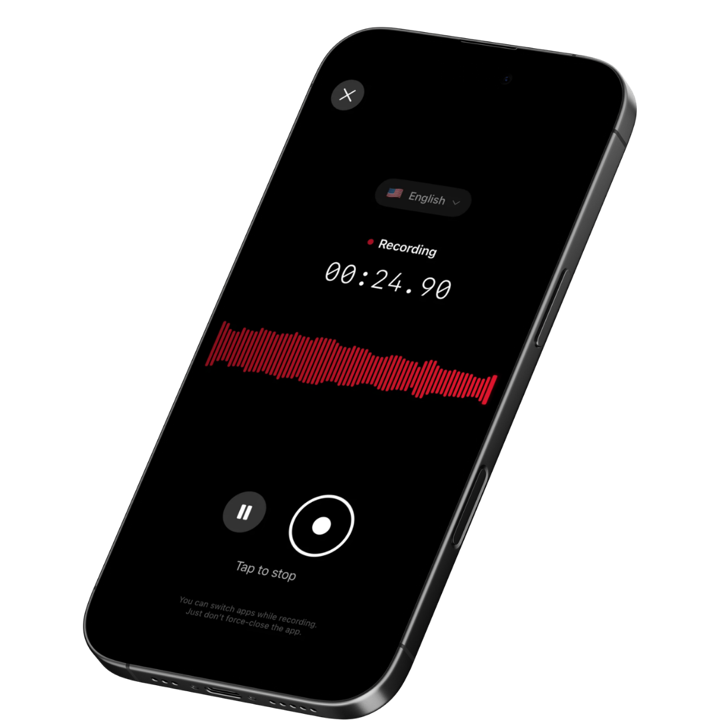
Voice capture offers a fundamentally different approach. Instead of typing into yet another collaboration tool, scheduling another sync meeting, or composing another thread, you simply speak-and AI handles the rest. Share ideas, updates, and decisions through voice notes that get transcribed, summarized, and organized automatically.
Download SpeakWise from the App Store and discover how one-tap recording, AI transcription, intelligent summaries, and Notion integration can help your team collaborate more effectively with less overhead.
Join 10,000+ professionals who've discovered that the best collaboration doesn't require more tools-it requires less friction.
Get SpeakWise Free →
4.9★ App Store Rating | iOS Optimized

🎯 4.9★ App Store Rating | 📱 Built for iOS
