Communication Tools Statistics 2026
Used by recruiters, executives, consultants, and more.
Communication Tools Statistics 2026
The unified communications market reached $113 billion in 2025, yet one in three employees remains dissatisfied with their organization's communication channels. Workers now switch between apps 32 times per day, 69% of companies adopted new communication tools this year, and U.S. businesses lose $1.2 trillion annually to miscommunication. These 16 statistics reveal how the explosion of workplace tools is reshaping - and sometimes undermining - how teams collaborate.
The modern workplace runs on communication tools. Email, Slack, Teams, Zoom, project management platforms, and dozens of niche apps compete for attention every hour of the workday. Each new tool promises better collaboration. The reality is more complicated. More tools often mean more noise, more context switching, and more cognitive load.
This post covers 16 statistics that capture the state of workplace communication tools in 2026. From market size and adoption rates to productivity impacts and employee satisfaction, these numbers tell the story of a workplace drowning in options. Whether you lead a distributed team or simply want to understand why your workday feels fragmented, these data points explain the landscape.
1. The unified communications market reached $113 billion in 2025
The infrastructure powering workplace communication has become a massive industry. The global unified communication and collaboration market was valued at $113.09 billion in 2025 and is projected to reach $126.60 billion in 2026. This growth reflects the central role that digital communication now plays in every organization, from startups to Fortune 500 companies. The market encompasses video conferencing, instant messaging, VoIP, and collaboration platforms that have become non-negotiable infrastructure for modern work.
Source: Global Growth Insights - Unified Communication and Collaboration Market
2. 69% of companies adopted new communication tools this year
The communication tool stack keeps expanding. Research shows that 69% of companies implemented new communications tools this year, up slightly from 67% the previous year. Project management tools overtook online chat tools for the first time, signaling a shift toward more structured collaboration. This constant adoption cycle means employees must regularly learn new platforms, adapt workflows, and integrate yet another tool into their daily routines.
Source: Project.co - Business Communication Statistics 2026
3. Workers switch between apps 32 times per day on average
The hidden cost of tool diversity shows up in context switching. Employees switch between apps and tools an average of 32 times per day, with much of that switching driven by messaging and communication platforms. Each switch carries a cognitive cost. Research consistently shows that regaining deep focus after a task switch takes significant time. Multiply 32 switches across an eight-hour day, and the fragmentation becomes clear. Some studies put the figure even higher, with knowledge workers switching tools up to 1,200 times daily when micro-interactions are counted.
Source: Conclude.io - Context Switching is Killing Your Productivity at Work
4. One in three employees is dissatisfied with their communication channels
More tools have not meant more satisfaction. One in three employees reports dissatisfaction with the communication channels their organization uses. This gap between tool availability and tool effectiveness suggests that the problem is not a lack of options. It is a lack of clarity about which tool to use, when, and for what purpose. When every platform competes for attention, none of them work optimally.
Source: Project.co - Business Communication Statistics 2026
5. U.S. companies lose $1.2 trillion annually to miscommunication
The financial toll of communication breakdowns is staggering. U.S. companies collectively lose an estimated $1.2 trillion every year due to miscommunication and collaboration failures. This figure accounts for wasted time, duplicated work, missed deadlines, and projects derailed by unclear instructions. Despite billions invested in communication tools, the core problem persists: more channels do not automatically produce better understanding.
Source: Pumble - Workplace Communication Statistics 2026
6. 77% of workers say communication tools improve their productivity
Despite the challenges, most employees recognize the value of digital communication. 77% of workers say that tools like email, instant messaging, and video conferencing have improved their productivity. Only 19% feel these tools have made them less productive. The issue is not whether communication tools help. It is whether the current approach of stacking multiple tools creates more benefit than burden.
Source: Project.co - Business Communication Statistics 2026
7. Microsoft Teams holds 53% market share among collaboration platforms
The collaboration platform market has a clear leader. Microsoft Teams commands 53% market share in the workplace collaboration space, followed by Slack at 18%. Teams surpassed 320 million monthly active users, cementing its position as the default communication hub for enterprises that already use the Microsoft 365 ecosystem. This dominance means most knowledge workers interact with Teams daily, whether or not it is their preferred tool.
Source: Slack Statistics 2025 - SQ Magazine
8. Slack surpassed 42 million daily active users in early 2025
While Teams leads overall, Slack continues strong growth in its segment. Slack surpassed 42 million daily active users globally in early 2025, marking 12% year-over-year growth. Over 215,000 organizations now use the platform. Slack's strength lies in its integration ecosystem and developer-friendly culture, making it the tool of choice for tech companies, startups, and creative agencies that prioritize customization over enterprise standardization.
Source: SQ Magazine - Slack Statistics 2025
9. Email remains the most popular tool at 18%, but messaging is catching up
The communication hierarchy is shifting. Email leads as the most popular communication tool among knowledge workers at 18%, with video calls close behind at 17%. But the story changes by role. Among leaders, instant messaging tops the list at 50%, followed by project management tools at 44%. Among employees, instant messaging leads at 64% and email follows at 63%. The generational and role-based divide in tool preferences creates friction when teams try to standardize.
Source: Project.co - Business Communication Statistics 2026
10. 68% of workers lack enough uninterrupted focus time
Communication tools create a constant stream of interruptions. 68% of workers say they do not have enough uninterrupted time to focus on their core work, with constant communication cited as a top reason. The always-on nature of Slack channels, Teams notifications, and email threads means that deep work competes with responsiveness. Many workers feel trapped between the need to collaborate and the need to concentrate.
Source: Brosix - Digital Communication Overload Statistics
11. 80% of organizations use digital collaboration tools daily
Digital communication tools are now universal. More than 80% of organizations use digital collaboration tools as part of daily operations, according to global enterprise IT surveys. This near-total adoption means that opting out is no longer viable for most professionals. The question has shifted from whether to use these tools to how to use them without sacrificing focused productivity.
Source: Grand View Research - Unified Communications Market Report
12. Cloud deployments hold 71% of the UC market
The way organizations deploy communication tools has shifted decisively to the cloud. Cloud deployments held 71.23% of the unified communications and collaboration market share in 2025, with video conferencing leading as the largest segment at 36.43% of revenue. Cloud-based tools offer flexibility and rapid deployment, but they also lower the barrier to adding yet another tool to the stack. When new platforms are one click away, tool sprawl accelerates.
Source: Mordor Intelligence - Unified Communications Market Report 2031
13. 73% of professionals report more communication channels than last year
The channel count keeps climbing. 73% of professionals report an increase in the variety of communication channels used over the past 12 months. This expansion happens organically as teams adopt new tools for specific purposes - a Slack channel here, a WhatsApp group there, a new project management board elsewhere. Each addition seems logical in isolation. Together, they create a fragmented communication landscape that no single person can fully monitor.
Source: Brosix - Digital Communication Overload Statistics
14. Workers spend 88% of their workweek communicating across channels
Communication has consumed nearly the entire workday. Knowledge workers report spending 88% of their workweek communicating across multiple channels, leaving just 12% for focused, uninterrupted work. This figure includes email, chat, video calls, phone calls, and in-person conversations. When nearly nine out of ten working hours go to communication, the question becomes whether teams are collaborating effectively or simply talking about work instead of doing it.
Source: Brosix - Digital Communication Overload Statistics
15. 52% of organizations report improved productivity after adopting UC solutions
Unified communication platforms do deliver measurable results when implemented well. Around 52% of organizations report improved operational productivity after adopting unified communication solutions. The key difference between productive and unproductive tool adoption lies in consolidation. Organizations that replace multiple fragmented tools with a single unified platform tend to see gains. Those that add UC on top of existing tools often see diminishing returns.
Source: Grand View Research - Unified Communications Market Report
16. By 2030, 75% of organizations plan to switch to unified communication tools
The trend toward consolidation is accelerating. By 2030, around 75% of organizations and businesses plan to switch to unified communication and collaboration tools for their communication needs. This projection reflects growing recognition that tool sprawl creates more problems than it solves. The future of workplace communication appears to favor fewer, more integrated platforms over the current patchwork approach.
Source: Market.us - Unified Communication and Collaboration Market
The Tool Paradox: More Options, Less Clarity
The data tells a contradictory story. The communication tools market is booming, with $113 billion in spending and 80% daily adoption rates. Yet one-third of employees remain dissatisfied, 68% lack focus time, and companies lose $1.2 trillion to miscommunication. More tools have not solved the communication problem. In many cases, they have made it worse.
The root issue is fragmentation. When teams spread conversations across email, Slack, Teams, project boards, video calls, and text messages, no single platform contains the full picture. Important decisions get lost in channels. Action items scatter across tools. Context disappears between platforms. The result is that everyone is communicating constantly, but no one feels fully informed.
The solution is not eliminating tools. It is consolidating and creating clear protocols for which tool serves which purpose. Organizations that establish communication norms - async updates in one place, urgent items in another, decisions documented in a single system - report both higher productivity and lower burnout.
The most productive teams in 2026 will not be the ones with the most tools. They will be the ones with the clearest system for capturing and organizing what matters across all their conversations.---
Capture what matters from every conversation - in one place
The real cost of tool sprawl is lost information. Decisions made in a Slack thread never reach the project board. Meeting agreements vanish from video calls. Ideas shared in hallway conversations disappear entirely. The problem is not communication itself. It is that important content gets trapped in whichever tool happened to be open at the time.
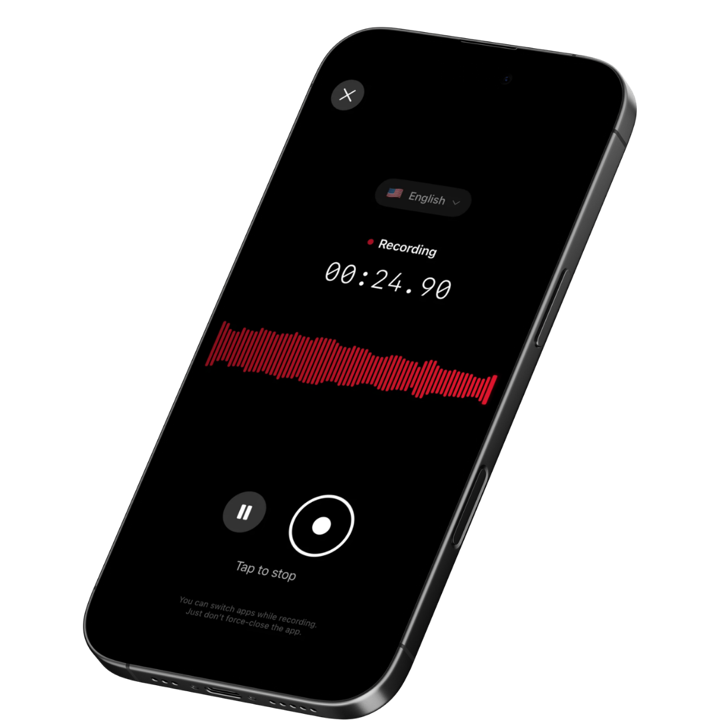
Voice capture solves this at the source. Instead of typing notes into yet another app, you speak your thoughts and let AI organize them. One tap records a meeting, a brainstorm, or a quick idea. AI transcription converts it to searchable text. Summaries extract the key points. Everything syncs to Notion - one central place for every insight, regardless of which communication tool generated it.
Download SpeakWise from the App Store and start capturing decisions, action items, and ideas from every conversation - without adding another tool to monitor.
Join 10,000+ professionals who use voice to cut through tool sprawl and keep their best thinking organized in one place.
Get SpeakWise Free
4.9-star App Store Rating | iOS Optimized

🎯 4.9★ App Store Rating | 📱 Built for iOS
