Workplace Conflict Statistics 2026: Costs


Used by recruiters, executives, consultants, and more.
Workplace Conflict Statistics 2026: Costs
85% of employees experience workplace conflict, with 27% reporting high levels of conflict weekly. Employees spend an average of 2.8 hours per week managing disputes, costing U.S. organizations more than $414 billion in paid hours annually. Managers spend over 4 hours a week on conflict resolution - yet 60% of employees have never received conflict management training. These 18 statistics reveal how unresolved conflict drains organizations.
Workplace conflict is inevitable. People with different perspectives, priorities, and communication styles will disagree. The problem is not conflict itself. The problem is how poorly most organizations handle it. When conflict goes unresolved, it escalates into disengagement, turnover, and significant financial losses.
This post examines 18 statistics that capture the full scope of workplace conflict in 2026. From the hours lost to disputes to the billions wasted on unresolved tensions, these numbers show why conflict management deserves strategic attention.
Key Workplace Conflict Statistics (2026)
- Workplace conflict affects the vast majority of employees, with 85% experiencing some form of dispute at work (Gitnux).
- Unresolved workplace conflict now costs U.S. organizations more than $414 billion a year in lost paid hours, replacing the outdated 2008 estimate (Pollack Peacebuilding Systems, 2026).
- Managers spend an average of 4.44 hours every week handling workplace conflict, worth about $14,000 a year in salaried time per manager (Pollack Peacebuilding Systems, 2026).
- 72% of organizations still lack a formal policy for resolving workplace conflict (Passive Secrets).
- Only 30% of leaders feel confident managing workplace conflict (DDI).
- 48% of employees say workplace conflict has become more common over the past two years, against just 14% who say it has improved (Pollack Peacebuilding Systems, 2026).
- 74% of employees who go through mediation over workplace conflict report their dispute was fully or largely resolved (Acas).
1. 85% of employees experience some form of workplace conflict
Conflict at work is nearly universal. Research shows that 85% of employees experience some form of workplace dispute, and 27% report high levels of workplace conflict on a weekly basis. This means that more than a quarter of your workforce is navigating significant interpersonal tension every single week, on top of the disputes that arise from time to time for nearly everyone else. The sheer prevalence makes conflict management a baseline organizational capability, not an optional program.
Source: Gitnux - Workplace Conflict Statistics
2. Employees spend 2.8 hours per week dealing with conflict
The average employee spends 2.8 hours per week managing workplace conflict. Over a year, that adds up to roughly 145 hours per employee - nearly four full work weeks lost to disputes. For a 500-person company, that represents 72,500 hours of productive time diverted to navigating disagreements, mediating tensions, and recovering from difficult conversations. This is time that never shows up on any project plan.
Source: Peaceful Leaders Academy - Workplace Conflict Statistics
3. Workplace conflict costs more than $414 billion in paid hours annually
The financial toll is staggering, and it has grown since the figure most organizations still quote. The long-cited $359 billion estimate came from a 2008 study built on 2008 wages; in 2026, Pollack Peacebuilding Systems rebuilt the model using a fresh 1,105-person survey and current Bureau of Labor Statistics wage data, putting the full-economy cost of U.S. workplace conflict at more than $414 billion in paid hours every year. This figure accounts only for the time employees spend engaged in or affected by disputes. It does not include downstream costs like turnover, absenteeism, or quality degradation. The true economic impact of workplace conflict likely exceeds this already-massive number by a significant margin.
Source: Pollack Peacebuilding Systems - The Real Costs of Workplace Conflict (2026)
4. Managers spend 4.44 hours a week on workplace conflict
Conflict resolution consumes a disproportionate share of management capacity. A 2026 survey of 1,105 U.S. employees found that managers spend an average of 4.44 hours a week handling escalated conflicts and difficult interactions - 231 hours a year, or roughly 29 full working days, worth about $14,000 in salaried time per manager. For frontline managers, this often means spending more time mediating team tensions than coaching, strategizing, or developing talent. Every hour a manager spends on avoidable conflict is an hour not spent on activities that drive growth.
Source: Pollack Peacebuilding Systems - The Real Costs of Workplace Conflict (2026)
5. 60% of employees have never received conflict management training
Despite managers spending over four hours a week on conflict, 60% of employees have never received any formal conflict management training. This gap between responsibility and preparation creates a cycle of poor conflict handling that escalates minor disagreements into major disruptions. Organizations invest heavily in technical skills training while neglecting the interpersonal skills that consume much of the workday.
Source: Pollack Peacebuilding - Workplace Conflict Statistics
6. 72% of workplace conflict stems from personality clashes
The most common sources of workplace conflict are interpersonal rather than structural. A 2024 Workplace Peace Institute survey found that a lack of trust is the single biggest trigger, cited by 73% of respondents, closely followed by personality clashes and ego (72%) and unclear roles (70%). Workplace stress (60%), destructive communication patterns (55%), and heavy workloads (55%) round out the leading causes. Better communication tools, clearer expectations, and stronger listening skills could prevent the vast majority of workplace disputes before they escalate.
Source: Workplace Peace Institute - State of Workplace Conflict in 2024
7. 77% of employees are disengaged due to workplace conflict
Unresolved conflict is a powerful disengagement driver. Research shows that 77% of employees who experience ongoing conflict become disengaged from their work. Disengaged employees produce less, collaborate poorly, and are far more likely to leave. The connection between conflict and disengagement means that every unresolved dispute quietly erodes team performance long after the initial disagreement.
Source: Passive Secrets - Workplace Conflict Statistics 2025
8. 53% of employees feel stressed due to workplace conflict
More than half of employees (53%) report that workplace conflict is a significant source of stress. Additionally, 45% take sick leave to avoid conflict situations. The health costs of conflict extend beyond stress. Chronic interpersonal tension contributes to anxiety, sleep disruption, and burnout. When nearly half your workforce uses sick days to escape conflict, the environment has become actively harmful.
Source: Passive Secrets - Workplace Conflict Statistics 2025
9. 51% of employees have wanted to quit due to conflict
Workplace conflict is a primary driver of voluntary turnover. 51% of employees say they have wanted to quit their jobs because of conflict, and 41% actually followed through. When half your workforce considers leaving because of unresolved disputes, conflict management becomes a direct retention strategy. The cost of replacing even one departing employee typically exceeds $15,000.
Source: Passive Secrets - Workplace Conflict Statistics 2025
10. Only 30% of leaders feel confident managing conflict
Despite its prevalence, only 30% of leaders feel confident in their ability to manage conflict effectively. This confidence gap at the leadership level is particularly damaging because it means that the people responsible for setting the tone and resolving disputes feel unequipped to do so. When leaders avoid conflict or handle it poorly, minor tensions escalate into major cultural problems.
Source: DDI - Managing Conflict in the Workplace
11. 72% of organizations lack a formal conflict resolution policy
An alarming 72% of organizations do not have a formal policy in place to resolve workplace conflicts. Without clear processes, employees and managers are left to navigate disputes using improvised approaches that often make things worse. A formal policy provides structure, consistency, and accountability - three elements that prevent minor disagreements from becoming destructive.
Source: Passive Secrets - Workplace Conflict Statistics 2025
12. $160,000 is the average cost of formally escalated conflict
When conflict escalates to formal proceedings - grievances, legal action, or external mediation - the average cost to a company is $160,000. These cases also take an average of 318 days to resolve, consuming management attention and legal resources for nearly a year. Early intervention through training and informal resolution could prevent the vast majority of these expensive escalations.
Source: Hiscox - 2017 Guide to Employee Lawsuits
13. 95% of trained employees find positive conflict resolutions
The return on conflict training is clear. 95% of employees who received conflict management training reported that it helped them navigate disputes positively and seek mutually beneficial outcomes. This near-universal effectiveness rate makes conflict training one of the highest-ROI investments an organization can make. The contrast with the 60% who never receive training highlights a massive missed opportunity.
Source: Pollack Peacebuilding - Workplace Conflict Statistics
14. 74% of mediation cases result in full or partial resolution
For conflicts that do require formal intervention, mediation delivers strong results. 74% of workplace mediation participants reported that their conflict was fully or largely resolved. Mediation is faster, cheaper, and less adversarial than formal grievance or legal processes. Yet only about 5% of employees who experience conflict actually go through mediation. The gap between mediation effectiveness and adoption represents a significant opportunity.
Source: Acas - Estimating the Costs of Workplace Conflict
15. U.S. organizations lose $2.6 billion daily to incivility-driven productivity loss
The daily cost of workplace friction is staggering and rising. SHRM's Q2 2026 Civility Index puts the toll of workplace incivility at roughly $2.6 billion a day in lost productivity and absenteeism across U.S. organizations, up from the $2 billion a day SHRM reported in 2024. Put differently, U.S. businesses lose the equivalent of a major tech company's annual revenue every few days to unresolved workplace tension alone. The scale of this loss makes conflict and civility management a top-line business priority.
Source: SHRM - Tracking SHRM's 2026 Workplace Predictions
16. $157 billion is lost annually to workplace conflict in manager time alone
A 2026 Pollack Peacebuilding Systems report set out to replace the aging 2008 estimate and landed on a conservative headline figure: U.S. organizations lose at least $157 billion a year in manager time alone, calculated from a 1,105-person survey combined with current Bureau of Labor Statistics wage data for the country's roughly 11 million managers. Using the mean management wage instead of the median pushes the figure to about $180 billion. This is a floor, not a ceiling - it excludes every hour that non-managers spend on conflict, which is where the broader $414 billion full-economy estimate comes from.
Source: Pollack Peacebuilding Systems - The Real Costs of Workplace Conflict (2026)
17. 48% of employees say workplace conflict has become more common in the past two years
Workplace conflict is not just expensive - it is getting worse. In the same 2026 Pollack Peacebuilding Systems survey, 48% of respondents said conflict has become more common in their workplace over the past two years, compared with just 14% who said it has improved. Nearly half of respondents also reported that conflict occurs weekly or more often at their organization. Whatever is driving workplace tension, the trend is moving in the wrong direction.
Source: Pollack Peacebuilding Systems - The Real Costs of Workplace Conflict (2026)
18. Financial services managers spend nearly 6 hours a week on workplace conflict
Workplace conflict is not distributed evenly across industries. The 2026 Pollack Peacebuilding Systems survey found that managers in financial services spend close to 6 hours a week handling conflict, with 64% of employees in the industry reporting conflict weekly or more often - the highest of any sector studied. Healthcare was a close second, at roughly 5.5 hours a week. High-stakes, high-pressure environments appear to generate the most interpersonal friction, while retail, government, and manufacturing reported calmer conditions.
Source: Pollack Peacebuilding Systems - The Real Costs of Workplace Conflict (2026)
The Communication Gap Behind Every Conflict
These statistics point to a consistent theme: most workplace conflict is preventable. When 72% of disputes stem from personality clashes and an even larger share trace back to a simple lack of trust, the solution is not more rules or stricter policies. It is better communication infrastructure.
The organizations losing the least to conflict are those that have invested in three areas: manager training, clear communication channels, and systems that preserve context. When everyone has access to the same information, misunderstandings decrease. When managers know how to facilitate difficult conversations, tensions resolve before they escalate.
The trajectory is clear. As work becomes more distributed and asynchronous, the opportunities for miscommunication multiply. Organizations that build conflict-prevention into their communication systems will outperform those that rely on reactive resolution.
Workplace conflict costs more than $414 billion per year not because disagreements are inevitable, but because most organizations have no strategy for preventing them.---
Reduce miscommunication before it becomes conflict
Most workplace conflict traces back to a simple problem: people heard different things, or missed the conversation entirely. When decisions happen in meetings that not everyone attends, when action items are remembered differently, and when context gets lost in translation, conflict follows.
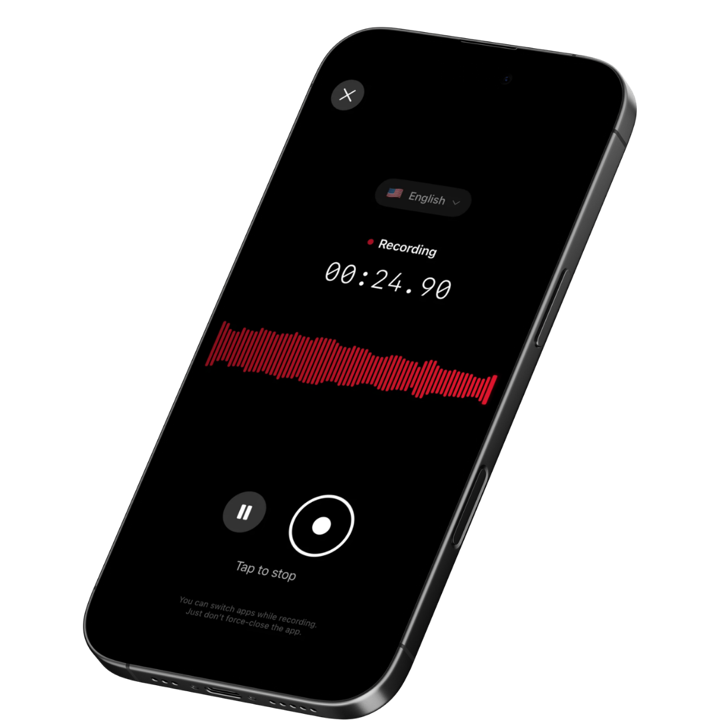
Voice recording with AI transcription creates a single source of truth. Every conversation is captured accurately, summarized automatically, and available to anyone who needs the context. No more "I thought we agreed on X" disputes.
Download SpeakWise from the App Store and turn every conversation into a clear, searchable record with AI transcription, automatic summaries, and Notion integration.
Join 10,000+ professionals who have eliminated communication gaps by capturing conversations accurately the first time.
Get SpeakWise Free
4.9-star App Store Rating | iOS Optimized

🎯 4.9★ App Store Rating | 📱 Built for iOS
