Workplace Creativity Statistics 2026: Trends


Used by recruiters, executives, consultants, and more.
Workplace Creativity Statistics 2026: Trends
82% of executives say creativity is the most important skill for business success. Yet 75% of employees are asked to be productive rather than creative. Only 25% of workers feel they are maximizing their creative potential, and 41% say their workplace actively stifles it. These 16 statistics expose the widening gap between how much organizations value creativity and how little they actually support it.
Creativity has become the most requested and least supported capability in modern organizations. Leaders name it as essential for growth, differentiation, and survival. But the workplace structures they build - rigid schedules, constant meetings, risk-averse cultures - systematically suppress the very thing they say they need.
This post presents 16 statistics on workplace creativity, covering its economic impact, the barriers that block it, and the conditions that unlock it. The data is relevant for anyone trying to build a more creative team or reclaim their own creative capacity at work.
1. 82% of executives say creativity is the most important business skill
82% of executives and 82% of organizations report a strong link between creativity and business success. This is not a soft sentiment - it reflects the recognition that in competitive markets, creative problem-solving drives differentiation, product development, and strategic advantage. Yet despite near-universal executive agreement on creativity's importance, most organizations fail to create conditions that foster it.
Source: Market.biz - Workplace Creativity and Innovation Statistics
2. 94% of hiring managers consider creativity important when hiring
Creativity ranks among the top hiring criteria. 94% of hiring managers say they consider creativity when evaluating candidates, and of HR professionals rate it as very important in the workplace. Yet once hired, creative employees often find themselves constrained by rigid processes and productivity expectations. The hiring funnel selects for creativity, but the work environment suppresses it.
Source: Keevee - Creativity Statistics
3. 75% of workers face pressure to be productive rather than creative
Three-quarters of employees report being under growing pressure to be productive rather than creative, even as they are increasingly expected to think creatively. This contradiction puts workers in an impossible bind: they are asked to innovate but measured on output volume. When productivity metrics dominate, workers default to safe, efficient approaches rather than creative exploration.
Source: Skillademia - Creativity Statistics
4. 41% of employees say their workplace stifles creativity
Nearly half the workforce feels their organization actively blocks creative expression. 41% of employees report that strict processes and lack of autonomy suppress their creativity. This is not passive neglect - it is structural obstruction. When policies, approval chains, and cultural norms punish experimentation, creative workers either conform or leave. Neither outcome serves the organization.
Source: Skillademia - Creativity Statistics
5. Only 25% of workers feel they are maximizing their creative potential
Just one in four employees believes they are fully utilizing their creative capabilities at work. The remaining 75% represent untapped creative capacity that exists within the organization but remains dormant. This is not a skills gap - it is an environment gap. The creative potential is already on the payroll; the workplace simply fails to activate it.
Source: The Global Creativity Gap - Creativity at Work
6. Lack of time is the biggest barrier to creativity for 47% of workers globally
Time pressure tops the list of creativity killers worldwide. 47% of workers globally cite lack of time as the biggest barrier to creative thinking. In the United States, that figure rises to 52%. When calendars are packed with meetings and task lists overflow, there is no space for the unstructured thinking that creativity requires. Creative output needs slack in the schedule - and most workers have none.
Source: The Global Creativity Gap - Creativity at Work
7. Only 35% of workers get dedicated time for creativity more than a few times per year
35% of workers receive dedicated time for creative thinking only a few times each year. The rest are expected to be creative within the margins of their existing workload - between meetings, during commutes, after hours. Without protected time for creative exploration, organizations are hoping for innovation without investing in the conditions that produce it.
Source: Skillademia - Creativity Statistics
8. 89% of employees applying creativity report higher job satisfaction
The link between creative work and satisfaction is strong. 89% of employees who regularly apply creativity and innovation at work report higher job satisfaction. Creative expression is not just a business need - it is a human need. When workers feel they can contribute original ideas and see them implemented, engagement and retention improve. Suppressing creativity suppresses satisfaction.
Source: Market.biz - Workplace Creativity and Innovation Statistics
9. Psychological safety increases employee engagement by nearly 20%
When employees feel safe enough to share ideas without fear of ridicule or punishment, overall engagement increases by almost 20%. Google's Project Aristotle identified psychological safety as the single most important factor in team effectiveness. Creative teams need trust more than talent. Without safety, even the most creative individuals self-censor their best ideas.
Source: Unispace - Creativity and Productivity in the Workplace
10. Diverse teams generate 60% more creative solutions
Teams with differing perspectives produce 60% more creative solutions than homogeneous groups. Cognitive diversity - differences in thinking styles, backgrounds, and expertise - creates the friction that sparks innovation. Homogeneous teams converge too quickly on conventional answers. Diverse teams explore more possibilities before settling, and the resulting solutions are more original and robust.
Source: Niagara Institute - Diversity and Innovation Statistics
11. Creative industries contribute $2.25 trillion to the global economy
The economic value of creativity is massive. Creative industries generate $2.25 trillion in annual global revenue. Within individual organizations, creative problem-solving drives product innovation, process improvement, and market differentiation. The companies that capture creativity effectively gain a direct competitive advantage. Those that suppress it leave economic value on the table.
Source: Keevee - Creativity Statistics
12. Companies encouraging innovation are 3.5x more likely to outperform on revenue
Organizations that actively encourage innovation are 3.5 times more likely to outperform their peers in revenue growth. This multiplier reflects the compound effect of creative culture: better products, faster adaptation, and stronger market position. The investment in creative conditions pays for itself many times over. The cost of not investing is slow decline.
Source: Orchidea - Eye-Opening Innovation Statistics
13. Sharing embarrassing stories before brainstorming generates 26% more ideas
Harvard Business Review reported a study where teams that shared embarrassing personal stories before a brainstorming session generated 26% more ideas across 15% more categories than control groups. Vulnerability builds psychological safety rapidly. When people lower their professional guards, creative thinking flows more freely. The implication is clear: creativity starts with human connection, not process design.
Source: Psychological Science - There's a Better Way to Brainstorm
14. Workers spend only 25% of their time at work creating
People spend just 25% of their work time engaged in creative activities. The remaining 75% goes to administrative tasks, meetings, email, and coordination. This ratio explains why creative output feels scarce - it is not that workers lack creative ability, but that the workday leaves minimal time for creation. Shifting even 10% of work time from coordination to creation could dramatically increase creative output.
Source: The Global Creativity Gap - Creativity at Work
15. People feel their creativity is better supported in personal life than at work
Research consistently shows that individuals feel their creative potential is better supported in their personal lives than in professional settings. At home, people have autonomy, unstructured time, and freedom to experiment. At work, they face deadlines, approval processes, and performance metrics that reward efficiency over exploration. This gap represents a design failure in how organizations structure the workday.
Source: The Global Creativity Gap - Creativity at Work
16. Only 27% of workers strongly agree their managers make them feel valued
Just 27% of employees strongly agree that their managers make them feel valued at work. Low perceived value directly suppresses creative contribution. When workers feel undervalued, they withhold discretionary effort - including creative ideas. The manager-employee relationship is the front line of creative culture, and right now, 73% of workers feel that front line is failing.
Source: The Global Creativity Gap - Creativity at Work
The Creativity Paradox: Valued by Leaders, Blocked by Systems
The data exposes a fundamental disconnect. Executives overwhelmingly value creativity. Hiring managers screen for it. Yet the systems, schedules, and cultures those same leaders build actively suppress creative thinking. Workers are asked to innovate but given no time, no safety, and no autonomy to do so.
The barriers are structural, not individual. When 52% of American workers cite time pressure as their biggest creativity killer and only 25% feel they are using their creative potential, the problem is not a lack of creative people. It is a surplus of creativity-blocking conditions. Meetings, rigid processes, and productivity-first metrics create an environment hostile to original thinking.
The organizations that close this gap will hold a decisive competitive advantage. The research is clear: creative cultures drive 3.5x more revenue growth, diverse teams produce 60% more creative solutions, and psychological safety unlocks engagement gains of nearly 20%. The investment is not in hiring more creative people. It is in removing the barriers that silence the creative people already present.
Creativity is not scarce in the modern workplace. Permission to be creative is.---
Capture creative ideas before they disappear
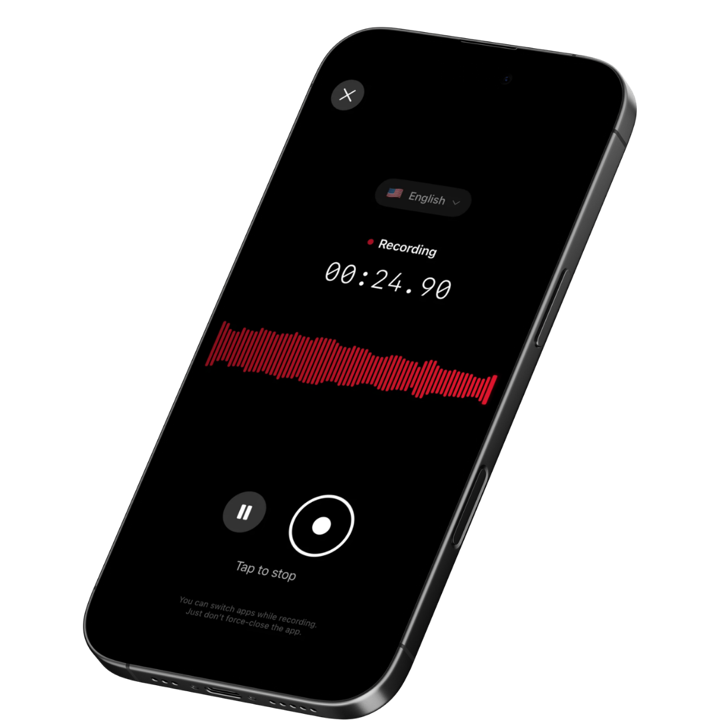
Creative thoughts arrive unpredictably - during walks, between meetings, in the middle of unrelated tasks. The problem is not generating ideas but capturing them before they fade. A voice note takes seconds and preserves the thought completely, including tone, context, and nuance that typed notes miss.
When creative professionals can speak their ideas aloud and get them transcribed, organized, and synced automatically, the barrier between inspiration and execution drops to nearly zero.
Download SpeakWise from the App Store and capture your creative ideas the moment they arrive. AI transcription in 100+ languages, smart summaries, and automatic Notion sync keep your best thinking organized and accessible.
Join 10,000+ professionals who never lose a creative idea to a busy schedule.
Get SpeakWise Free
4.9-star App Store Rating | iOS Optimized

🎯 4.9★ App Store Rating | 📱 Built for iOS
