Workplace Culture Statistics 2026
Used by recruiters, executives, consultants, and more.
Workplace Culture Statistics 2026
Global employee engagement fell to 20% in 2025, costing the global economy $10 trillion annually in lost productivity. For the first time in Workmonitor's 22-year history, work-life balance (83%) has surpassed pay (82%) as workers' top priority. Managers now account for at least 70% of team engagement, yet only 22% of managers themselves were engaged in 2025. These 17 statistics reveal how workplace culture is being redefined in 2026.
Workplace culture has moved from a background concern to a front-page business issue. The pandemic reshuffled expectations. The return-to-office debate exposed fundamental disagreements between employers and employees. Engagement is declining globally even as organizations spend more on culture programs. Something is not working.
This post covers 17 statistics on workplace culture in 2026. These numbers reveal the current state of engagement, the shifting priorities of workers, the role of managers in culture outcomes, and where organizations need to focus to build cultures that attract and retain talent.
Key Workplace Culture Statistics (2026)
- Workplace culture is under strain as global employee engagement fell to just 20% in 2025, Gallup's lowest level since 2020 (Gallup - State of the Global Workplace Report).
- Low engagement now costs the global economy $10 trillion annually, equivalent to 9% of global GDP (Gallup - State of the Global Workplace Report).
- For the first time in Workmonitor's 22-year history, work-life balance (83%) topped pay (82%) as workers' number one priority (Randstad - Workmonitor 2025).
- Managers account for at least 70% of the variance in team engagement, making them the single biggest lever for culture change (Gallup - Global Indicator: Employee Engagement).
- Nearly half of CHROs (46%) name leadership and manager development their top priority for 2026 (SHRM - 2026 CHRO Priorities and Perspectives).
- Organizational culture carries more than twice the weight of individual behavior in AI adoption success (67% vs. 32%), per Microsoft's 2026 Work Trend Index (Microsoft Work Trend Index 2026).
- Only 43% of knowledge workers say they are clear on their organization's objectives for the year, per Asana's Anatomy of Work Index (Asana - Anatomy of Work Index).
1. Global employee engagement fell to 20% in 2025
Gallup's State of the Global Workplace: 2026 Report shows that global employee engagement declined to 20% in 2025, down from 21% in 2024 and a peak of 23% in 2022-2023. This is the first time in the survey's history that global engagement has dropped for two consecutive years. When only one in five workers worldwide feels engaged, the default state of work is disconnection. Most employees show up, do the minimum, and mentally check out.
Source: Gallup - State of the Global Workplace Report
2. Low engagement costs the global economy $10 trillion annually
The full economic cost of disengagement is staggering. Gallup estimates that low engagement cost the world economy approximately $10 trillion in lost productivity in 2025 - the equivalent of 9% of global GDP. This figure makes employee disengagement one of the largest economic drains on the planet, exceeding the GDP of most countries.
Source: Gallup - State of the Global Workplace Report
3. Work-life balance surpassed pay as workers' #1 priority for the first time
Randstad's Workmonitor 2025 survey of 26,000 workers across 35 markets documented a historic shift. For the first time in Workmonitor's 22-year history, work-life balance (83%) surpassed pay (82%) as the top priority for workers. This inversion reflects a fundamental change in what employees want from work. Compensation still matters. But it is no longer enough to compensate for a life consumed by work.
Source: Randstad - Work-Life Balance Tops Pay: Workmonitor 2025
4. 70% of team engagement is attributable to the manager
Culture is not set by leadership statements or values posters. It is set by managers. Gallup's research shows that managers account for at least 70% of the variance in team engagement. This finding means that every manager in an organization is effectively the CEO of their team's culture. When managers are engaged, their teams are engaged. When managers are burned out or checked out, their teams follow.
Source: Gallup - Global Indicator: Employee Engagement
5. Manager engagement dropped from 27% to 22% in 2025
The most alarming decline in Gallup's 2026 report is not among frontline employees. It is among managers. Manager engagement fell from 27% to 22% between 2024 and 2025 - the largest year-over-year drop since Gallup began tracking it, and part of a nine-point decline since 2022. Since managers drive at least 70% of team engagement, declining manager engagement creates a cascading effect. The people responsible for culture are losing their own connection to it.
Source: Gallup - State of the Global Workplace Report
6. Less than half of employees trust their employer to build a thriving culture
Trust in organizational culture is thin. According to Randstad's Workmonitor 2025, less than half of employees surveyed (49%) said they trust their employers to create an inclusive workplace culture where everyone can thrive. When the majority of workers do not trust their employer's cultural intentions, every culture initiative starts at a deficit. Trust must be rebuilt before programs can be effective.
Source: Randstad - Workmonitor 2025 Report
7. 46% of CHROs cite leadership development as a top 2026 priority
Chief Human Resources Officers recognize the urgency. Nearly half (46%) cite leadership and manager development as their top priority for 2026 - the second consecutive year it has ranked first. This represents a significant shift in focus from broad engagement programs to targeted investments in the people who actually shape culture daily. The recognition that culture flows from managers is driving a reallocation of HR budgets toward leadership capability.
Source: SHRM - 2026 CHRO Priorities and Perspectives
8. 31% of CHROs prioritize workplace culture - double the 2025 figure
Culture as a named strategic priority is rising fast. 31% of CHROs now emphasize workplace culture as a focus area, up from just 15% in 2025. This doubling reflects the growing recognition that culture is not a byproduct of good business. It is a prerequisite for it. Organizations where culture is a board-level priority outperform those where it remains an HR department concern.
Source: SHRM - 2026 CHRO Priorities and Perspectives
9. 92% of CHROs expect greater AI integration in workforce operations
Technology is reshaping culture alongside management practices. 92% of CHROs anticipate greater AI integration in workforce operations, while 84% expect upskilling in AI-specific skills to increase. AI adoption is becoming a cultural marker. Organizations that integrate AI thoughtfully create cultures of innovation and efficiency. Those that impose it clumsily create cultures of anxiety and resistance.
Source: SHRM - 2026 CHRO Priorities and Perspectives
10. Less than half of managers have received management training
A critical infrastructure gap undermines culture efforts. Fewer than half of the world's managers (44%) say they have received any management training. This means the majority of people responsible for culture, engagement, and team performance have been given the responsibility without the preparation. The most impactful culture intervention for most organizations is simply training the managers they already have.
Source: Gallup - State of the Global Workplace Report
11. 68% of employees have a coworker who inspires them
Culture is not only top-down. Peer relationships shape workplace experience profoundly. Research shows that 68% of employees have at least one coworker who inspires them at work. Conversations with coworkers are the number one source of workplace inspiration. This data suggests that culture interventions should strengthen peer connections and create opportunities for informal interaction, not just improve manager behaviors.
Source: O.C. Tanner - Culture Trends 2026
12. Emtrain analyzed 48 million employee sentiment responses for 2026
The scale of culture measurement is growing rapidly. Emtrain's 2026 Workplace Culture Report analyzed 48 million employee sentiment responses - an unprecedented dataset for understanding how employees actually experience their work environments. This volume of data enables pattern recognition that smaller surveys miss, revealing industry-specific, regional, and demographic variations in culture experience that help organizations target interventions more precisely.
Source: Emtrain - Four Workplace Culture Trends 2026
13. High-engagement organizations are 23% more profitable
The business case for culture is strongest in its connection to financial performance. Gallup's Q12 Meta-Analysis across industries and geographies confirms that organizations with high employee engagement are 23% more profitable. They also see 18% higher productivity, 78% lower absenteeism, and 21% lower turnover. Culture is not separate from business performance. It is the foundation of it.
Source: Gallup - How to Improve Employee Engagement in the Workplace
14. Manager engagement fell most in South Asia amid organizational flattening
The engagement decline is not uniform. In 2025, South Asia (primarily India) experienced an eight-point decline in manager engagement - the largest decline of any region, according to Gallup's 2026 State of the Global Workplace Report. At the same time, the percentage of managers in South Asia also declined, suggesting employers are cutting management roles as organizations flatten. Fewer managers means larger spans of control, and Gallup's research shows manager engagement declines as team size grows. Addressing organizational flattening head-on is not just a headcount decision. It is a culture survival strategy.
Source: Gallup - State of the Global Workplace Report
15. Organizational culture matters twice as much as individual behavior for AI value
Microsoft's 2026 Work Trend Index, based on a survey of 20,000 knowledge workers across 10 markets, found that organizational factors - like culture, leadership alignment, and shared norms - account for more than twice the impact on AI value that individual factors like mindset and behavior do (67% vs. 32%). Microsoft calls organizational AI culture "the strongest single factor" in whether AI actually transforms how work gets done. Buying tools is not a culture strategy. Building the organizational conditions for people to use them well is.
Source: Microsoft - 2026 Work Trend Index Annual Report
16. Only 26% of AI users say leadership is clearly aligned on AI
The gap between individual AI adoption and organizational readiness starts at the top. Microsoft's 2026 Work Trend Index found that only one in four AI users (26%) say their leadership is clearly and consistently aligned on AI. When managers actively model AI use, employees report a 17-point lift in perceived AI value and a 30-point lift in trust in agentic AI. Culture, not capability, is the bottleneck on most AI rollouts.
Source: Microsoft - 2026 Work Trend Index Annual Report
17. Only 43% of employees are clear on their organization's objectives
Clarity is a culture problem hiding in plain sight. Asana's Anatomy of Work Index, a global survey of more than 10,000 knowledge workers, found that only 43% of respondents are clear on their organization's objectives for the year, and just 46% are clear on how their own work adds value to the company. Without shared clarity on what matters, culture initiatives compete with confusion for employees' attention. Alignment, not another values poster, is often the missing layer.
Source: Asana - Anatomy of Work Index
Culture at a Crossroads: The Engagement Crisis Meets Shifting Expectations
The statistics paint a picture of workplace culture in crisis and transition simultaneously. Engagement is falling. Trust is low. Managers are burning out. At the same time, employees are asserting clearer expectations about flexibility, balance, and purpose. The old culture playbook - perks, office space, and annual surveys - no longer matches what workers want.
The organizations succeeding in this environment share a common trait: they treat culture as a system, not a sentiment. They invest in manager training, build genuine feedback mechanisms, protect flexibility, and measure culture outcomes with the same rigor they apply to revenue. They recognize that 70% of engagement flows from managers and act accordingly.
The trajectory for 2026 suggests acceleration. CHROs are doubling down on culture as a strategic priority. AI integration is reshaping how work gets done. Remote and hybrid expectations have hardened into non-negotiables. Organizations that adapt their cultures to these realities will attract the best talent. Those that resist will watch their engagement numbers continue to decline.
When only 20% of the global workforce is engaged and the cost of disengagement is $10 trillion, culture is not an HR program. It is the most consequential business strategy an organization can pursue.---
Build a culture of connection without the meeting overload
Strong culture requires connection. But connection does not require everyone to be in the same room at the same time. The organizations with the strongest cultures in 2026 are those that enable asynchronous connection - sharing context, decisions, and updates in formats that respect everyone's time and attention.
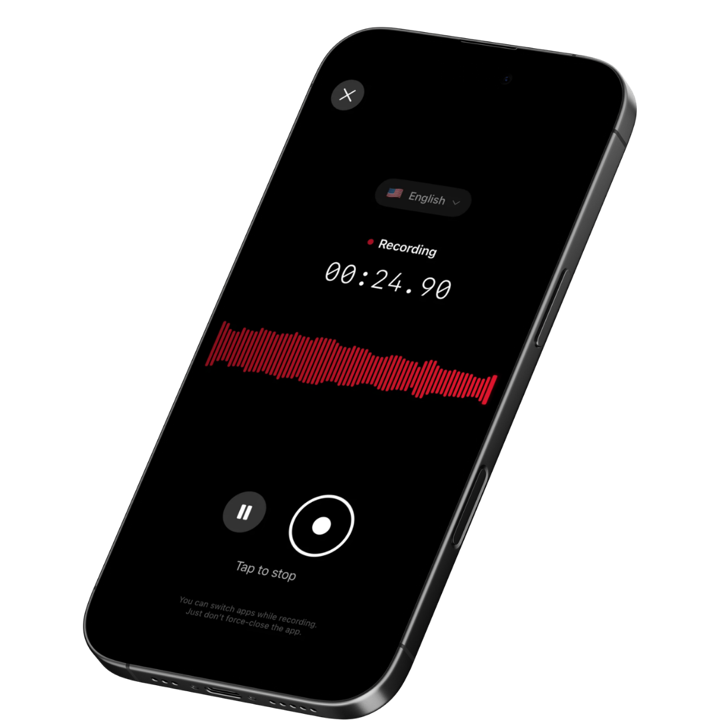
Voice recording with AI transcription creates a culture of shared context. Team members record updates, share meeting summaries, and capture decisions in their own words. Everyone stays connected without sitting through more meetings.
Download SpeakWise from the App Store and strengthen team culture with voice-based updates, AI transcription in 100+ languages, and automatic Notion sync that keeps everyone informed.
Join 10,000+ professionals who build strong workplace culture through shared context, not mandatory attendance.
Get SpeakWise Free
4.9-star App Store Rating | iOS Optimized

🎯 4.9★ App Store Rating | 📱 Built for iOS
