Workplace Cybersecurity Statistics 2026


Used by recruiters, executives, consultants, and more.
Workplace Cybersecurity Statistics 2026
88% of all cyber incidents are caused by human error. The global average cost of a data breach is $4.88 million. Phishing attacks have surged 1,265% since the rise of generative AI. Ransomware was involved in 44% of breaches in 2025, up from 32% the year before. These 16 statistics reveal why workplace cybersecurity has become every employee's responsibility, not just IT's.
Cybersecurity is no longer a technical problem contained within the IT department. It is a workplace-wide challenge that touches every employee, every device, and every digital interaction. The modern workplace - with its remote access, cloud applications, and AI tools - has expanded the attack surface far beyond what traditional security perimeters can protect. The human element is now the primary vulnerability, and the workplace is the primary battlefield.
This post presents 16 statistics on workplace cybersecurity in 2026. These numbers cover the cost of breaches, the role of human error, the rise of AI-powered threats, remote work security challenges, and what effective security training can achieve.
1. 88% of all cyber incidents are caused by human error
The primary cybersecurity vulnerability is not technology. It is people. Research shows that as many as 88% of all cyber incidents are caused by human errors - clicking phishing links, using weak passwords, misconfiguring systems, or sharing sensitive data through unsecured channels. This statistic reframes cybersecurity as a workplace behavior challenge rather than a purely technical one. The most sophisticated security infrastructure is undermined when a single employee clicks a malicious link.
Source: VikingCloud - 205 Cybersecurity Stats and Facts for 2026
2. The global average cost of a data breach is $4.88 million
Breaches are expensive and getting more so. Research shows that the global average cost of a data breach in 2024 was $4.88 million, representing a 10% increase from the previous year. U.S. organizations face even higher costs, with an average breach cost of $10.22 million. These costs include detection, response, notification, regulatory fines, legal fees, and the long-term reputational damage that reduces customer trust and business opportunities.
Source: SentinelOne - Key Cyber Security Statistics for 2026
3. Phishing attacks surged 1,265% since the rise of generative AI
Generative AI has supercharged phishing. Research shows that phishing attacks over the past year increased by 1,265%, attributed directly to the growth of generative AI tools that can create convincing, personalized phishing emails at scale. AI-generated phishing lures increase click-through rates by up to 54% compared to traditional phishing attempts. The sophistication of these attacks makes them harder for both employees and automated filters to detect.
Source: Spacelift - 80+ Cybersecurity Statistics for 2026
4. Ransomware was involved in 44% of breaches in 2025
Ransomware continues to grow as a threat vector. Research shows that ransomware was involved in 44% of breaches in 2025, up from approximately 32% in 2024. This significant year-over-year increase reflects the professionalization of ransomware operations and the emergence of "ransomware-as-a-service" models that lower the barrier for attackers. Annual global damage costs from ransomware are forecasted to reach $74 billion in 2026.
Source: Deepstrike - Ransomware Statistics 2026
5. 86% of organizations have experienced an AI-related phishing attack
AI is not just a defensive tool. It is an offensive weapon. Research shows that more than 86% of organizations have already encountered at least one AI-related phishing or social engineering incident. The number of reported AI-enabled cyber attacks rose 47% globally in 2025. Attackers use AI to craft personalized messages, impersonate trusted contacts, and generate deepfake audio or video. The arms race between AI-powered attacks and AI-powered defenses is now the defining dynamic of workplace cybersecurity.
Source: Keepnet Labs - Security Awareness Training Statistics
6. Phishing accounts for 42% of all global breaches
Phishing remains the most common attack vector worldwide. Research shows that phishing is involved in 42% of all global breaches, making it the single largest category of initial breach mechanism. With an average cost of $4.8 million per phishing-related breach, the financial exposure from this one attack type alone exceeds the total cybersecurity budget of most organizations. Every employee with an email address is a potential entry point.
Source: Fortinet - Top Cybersecurity Statistics: Facts, Stats and Breaches for 2025
7. Remote work breaches cost $1.07 million more than office breaches
The distributed workplace creates distributed security risks. Research shows that the average business cost for breaches linked to remote workers is $1.07 million higher than those involving on-site employees. Remote work introduces additional vulnerabilities: unsecured home networks, personal devices, and the reduced visibility that makes anomalous behavior harder to detect. As remote and hybrid work becomes permanent, organizations must invest in securing the distributed perimeter.
Source: ElectroIQ - Remote Work Cybersecurity Statistics and Facts 2026
8. 29% of ransomware attacks in 2025 came from home offices
Home offices have become a significant attack surface. Research shows that 29% of total ransomware attacks in 2025 originated from home office environments. Remote workers often operate on less-secured networks, use personal devices that lack enterprise security controls, and have fewer opportunities for in-person security guidance. The home office is now the frontier of enterprise security, and most organizations have not fully addressed its unique vulnerabilities.
Source: ElectroIQ - Remote Work Cybersecurity Statistics and Facts 2026
9. Global cybercrime costs are projected to reach $10.5 trillion annually
The scale of the cybercrime economy is staggering. Cybersecurity Ventures estimates that global cybercrime costs will reach $10.5 trillion annually by 2025, with projections reaching $23 trillion by 2027. If cybercrime were a country, its economy would be the third largest in the world. This figure includes direct losses, recovery costs, productivity disruption, and the defensive spending organizations undertake to prevent attacks.
Source: Cybersecurity Ventures - 2025 Cybersecurity Almanac
10. 52% of organizations have unfilled cybersecurity positions
The talent shortage compounds every other challenge. Research shows that 52% of organizations have unfilled cybersecurity positions, and 55% of security teams are understaffed. The gap between the number of threats and the number of professionals available to counter them continues to widen. This staffing crisis makes employee security awareness even more critical - when security teams cannot cover every risk, every employee must function as a first line of defense.
Source: SentinelOne - Key Cyber Security Statistics for 2026
11. Only 52% of organizations teach employees about phishing
Despite phishing being the top attack vector, training remains inadequate. Research shows that only 52% of organizations provide their employees with specific phishing awareness training. This means nearly half of organizations leave their employees without formal guidance on identifying and reporting the single most common cyber threat they face. The gap between the severity of the phishing threat and the investment in phishing training represents one of the most addressable weaknesses in workplace cybersecurity.
Source: Keepnet Labs - Security Awareness Training Statistics
12. Security awareness training reduces employee-driven incidents by up to 72%
Training works when organizations invest in it. Research shows that ongoing security awareness training can reduce the risk of employee-driven cyber incidents by up to 72%. Additionally, 89% of security leaders report measurable improvements to their organization's security posture after implementing training programs. Users who complete phishing awareness training are 30% less likely to click on a phishing link. The evidence for training effectiveness is robust. The challenge is getting organizations to invest consistently.
Source: Keepnet Labs - Security Awareness Training Statistics
13. Insider threats cost organizations $17.4 million annually
Not all cyber threats come from outside the organization. Research shows that insider threats - whether from negligent, compromised, or malicious employees - cost organizations an average of $17.4 million annually, up from $16.2 million in 2023. Only 17% of organizations reported zero insider incidents in 2024, down from 40% in 2023. The rise in insider incidents reflects both the expanded digital footprint of the workforce and the increasing sophistication of social engineering targeting insiders.
Source: Bright Defense - 250+ Insider Threat Statistics for 2026
14. 62% of insider incidents stem from negligent or compromised users
Insider threats are primarily accidental rather than malicious. Research shows that 62% of insider incidents are attributed to negligent or compromised users rather than intentional bad actors. Employees who accidentally share sensitive files, fall for phishing attacks, or misconfigure security settings create vulnerabilities without intent. This distinction is important because it means the solution is training and systems design, not surveillance and punishment.
Source: SpyCloud - 2025 Insider Threat Pulse Report
15. 54% of CISOs report increased credential theft from remote access tools
Remote access is a growing attack target. Research shows that 54% of CISOs report an increase in credential theft incidents related to remote access tools. As organizations deploy VPNs, remote desktop solutions, and cloud access platforms, each tool becomes a potential entry point for attackers. Credential theft from these tools provides attackers with legitimate access credentials, making their activities harder to detect and their potential damage greater.
Source: ElectroIQ - Remote Work Cybersecurity Statistics and Facts 2026
16. GenAI-integrated security programs will reduce employee-driven incidents by 40%
The future of workplace cybersecurity includes AI-powered defense. Gartner predicts that by 2026, enterprises combining generative AI with integrated platform-based architectures in security behavior and culture programs will experience 40% fewer employee-driven cybersecurity incidents. AI can personalize training, identify at-risk behaviors, simulate realistic phishing tests, and provide real-time guidance when employees encounter suspicious activity.
Source: VikingCloud - 205 Cybersecurity Stats and Facts for 2026
The Human Firewall: Every Employee Is a Security Perimeter
The statistics make one thing abundantly clear: technology alone cannot solve workplace cybersecurity. When 88% of incidents stem from human error and phishing remains the top attack vector, the most important security investment an organization can make is in its people. Every employee is either a vulnerability or a defense, depending on their awareness, training, and the systems that support them.
The challenge is compounded by remote work, which has distributed the security perimeter to hundreds or thousands of home offices. Traditional security models that assumed a centralized workplace with controlled network access are obsolete. The new model must secure people wherever they work, on whatever device they use, through whatever network they connect to.
The organizations with the strongest security postures in 2026 will not be those with the biggest technology budgets. They will be those that have built security awareness into the daily habits of every employee, supported by AI-powered tools that augment human judgment rather than replace it.
Cybersecurity is no longer an IT problem. It is a workplace culture problem, and the solution is every employee becoming a conscious participant in the organization's defense.---
Secure your conversations. Protect your information.
Workplace cybersecurity starts with how you capture and store sensitive information. Meeting notes in unsecured apps. Client details shared through unencrypted channels. Sensitive discussions recorded on personal devices without proper data handling. Every informal capture method is a potential security gap.
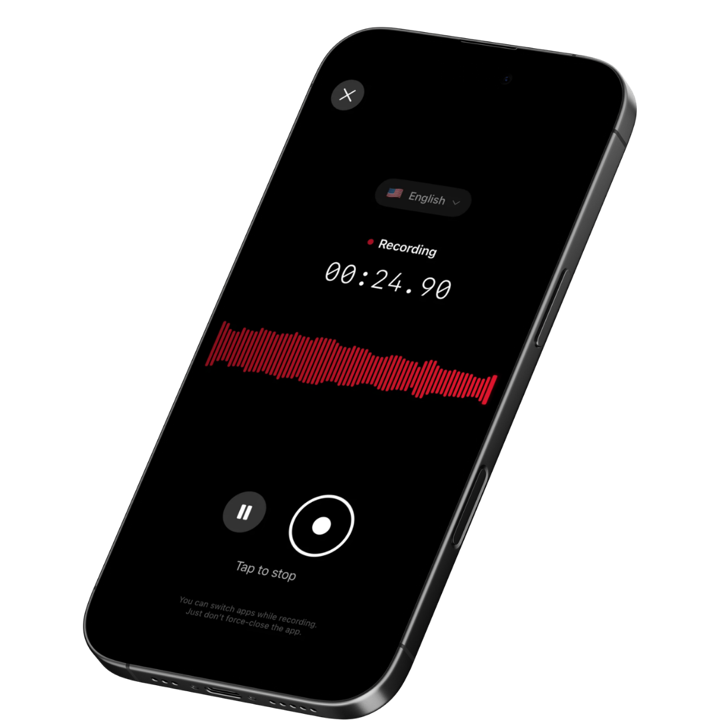
SpeakWise provides a secure, purpose-built environment for capturing workplace conversations. Enterprise-grade encryption, iOS-optimized security, and controlled data flow through Notion integration ensure that your voice notes and meeting recordings are protected by the same standards you apply to other sensitive business data.
Download SpeakWise from the App Store and capture your meetings and voice notes through a secure, purpose-built app instead of scattered tools with unknown security practices.
Join 10,000+ professionals who trust SpeakWise to handle their meeting recordings, client conversations, and sensitive voice notes with the security their work demands.
Get SpeakWise Free
4.9-star App Store Rating | iOS Optimized

🎯 4.9★ App Store Rating | 📱 Built for iOS
