Workplace Distraction Statistics 2026: Interruption Frequency, Focus Time, and the Attention Crisis
Used by recruiters, executives, consultants, and more.
Workplace Distraction Statistics 2026: Interruption Frequency, Focus Time, and the Attention Crisis
79% of workers get distracted within an hour of starting a task. The average employee faces 15 interruptions per hour. Distractions cost the U.S. economy an estimated $650 billion annually. With 59% unable to focus for even 30 minutes and 92% of employers calling it a major problem, these 18 statistics reveal why workplace distractions have become the single greatest obstacle to meaningful work.
We live in an age of infinite interruption. Between open-plan offices, smartphone notifications, Slack pings, email alerts, and coworker drop-ins, the modern worker navigates a constant gauntlet of attention thieves. The result isn't just lost time-it's a fundamental degradation of the quality of thinking that knowledge work demands. Deep analysis, creative problem-solving, and strategic planning all require sustained attention, and sustained attention is precisely what the modern workplace systematically destroys.
In this post, we'll explore 18 statistics that capture the true scope of workplace distractions in 2025 and 2026. These numbers reveal not just how often we're interrupted, but the cascading effects on output quality, stress levels, and organizational performance. Whether you're a leader designing workplace policies, a manager trying to protect your team's focus time, or a worker who hasn't had an uninterrupted hour in months, these data points offer both a diagnosis and a direction.
Key Workplace Distraction Statistics (2026)
- Workplace distraction statistics show that 79% of U.S. workers get distracted within an hour of starting a task, and nearly six in ten can't focus for even 30 minutes (Passive Secrets).
- The average worker faces 15 interruptions per hour-one every four minutes-throughout the workday (Passive Secrets).
- Recovering from a single interruption takes an average of 23 minutes and 15 seconds, according to Gloria Mark's landmark UC Irvine research (Gallup Business Journal).
- Distracted work costs the U.S. economy an estimated $650 billion every year in lost productivity (Passive Secrets).
- 98% of workers say they're interrupted at least three or four times a day, and half even more often (TeamStage).
- Global employee engagement fell to just 20% in 2025, its lowest level since 2020, costing the world economy an estimated $10 trillion in lost productivity (Gallup).
- 81% of employees say they feel regularly distracted while working in the office, compared with just 26% who say remote work decreases focus (Insightful).
1. 79% of workers get distracted within one hour of starting a task
The ability to sustain focus for even a modest period has become rare. Research shows that 79% of U.S. workers get distracted within one hour of beginning a task, with nearly six in ten (59%) unable to focus for even 30 minutes without being sidetracked. This means that for the vast majority of the workforce, deep work-the kind of sustained concentration that produces high-quality output-happens in fragments, if it happens at all. Source: Passive Secrets - Workplace Distraction Statistics 2025
2. The average worker experiences 15 interruptions per hour
The pace of workplace interruptions has reached an intensity that makes sustained focus nearly impossible. Research shows that the average worker faces approximately 15 interruptions per hour during the workday-one every four minutes. These interruptions range from push notifications and email alerts to coworker conversations and meeting invitations. At this frequency, workers exist in a state of perpetual partial attention, never fully engaged with any single task. Source: Passive Secrets - Workplace Distraction Statistics 2025
3. It takes 23 minutes and 15 seconds to refocus after each interruption
The true cost of each interruption extends far beyond the interruption itself. Landmark research by Gloria Mark at the University of California, Irvine, established that it takes an average of 23 minutes and 15 seconds to fully regain deep focus after a single disruption. The arithmetic is devastating: with interruptions arriving every four minutes and each requiring 23 minutes of recovery, the modern worker can never complete a single recovery cycle before the next interruption arrives. Full focus becomes mathematically impossible. Source: Gallup Business Journal - Too Many Interruptions at Work?
4. Workplace distractions cost the U.S. economy $650 billion annually
The economic toll of distracted work is staggering. Research estimates that workplace distractions cost U.S. companies approximately $650 billion per year in lost productivity-a figure that accounts for the cumulative effect of hundreds of millions of workers each losing hours daily to interruptions, context switching, and the slow recovery of shattered focus. This hidden tax on economic output dwarfs many other widely discussed business costs. Source: Passive Secrets - Workplace Distraction Statistics 2025
5. 92% of employers and managers view workplace distractions as a major problem
The distraction crisis isn't invisible to leadership-it's just unsolved. Research shows that 92% of employers and managers acknowledge workplace distractions as a significant problem affecting their organization's productivity. Despite this near-universal recognition, most organizations have failed to implement effective countermeasures, relying instead on individual discipline while maintaining the open offices, notification-heavy tools, and meeting cultures that create the distractions in the first place. Source: Insightful - Lost Focus Report 2025
6. 98% of people are interrupted at least 3-4 times per day, with half interrupted more frequently
Interruption-free work has become virtually nonexistent. Research shows that 98% of workers say they are interrupted at least three or four times per day, with half reporting even higher interruption frequency. The remaining 2% who claim uninterrupted workdays are either working in highly unusual environments or aren't counting the digital interruptions that most workers have normalized to the point of invisibility. Source: TeamStage - Workplace Distractions Statistics
7. Colleague interruptions are the most common workplace distraction
Despite the focus on digital distractions, the most common source of workplace interruptions remains decidedly analog. Research from Insightful's Lost Focus Report found that 71% of workers name coworkers as the main reason they lose track of thought and can't focus on work-more than phones, email, or social media. Most employees agree that a colleague dropping by to chat, ask a question, or share an update-however well-intentioned-breaks concentration more effectively than any notification. Open-plan offices amplify this by eliminating the physical barriers that once protected focused work. Source: Insightful - Lost Focus Report 2025
8. Smartphone notifications distract even when workers don't respond to them
A notification costs attention even when it goes unanswered. Research published in PMC found that smartphone notifications can significantly distract individuals even when they choose not to respond-a phenomenon researchers call "attentional capture." The notification triggers an automatic orienting response that diverts cognitive resources from the current task, even if the worker successfully resists picking up the phone. Knowing a message is waiting creates a cognitive itch that degrades performance on the primary task. Source: PMC - Phone in the Room, Mind on the Roam
9. 80% of the global workforce lacks the time or energy to do their job well
The distraction crisis is a key contributor to what Microsoft calls the "capacity gap." Their 2025 Work Trend Index found that 80% of the global workforce-both employees and leaders-report lacking the time or energy to do their job effectively. While distraction isn't the only cause, it's a primary one: when interruptions consume hours of productive capacity each day, the remaining time simply isn't sufficient for the work that needs to be done. Source: Microsoft Work Trend Index 2025
10. Remote workers are more focused than office workers
One of the most significant findings in distraction research challenges the assumption that remote workers are more distracted. Research shows that 54% of employers say remote work has increased employee productivity, while just 26% say it decreases focus. Employees agree: 40% report that remote work enhances their ability to concentrate, and a striking 81% say they feel regularly distracted while working in the office-suggesting that the office environment itself, with its open plans and interruption culture, is a major distraction source. Source: Insightful - Lost Focus Report 2025
11. Workers lose an average of 2.1 hours per day to distractions
When all distraction sources are combined, the daily toll is sobering. Research by Basex found that the average information worker loses 2.1 hours of productivity every day to interruptions and distractions-off-task browsing, unplanned conversations, and notification responses all included. That's more than 10 hours per week, over 520 hours per year, or roughly 13 full working weeks lost annually to unplanned diversions from the work that actually matters. For a company with 1,000 employees, that's the equivalent of losing 250 full-time workers to distraction alone. Source: NBC News - Blunt the E-mail Interruption Assault
12. Over three-quarters of employees are distracted by notifications during work
Digital notifications have become a pervasive attention thief. Research finds that over 75% of employees report being regularly distracted by notifications during the workday-from email, chat, social media, and mobile apps. The average smartphone user receives 80 to 100 notifications per day, and even in workplaces that restrict personal phone use, work-related notifications from Slack, Teams, email, and project management tools create their own constant stream of interruptions. Source: People Management - Notifications in the Workplace
13. 56% of workers say social media is a top distraction
Despite awareness of its impact, social media remains a significant workplace distraction. Research shows that 56% of workers identify social media as one of their top distractions during work hours. The design of platforms like Instagram, TikTok, and X deliberately exploits the same dopamine pathways that drive notification checking, making it particularly difficult to resist during the low-engagement moments that characterize distraction-heavy work environments. Source: Passive Secrets - Workplace Distraction Statistics 2025
14. Multitasking increases employee error rates by 50%
Distractions don't just waste time-they degrade quality. Research by Steelcase found that multitasking increases the error rates made by employees by 50%, and that the same work takes twice as long to complete. Because every interruption forces exactly this kind of task-switching, the finding reaches well beyond deliberate multitasking. For knowledge workers whose output depends on accuracy-financial analysts, software engineers, medical professionals, legal teams-a 50% higher error rate translates directly into rework, risk, and reduced client confidence. The cost of distraction isn't just lost time; it's the inferior quality of whatever gets produced in fragmented attention. Source: HRZone - Multitasking Can Increase Error Rates by 50%
15. The average person checks their phone 96 times per day-once every 10 minutes
Smartphone usage during work hours represents a constant drain on attention. Research shows the average person checks their phone 96 times per day, or approximately once every 10 minutes during waking hours. Even when each check lasts only seconds, the cumulative effect of these micro-interruptions fragments attention throughout the day. The phone sits at the intersection of work notifications and personal distractions, making it the single most persistent source of attention fragmentation. Source: Asurion - Americans Check Their Phones 96 Times a Day
16. Global employee engagement fell to 20% in 2025, the lowest since 2020
The distraction crisis doesn't exist in isolation from a broader engagement collapse. Gallup's State of the Global Workplace 2026 report found that global employee engagement fell to just 20% in 2025, its lowest level since 2020, and estimates that this disengagement costs the world economy $10 trillion in lost productivity annually. Disengaged employees are, almost by definition, more susceptible to interruption: without a compelling reason to stay locked onto the task in front of them, every notification, conversation, and open browser tab becomes an easier excuse to look away. Source: Gallup - State of the Global Workplace 2026
17. 42% of workers check personal devices up to five times a day during work
Personal phone use compounds the interruptions that already arrive from meetings, chat apps, and coworkers. Insightful's 2025 Lost Focus Report found that more than 42% of employees check their devices for personal reasons up to five times a day, while another 37% reach for their phones five to ten times a day-meaning a majority of the workforce is voluntarily fragmenting its own attention on top of the interruptions imposed by the workplace itself. Source: Insightful - Lost Focus Report 2025
18. 77% of hybrid workers lose time to meeting-related technical difficulties
Even the tools meant to support hybrid work create their own drag on focus. Owl Labs' 2025 State of Hybrid Work report found that nearly 8 in 10 workers (77%) say they've lost time to technical difficulties during meetings-a cost the report calls the "meeting tax"-with more than a quarter losing 10 or more minutes per meeting to setup issues alone. What looks like a minor technical hiccup adds up to a substantial, recurring drain on the workday. Source: Owl Labs - State of Hybrid Work 2025
The Distraction Paradox: Connected but Unfocused
The statistics reveal a workplace that has optimized for accessibility at the expense of depth. Every tool, office layout, and communication norm is designed to make people reachable-and the result is a workforce that can be reached but can barely think. We've created environments where answering a Slack message takes priority over finishing a thought, where an open door signals collaboration but invites interruption, and where the busiest people are often the least productive.
The root cause isn't individual discipline-it's environmental design. The same open offices, notification-heavy tools, and meeting-centric cultures that create distractions are choices made by organizations, not individuals. Workers can't focus their way out of an environment engineered to prevent focus.
The path forward requires treating attention as an organizational resource, not a personal responsibility. This means redesigning offices with focus zones, implementing notification-free periods, batching meetings to protect deep work blocks, and adopting tools that capture information asynchronously so workers can engage on their own schedule rather than every time a ping arrives.
The question isn't whether to eliminate distractions-that's impossible. It's whether to treat your team's attention as the finite, precious resource the data proves it is.---
Ready to capture your best thinking without interruption?
The irony of workplace distractions is that they often stem from important information arriving at the wrong time. A colleague's question is valid-it just shouldn't interrupt your deep work. A meeting decision matters-it just shouldn't require your live presence.
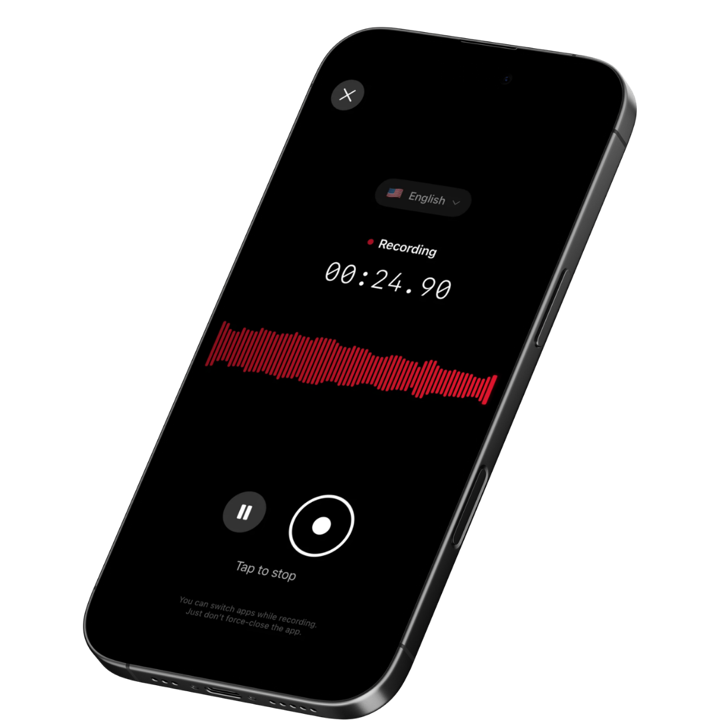
Voice recording lets you capture information on your terms. Record a thought when inspiration strikes with an AI voice memo app, capture a meeting without attending it, or dictate notes without opening another app-all without breaking your focus.
Download SpeakWise from the App Store and discover how one-tap recording, AI transcription, intelligent summaries, and Notion integration can help you protect your focus while never missing what matters.
Join 10,000+ professionals who've discovered that the best way to fight distractions isn't more discipline-it's better information capture.
Get SpeakWise Free →
4.9★ App Store Rating | iOS Optimized

🎯 4.9★ App Store Rating | 📱 Built for iOS
