Workplace Diversity Statistics 2026


Used by recruiters, executives, consultants, and more.
Workplace Diversity Statistics 2026
Companies in the top quartile for diversity are 36% more profitable than their peers. Yet women hold only 27.4% of C-suite roles, and the gender pay gap persists at 85 cents on the dollar. 53% of employees say diversity matters when evaluating job offers, rising to 77% among Gen Z. These 16 statistics reveal both the proven business case for workplace diversity and the persistent gaps that remain.
Workplace diversity has never been more debated or more measured. The research linking diversity to better business outcomes continues to strengthen, with McKinsey's latest data showing the strongest case since they began tracking. At the same time, political shifts and policy changes have created new uncertainties around DEI programs. The data cuts through the debate with clear findings.
This post covers 16 statistics on diversity's business impact, representation gaps, pay equity, and employee attitudes. Whether you lead DEI initiatives, make hiring decisions, or want to understand where your organization stands relative to the data, these numbers provide the factual baseline.
1. Top-quartile diverse companies are 36% more profitable
McKinsey's research on diversity and financial performance found that companies in the top quartile for ethnic and cultural diversity outperform those in the bottom quartile by 36% in profitability. For gender diversity on executive teams, top-quartile companies are 25% more likely to have above-average profitability. McKinsey notes that the business case is the strongest it has ever been since they began tracking this relationship. The profitability gap reflects diverse teams' ability to understand broader customer bases, make better decisions, and avoid groupthink.
Source: McKinsey - Diversity Matters Even More
2. Women hold only 27.4% of C-suite positions
Despite representing 50.8% of the US workforce, women hold only 27.4% of C-suite positions. People of color hold 18.3% of C-suite roles. The pipeline problem starts much earlier: women's promotion rates dropped from 87 per 100 men in 2023 to just 81 per 100 men in 2025. This "broken rung" at the first step to management is where the representation gap begins. Each level of the corporate ladder loses women at a higher rate than men, creating the dramatic underrepresentation visible at the top. Fixing the C-suite gap requires fixing the promotion gap at every level below it.
Source: Select Software Reviews - Workplace Diversity Statistics 2026
3. Women earn 85 cents for every dollar men earn
In 2024, women earned an average of 85% of what men earned, according to Pew Research Center's analysis of median hourly earnings. Globally, the gap is wider: women earn about 23% less than their male counterparts. The US gender pay gap has narrowed slightly over two decades but progress has been inconsistent. The gap varies by race and ethnicity, with Hispanic women earning 60.6 cents and American Indian and Alaska Native women earning 57.9 cents for every dollar earned by white non-Hispanic men. The headline number of 85 cents masks much larger disparities for women of color.
Source: Pew Research Center - Gender Pay Gap 2025
4. 53% of employees say diversity matters when evaluating job offers
A survey found that 53% of employees in the United States say a diverse and inclusive workplace is important when evaluating job offers. The number rises dramatically by generation: 77% of Gen Z workers and 63% of Millennials indicate that DEI greatly influences their choice of workplace. As these generations become the majority of the workforce, organizations without visible diversity commitments will face increasing difficulty attracting talent. Diversity is not just a moral or business imperative. It is a talent acquisition requirement for companies competing for younger workers.
Source: Engagedly - DEI Statistics 2025
5. Diverse organizations generate 45% of revenue from innovation
BCG research found that organizations with above-average diversity generate 45% of revenue from innovation, compared to just 26% in less diverse firms. Cognitive diversity enhances team innovation by up to 20%. The innovation advantage comes from diverse perspectives producing more creative solutions, identifying blind spots, and anticipating shifts in consumer needs. In industries where innovation drives growth, the 19-point revenue gap between diverse and less diverse firms represents a massive competitive advantage that compounds over time.
Source: BCG / Include Consulting - Business Benefits of DEI 2025
6. Only 8.8% of Fortune 500 CEOs are women
Female representation at the highest level of corporate leadership remains strikingly low. Only 8.8% of professionals on the Future 500 CEO list are women. In the Fortune Global 500, women hold just 34 CEO positions. While 61.5% of Fortune Global 500 companies now have three or more women on their boards, the CEO gap persists. Board representation has improved faster than executive leadership, suggesting that the pipeline to the very top remains constrained. The 8.8% figure has improved from 5% a decade ago, but progress at this pace will take decades to reach parity.
Source: Second Talent - Workplace Diversity Statistics 2026
7. 77% of Gen Z says DEI influences their workplace choice
Among Gen Z workers, 77% say that diversity, equity, and inclusion significantly influences their choice of workplace. This is the highest rate of any generation and signals a shift in what younger workers expect from employers. Gen Z is also the most racially and ethnically diverse generation in US history, making diversity not just a value but a lived experience. Companies that retreat from DEI commitments risk alienating the generation that will comprise the majority of entry-level and early-career talent over the next decade.
Source: Engagedly - DEI Statistics 2025
8. Seven in eight companies plan to maintain or expand DEI budgets
A January 2025 survey of 1,000 companies with existing DEI programs found that seven in eight plan to maintain or expand their DEI budgets. This finding challenges the narrative that companies are broadly abandoning DEI efforts. While some high-profile companies have scaled back public DEI messaging, the majority are maintaining investment levels. The disconnect between public rhetoric and private spending suggests that companies understand the business case even when the political environment makes public advocacy more complex.
Source: Resume.org / Traliant - DEI Company Survey 2025
9. The US labor force is 75.6% white, reflecting gradual diversification
As of August 2025, the US labor force is 75.6% white, a slight decline from 77% in 2022. The workforce is 12.8% Black or African American, 18.8% Hispanic or Latino, and 6.9% Asian. These demographic shifts are gradual but directional. The labor force is becoming more diverse every year as older, less diverse cohorts retire and younger, more diverse generations enter. For organizations, this means that building inclusive cultures is not preparing for a future workforce. It is serving the current one.
Source: Select Software Reviews - Workplace Diversity Statistics 2026
10. Male candidates are twice as likely to get hired for the same role
Research shows that male candidates are twice as likely to get hired for a role as female candidates with comparable qualifications. Additionally, 40% of professionals agree there is bias against women in the workplace. Hiring bias is one of the most documented and persistent barriers to workplace diversity. It operates through resume screening, interview evaluation, and reference checking at every stage of the hiring process. Organizations that implement structured interviews, blind resume reviews, and standardized evaluation criteria see significant reductions in gender bias.
Source: Qureos - Workplace Diversity Statistics 2025
11. Women's promotion rates dropped to 81 per 100 men in 2025
The promotion rate for women fell from 87 per 100 men in 2023 to just 81 per 100 men in 2025. This decline represents a reversal of progress and disproportionately affects the pipeline to leadership. The "broken rung" at the first promotion to manager means fewer women enter the management track. Each subsequent promotion compounds the gap. By the time organizations look at their C-suite, the underrepresentation traces back to this initial promotion disparity. Fixing the broken rung is the single most impactful intervention for improving gender diversity at senior levels.
Source: Payscale - Gender Pay Gap Report 2025
12. Companies with diverse leadership show 31% higher likelihood of outperformance
Companies in the top quartile for diversity show a 31% higher likelihood of outperforming their industry medians. This finding spans both gender and ethnic diversity at the leadership level. The outperformance is measured across profitability, revenue growth, and value creation. The 31% likelihood premium is a probability statement: diverse companies are not guaranteed to outperform, but the odds are significantly in their favor. Over a portfolio of companies and years, this probability translates into measurable financial outperformance.
Source: McKinsey - Diversity Wins
13. Hispanic women earn 60.6 cents for every dollar earned by white men
The gender pay gap is significantly wider when race and ethnicity are factored in. Hispanic women in the US earned just 60.6 cents for every dollar earned by white non-Hispanic men. American Indian and Alaska Native women earned 57.9 cents on the dollar. Black women earned approximately 67 cents. These intersectional pay gaps reveal that the headline gender pay gap of 85 cents obscures much deeper disparities. For women of color, the pay gap is not just about gender. It is the compounding effect of gender and racial bias operating simultaneously.
Source: IWPR - Equal Pay 2025
14. 61.5% of Fortune Global 500 companies have three or more women on their boards
Board diversity has improved measurably. 61.5% of Fortune Global 500 companies now have three or more women on their boards of directors. Women serve as Board Chairs for 31 companies in this group. While board representation still falls short of parity, the progress is notable. Research suggests that three is the threshold at which women board members begin to influence board dynamics and decision-making rather than functioning as isolated voices. Reaching 61.5% above this threshold represents meaningful structural change at the governance level.
Source: Second Talent - Workplace Diversity Statistics 2026
15. Cognitive diversity enhances team innovation by up to 20%
Research shows that cognitive diversity, the inclusion of people who think differently and approach problems from varied perspectives, enhances team innovation by up to 20%. Cognitive diversity goes beyond demographic diversity to include differences in thinking styles, problem-solving approaches, and professional backgrounds. Teams with high cognitive diversity generate more ideas, evaluate them more rigorously, and arrive at better solutions. The 20% innovation enhancement suggests that diversity's business value extends beyond representation into the fundamental quality of organizational thinking.
Source: Include Consulting - Business Benefits of DEI 2025
16. The forecast for achieving global gender pay equity is growing bleaker
The Institute for Women's Policy Research reports that the forecast for achieving pay equity has worsened. Gender gaps increased rather than decreased in recent data, and at current rates, pay equity for all women is decades away. For Hispanic women, the timeline extends to 2155. For Black women, to 2124. These projections assume continued gradual progress, which is not guaranteed. Policy changes, economic conditions, and organizational priorities all affect the pace. The bleaker forecast suggests that without deliberate acceleration, pay equity within the careers of current workers is unlikely.
Source: IWPR - Equal Pay 2025
The Diversity Data: Proven Value, Persistent Gaps
These statistics present a clear but frustrating picture. The business case for diversity has never been stronger. Top-quartile diverse companies are 36% more profitable, generate 45% of revenue from innovation, and show 31% higher likelihood of outperformance. The evidence is overwhelming and consistent across research methodologies, industries, and geographies.
Yet the gaps persist. Women hold 27.4% of C-suite roles despite being 50.8% of the workforce. The gender pay gap sits at 85 cents and widens dramatically for women of color. Promotion rates for women are declining, not improving. The broken rung at the first step to management continues to filter women out of the leadership pipeline. Progress is happening, but it is slow, uneven, and in some areas reversing.
The disconnect between proven value and persistent gaps suggests that awareness is not the bottleneck. Organizations know diversity matters. Seven in eight are maintaining or expanding DEI budgets. The bottleneck is implementation. Structured hiring processes, standardized promotion criteria, pay equity audits, and inclusive leadership development are the interventions that close gaps. Organizations that move from intention to systematic action will capture the diversity advantage. Those that rely on general goodwill will continue to see the same patterns in their data year after year.
Diversity is not a debate. It is a measured competitive advantage. The question is whether organizations will do the systematic work required to capture it.---
Create space for every voice with better meeting capture
The diversity statistics show that inclusive teams innovate more and perform better. But inclusion in meetings requires that every voice is heard, every contribution is captured, and every idea gets equal consideration. In practice, dominant voices tend to fill the space while quieter contributors get overlooked. Ideas from underrepresented team members are more likely to be forgotten or misattributed.
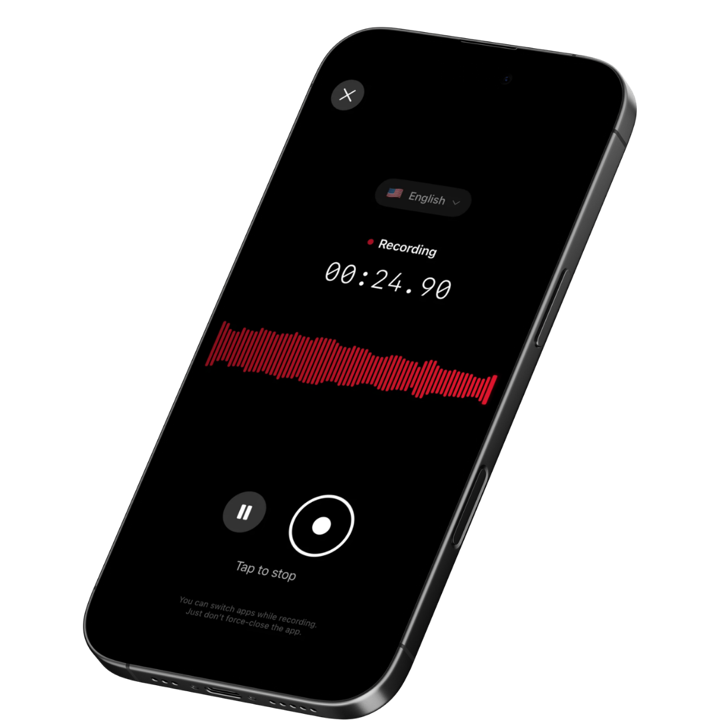
Speakwise levels the field by capturing everything said in a meeting with AI-powered transcription. Every contribution is documented, attributed, and searchable. Summaries capture all ideas, not just the loudest ones. Action items reflect the full conversation. When meetings are recorded and transcribed, the record speaks for itself, ensuring that good ideas get recognized regardless of who said them.
Download Speakwise from the App Store and ensure every voice in your meetings is captured, documented, and valued.
Join 10,000+ professionals who use AI-powered voice notes to create inclusive meeting records that capture every contribution.
Get Speakwise Free
4.9-star App Store Rating | iOS Optimized

🎯 4.9★ App Store Rating | 📱 Built for iOS
