Workplace Ergonomics Statistics 2026: Injury and ROI


Used by recruiters, executives, consultants, and more.
Workplace Ergonomics Statistics 2026: Injury and ROI
80.8% of office workers report musculoskeletal disorders, with neck pain (58.6%) and lower back pain (52.5%) as the most common complaints. Ergonomic programs reduce MSDs by 59% and lost workdays by 75%. The global ergonomic products market is projected to reach $56.6 billion in 2025. And 70% of workers say their workplace has never been ergonomically assessed. These 16 statistics show why ergonomics is both a massive problem and a solvable one.
Workplace ergonomics has shifted from a niche occupational health concern to a mainstream business issue. With the rise of remote work, millions of employees now work from home setups that were never designed for sustained use. In offices, the prevalence of musculoskeletal disorders among desk workers remains stubbornly high. The financial costs to businesses - in lost productivity, medical claims, and absenteeism - run into billions annually.
This post covers 16 statistics that define workplace ergonomics in 2026. From injury prevalence and economic costs to intervention effectiveness and market growth, these numbers provide the evidence base for investing in ergonomic solutions that protect worker health and improve organizational performance.
1. 80.8% of office workers report work-related musculoskeletal disorders
Musculoskeletal disorders (MSDs) are the dominant health complaint among office workers. A recent study published in Nature's Scientific Reports found an 80.8% prevalence of work-related MSDs among office workers. The most commonly affected areas are the neck (58.6%), lower back (52.5%), and shoulders (37.4%). This near-universal prevalence means that MSDs are not an outlier problem affecting a few unfortunate workers. They are the default physical experience of desk-based work.
Source: Nature Scientific Reports - Musculoskeletal Disorders Among Office Workers
2. Ergonomic programs reduce musculoskeletal disorders by 59%
The effectiveness of ergonomic interventions is well documented. Structured ergonomics programs reduce MSDs by 59% and cut lost workdays by 75%. These are not marginal improvements. A 59% reduction in the condition affecting 80% of office workers translates to a massive improvement in workforce health. The 75% reduction in lost workdays directly impacts productivity and bottom-line costs. Few workplace interventions deliver this combination of health improvement and business value.
Source: Market.biz - Workplace Ergonomics Statistics 2025
3. 70% of workers say their workplace has never been ergonomically assessed
Despite the high prevalence of MSDs, most workplaces have never addressed the root cause. 70% of workers report that their workplace has never been ergonomically calculated or assessed. This gap between the scale of the problem and the response to it represents an enormous missed opportunity. Many office workers experience daily pain that a simple workstation assessment and adjustment could alleviate. The barrier is not cost or complexity. It is awareness and organizational priority.
Source: Nature Scientific Reports - Musculoskeletal Disorders Among Office Workers
4. The global ergonomic products market is projected to reach $56.6 billion in 2025
Investment in ergonomic solutions is growing rapidly. The global ergonomic products market is projected to reach approximately $56.6 billion in 2025, spanning chairs, desks, keyboards, monitors, and accessories. The ergonomic chair market alone was valued at $10.4 billion in 2024 and is projected to reach $19.12 billion by 2033. These market figures reflect growing recognition that workplace comfort and health are not luxuries. They are business essentials that affect productivity, retention, and healthcare costs.
Source: Verified Market Reports - Ergonomic Products Market 2033
5. The mean ROSA score of 5.40 indicates suboptimal workstation ergonomics across offices
The Rapid Office Strain Assessment (ROSA) is a standardized tool for evaluating workstation ergonomics. A recent study found a mean ROSA score of 5.40 among office workers, with a standard deviation of 1.27. Scores above 5 indicate a need for immediate ergonomic intervention. The fact that the average score exceeds this threshold means that the typical office workstation is ergonomically inadequate. Most office workers are operating in conditions that ergonomic experts would flag for corrective action.
Source: Nature Scientific Reports - Musculoskeletal Disorders Among Office Workers
6. Ergonomic-related injuries cost U.S. businesses more than $20 billion annually
The financial burden of poor ergonomics is substantial. According to the Bureau of Labor Statistics, ergonomic-related injuries cost U.S. businesses more than $20 billion annually in medical expenses, lost productivity, and workers' compensation claims. For individual companies, the cost of a single ergonomic injury claim can run from $5,000 to $50,000 or more depending on severity. The cumulative $20 billion figure makes poor ergonomics one of the largest preventable cost categories in American business.
Source: U.S. Bureau of Labor Statistics - Occupational Injuries and Illnesses: MSDs
7. 9% of U.S. adults experienced a repetitive strain injury in the past three months
Ergonomic injuries are not confined to specific industries. The National Center for Health Statistics found that 9% of all U.S. adults experienced a repetitive strain injury (RSI) in the past three months. Among those with RSIs, 44.2% had their normal activities limited for at least 24 hours due to the injury. When scaled to the adult population, 9% represents tens of millions of people dealing with work-related strain injuries at any given time. The impact on national productivity is significant.
Source: NCBI - Ergonomics StatPearls
8. Excellent ergonomic programs boost productivity by an additional 25%
Beyond injury prevention, ergonomics delivers direct productivity gains. Research shows that excellent ergonomic programs produce a 25% increase in productivity on top of the injury-reduction benefits. When workers are comfortable, properly positioned, and free from pain, they can focus more effectively and work for longer sustained periods without fatigue. The productivity uplift from ergonomic improvements often exceeds the investment cost within months, making it one of the highest-ROI workplace investments available.
Source: Market.biz - Workplace Ergonomics Statistics 2025
9. 71.9% of office workers in higher education report work-related MSDs
The MSD problem is consistent across sectors. A cross-sectional study of office workers in higher education institutions found a 71.9% prevalence rate of work-related musculoskeletal disorders. This sector-specific figure aligns with the broader 80.8% rate found in general office populations. The consistency across different studies and settings reinforces that MSDs are a systemic feature of desk work, not a problem unique to any particular industry or organization.
Source: PMC - Work-Related Musculoskeletal Disorders Among Office Workers in Higher Education
10. Companies implementing ergonomic solutions reduce employee injuries by up to 40%
Structured ergonomic implementations deliver measurable injury reduction. Companies that adopt comprehensive ergonomics processes report a reduction in employee injuries of up to 40%, leading to lower workers' compensation costs and improved employee satisfaction. The 40% reduction figure comes from organizations that implement systematic assessments, provide ergonomic equipment, and train employees on proper workstation setup. Partial efforts produce partial results. Full-program approaches deliver the strongest outcomes.
Source: Business Research Insights - Ergonomic Consulting Market 2035
11. The ergonomic consulting market is valued at $1.52 billion in 2025
Professional ergonomic consulting has become a sizeable industry. The global market is valued at $1.52 billion in 2025 and projected to reach $3.5 billion by 2035, growing at 8.2% CAGR. This growth reflects increasing corporate demand for expert ergonomic assessment, particularly as organizations manage hybrid workforces with both office and home workstations. The expansion of remote work has effectively doubled the number of workstations that need ergonomic attention.
Source: Business Research Insights - Ergonomic Consulting Market 2035
12. 62% of enterprises plan ergonomic upgrades by 2026
Corporate commitment to ergonomic investment is growing. 62% of enterprises are planning ergonomic upgrades by 2026. This planned investment spans office furniture, workstation assessment programs, and employee wellness initiatives. The high percentage of enterprises planning upgrades suggests that ergonomics is moving from a reactive response to injury claims to a proactive investment in workplace quality. Organizations recognize that preventing problems is cheaper than treating them.
Source: Business Research Insights - Ergonomic Consulting Market 2035
13. Organizations report 20-30% efficiency improvements from ergonomic solutions
The productivity case for ergonomics is consistent across studies. Organizations implementing ergonomic solutions report 20-30% improvements in efficiency and employee satisfaction. These gains come from multiple sources: reduced pain-related distraction, fewer breaks needed for discomfort, improved focus from comfortable positioning, and reduced absenteeism due to MSD-related health issues. The efficiency improvements compound over time as chronic conditions that would have developed are prevented entirely.
Source: Business Research Insights - Ergonomic Consulting Market 2035
14. Excellent ergonomic programs reduce employee costs by 67%
The cost reduction from comprehensive ergonomic programs is dramatic. Research shows that excellent programs can reduce employee-related costs by 67%. These savings come from lower workers' compensation claims, reduced medical insurance utilization, decreased absenteeism, and higher retention rates. For organizations spending millions on health-related employee costs, a 67% reduction through ergonomic investment offers returns that far exceed the implementation cost.
Source: Market.biz - Workplace Ergonomics Statistics 2025
15. Corporate spending on workplace well-being surpassed $30 billion in 2024
Ergonomics is part of a broader corporate wellness investment trend. Corporate spending on workplace well-being surpassed $30 billion globally in 2024, encompassing ergonomic equipment, wellness programs, mental health support, and environmental design. The growth in wellness spending reflects evolving expectations. Employees increasingly view physical comfort and health support as standard benefits, not perks. Companies that fall behind on workplace well-being risk losing talent to competitors who invest more.
Source: Business Research Insights - Ergonomic Consulting Market 2035
16. A systematic review confirms ergonomic interventions effectively reduce work-related MSD pain
A 2025 systematic review and meta-analysis published in the Journal of Clinical Medicine confirmed that ergonomic interventions are effective at reducing work-related musculoskeletal pain. The review examined multiple intervention types including workstation adjustments, ergonomic equipment, training programs, and exercise-based approaches. All showed positive effects, with combined approaches delivering the strongest outcomes. This meta-analytic confirmation provides the highest level of evidence supporting ergonomic investment.
The Ergonomics Gap: A Proven Solution That Most Workplaces Ignore
These 16 statistics reveal a striking disconnect. 80.8% of office workers experience musculoskeletal disorders. Ergonomic interventions reduce MSDs by 59% and boost productivity by 25%. The evidence is overwhelming. Yet 70% of workplaces have never been ergonomically assessed. The solution exists. It works. Most organizations simply have not implemented it.
The financial case is equally compelling. Ergonomic-related injuries cost U.S. businesses $20 billion annually. Excellent programs cut employee costs by 67%. The ROI math on ergonomic investment is among the most favorable in workplace health. Organizations that invest save money. Those that do not pay through injury claims, lost productivity, and higher turnover.
The remote work expansion has added urgency. Millions of employees now work from improvised home setups that would fail any ergonomic assessment. The 62% of enterprises planning ergonomic upgrades by 2026 are responding to this reality. But for the remaining 38%, the combination of high MSD prevalence and absent ergonomic support will continue generating preventable pain, preventable costs, and preventable productivity losses.
Workplace ergonomics is one of the rare problems where the solution is proven, affordable, and delivers returns that far exceed its cost. The only barrier is organizational action.---
Reduce Screen Time and Desk Time With Voice-First Capture
Ergonomic problems get worse with more time spent typing and staring at screens. Every additional hour of keyboard use adds to the repetitive strain that causes 80% of office workers to experience musculoskeletal pain. Reducing the amount of typing in your workday directly reduces ergonomic risk.
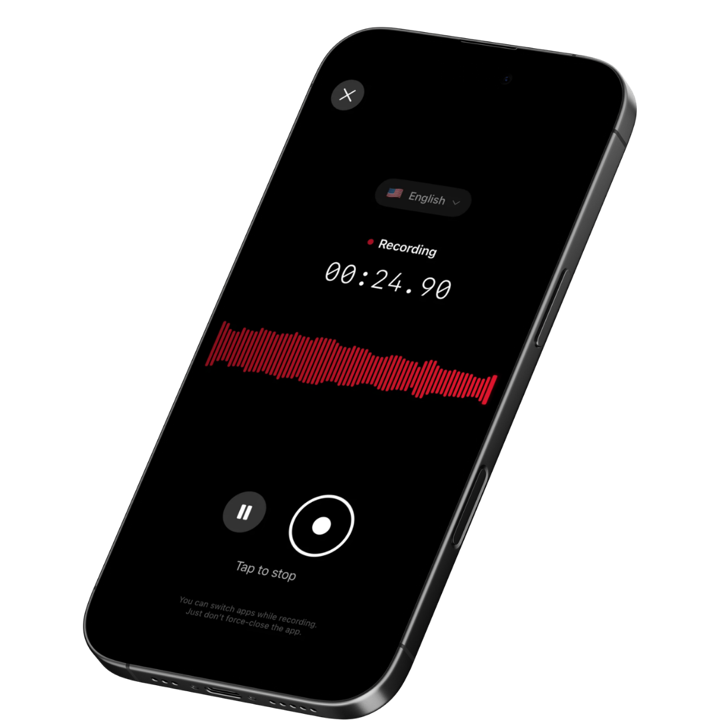
Voice capture replaces typing with speaking. Dictate notes, capture meeting summaries, and record ideas using your voice instead of your keyboard. Speaking is 3x faster than typing, requires zero repetitive hand movements, and lets you change posture while working. AI transcription handles the conversion to text automatically, with summaries and action items organized for you.
Download Speakwise from the App Store and reduce your keyboard time while capturing more - speak your notes, summaries, and ideas instead of typing them.
Join 10,000+ professionals who protect their body and boost their productivity with voice-first capture.
Get Speakwise Free
4.9-star App Store Rating | iOS Optimized

🎯 4.9★ App Store Rating | 📱 Built for iOS
