Workplace Flexibility Statistics 2026


Used by recruiters, executives, consultants, and more.
Workplace Flexibility Statistics 2026
88% of employers now offer some form of hybrid work. 98% of professionals want to work remotely at least part-time for the rest of their careers. Remote workers report 24% higher job satisfaction than fully on-site peers. Yet 40% of employees would start job hunting if flexible work were removed. These 15 statistics reveal why workplace flexibility has shifted from a pandemic perk to a permanent expectation that shapes hiring, retention, and productivity.
Flexible work is no longer an experiment. After five years of data, organizations have enough evidence to know that flexibility works. The challenge has shifted from "should we offer flexibility?" to "how do we structure it well?" Companies that still treat flexibility as a temporary concession are losing talent to those that treat it as a strategic advantage.
This post covers 15 statistics that define the state of workplace flexibility in 2026. Whether you manage a hybrid team, lead a remote-first company, or are deciding your own work arrangement, these numbers provide the context you need to make informed decisions.
1. 88% of employers provide some form of hybrid work option
The vast majority of employers have embraced flexibility. According to Robert Half's 2026 research, 88% of employers now provide some hybrid work options, with 25% offering hybrid arrangements to all employees. This near-universal adoption signals that hybrid work has moved beyond early-adopter territory into standard practice. Companies that refuse to offer any flexibility now stand out as exceptions rather than the norm.
Source: Robert Half - Remote Work Statistics and Trends 2026
2. 98% of professionals want remote work at least part-time
Worker preference for flexibility is nearly unanimous. Buffer's research found that 98% of professionals want to work remotely at least some of the time for the rest of their careers. This is not a generational preference or a temporary pandemic habit. It spans roles, industries, and seniority levels. The 2% who prefer full-time on-site work represent an extreme minority. Organizations building for the future need to design around the 98%, not the 2%.
Source: SurveyMonkey - The Workplace Today: 2026 Remote and Hybrid Work Trends
3. Remote workers are 24% more satisfied with their jobs
Flexibility doesn't just attract talent. It makes existing employees happier. Research shows that remote workers report 24% higher job satisfaction compared to their fully on-site counterparts. The satisfaction boost comes from reduced commute stress, greater schedule control, and the ability to design a work environment that suits individual preferences. Higher satisfaction translates directly into lower turnover, better performance, and stronger organizational commitment.
Source: Owl Labs - State of Hybrid Work 2025
4. 40% of workers would start job hunting if flexibility were removed
The retention risk of eliminating flexibility is significant. Survey data shows that roughly 40% of employees say they would begin looking for a new job if their employer removed flexible work arrangements. This figure rises among younger workers and those in high-demand fields like technology and finance. Mandating a full return to office is not a neutral decision. It is a decision that puts nearly half your workforce into active job-search mode.
Source: Archie - The State of Flexible Working: Statistics and Trends for 2026
5. 25% of all paid workdays in the U.S. are now remote
Remote work has reached a stable plateau. According to WFH Research data, 25% of all paid workdays in the United States are now performed remotely. This is down from the pandemic peak of around 50% but five times higher than the pre-pandemic baseline of 5%. The stabilization suggests that the hybrid equilibrium has been found. Neither full remote nor full office will dominate. The split is roughly three-quarters on-site and one-quarter remote.
Source: Gable - 28 Workplace Statistics That Defined 2025
6. Only 12% of executives plan a full return-to-office mandate
Executive support for forced returns is shrinking. Among leaders managing hybrid and remote teams, only 12% plan to implement a full return-to-office mandate. The remaining 88% either plan to maintain current flexibility or expand it further. This signals a shift at the leadership level. Executives who once saw remote work as a temporary measure now recognize it as a structural advantage for recruitment, real estate savings, and employee satisfaction.
Source: Work Forward - Flexible Work Reality: Latest Data and Research
7. Employees with flexible work options are 32% less likely to leave
Flexibility is one of the strongest retention levers available. A Forbes study found that employees with access to flexible work arrangements are 32% less likely to leave their jobs compared to those without flexibility. In a labor market where replacing a single employee costs 50-200% of their annual salary, this reduction in turnover represents a massive financial return on a relatively simple policy choice.
Source: Ideal Traits - How Flexible Work Arrangements Boost Employee Retention
8. 87% of employees offered remote work take advantage of it
When given the option, the overwhelming majority of workers choose flexibility. McKinsey research found that 87% of employees who are offered the opportunity to work remotely take advantage of it. The gap between "offered" and "used" is remarkably small. This undermines the argument that workers secretly prefer the office but just need permission to say so. When the choice exists, workers choose flexibility almost universally.
Source: Quantum Workplace - How Flexible Work Practices Reduce Employee Turnover
9. Flexible workers are 38% more likely to feel engaged
Flexibility does not reduce engagement. It amplifies it. Gallup survey data shows that employees in flexible workplaces are 38% more likely to report feeling engaged at work. The common fear that remote or hybrid workers will disengage and coast is contradicted by the evidence. Flexibility gives workers more control over their environment and schedule, which increases their psychological investment in their work rather than diminishing it.
Source: Velocity Global - Flexibility as a Retention Strategy: Beyond Remote Work
10. 75% of remote-capable employees work from home at least some of the time
Among U.S. adults whose jobs can be performed remotely, about 75% are working from home at least part of the time. Gallup data breaks this further: roughly half work hybrid, three in ten are fully remote, and about two in ten are fully on-site. The pattern is clear. When the work permits it, the vast majority of employees choose some degree of location flexibility. Fully on-site arrangements for remote-capable roles are now the minority position.
Source: Gallup - State of the Workplace Report
11. 24% of new job postings in Q4 2025 were hybrid
The job market continues to normalize flexibility. Robert Half data shows that 24% of new job postings in Q4 2025 were classified as hybrid and 11% were fully remote. For senior-level roles, the numbers are even higher: 30% hybrid and 13% remote. The implication for employers is straightforward. If your competitors are offering flexible roles, your fully on-site postings are competing at a structural disadvantage for the same talent pool.
Source: Robert Half - Remote Work Statistics and Trends 2026
12. 75% of remote-capable workers face on-site requirements from employers
Despite employee preference for flexibility, employer mandates are tightening. Gallup reports that roughly 75% of U.S. workers with remote-capable jobs who are not fully remote say their employer requires them to be on-site a certain number of days. This is up from about 63% in early 2023. The tension between employee preference and employer mandate is growing, creating a friction point that shapes morale, retention, and workplace culture.
Source: Gable - 28 Workplace Statistics That Defined 2025
13. 90% of companies maintained or expanded remote work policies
The narrative of a mass return to office is overstated. Data shows that around 90% of companies have either maintained or expanded their remote work policies in recent years. The high-profile mandates from a handful of large companies dominate headlines, but the broader trend tells a different story. Most organizations are quietly preserving flexibility because the business case - better retention, wider talent pools, lower real estate costs - is too strong to ignore.
Source: Yomly - 50+ Important Remote Work Statistics of 2026
14. Hybrid employees report 84% feeling more productive
The productivity argument for flexibility is strong. Research shows that 84% of employees report feeling more productive when working remotely or in a hybrid model compared to a fully on-site arrangement. This self-reported productivity aligns with objective measures. Multiple studies confirm that hybrid and remote workers produce equal or higher output than their office-bound counterparts while working fewer unproductive hours.
Source: Achievers - 20 Remote Work Statistics to Know in 2026
15. Six in ten prefer hybrid as their ideal setup
When asked about their ideal work arrangement, the answer is consistent. Among U.S. employees in remote-capable jobs, about six in ten say hybrid is their preferred model. About one-third prefer fully remote. Less than one in ten choose fully on-site. The message from the workforce is clear: not fully remote, not fully on-site, but a structured blend. Organizations that design high-quality hybrid experiences will have a decisive advantage in the talent market.
Source: Gallup - State of the Workplace Report
The Flexibility Equation: Preference Meets Performance
These 15 statistics tell a consistent story. Workers overwhelmingly prefer flexibility. Flexibility improves satisfaction, engagement, and retention. And most organizations have already adapted. The debate over whether flexible work "works" is settled. The remaining challenge is execution.
The organizations seeing the best results from flexibility are not the ones offering the most freedom. They are the ones designing the best systems. Clear communication norms, structured async workflows, and reliable ways to capture and share information across time zones matter more than whether someone works from home on Tuesdays. Flexibility without structure creates chaos. Structure without flexibility creates attrition.
The trajectory is clear. Flexibility will continue to expand. The companies that build the infrastructure to support it well will outperform those that either resist it or implement it haphazardly.
Workplace flexibility is no longer a benefit. It is the baseline expectation that defines whether your organization can attract, retain, and engage top talent.---
Flexibility works best when information flows freely
The core challenge of flexible work is information access. When teams are distributed across locations and schedules, the casual hallway update disappears. Decisions happen in meetings that half the team cannot attend. Critical context lives in someone's head instead of in a shared system. Flexibility fails when information gets trapped.
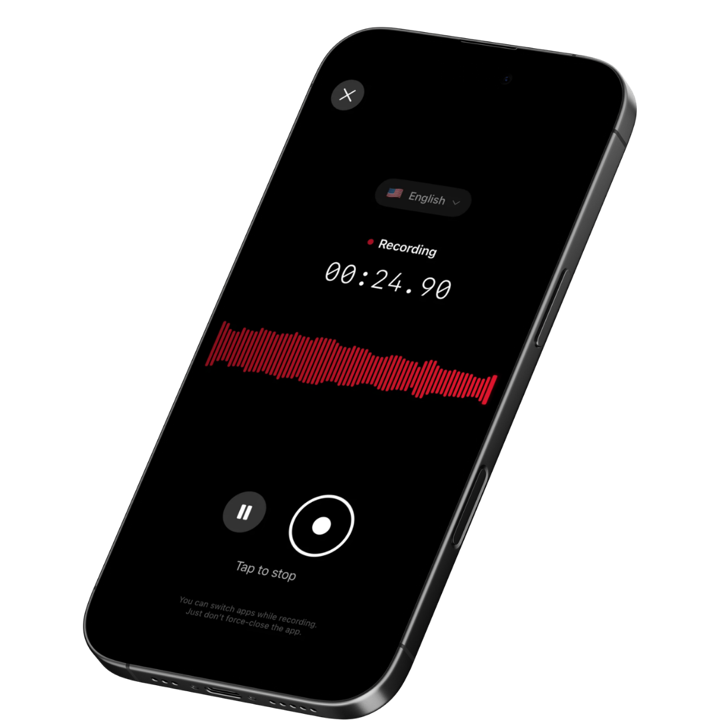
Voice capture bridges the gap. A quick voice note after a client call, a recorded debrief after a decision, a one-tap meeting summary sent to the team - these small actions keep distributed teams aligned without requiring everyone to be in the same room at the same time.
Download SpeakWise from the App Store and turn every conversation, meeting, and quick thought into searchable, shareable knowledge that keeps your flexible team connected.
Join 10,000+ professionals who use voice capture to make flexible work actually work - without losing the information that holds teams together.
Get SpeakWise Free
4.9-star App Store Rating | iOS Optimized

🎯 4.9★ App Store Rating | 📱 Built for iOS
