Workplace Gratitude Statistics 2026
Used by recruiters, executives, consultants, and more.
Workplace Gratitude Statistics 2026
66% of employees say they would leave their job if they did not feel appreciated. Companies with recognition programs see 31% lower voluntary turnover. Yet only 19% of employees receive recognition weekly, and 82% of American professionals feel they do not get enough recognition at work. These 16 statistics reveal how gratitude and recognition shape retention, engagement, and performance in 2026.
Gratitude costs nothing to express and everything to withhold. The research on workplace recognition consistently shows that feeling appreciated is one of the strongest predictors of whether employees stay, engage, and perform at their best. Yet most organizations under-deliver on recognition by a wide margin.
This post covers 16 statistics on workplace gratitude and recognition in 2026. The data spans the impact on retention and turnover, the frequency gap between what employees want and what they receive, the business case for formal recognition programs, and emerging trends in how organizations approach appreciation. Whether you are a leader looking to reduce turnover, an HR professional designing recognition programs, or a manager who wants to keep your best people, these numbers make the case for gratitude as a strategic priority.
1. 66% of employees would leave their job if they felt unappreciated
Two-thirds of employees say they would leave their job if they did not feel appreciated. This statistic places recognition alongside compensation and career growth as a fundamental driver of retention. Appreciation is not a bonus on top of a good job. It is a requirement for staying. Organizations that assume good work speaks for itself are making a bet that the data consistently disproves.
Source: Nectar HR - Employee Recognition Statistics 2025
2. Companies with recognition programs see 31% lower voluntary turnover
The retention impact of formal recognition is substantial. Companies with employee recognition programs experience 31% lower voluntary turnover compared to companies without such programs. They also see a 12% rise in productivity. These are not marginal improvements. A 31% reduction in turnover represents significant savings in recruitment, onboarding, and lost productivity costs for every position that does not need to be refilled.
Source: Select Software Reviews - Employee Recognition Statistics 2026
3. Only 19% of employees receive recognition on a weekly basis
Despite the evidence that frequent recognition drives engagement, only 19% of employees report receiving recognition weekly. Gallup research suggests that weekly recognition is the optimal frequency. The gap between what works and what happens is enormous. 81% of employees are going a week or more without anyone acknowledging their contributions. That silence speaks louder than any employee handbook.
Source: ProofHub - Employee Recognition Statistics 2026
4. 82% of American professionals feel under-recognized at work
The recognition deficit is overwhelming. 82% of American professionals say they do not receive enough recognition for their work. This is not a small or vocal minority. It is the vast majority of the workforce feeling that their efforts go unnoticed. When eight in ten employees feel under-appreciated, the problem is not individual managers forgetting to say "thank you." It is a systemic failure of organizational culture.
Source: Advantage Club - Employee Recognition Statistics 2025
5. 69% of employees would work harder with better recognition
Recognition directly fuels effort. 69% of employees say they would work harder if their efforts were better appreciated. This is the discretionary effort that separates good performance from great performance. It cannot be mandated, incentivized with bonuses alone, or extracted through pressure. It comes voluntarily from employees who feel seen, valued, and appreciated for what they contribute.
Source: Advantage Club - Employee Recognition Statistics 2025
6. Employees recognized weekly are 9x more likely to feel a sense of belonging
The relationship between recognition frequency and belonging is dramatic. Employees who receive meaningful recognition at least weekly are nine times more likely to report a strong sense of belonging at work. Belonging is a foundational psychological need. When it is met, employees are more collaborative, more creative, and more willing to invest emotionally in their team and organization.
Source: Select Software Reviews - Employee Recognition Statistics 2026
7. 59% of employees say their bosses do not show enough appreciation
The appreciation gap falls squarely on management. 59% of employees say their direct boss does not show enough appreciation, and this lack of recognition makes them feel seriously undervalued. Since the manager-employee relationship is the primary channel for recognition, this finding highlights a critical skill gap in people management. Many managers were never taught how to recognize effectively.
Source: Advantage Club - Employee Recognition Statistics 2025
8. 71% of employees say more frequent recognition would reduce turnover
Employees themselves identify the solution. 71% say that receiving more frequent recognition would make them less likely to leave their current employer. This is a direct, employee-reported connection between recognition frequency and retention intention. Organizations do not need to guess what keeps people. The workforce is telling them: say "thank you" more often, and we will stay.
Source: Select Software Reviews - Employee Recognition Statistics 2026
9. 92% of employees in companies with recognition programs feel valued
The presence of a formal recognition program transforms how employees perceive their workplace. 92% of workers in companies with recognition programs report feeling valued, compared to only 70% in companies without such programs. That 22-point gap demonstrates that informal, ad-hoc recognition is not sufficient. Structured programs signal that appreciation is a genuine organizational priority, not just a nice idea.
Source: Advantage Club - Employee Recognition Statistics 2025
10. Recognition is the number one driver of employee engagement
Across multiple studies, recognition consistently ranks as the single most important driver of employee engagement. Above compensation, above career development, above work flexibility. This ranking may seem surprising until you consider that recognition validates everything else. A good salary feels meaningful when your work is appreciated. Without recognition, even generous compensation feels transactional.
Source: HR Cloud - Employee Engagement Statistics
11. Employees who feel recognized are 45% less likely to leave within two years
The retention effect of recognition is durable. Employees who consistently feel recognized at work are 45% less likely to leave their organization within a two-year window. This is not a short-term mood boost. It is a sustained commitment driven by the ongoing experience of being valued. Two years of retention per recognized employee represents significant savings in turnover costs across the organization.
Source: Advantage Club - Employee Recognition Statistics 2025
12. Recognized employees are 2x more likely to go above and beyond
Gratitude creates a multiplier effect on effort. Employees who consistently feel recognized at work are two times more likely to say that people in their organization go above and beyond expectations. This discretionary effort is what separates high-performing teams from average ones. It cannot be purchased. It can only be earned through a culture where contribution is noticed and appreciated.
Source: Cooleaf - Employee Recognition Statistics
13. 72% of employees say recognition is most meaningful when personalized
Generic recognition falls flat. 72% of employees report that recognition feels most meaningful when it is personalized to them and their specific contribution. "Great job" is not enough. Effective recognition names the specific behavior, explains why it mattered, and connects it to a larger purpose. The effort of personalization signals that the recognizer genuinely noticed what was done.
Source: Select Software Reviews - Employee Recognition Statistics 2026
14. 63% of employees receive peer recognition at least weekly
While manager recognition lags, peer recognition is more common. 63% of employees report receiving recognition from peers on a weekly basis. This suggests that employees are naturally inclined to appreciate each other, even when formal systems do not encourage it. Organizations can amplify this by creating platforms and norms that make peer-to-peer recognition visible and celebrated.
Source: Select Software Reviews - Employee Recognition Statistics 2026
15. Replacing an employee costs 50% to 200% of their annual salary
The cost of losing an unappreciated employee is not just emotional. It is financial. Replacing a single employee costs between 50% and 200% of their annual salary when accounting for recruitment, onboarding, lost productivity, and knowledge drain. For a $75,000 employee, that is $37,500 to $150,000 per departure. Compared to the cost of a recognition program, the math overwhelmingly favors investing in gratitude.
Source: Kudoboard - Employee Recognition and Retention 2025
16. Recognition in 2026 is moving into the daily flow of work
The emerging trend in employee recognition is integration into daily workflows. Instead of annual awards ceremonies or quarterly recognition events, organizations are embedding recognition into the tools employees use every day. Recognition at the point of contribution, delivered in real time through the platforms where work happens, is replacing the delayed, formal recognition that employees have long found insufficient.
Source: Award Maven - Employee Recognition Trends 2026
The Gratitude Gap: The Simplest Fix with the Biggest Impact
These 16 statistics tell the story of an extraordinary mismatch. Recognition is the number one engagement driver. It reduces turnover by 31%. It makes employees nine times more likely to feel they belong. 69% would work harder with more of it. And yet 82% of professionals feel under-recognized, and only 19% receive it weekly. The solution is known. The execution is missing.
The financial case is unambiguous. Recognition programs cost a fraction of the turnover they prevent. A $37,500-to-$150,000 replacement cost per employee dwarfs the investment required to build a culture of consistent appreciation. Organizations are spending more on losing people than they would need to spend on keeping them.
The most effective recognition is not expensive. It is specific, timely, and personal. It happens in the moments after a contribution, not months later in a review. It names what was done and why it mattered. The trend toward real-time, workflow-integrated recognition reflects this truth. The best recognition programs do not feel like programs. They feel like how the team communicates.
82% of the workforce feels unappreciated. 66% would leave over it. The most cost-effective retention strategy in business is simply noticing what people do and telling them it matters.---
Capture moments of recognition so they last beyond the conversation
The most meaningful recognition often happens verbally. A manager praises a team member during a meeting. A colleague thanks someone on a call. A leader acknowledges an achievement during a debrief. These moments create real emotional impact, but they vanish the instant the conversation ends. No one remembers the exact words. The specific appreciation is lost.
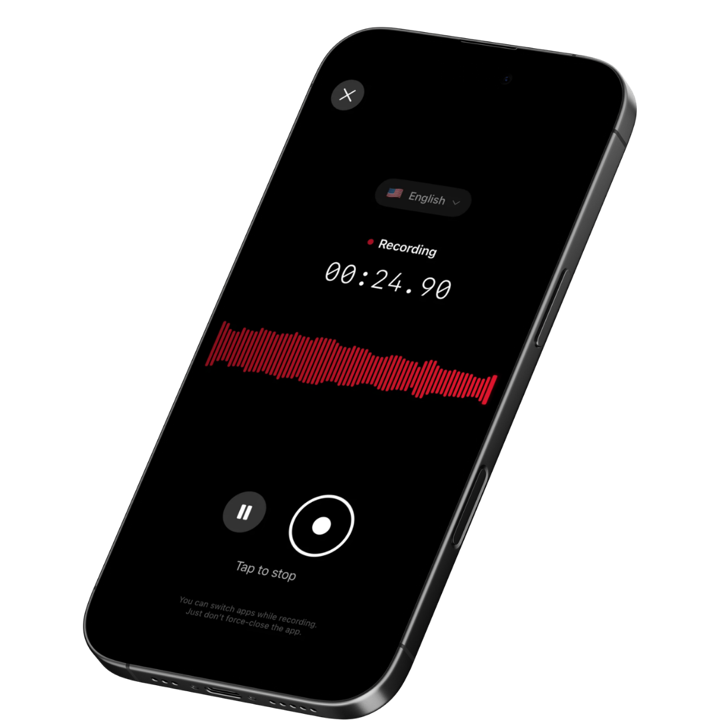
Voice capture makes recognition permanent. Record the meeting, the one-on-one, or the team call where recognition happens naturally. AI creates a transcript that preserves the exact words of appreciation. Share it, save it, reference it during reviews. Recognition that is documented carries weight long after the initial conversation.
Download Speakwise from the App Store and preserve every moment of recognition with one-tap recording, AI transcription, and seamless Notion integration.
Join 10,000+ professionals who make workplace gratitude stick by capturing it the moment it happens.
Get Speakwise Free
4.9-star App Store Rating | iOS Optimized

🎯 4.9★ App Store Rating | 📱 Built for iOS
