Workplace Loneliness Statistics 2026: Data


Used by recruiters, executives, consultants, and more.
Workplace Loneliness Statistics 2026: Data
More than one in five employees worldwide feel lonely at work, according to Gallup's State of the Global Workplace: 2026 Report. Remote and hybrid workers report the most daily loneliness, at 24% each, compared to 18% for on-site workers in remote-capable roles. The U.S. Surgeon General declared loneliness an epidemic in 2023, citing a 29% increased risk of heart disease and a 32% higher stroke risk. Workplace loneliness costs employers an estimated $154 billion annually in stress-related absenteeism alone.
Loneliness at work is no longer a personal struggle - it is an organizational crisis. The shift to remote and hybrid work accelerated a trend that was already building. As digital communication replaced hallway conversations and video calls replaced shared lunches, workers became more connected technologically and more isolated personally. The consequences show up in health outcomes, engagement scores, and turnover rates.
This post covers 19 statistics that quantify the scope, causes, and costs of workplace loneliness. These numbers come from Gallup, the U.S. Surgeon General's office, Cigna, BetterUp, the Integrated Benefits Institute, the World Health Organization, and peer-reviewed research to show why loneliness belongs on every leadership team's agenda.
Key Workplace Loneliness Statistics (2026)
- Workplace loneliness affects 22% of employees worldwide, who report feeling lonely a lot of the previous day (Gallup - State of the Global Workplace: 2026 Report).
- Remote and hybrid employees report the most daily loneliness, at 24% each, compared with just 18% for on-site workers in remote-capable roles (Gallup 2026).
- The U.S. Surgeon General's advisory compares the mortality impact of chronic loneliness to smoking up to 15 cigarettes a day, and links poor social connection to a 29% higher risk of heart disease (HHS - Our Epidemic of Loneliness and Isolation).
- Workplace loneliness costs U.S. employers an estimated $154 billion a year in stress-related absenteeism alone (Cigna).
- Lonely employees are 5 times as likely to miss a day of work due to stress as their non-lonely peers (Cigna).
- Employees with a strong sense of belonging have a 50% lower risk of turnover, worth more than $52 million a year for a 10,000-person company (BetterUp).
- Frequent loneliness is linked to a more than 7 times higher risk of anxiety or depression (Integrated Benefits Institute).
1. More than one in five employees worldwide feel lonely daily
Gallup's State of the Global Workplace: 2026 Report found that 22% of employees worldwide experienced loneliness "a lot" of the previous day, up from 20% in 2023. That translates to hundreds of millions of workers across the globe feeling disconnected from the people they work alongside. Loneliness at work is not simply about being alone - many lonely workers are surrounded by colleagues. It is about the quality of connection. Workers who lack meaningful relationships, who feel unseen or unvalued, and who have no one to turn to for support experience loneliness even in crowded offices. Even this figure likely understates the problem, as loneliness carries stigma that discourages honest reporting.
Source: Gallup - State of the Global Workplace: 2026 Report, Global Data
2. Remote and hybrid workers report the most daily loneliness, at 24% each
Gallup's 2026 data shows employees working exclusively remote and those in hybrid roles each report the highest daily loneliness, at 24%. On-site workers in non-remote-capable roles report 21%, and on-site workers in remote-capable roles report the least, at 18%. The gap illustrates the social cost of physical separation. While remote and hybrid arrangements offer flexibility and eliminate commutes, they also remove the organic social interactions - coffee conversations, walk-and-talks, shared meals - that build workplace relationships. The data shows hybrid work now carries the same daily loneliness risk as fully remote work, not a smaller one.
Source: Gallup - State of the Global Workplace: 2026 Report, Global Data
3. The U.S. Surgeon General declared loneliness an epidemic in 2023
In spring 2023, U.S. Surgeon General Vivek Murthy formally declared loneliness and social isolation a public health epidemic. The advisory called on employers, communities, and policymakers to treat social disconnection with the same urgency as smoking, obesity, and substance abuse. The declaration was based on decades of research showing that chronic loneliness carries health risks comparable to smoking 15 cigarettes per day. By labeling loneliness an epidemic, the Surgeon General elevated it from a personal problem to a systemic crisis requiring institutional action. The workplace, where adults spend the majority of their waking hours, is one of the primary intervention points.
Source: HHS - Our Epidemic of Loneliness and Isolation
4. Loneliness increases heart disease risk by 29% and stroke risk by 32%
The Surgeon General's advisory reported that individuals with poor social connection face a 29% greater risk of heart disease and a 32% higher likelihood of stroke. Loneliness is also associated with a 50% increased risk of dementia and a 26% greater risk of premature death. These health statistics place loneliness alongside smoking, obesity, and physical inactivity as a major cardiovascular risk factor. For employers, the health consequences of workplace loneliness translate directly into higher healthcare costs, more sick days, and reduced cognitive performance. A lonely workforce is an unhealthy workforce.
Source: HHS - Our Epidemic of Loneliness and Isolation
5. Workplace loneliness costs employers approximately $154 billion annually
Cigna estimates that stress-related absenteeism linked to loneliness costs U.S. employers roughly $154 billion per year. A separate, earlier Cigna analysis put the broader national cost of worker loneliness, including missed workdays and lost productivity across the economy, at $406 billion a year, or nearly $4,200 per lonely worker. The financial impact makes workplace loneliness a business problem, not just a wellness initiative. At $154 billion annually from absenteeism alone, loneliness represents a larger drag on the economy than many well-funded corporate challenges. Yet most organizations have no strategy for measuring or addressing it.
Source: Cigna - The Business Case for Addressing Loneliness in the Workforce ($154 billion figure); Cigna - Loneliness and Its Impact on the American Workplace ($406 billion figure)
6. 52 million U.S. adults struggle with loneliness
Gallup estimates that approximately 52 million U.S. adults currently struggle with loneliness. This population-level figure provides context for the workplace statistics: lonely workers are not a small, unusual subgroup. They represent a significant portion of the adult population, and they bring their loneliness to work every day. The 52 million figure also highlights that workplace loneliness is not solely a workplace problem. It reflects broader social trends including declining community participation, reduced in-person socializing, and the substitution of digital interaction for face-to-face connection.
Source: Gallup - Daily Loneliness Afflicts One in Five in U.S.
7. Almost two-thirds of remote and hybrid workers rarely or never feel lonely
A 2026 CoworkingCafe survey of 1,140 U.S. remote and hybrid employees found that almost two-thirds of respondents say they rarely or never feel lonely while working remotely. That is an important counterpoint to the loneliness statistics above: most remote and hybrid workers are not chronically isolated. But the finding is not evenly distributed. Gen X is the most insulated group, with 69% saying they feel lonely less than once a month or never, while younger workers report far less protection from isolation.
Source: CoworkingCafe - The 2026 Remote Work Well-Being Survey
8. 20% of Gen Z remote workers experience high-frequency loneliness
Among remote and hybrid workers, 20% of Gen Z employees experience high-frequency loneliness, defined as one to two times a week or more, double the rate reported by Millennials. Separately, a broader 2025 survey of 1,000 U.S. employees found that about 40% of Gen Z workers report experiencing workplace loneliness in some form. This generational pattern is concerning because Gen Z is the first generation to enter the workforce during and after the remote work shift. Many young workers have never experienced the in-office social rituals that older generations took for granted. Without mentorship lunches, team outings, and casual desk conversations, early-career workers struggle to build the workplace relationships that combat isolation.
Source: CoworkingCafe - The 2026 Remote Work Well-Being Survey (high-frequency loneliness); Reward Gateway - Workplace Loneliness Research 2025 (40% figure)
9. Lonely workers are 5x more likely to miss work due to stress
Cigna's research on loneliness and the workplace found that lonely employees are five times as likely to miss a day of work due to stress as their non-lonely counterparts, and twice as likely to miss a day due to illness. Separately, Cigna has found that lonely workers miss more than five additional workdays per year compared to workers who feel socially connected. The absenteeism link is straightforward: loneliness degrades mental health, mental health degradation increases stress, and stress drives unplanned absences. Each sick day costs employers in both direct wages and lost productivity. When lonely workers miss five or more extra days per year, the cumulative cost across an organization is substantial.
Source: Cigna - Loneliness and the Workplace: 2020 U.S. Report; Cigna - The Business Case for Addressing Loneliness in the Workforce
10. Workplace loneliness reduces job performance with a correlation of -0.35
A mixed-method systematic review and meta-analysis found that workplace loneliness is associated with lower job performance, with a correlation coefficient of -0.35. The same analysis found reduced job satisfaction (r = -0.34), worse worker-manager relationships (r = -0.31), and elevated burnout (r = 0.39). These are not trivial correlations. A -0.35 relationship between loneliness and performance means that lonely workers produce meaningfully less output, complete fewer tasks successfully, and contribute less to team goals. The performance impact alone justifies organizational investment in reducing workplace loneliness.
Source: PMC - Loneliness in the Workplace: A Mixed-Method Systematic Review
11. A single incident of exclusion causes a 25% drop in performance
BetterUp's research on belonging at work found that employees with a strong sense of belonging show 56% higher performance than employees with a low sense of belonging. The flip side is just as striking: in controlled experiments, BetterUp found that a single incidence of micro-exclusion, being briefly left out of a simple team activity, caused an immediate 25% decline in an individual's performance on a later team task. The magnitude of this finding highlights how powerful social connection is as a driver of performance. No compensation package, no office perk, and no productivity tool can undo the damage of a workforce that does not feel included. Belonging is the foundation on which all other engagement strategies are built.
Source: BetterUp - The Value of Belonging at Work
12. Lonely workers think about quitting twice as often
Cigna's workplace research found that lonely employees think about quitting their jobs more than twice as often per month as non-lonely employees, and lonely workers are nearly twice as likely to be actively looking for a new position within the next year. The retention implication is direct: loneliness drives turnover intention, and turnover intention predicts actual turnover. Replacing an employee typically costs employers between half and twice that employee's annual salary, according to Cigna's analysis. For a company with 500 employees where 20% are lonely, even a modest increase in actual turnover among that group creates a real cost that most organizations never attribute to its true cause.
Source: Cigna - Loneliness and the Workplace: 2020 U.S. Report; Cigna - Loneliness and Its Impact on the American Workplace
13. Individuals with frequent loneliness are 7x more likely to have anxiety or depression
Workers experiencing frequent loneliness are more than seven times more likely to suffer from anxiety or depression compared to those with strong social connections. This finding establishes loneliness as one of the most potent predictors of workplace mental health problems. The sevenfold increase in anxiety and depression risk means that workplace loneliness is not just an engagement problem - it is a clinical health risk. Organizations that ignore loneliness while investing in mental health programs are addressing symptoms while leaving the root cause untouched.
14. 13% of workers experience frequent loneliness, and it strongly predicts anxiety and depression
A large-scale analysis by the Integrated Benefits Institute (IBI) found that 13% of the U.S. workforce report experiencing loneliness "usually or always," a stricter bar than simply feeling lonely on occasion. Among the broader workforce studied, IBI found clinically relevant anxiety in 26.7% of workers and clinically relevant depression in 20.0%, with frequent loneliness standing out as the single strongest predictor of both. Employees with clinically relevant anxiety or depression take an average of 4.6 more sick days a year than employees without those conditions. The pattern shows that workplace loneliness is not a soft, background issue. It is measurably tied to some of the most costly and disruptive health conditions employers manage.
15. Strong belonging cuts turnover risk by 50%, worth $52 million a year at scale
BetterUp's Value of Belonging at Work research found that employees with a strong sense of belonging have a 50% lower risk of turnover than employees with a low sense of belonging, along with 75% fewer sick days. For a 10,000-person company, BetterUp estimated this translates into more than $52 million a year in productivity gains, plus another $10 million a year in reduced turnover costs. The financial stakes of belonging are enormous. A 50% reduction in turnover risk, multiplied across a large workforce, represents real money that most organizations never attribute to their culture. Investing in belonging programs - team building, mentorship, social connection initiatives - is not a soft perk. It is a retention strategy with clear financial returns.
Source: BetterUp - The Value of Belonging at Work
16. 33% of remote workers experience burnout symptoms, with Gen Z at 38%
A third of remote workers report experiencing burnout symptoms, and the rate rises to 38% among Gen Z remote employees. The burnout-loneliness connection is bidirectional: loneliness contributes to burnout through emotional exhaustion, and burnout contributes to loneliness by reducing the energy available for social connection. Remote workers who are both lonely and burned out face a compounding spiral. They lack the social support that buffers against burnout, and their burnout further isolates them from the connections they need. Breaking this cycle requires proactive organizational intervention, not just individual coping strategies.
Source: CoworkingCafe - The 2026 Remote Work Well-Being Survey
17. Managers report more daily loneliness than individual contributors
Gallup's State of the Global Workplace: 2026 Report found that 23% of managers experience loneliness a lot of the previous day, compared to 21% of individual contributors. The gap is a reminder that seniority does not protect against isolation. Managers often sit between leadership and their teams, responsible for others' performance and wellbeing while having fewer peers to confide in about their own struggles. Organizations that build connection programs only for frontline staff may be missing a group that needs it just as much.
Source: Gallup - State of the Global Workplace: 2026 Report, Global Data
18. Employee loneliness varies sharply by region, from 28% in South Asia to 12% in Latin America
Gallup's 2026 global data shows daily employee loneliness is highest in South Asia and Sub-Saharan Africa, both at 28%, and lowest in Latin America and the Caribbean, at 12%, with Europe just above at 13%. The United States and Canada sit in the middle of the global range, at 19%. The regional spread shows that workplace loneliness is not a uniform global phenomenon. Cultural norms around community, family structure, and social support appear to shape how isolated employees feel at work as much as any single workplace policy does.
Source: Gallup - State of the Global Workplace: 2026 Report, Global Data
19. Loneliness is linked to 871,000 deaths worldwide each year
The World Health Organization's Commission on Social Connection found that roughly 1 in 6 people globally, about 15.8%, report feeling lonely, and that social disconnection is linked to an estimated 871,000 deaths every year. This is a global population figure, not a workplace-specific one, but it establishes the scale of the underlying public health problem that also shows up at work. The WHO notes that lonely people are more likely to struggle at work, earn less, and face job instability, though it does not provide a specific percentage for that workplace effect.
Source: WHO - Social Connection: Questions and Answers
The Loneliness Paradox: Connected Technology, Disconnected People
These nineteen statistics reveal a workplace that is more digitally connected than ever and more personally disconnected than at any point in modern history. Workers communicate through dozens of channels, attend virtual meetings daily, and exchange hundreds of messages per week. Yet more than one in five feels lonely, 13% experience it usually or always, and researchers compare the health consequences to smoking. Technology has optimized information exchange while hollowing out the human connection that gives work meaning.
The remote work revolution amplified this paradox. The same flexibility that freed workers from commutes and rigid schedules also severed the organic social bonds that develop through shared physical space. Younger workers are disproportionately affected because they entered the workforce without the established relationships that sustain older colleagues through periods of isolation.
The business case for addressing workplace loneliness is overwhelming. Lonely workers perform worse, call in sick more often, think about quitting at double the rate, and cost employers over $154 billion annually. Organizations that treat loneliness as a soft, personal problem rather than a strategic business challenge are leaving enormous value on the table.
More than one in five workers is lonely. They perform worse, quit more often, and cost $154 billion per year. The most overlooked productivity lever in modern organizations is not a tool or process - it is genuine human connection.---
Build connection through shared understanding
These 19 statistics show that loneliness at work often stems from a lack of meaningful interaction - not a lack of communication tools. Workers exchange messages all day but rarely feel truly heard. Meetings happen constantly but the insights and decisions discussed fade before anyone acts on them.
Shared understanding is the antidote to disconnection. When team members can easily review what was discussed, who said what, and what decisions were made, they feel included even when they could not attend. Accurate, accessible meeting records create continuity that strengthens team bonds.
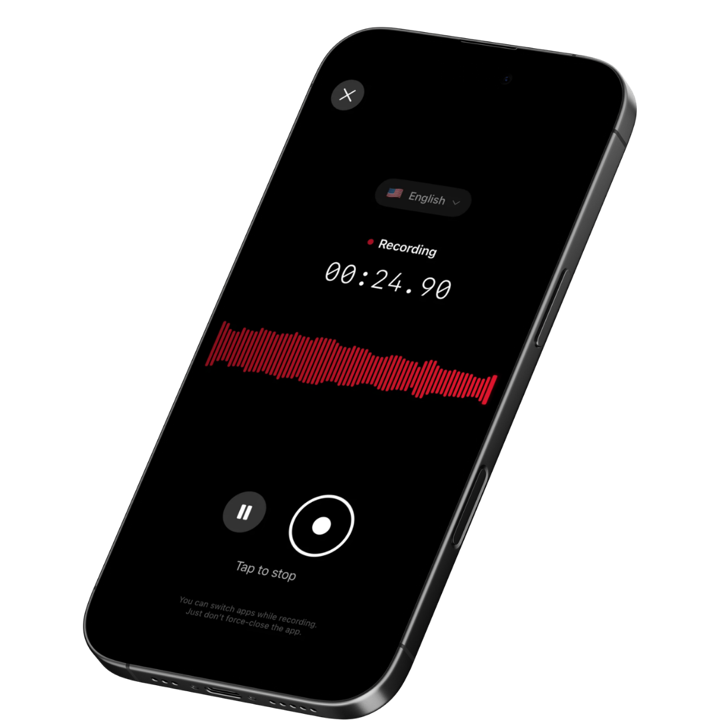
Download Speakwise from the App Store and give your team a shared record of every conversation with AI-powered transcription, summaries, and action items that sync directly to Notion.
Join 10,000+ professionals who keep their teams connected through clear, searchable records of every important conversation.
Get Speakwise Free
4.9-star App Store Rating | iOS Optimized

🎯 4.9★ App Store Rating | 📱 Built for iOS
