Workplace Mental Health Statistics 2026


Used by recruiters, executives, consultants, and more.
Workplace Mental Health Statistics 2026
76% of U.S. workers reported at least one symptom of a mental health condition over the past year. Depression alone costs employers $44 billion annually in lost productivity. The WHO estimates that anxiety and depression cause 12 billion lost working days globally each year. With 84% of employees saying workplace conditions contribute to their mental health challenges, these 18 statistics reveal a crisis that is reshaping how organizations think about employee wellbeing.
Mental health at work has shifted from a taboo subject to a boardroom priority. The pandemic accelerated awareness, but the underlying problems run deeper. Chronic stress, always-on culture, and insufficient support systems continue to erode worker wellbeing at scale. The data now shows that mental health is not just a personal issue - it is an organizational performance issue with measurable financial consequences.
This post compiles 18 statistics that capture the scope, cost, and drivers of workplace mental health challenges. From global prevalence data to employer ROI calculations, these numbers provide the evidence base for understanding why mental health has become the defining workforce issue of the decade.
Key Workplace Mental Health Statistics (2026)
- Workplace mental health statistics show that three in four U.S. workers are affected: 76% reported at least one symptom of a mental health condition in the past year (U.S. Surgeon General's Framework for Workplace Mental Health & Well-Being).
- Depression alone costs U.S. employers an estimated $44 billion annually in lost productivity (APA Center for Workplace Mental Health).
- The WHO estimates depression and anxiety cause 12 billion lost working days every year, at a global cost of $1 trillion in lost productivity (WHO - Mental Health at Work).
- 84% of employees report at least one workplace factor - such as emotionally draining work or poor work-life balance - that negatively affects their mental health (U.S. Surgeon General's Framework for Workplace Mental Health & Well-Being).
- 50% of U.S. workers report moderate to severe levels of burnout, depression, or anxiety, according to Mind Share Partners' 2025 Mental Health at Work Report (Mind Share Partners).
- 92% of workers say it is important to work for an organization that values their emotional and psychological wellbeing (APA - 2023 Work in America Survey).
- Burnout affects 77% of professionals at their current job, per the 2018 Deloitte Workplace Burnout Survey (APA Center for Workplace Mental Health).
1. 76% of U.S. workers reported at least one mental health symptom
A national survey of 1,500 U.S. workers cited in the U.S. Surgeon General's Framework for Workplace Mental Health & Well-Being found that 76% of respondents reported experiencing at least one symptom of a mental health condition in the preceding 12 months - an increase of 17 percentage points in just two years. These symptoms ranged from anxiety and depression to irritability and difficulty concentrating. The figure represents a significant portion of the workforce dealing with mental health challenges that directly affect their ability to perform at work. This isn't a fringe issue affecting a small minority - it is the majority experience of American workers today.
Source: U.S. Surgeon General's Framework for Workplace Mental Health & Well-Being
2. Depression and anxiety cost the global economy $1 trillion per year
The World Health Organization estimates that depression and anxiety disorders cost the global economy approximately $1 trillion annually in lost productivity. This figure accounts for absenteeism, presenteeism, and reduced output across all industries and regions. The cost is not distributed evenly - knowledge-intensive industries and high-pressure sectors bear a disproportionate share. Despite this enormous economic burden, WHO reports that investment in mental health treatment and prevention remains far below what the evidence supports.
Source: WHO - Mental Health at Work
3. 12 billion working days are lost to depression and anxiety annually
The scale of lost productivity from mental health conditions is staggering. WHO data shows that 12 billion working days are lost globally each year due to depression and anxiety alone. That translates to roughly 50 million years of work erased annually by just two mental health conditions. This figure does not include other conditions like PTSD, substance use disorders, or burnout-related conditions. The true total of mental health-related productivity loss is likely much higher.
Source: WHO - Mental Health at Work
4. 84% of employees say workplace conditions contribute to mental health problems
Workplace conditions are not just a backdrop to mental health - they are a primary driver. The same national survey cited in the U.S. Surgeon General's Framework for Workplace Mental Health & Well-Being found that 84% of respondents reported at least one workplace factor - such as emotionally draining work, challenges with work-life balance, or lack of recognition - that had a negative impact on their mental health. This statistic shifts the conversation from individual resilience to systemic responsibility. When 84% of workers point to the workplace itself as the problem, the solution cannot be limited to employee assistance programs.
Source: U.S. Surgeon General's Framework for Workplace Mental Health & Well-Being
5. Depression costs U.S. employers an estimated $44 billion per year in lost productivity
The American Psychiatric Association's Center for Workplace Mental Health reports that depression alone costs American employers approximately $44 billion annually in lost productivity. This includes both absenteeism (missed days) and presenteeism (being physically present but unable to function effectively). Presenteeism accounts for the larger share of this cost, as many employees with depression continue to show up while operating well below their capacity. Most of this cost is invisible to employers who only track absence.
Source: APA Center for Workplace Mental Health - Depression: A Costly Condition for Businesses
6. For every $1 invested in mental health treatment, there is a $4 return
The business case for mental health investment is strong. A WHO-led study published in The Lancet Psychiatry demonstrates that for every US$1 invested in scaled-up treatment for common mental health disorders like depression and anxiety, there is a return of US$4 in better health and ability to work. This 4:1 ROI exceeds the returns on many standard business investments. Despite this evidence, mental health budgets remain among the first to be cut during economic downturns, precisely when worker stress is highest.
Source: WHO - Investing in Treatment for Depression and Anxiety Leads to Fourfold Return
7. 1 in 5 U.S. adults lives with a mental illness
The baseline prevalence of mental health conditions provides critical context for workplace statistics. NAMI reports that approximately 1 in 5 U.S. adults - 23.4%, or roughly 61.5 million people in 2024 - experienced a mental illness in the past year. Among these, approximately 1 in 20 adults (about 14.6 million) live with a serious mental illness that substantially interferes with major life activities. Given that most of these adults are in the workforce, employers are already managing teams where mental health conditions are present, whether or not they are visible.
Source: NAMI - Mental Health By The Numbers
8. Only 61% of adults with major depression receive treatment
Treatment access remains a significant barrier. NIMH data shows that only an estimated 61.0% of U.S. adults with a major depressive episode received any form of mental health treatment in the past year - meaning close to 4 in 10 went without care. Cost, stigma, lack of access, and time constraints all contribute to this gap. For workers specifically, the fear of career consequences can be a powerful deterrent to seeking help. This means a substantial share of depressed workers are managing their condition without professional support.
Source: NIMH - Major Depression
9. Burnout affects 77% of professionals at their current job
Burnout has reached near-universal levels. Deloitte's Workplace Burnout Survey found that 77% of professionals have experienced burnout at their current job. Burnout is now recognized by WHO as an occupational phenomenon in the International Classification of Diseases. It is characterized by energy depletion, increased mental distance from one's job, and reduced professional efficacy. The prevalence data suggests burnout is now the norm, not the exception.
10. 77% of employees say work-related stress has hurt their mental health
The trajectory is heading in the wrong direction. The American Institute of Stress cites Headspace's 2024 Workforce State of Mind Report, which found that 77% of employees believe work-related stress has negatively affected their mental health, and 71% say work-related stress has contributed to the end of a personal relationship. Contributing factors include technology-driven always-on expectations, increasing workloads due to leaner teams, economic uncertainty, and the blurring of work-life boundaries. The scale of these numbers suggests a widening gap between the scope of the problem and organizational response.
Source: The American Institute of Stress - Workplace Stress Statistics
11. Anxiety disorders affect 19.1% of U.S. adults annually
Anxiety is the most common mental health condition in the United States. NIMH data show that an estimated 19.1% of U.S. adults experienced an anxiety disorder in the past year, with prevalence higher among women (23.4%) than men (14.3%). Of those affected, an estimated 22.8% experienced serious impairment and 33.7% experienced moderate impairment. In the workplace, anxiety manifests as difficulty concentrating, avoidance of challenging tasks, excessive worry about performance, and strained interpersonal relationships.
Source: NIMH - Any Anxiety Disorder
12. Mental health-related absences increased 33% in a single year
The pandemic created a step-change in mental health-related absenteeism that has not reversed. ComPsych, the world's largest provider of mental health and absence management services, reports that mental health-related leaves of absence increased 33% in 2023 over the prior year alone - and a cumulative 300% between 2017 and 2023. Women account for a disproportionate share of this increase, taking nearly seven in ten (69%) mental health-related leaves in 2023. Employers report that mental health is now among the fastest-growing categories of leave requests, alongside long-standing drivers like musculoskeletal issues.
Source: ComPsych - Mental Health Leaves of Absence Surge, Increasing 33% Over Prior Year
13. Workers with untreated depression are 35% less productive
Presenteeism from untreated mental health conditions carries a significant productivity cost. Research published in the Journal of Occupational and Environmental Medicine found that workers with untreated depression are approximately 35% less productive than their peers. This productivity loss is often invisible because the worker is physically present. Managers may attribute the output gap to motivation or skill issues rather than recognizing it as a health issue. Effective treatment can recover much of this lost productivity.
Source: JOEM - Depression and Work Productivity
14. 60% of employees have never spoken about mental health at work
Stigma remains a powerful barrier to workplace mental health progress. A national study by the nonprofit Mind Share Partners, in partnership with SAP and Qualtrics, found that almost 60% of employees have never spoken to anyone at work about their mental health status - even though nearly 60% had experienced symptoms in the past year. Among those who have disclosed, many reported negative consequences including being passed over for promotions, receiving unsolicited advice, or being treated differently by managers. Until workplaces create genuinely safe environments for disclosure, the true scale of mental health challenges will remain hidden.
Source: Harvard Business Review - Research: People Want Their Employers to Talk About Mental Health
15. 92% of workers say it is important to work for a company that values mental health
Employee expectations around mental health have shifted dramatically. The APA's 2023 Work in America Survey found that 92% of workers say it is very (57%) or somewhat (35%) important to them to work for an organization that values their emotional and psychological wellbeing. This expectation is especially strong among younger workers and has become a significant factor in employer selection. Companies that visibly prioritize mental health gain advantages in recruitment, retention, and engagement - making wellbeing investment a talent strategy as much as a health strategy.
Source: APA - 2023 Work in America Survey
16. Half of U.S. workers report moderate to severe burnout, depression, or anxiety
Mind Share Partners' 2025 Mental Health at Work Report, produced in partnership with Qualtrics, surveyed 1,153 U.S. adults employed full-time and found that half of U.S. workers report moderate to severe levels of burnout, depression, or anxiety. The top stressors cited were U.S. politics (43%), global events (42%), and personal finances (37%). The same research found that employees at companies that support their mental health are twice as likely to report no burnout or depression, underscoring the return on investment for employers who act.
Source: Mind Share Partners - 2025 Mental Health at Work Report
17. 19% of U.S. adults have ever been diagnosed with depression
The CDC's Mental Health Data Channel reports that, based on the most recent 2024 data, 19% of U.S. adults - about 1 in 5 - have at some point been told by a doctor or other health care professional that they had a depression disorder. The same data source found that only 14% of U.S. adults, or about 1 in 7, received counseling or therapy from a mental health professional in the past 12 months, though that share was higher in 2024 than in 2023. The gap between diagnosis and ongoing care remains a workplace-relevant barrier to recovery.
Source: CDC - Mental Health Conditions & Care
18. 44% of employed adults worry a downturn could cost them their job
Economic anxiety is now a measurable driver of workplace mental health strain. The APA's 2025 Work in America Survey found that 44% of employed adults were concerned that an economic slump, downturn, or recession would cause them to be laid off, furloughed, or otherwise lose their job in the next 12 months - up from 36% in 2024. Workers who were satisfied with the mental health support provided by their employer were significantly less likely to share this concern (42% vs. 52% among those unsatisfied with their employer's support), showing that mental health investment can buffer economic stress.
Source: APA - 2025 Work in America Survey
The Mental Health Reckoning Organizations Can No Longer Avoid
The statistics paint a clear picture. Workplace mental health is not a niche concern affecting a small minority - it is a universal challenge touching three-quarters of the workforce. The financial costs are enormous, running into the trillions globally. And the gap between employee expectations and employer action continues to widen.
What makes this crisis especially frustrating is that the solutions are well-documented. Every dollar invested in mental health treatment returns four dollars in productivity. Effective treatment recovers most of the productivity lost to depression. The evidence is overwhelming. The obstacle is not knowledge - it is implementation.
The path forward requires organizations to move beyond awareness campaigns and into structural change. This means reducing the workplace conditions that 84% of employees identify as contributors to poor mental health: excessive workload, always-on expectations, lack of autonomy, and toxic cultures. It means making treatment accessible and destigmatized. And it means recognizing that employee mental health is not a benefit - it is a business imperative.
The data is clear: organizations that treat mental health as a strategic priority will outperform those that treat it as an afterthought. The $1 trillion question is how quickly companies will act.---
Protect Your Team's Mental Health with Smarter Communication
Meeting overload, constant interruptions, and information fragmentation are among the top workplace stressors employees cite. Reducing communication overhead is not just a productivity play - it is a mental health intervention. When workers spend less time in unnecessary meetings and more time on meaningful work, stress decreases and engagement rises.
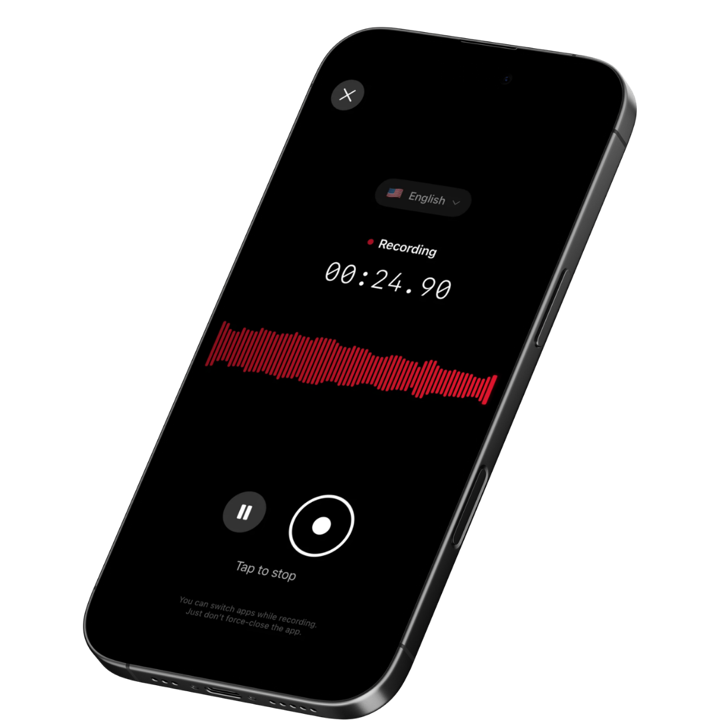
Voice-first tools can help. Instead of scheduling another meeting to share updates, record a quick voice note. Instead of writing lengthy recap emails, let AI generate the summary. Less time in meetings means more space for focused work and recovery.
Download SpeakWise from the App Store and reduce meeting overload with one-tap voice recording, AI transcription, and intelligent summaries that keep your team aligned without burning them out.
Join 10,000+ professionals who protect their mental health by replacing unnecessary meetings with voice notes.
Get SpeakWise Free
4.9-star App Store Rating | iOS Optimized

🎯 4.9★ App Store Rating | 📱 Built for iOS
